
Archived: 26 September 2026
Abstract
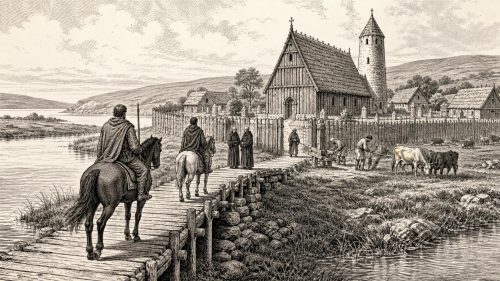
In 1030, Ireland remained divided among competing dynasties after Brian Bórama and Máel Sechnaill’s deaths. Annals record the killing of Tadc Ua Conchobair of Connacht, conflict and devastation in Mide, and northern rivalry culminating in Ruaidrí Ua Canannáin’s death. Flaithbertach Ua Néill travelled to Rome, while Tadc of Uí Cheinnselaig died on pilgrimage at Glendalough. Gormlaith’s death linked Leinster, Dublin and Munster dynasties. Ecclesiastical leaders, including successors of Ciarán, Tigernach and Comgall, died, alongside chief poet Cú Mara. Relic profanation, church attacks, maritime loss and a solar eclipse illustrate religion, learning, violence and observation shaping everyday political life across Ireland.
Read Article
Archived: 26 September 2026
Abstract
In 1027, Irish annals recorded a politically fragmented island where regional rulers, Dublin and monasteries shaped events. Donnchad mac Briain of Munster invaded Osraige, taking booty and captives, but suffered a costly defeat against local resistance. In Mide, forces of Sitriuc Silkbeard’s Dublin and Brega fought Mide, killing both Ráen ua Máel Sechnaill and Donnchad ua Duinn. Northern cattle raids and local conflicts underscored persistent border warfare. Deaths, pilgrimages and ecclesiastical successions linked Ireland to Iona, Rome and Cologne. The reported desecration of the Staff of Jesus demonstrated relics’ public importance. Warfare, trade, lordship and Christian learning were deeply interconnected.
Read Article

Archived: 26 September 2026
Abstract
In 1024, Ireland remained fragmented after Máel Sechnaill’s death, with authority contested among provincial dynasties, Norse-Gaelic towns and church interests. Leinster suffered upheaval when Úgaire, king of Leinster, and Máel Mórda of Uí Cheinnselaig were killed during Donn Sléibe’s seizure and burning of a house; Donn Sléibe was later slain. Fighting marked Corann, Ulster and the midlands, while Irish forces raided Foreigners for hostages and wealth. Ecclesiastical deaths, pilgrimages and attacks on Slane and Kildare demonstrated churches’ scholarly, economic and political importance. Cúán ua Lothcháin, Ireland’s chief poet-historian, was murdered, emphasising the learned class’s prestige amid endemic violence and instability.
Read Article

Archived: 26 September 2026
Abstract
In 1012, Brian Bórama’s high-kingship remained powerful yet required constant military, religious and material reinforcement. Northern rulers Flaithbertach Ua Néill and Máel Sechnaill raided rival territories, burning centres and seizing cattle, captives and plunder, while succession fighting continued in Ulaid. Brian campaigned in Mag Muirtheimne, granting immunity to Patrick’s churches, and fortified Cenn Corad and other strategic sites. Armagh suffered a prolonged sickness that killed clergy, students and others. Heavy rainfall damaged cereal crops, worsening pressures on communities already exposed to armies. The annals portray rivalry, fragile overlordship and hardship, anticipating the crises that culminated at Clontarf two years later.
Read Article

Archived: 26 September 2026
Abstract
In 1011, Brian Bórama’s supremacy reached the north-west through a major campaign against Cenél Conaill. Forces led by Brian and his sons, allied with Flaithbertach Ua Néill and other rulers, raided, seized cattle and captives, and compelled Máel Ruanaid Ua Máel Doraid to submit at Cenn Corad. The events demonstrated both Brian’s wide influence and the negotiated, competitive character of Irish over-kingship. Máel Sechnaill remained within Brian’s political order, while Ulster’s dynastic conflicts continued. Deaths among royal heirs and prominent churchmen, illness near Armagh, and a plentiful nut harvest reveal a society shaped by warfare, ecclesiastical learning, disease, and resources.
Read Article
Archived: 26 September 2026
Abstract
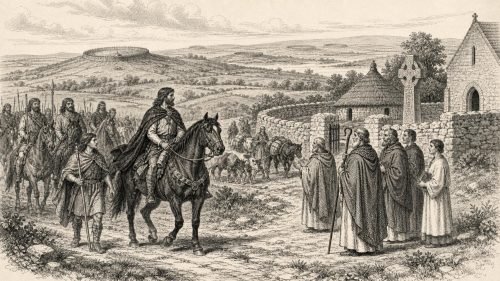
In 1006, Brian Bórama demonstrated the reach yet limits of his Irish overlordship by leading a broad coalition from Munster, Leinster, Mide, Connacht and Dublin through the north. His circuit secured Ulaid hostages and satisfied Armagh's claims, strengthening royal and ecclesiastical legitimacy, but Cenél Conaill and Cenél nEógain withheld submission. Provincial violence continued, including killings of regional kings, revealing unstable local rule. The deaths of Armagh churchmen underline clerical institutions' importance. A mild, food-rich winter offered relief after scarcity, while the army's passage burdened rural communities. Dublin's participation reflected its growing military, commercial and maritime value within Brian's negotiated supremacy.
Read Article

Archived: 26 September 2026
Abstract
Brian Boru’s northern campaign of 1005 demonstrated his contested claim to high-kingship over Ireland. After establishing dominance in the south and securing Máel Sechnaill’s submission, he led an army, including Gaelic and Norse-Irish forces, to Armagh and Ulaid. At Patrick’s altar he gave twenty ounces of gold, strengthening ties with Armagh’s primatial church; the Book of Armagh associated him with title imperator Scotorum. His expedition sought hostages from northern dynasties, but accounts differ over whether Cenél Conaill and Cenél nEógain submitted. Ulaid suffered dynastic killings, external attacks and scarcity that dispersed its population. The year showed kingship dependent on campaigns.
Read Article
Archived: 26 October 2026
Abstract
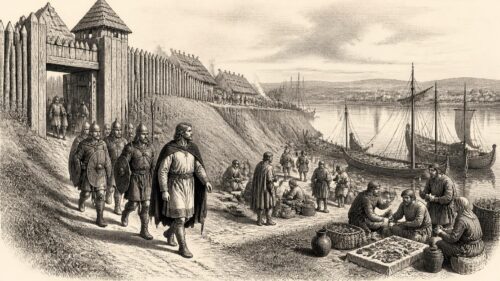
For Ireland, 979 is a year best approached through a small but unusually revealing cluster of annalistic notices. No surviving source supplies a continuous narrative, and none explains every motive or consequence. Yet the recorded capture of Domnall Claen, king of Leinster, by the foreigners of Dublin exposes the political weight of the Hiberno-Norse town at the mouth of the Liffey. Deaths and killings among rulers in Offaly, Dál Araide and Cenél Conaill show, at the same time, that power remained fragmented across many regional kingdoms. Notices of a Kildare church leader, a Clonmacnoise scholar-cleric and a foremost man of
Read Article
Archived: 27 October 2026
Abstract
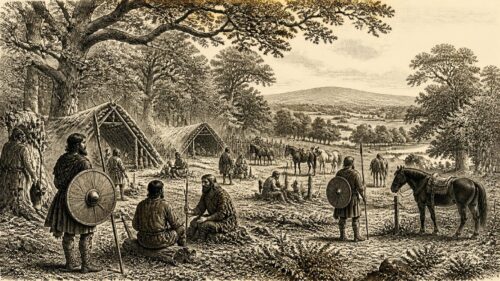
In 950, Ruaidrí ua Canannáin of Cenél Conaill pursued a serious claim to Tara, maintaining pressure on Mide and Brega for six months. His campaign ended at Muine Brócáin, where Dublin’s foreigners killed him and his kinsman Niall, preserving Congalach Cnogba’s position. Annalistic dates and battle figures vary, but the principal events are secure. Dublin’s forces also burned Sláine’s bell-house, killing clergy and destroying sacred objects. Elsewhere, Donnchad of Mide and Matudán of Ulaid died in kin-based conflicts. The year exposed fragmented kingship, politically engaged churches, Dublin’s inland influence, rural warfare, and seasonal environmental conditions, including an exceptional mast crop.
Read Article

