
Archived: 26 September 2026
Abstract
In 1136 Ireland remained divided among kings, church jurisdictions and raiding forces. Tairdelbach Ua Conchobair, pre-eminent king of Connacht, faced dynastic threats, imprisoning Ruaidrí despite clerical guarantees, while another son, Áed, was blinded and a rival claimant killed. In the north, Conchobar Ua Lochlainn’s murder enabled Muirchertach Mac Lochlainn’s accession. Conflict devastated Mide and Bréifne, where cattle raids and attacks included Clonard’s plundering. Leinster, Dublin and Munster saw disputed campaigns. Malachy of Armagh advanced church reform and relinquished office amid succession. Clerics, monasteries and men remained vulnerable yet influential. Annals reveal power founded on kinship, livestock, violence, authority and memory.
Read Article

Archived: 26 September 2026
Abstract
In 1132, Toirdelbach Ua Conchobair’s high-kingship faced coordinated resistance from Munster, Meath, Bréifne, Conmaicne and northern rivals. Using fleets and fortified crossings, he raided Munster, installed Muirchertach Ua Maelsechlainn in Meath and repelled attacks on Athlone. However, Munster forces destroyed Bun Gaillimhe, defeated Iar Connacht and killed leading western nobles, exposing Connacht’s vulnerability. Raiding devastated communities and cattle wealth. In Leinster, Uí Chennselaig attacked Kildare, burning its church, killing many and abducting its female leader. Malachy Ua Morgair was consecrated for Armagh amid reform conflict. The year demonstrated interconnected warfare, dynastic competition, ecclesiastical rivalry and the limits of Toirdelbach’s authority.
Read Article

Archived: 26 September 2026
Abstract
In 1130, Ireland remained politically fragmented, as provincial kings used alliances, hostages, tribute and warfare to extend authority. Toirdelbach Ua Conchobair of Connacht mounted naval raids to Tory Island, Ros Guill and Desmond, demonstrating reach without securing conquest. Conchobar Ua Lochlainn defeated Ulaid, plundered its lands and obtained hostages through a peace at Armagh. Tigernán Ua Ruairc defeated Mide forces, advancing Bréifne's interests. Swords was burned, while Clonmacnoise treasures were recovered in Limerick. Church reform remained contested at Armagh. Warfare damaged communities through captivity and livestock seizure, though annals record an abundant fruit harvest and poet Gilla Pátraic Ua hAireachtaigh.
Read Article

Archived: 26 September 2026
Abstract
In 1129, Toirdelbach Ua Conchobair strengthened his contested high-kingship by building a timber-and-earth castle, and probably a bridge, at Athlone, commanding the Shannon crossing into Meath. Northern politics remained unstable as Magnus Mac Lochlainn briefly displaced Conchobar before being killed, while raids and killings marked wider local conflicts. A severe summer drought caused animal deaths and threatened livestock wealth. Cellach of Armagh died, prompting a prolonged succession dispute between Muirchertach mac Domnaill and reformers backing Malachy. Robbery of Clonmacnoise's rich altar treasures highlighted monastic wealth and vulnerability. These events intertwined royal ambition, warfare, environmental strain, ecclesiastical reform, and regional authority.
Read Article

Archived: 26 September 2026
Abstract
In 1126, Toirdelbach Ua Conchobair exploited the death of Leinster’s king to secure hostages, obtain Dublin’s submission and install his young son Conchobar as ruler of Dublin and, according to some annals, Leinster. From a long encampment in Ormond, he campaigned against Desmond, Osraige and other regions, taking cattle, captives and tribute. Raiding and counter-raiding also affected Connacht, Tír Conaill and the north-east, revealing unstable alliances and local conflict. Cellach of Armagh sought to restrain warfare while advancing church reform and consecrating a stone church. Cork burned, learned clerics died, and Toirdelbach’s extensive but coercive ascendancy remained fragile throughout Ireland.
Read Article

Archived: 26 September 2026
Abstract
In 1121, Domnall Ua Lochlainn’s death ended the northern overking’s role as Connacht’s principal counterweight, strengthening his son-in-law Toirdelbach Ua Conchobair’s claim to wider supremacy. Toirdelbach invaded Munster, devastating territories, churches and Lismore’s protected lands, taking cattle and hostages, and attempting to balance Mac Cárthaigh and Uí Briain interests. His forces nevertheless suffered notable losses. Church politics saw Armagh’s Cellach temporarily assume Dublin’s bishopric amid reform and Canterbury connections. Regional feuds killed several rulers, including one at Bangor cemetery. Fires and storms damaged ecclesiastical settlements at Telach Inmainne and Armagh, revealing communities vulnerable to warfare, disaster, tribute and shifting lordship.
Read Article

Archived: 26 September 2026
Abstract
In 1116, Ireland faced intertwined dynastic, military and environmental crises. Munster’s Uí Briain kingship fractured as Diarmait displaced the ailing Muirchertach, enabling Connacht’s Toirdelbach Ua Conchobair to raid Thomond, burn Kincora and challenge Munster forces. Severe winter weather produced famine and pestilence, especially in Leinster and southern Ireland, causing mortality, displacement and abandoned settlements; warfare worsened shortages through plunder and captivity. Fires damaged major ecclesiastical centres, including Armagh, Killaloe, Cork, Emly, Lismore, Aghaboe and Clonard, while attacks struck church communities. Despite disruption, Cellach of Armagh completed a Connacht visitation, demonstrating enduring ecclesiastical authority and institutional resilience amid severe widespread hardship.
Read Article
Archived: 26 September 2026
Abstract
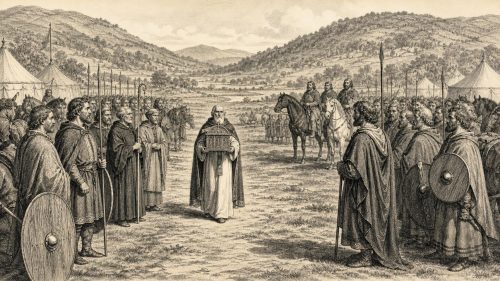
In 1113, Ireland was dominated by rivalry between Muirchertach Ua Briain of Munster and Domnall Ua Lochlainn of Ailech, whose coalitions threatened conflict. Domnall expelled Donnchad Ua hEochada and partitioned Ulaid, while Muirchertach mobilised Leinster and Connacht forces in response. On two occasions Cellach, successor of Patrick at Armagh, prevented battle, ultimately securing a year’s truce with the sacred Bachall Ísu. The events demonstrated Armagh’s ecclesiastical authority amid church reform. Local dynastic killings, cattle mortality, pilgrimage deaths on Croagh Patrick, and shrine-work at Clonmacnoise also reveal instability, devotion, economic vulnerability, and patronage. Neither overking prevailed before Muirchertach’s illness in 1114.
Read Article

Archived: 26 September 2026
Abstract
In 1112, rivalry between northern overking Domnall Ua Lochlainn and Munster’s Muirchertach Ua Briain shaped Irish politics. Domnall raided Fine Gall near Dublin, seizing cattle and captives, demonstrating northern power in a prosperous region. Armagh’s enclosure, church and neighbouring quarters burned on 23 March, amid implementation of diocesan reforms agreed at Ráith Bressail. Deaths included leading officers of Derry, Kildare and Clonfert, illustrating enduring ecclesiastical and dynastic institutions. Terryglass and Fore also suffered fires, while a local aristocrat was killed. Conversely, an abundant mast crop aided rural households and pig husbandry, underscoring countryside wealth vulnerable to warfare and disruption alike.
Read Article

Archived: 26 September 2026
Abstract
In 1109, rival Irish overkings Muirchertach Ua Briain and Domnall Ua Lochlainn mobilised major coalitions, while Murchad Ua Máel Sechlainn of Mide, allied to Ua Briain, raided Bréifne. The invaders seized cattle, captives and booty but failed to secure hostages; Aed Ua Ruairc retaliated, and Ardbraccan was burnt. Cellach of Armagh prevented confrontation between the principal armies at Sliab Fuait, arranging a one-year truce. Ua Lochlainn subsequently compelled Ulaid submission through hostages, amid continuing local feuds. Annals also note clerical deaths, church learning, severe weather, fasting, plentiful apples, crop-destroying mice, and vulnerability to warfare and environmental disruption throughout the island.
Read Article

Archived: 26 September 2026
Abstract
In 1108, Ireland remained divided among provincial overkings, lesser dynasties and Hiberno-Norse towns, despite peace between Muirchertach Ua Briain and Domnall Ua Lochlainn. Local conflict persisted: Niall Ua Lochlainn raided Corann, rulers were killed in Ulaid, Bréifne and elsewhere, and strongholds were attacked. Cellach of Armagh visited Connacht, collecting dues and extending Armagh’s primatial authority, while clerical disputes employed fasting and sacred sanctions. Lightning was blamed for Limerick’s fire, which spared its external market. Good weather, plentiful grain and oak-mast aided rural prosperity, yet storms, raids and killings exposed enduring insecurity. The year foreshadowed church reform amid fragmented, competitive power.
Read Article

Archived: 26 September 2026
Abstract
In 1106, Ireland’s annals reveal political and ecclesiastical change rather than a single decisive event. In Mide, Donnchad Ua Máel Sechlainn was killed after seeking Domnall Mac Lochlainn’s aid against Muirchertach Ua Briain, while Murchad son of Domnall became king. In Connacht, the young Tairdelbach Ua Conchobair succeeded his brother, beginning a long, influential reign. Cellach of Armagh toured northern and southern territories, collecting dues and receiving episcopal dignity, strengthening Armagh’s primacy and church reform. Recorded clerical deaths, violence at Clonmacnoise, and a fire at Dísert Diarmata illuminate monastic organisation, insecurity and material life, amid tribute, livestock and regional commerce.
Read Article

Archived: 26 September 2026
Abstract
In 1105, rivalry between Muirchertach Ua Briain of Munster and Domnall Ua Lochlainn of the north continued without decisive resolution. Muirchertach campaigned in Mide, expelled Donnchad Ua Máel Sechlainn, seized livestock, secured hostages and sought to reshape midland politics. Dynastic killings and deaths underlined regional instability. Armagh’s head, Domnall son of Amalgaid, attempted mediation in Dublin but died; his successor Cellach began an important, though gradual, reforming ecclesiastical leadership. Heavy snow devastated livestock, exposing rural vulnerability. Meanwhile, a camel from Alba, a huge fish near Limerick, and clerical notices reveal maritime links, economic activity and enduring learned religious communities alike.
Read Article

Archived: 26 September 2026
Abstract
In 1103, Ireland remained divided between Muirchertach Ua Briain, dominant in the south, and Domnall Ua Lochlainn of Ailech. Muirchertach led a coalition from several kingdoms, including Dublin, against the Ulaid and Domnall, but divided his forces after campaigning near Armagh. On 5 August Domnall defeated the remaining coalition at Mag Coba, killing regional kings and nobles and capturing royal insignia. The victory checked southern ambitions without ending Muirchertach’s power. Later that month Ulaid killed Norway’s King Magnus Barelegs, ending his Irish expansion. Annals also note churchmen, learning, scholarship, rural life, economies, Dublin trade, local conflicts, and a rare birth.
Read Article

Archived: 26 September 2026
Abstract
In 1099, Ireland remained politically divided as Muirchertach Ua Briain and Domnall Ua Lochlainn confronted one another at Sliabh Fuaid. Armagh brokered a year-long truce, preventing battle without resolving their rivalry. Domnall then defeated Ulaid at Cráeb Telcha, took hostages, burned its camp and felled its inauguration tree. Midland warfare killed Tethba leaders, while Airthir’s king died. A nationwide epidemic and fires at Kells, Kildare and Ardstraw compounded disruption. Church institutions continued through episcopal appointment and clerical deaths. Ireland’s communities and Dublin’s trade sustained wider Irish Sea connections, including Norse activity and Welsh exiles. The year combined restraint with violence.
Read Article

Archived: 26 September 2026
Abstract
In 1097, Muirchertach Ua Briain led a southern coalition to Mag Muirtheimne, where Domnall Ua Lochlainn’s northern army confronted it at Fid Conaill. Abbot Domnall of Armagh brokered an uneasy peace, demonstrating ecclesiastical influence without ending royal rivalry. Connacht suffered renewed instability after Tadc Ua Conchobair’s killing and Flaithbertach Ua Flaithbertaig’s contested restoration. Regional rulers died or were killed, while notable churchmen also died. Fire destroyed books and treasures at Monasterboice. Exceptionally abundant nuts fattened swine, lowered prices and supported food supplies. The annals thus depict political conflict, cultural loss, church diplomacy and rural economic abundance across late eleventh-century Ireland.
Read Article

Archived: 26 September 2026
Abstract
In 1094 Muirchertach Ua Briain, king of Munster, recovered influence across Ireland amid rivalry with Domnall Ua Lochlainn. After campaigning involving Dublin, Meath, Leinster and northern forces, he expelled Gofraid Méránach, probably Godred Crovan, from Dublin, securing its maritime wealth. Domnall Ua Máel Sechlainn of Meath was killed and Muirchertach divided Meath between dependent rivals. His authority nevertheless met limits: Connacht’s Síl Muiredaig defeated Munster-backed forces at Fidnach, and one expedition failed to obtain hostages. Armagh’s abbot visited Munster successfully, while violence, severe weather and scarcity compounded disruption. Dublin’s trade and crafts endured. The year redistributed power without unifying Ireland.
Read Article

Archived: 26 September 2026
Abstract
In 1092, Ruaidrí na Saide Buide Ua Conchobair, overking of Connacht, was treacherously blinded by rivals, enabling Muirchertach Ua Briain of Munster to claim supremacy, take hostages and manipulate local contenders. Muirchertach also campaigned in Leinster, while his brother Diarmait was exiled to Ulaid. Regional instability included Énna of Uí Chennselaig’s killing and Éoganacht deaths. Armagh’s church and settlement burned, while a Munster fleet plundered Clonmacnoise. Dublin remained under Gofraid Méránach. Raids devastated Mag Aí’s cattle, and severe winter frost followed. Divergent annals nevertheless portray authority as dependent on alliances, violence, hostages, wealth and unreliable regional obedience throughout medieval Ireland.
Read Article

Archived: 26 September 2026
Abstract
1091 Ireland remained divided among provincial dynasties, ecclesiastical centres and Hiberno-Norse towns, while Muirchertach Ua Briain of Munster and Domnall Ua Lochlainn of Ailech contested supremacy. Muirchertach raided Meath and the midlands, but Connacht attacked Munster and Dublin passed to Gofraid son of Mac Arailt, strengthening Irish Sea power. In Leinster, Énna killed rival Murchad. Domnall defeated and killed Donn Sléibe Ua hEochada of Ulaid, consolidating northern dominance. Armagh suffered a major fire, then Máel Ísu died and Domnall grandson of Amalgaid succeeded him. Treacherous killings reflected political insecurity, although favourable weather produced abundance, sustaining rural and urban communities alike.
Read Article

Archived: 26 September 2026
Abstract
Ireland in 1080 comprised competing overkingships, powerful churches and Hiberno-Norse towns rather than a unified state. Tairdelbach Ua Briain of Munster demonstrated negotiated supremacy through a hosting in Leinster and Mide, taking Máel Sechnaill to Limerick, while his son Diarmait raided Wales. Donn Sléibe Ua hEochada regained Ulaid and sought hire in Munster, illustrating mobile paid alliances. Warfare killed rulers around Sliab Fuait, Clogher and Uí Fhailge, where raiders were defeated near church land. Ua Cinn Fhaelad of Déisi undertook pilgrimage to Jerusalem; Cellach of Armagh was born. Annals reveal rural production, maritime exchange, ecclesiastical influence and uneven regional perspectives.
Read Article

Archived: 26 September 2026
Abstract
In 1074, Ireland’s annals emphasised ecclesiastical affairs, dynastic violence and unstable political authority rather than major warfare. Tairdelbach Ua Briain maintained an expanding, but negotiable, supremacy over Munster, Leinster, Dublin and other regions following earlier campaigns. Donnchad Ua Cellaig of Uí Maine and Ragnall Ua Madadáin, heir of Ailech, were killed amid succession struggles. On 6 May, fire devastated Armagh’s churches, bells and settlement divisions. After Bishop Dúnán’s death, Dublin sent Gilla Pátraic to Canterbury, where Lanfranc consecrated him and received his obedience. Clerical deaths across Ireland reveal interconnected churches whose religious, economic and social roles sustained wider local communities.
Read Article

Archived: 26 September 2026
Abstract
In 1068, Irish annals portray Tairdelbach Ua Briain’s growing ascendancy amid fragmented regional kingship. His rival cousin Murchad Ua Briain was killed during a raid in Tethba, strengthening Tairdelbach’s control of Munster. An ordinance credited to him promised security sufficient for livestock to remain unprotected at night. Visiting Leinster, he acquired Brian Bóruma’s sword and a Saxon royal standard from Diarmait mac Maíl na mBó, reflecting dynastic and Irish Sea politics linked to English exiles. Northern rulers died violently, while Armagh’s successor successfully visited Munster. Church deaths, Clonfert’s disruption, trade, farming and manuscript culture reveal political, ecclesiastical and maritime networks.
Read Article

Archived: 26 September 2026
Abstract
In 1064, annalists recorded a redistribution of power in Ireland. Donnchad mac Briain, son of Brian Bóruma, was deposed from Munster, travelled penitentially to Rome and died there. His nephew Toirdelbach Ua Briain, backed by foster-father Diarmait mac Máel na mBó of Leinster, secured kingship through campaigns, hostage-taking and cattle raids against southern rivals. Diarmait’s authority embraced Dublin and Irish Sea connections following Echmarcach mac Ragnaill’s death. Northern dynastic deaths affected Telach Óc and Ailech, while Armagh lost its successor of Patrick, Dub dá Leithe. Clerical and scholarly deaths underline the year’s cultural change, while warfare inflicted hardship without unity.
Read Article

Archived: 26 September 2026
Abstract
In 1047, Ireland endured exceptional winter weather, remembered as the Great Snow, which persisted into March and killed people, livestock and wildlife. Resulting scarcity devastated Ulster, prompting hungry Ulaid groups to seek refuge in Leinster. Political conflict continued: Áed Ua Conchobair killed Niall Ua Ruairc in Corann, strengthening his Connacht kingship amid a longer dynastic feud; northern forces raided Brega; and Muirchertach of Uí Bresail was treacherously slain at Armagh. Ecclesiastical obits recorded leaders, lectors and a Kildare female coarb, while a bishop died on pilgrimage at Iona. The year clearly reveals regional rule, warfare, religious networks and rural vulnerability.
Read Article

Archived: 26 September 2026
Abstract
In 1041, Ireland remained politically fragmented despite Donnchad mac Briain’s claims to wider kingship. Leinster’s struggle between Murchad mac Dúnlainge and Uí Chennselaig brought raids, the death of Domnall Remur, Ferns’s burning, and Diarmait mac Maíl na mBó’s devastating retaliatory attack on Glenn Uisen. Rivalries also produced blinding, killings and sanctuary violations at Timahoe and Kildare, while assassinations, raids and battles disturbed Osraige, northern regions and Munster. Annals also record learned churchmen’s deaths, ecclesiastical organisation and church-building. Cattle raiding underpinned warfare and wealth, although farming, commerce and learning continued. The selective record portrays violence alongside resilient institutions, foreshadowing Diarmait’s dominance.
Read Article
Archived: 26 September 2026
Abstract
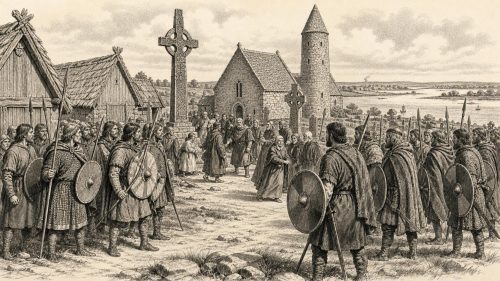
During 1038, Ireland remained fragmented, with rival dynasties contesting kingship, territory and influence. Local violence reached ecclesiastical centres: Orc Allaid Ua Ruadacáin was killed at Armagh by Clann Sínaig; Delbna defeated Uí Maine at Clonmacnoise during Ciarán’s feast; and Conchobar Ua Máelshechlainn’s Gailenga plundered Clonard. Killings, imprisonment and succession disputes affected Mide, Munster, Donegal and Dublin, where Ímar replaced Echmarcach. Rathlin was raided by Norse or Hiberno-Norse forces. Church obituaries reveal institutional networks and pilgrimage to Rome. Annals also note abundant fruit while stressing chronological uncertainty. Sacred settlements, central to worship, learning and economic life, proved vulnerable to regional feuds.
Read Article

Archived: 26 September 2026
Abstract
In 1020, Ireland remained politically fragmented after Clontarf. Máel Sechnaill mac Domnaill led a coalition including Uí Néill, Donnchad mac Briain and Art Ua Ruairc to the Shannon, receiving Connacht hostages and asserting overkingship. Northern and eastern lesser kingdoms experienced blinding, killings and rapid succession disputes. Fires devastated Kildare, Glendalough, Clonard, Clonmacnoise, Swords and Armagh, damaging churches, treasures and settlement districts. Armagh’s blaze then preceded Máel Muire’s death and Amalgaid’s installation as Patrick’s successor; Patrick’s shrine and bell were also plundered. Annals additionally commemorate learned clerics, revealing churches as centres of wealth, scholarship, authority and vulnerability amid violent political competition.
Read Article

Archived: 26 September 2026
Abstract
In 1012, Brian Bórama’s high-kingship remained powerful yet required constant military, religious and material reinforcement. Northern rulers Flaithbertach Ua Néill and Máel Sechnaill raided rival territories, burning centres and seizing cattle, captives and plunder, while succession fighting continued in Ulaid. Brian campaigned in Mag Muirtheimne, granting immunity to Patrick’s churches, and fortified Cenn Corad and other strategic sites. Armagh suffered a prolonged sickness that killed clergy, students and others. Heavy rainfall damaged cereal crops, worsening pressures on communities already exposed to armies. The annals portray rivalry, fragile overlordship and hardship, anticipating the crises that culminated at Clontarf two years later.
Read Article

Archived: 26 September 2026
Abstract
In 1011, Brian Bórama’s supremacy reached the north-west through a major campaign against Cenél Conaill. Forces led by Brian and his sons, allied with Flaithbertach Ua Néill and other rulers, raided, seized cattle and captives, and compelled Máel Ruanaid Ua Máel Doraid to submit at Cenn Corad. The events demonstrated both Brian’s wide influence and the negotiated, competitive character of Irish over-kingship. Máel Sechnaill remained within Brian’s political order, while Ulster’s dynastic conflicts continued. Deaths among royal heirs and prominent churchmen, illness near Armagh, and a plentiful nut harvest reveal a society shaped by warfare, ecclesiastical learning, disease, and resources.
Read Article

Archived: 26 September 2026
Abstract
In 1010 Brian Bóruma reinforced his contested supremacy by leading Munster forces north to Armagh and securing hostages from the northern Uí Néill, Ulaid and wider Leth Cuinn. The campaign demonstrated that overlordship required repeated negotiation, military display and guarantees. Connacht’s king Cathal mac Conchobair died penitently, while lesser rulers, an Ailech heir and other political figures also died or were killed. Church losses included Brian’s brother Marcán, senior cleric of Munster, Clonmacnoise bishop Conaing, and scholar-king Máel Suthain ua Cerbaill. An abbot suffered blinding. Annals also recorded a hot summer and fruitful autumn, underscoring rural resources sustaining political power.
Read Article


