
Archived: 10 October 2026
Abstract
In 1871, Ireland experienced constitutional, demographic, agrarian and civic change. The Church of Ireland was disestablished, ending its privileged state position while preserving it as a self-governing voluntary body. The census recorded 5,412,377 people, confirming continuing post-Famine decline and emigration, alongside Belfast’s industrial growth. Land reform under the 1870 Act offered limited tenant protections, but agrarian violence prompted the coercive Westmeath Act, permitting detention without trial in proclaimed districts. Isaac Butt’s election for Limerick advanced constitutional home government. Belfast opened Ormeau Park, while expanding national education and Trinity’s academic life highlighted uneven access, religious tensions and unresolved inequalities across Ireland.
Read Article

Archived: 11 October 2026
Abstract
In 1832, Ireland experienced reform, conflict and epidemic crisis. Glasnevin Cemetery opened in February as Daniel O’Connell’s inclusive burial project, its first interment an eleven-year-old Dublin boy. Cholera soon spread from Belfast to Dublin and other towns, killing perhaps 25,000 people and exposing poor sanitation, inadequate institutions and improvised medical and burial provision. Local boards of health organised contested responses. Meanwhile, resistance to Church of Ireland tithes continued despite government relief and enforcement measures. Parliamentary reform revised constituencies and increased representation but retained a property-based franchise. Debates over national education and restrictions on partisan processions reflected religious and political tensions.
Read Article
Archived: 11 October 2026
Abstract
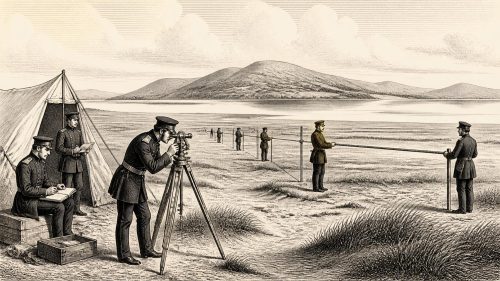
In 1827, Ireland remained politically unsettled as Catholic emancipation was debated but denied, despite petitions, Daniel O’Connell’s New Catholic Association and concern for vulnerable forty-shilling freeholders. The Petty Sessions Act regularised magistrates’ courts, while Beggars Bush Barracks reflected the state’s military reach. Fever, drought and harvest uncertainty exposed rural precarity. Religious controversy appeared in Dublin’s Maguire–Pope debate, alongside Franciscan restorations and Catherine McAuley’s lay House of Mercy. Ordnance Surveyors began the Lough Foyle baseline, initiating systematic mapping. In Callan, Amhlaoibh Ó Súilleabháin commenced his Irish-language diary, recording everyday life and cultural continuity amid administrative, religious and social change during 1827.
Read Article
Archived: 18 October 2026
Abstract
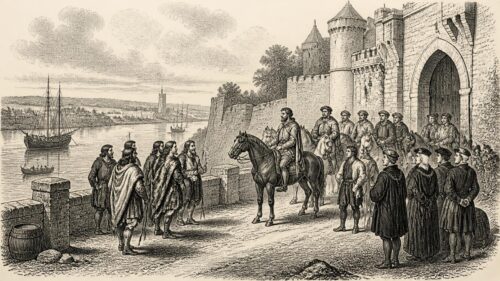
In 1549, Tudor authority in Ireland rested on negotiation, military pressure and limited resources. William Brabazon replaced Edward Bellingham as lord justice and held a major court at Limerick, where regional lords accepted a contingent peace secured by civic and aristocratic guarantees. Conflict continued across the midlands and west through castle seizures, raids, killings and disputed successions within Gaelic kindreds. Gunpowder caused Dermot O’Sullivan’s death, illustrating changing warfare. French envoys explored an Ulster alliance through Lough Foyle but found Gaelic divisions. Religious reform remained uneven, while local lordship, kinship and control of land shaped daily political realities beyond royal centres.
Read Article
Archived: 21 October 2026
Abstract
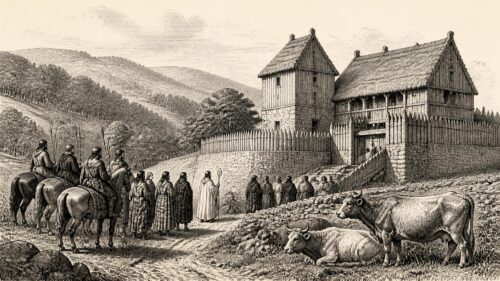
In 1417, the death of Art Mac Murchadha, king of Leinster, ended the career of a Gaelic ruler who had challenged English authority through warfare, negotiation and cross-community alliances. Annals disagree over the date and alleged poisoning, but emphasise his piety, hospitality and power; his son Donnchadh succeeded amid uncertainty after Diarmait Red-hand also died. Elsewhere, John Talbot’s cattle raid demonstrated uneven royal reach. Connacht saw Ruaidhrí Ó Dubhda’s succession, drownings, kin conflicts and hostage settlements. Burnings, killings and ecclesiastical involvement reveal pervasive local violence. Annalistic records also stress penitent deaths, kinship, burial and generosity, showing a fragmented Irish authority.
Read Article
Archived: 21 October 2026
Abstract
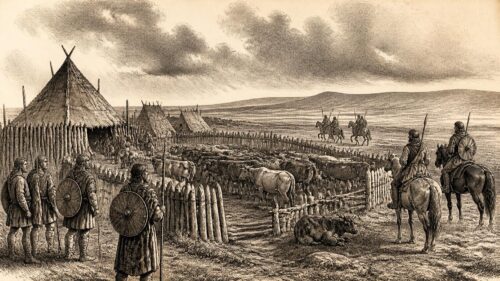
In 1397, Irish politics centred on rival lordships, notably Connacht’s struggle between Ó Conchobhair Donn and Ó Conchobhair Ruadh. Mac Donnchadha’s cattle-bearing camp at Cenn-eitigh was surprised and destroyed in mid-August, prompting retaliatory raids, new alliances and further gallowglass warfare. Conflict devastated crops, houses and herds amid summer food scarcity and a wet, destructive autumn. In Ulster, Niall Mór Ó Néill died and was succeeded by Niall Óg, who inherited continuing struggles. Roger Mortimer sought authority in Leinster and the midlands, building Finnea castle. Ecclesiastical deaths and journeys to Rome reflected enduring religious connections despite widespread instability across the island.
Read Article

Archived: 26 September 2026
Abstract
Irish annals portray 1214 as a period of contested lordship rather than national unity. Anglo-Norman castles at Clonmacnoise and Durrow provoked Cormac Ó Máel Sechlainn’s raids, involving cattle seizure, burning and attacks on church resources. Ualgarg Ó Ruairc raided settler-held Carbury, while deaths among Connacht lords and churchmen marked shifting local authority. Ulster records, though chronologically disputed, describe plunder at Derry, castle-building at Coleraine, resistance to settlers and destruction at Carlingford. Ecclesiastical communities remained influential yet vulnerable. Dublin received authority for commercial infrastructure. King John’s papal settlement formally included Ireland, but did not establish uniform control over its competing regions.
Read Article

Archived: 26 September 2026
Abstract
In 1187, Ireland remained politically divided between Gaelic kingdoms and Anglo-Norman lordships, whose frontier was weakened after Hugh de Lacy’s death. Conchobar Máenmaige Ua Conchobair and Máel Sechlainn Bec destroyed Killare castle in western Meath, gaining arms and challenging colonial expansion. Northern dynastic warfare included Ruaidrí Ua Flaithbertaig’s death and reprisals after Drumcliff’s plunder by a mixed Gaelic-Norman force. Lightning or fire devastated the Rock of Lough Key, killing many inhabitants and straining Moylurg’s ruling family during succession. Churchmen, scholars and monastic foundations reflected reform and regional connections, while trade, agriculture and cross-cultural alliances shaped life amid conflict and recovery.
Read Article

Archived: 26 September 2026
Abstract
In 1184, Ireland remained divided between Anglo-Norman lordships, Irish kings and Henry II’s limited royal administration. Philip of Worcester replaced Hugh de Lacy as governor, signalling efforts to prepare John’s projected lordship and restrain de Lacy’s power. In western Meath, Art Ua Máelshechlainn was murdered amid settler interference, and his successor joined Conchobar Máenmaige in destroying a settler castle, while another rose at Killare. Ruaidrí Ua Conchobair and Conchobar fought for Connacht. Meath settlers plundered Armagh, whose leadership was disputed. Assaroe received patronage, Clones burned, and castles, warfare and changing lordship burdened rural communities in an increasingly unstable frontier landscape.
Read Article

Archived: 26 September 2026
Abstract
In 1022, the death of Máel Sechnaill mac Domnaill, king of Mide and foremost post-Clontarf claimant to Ireland’s high-kingship, exposed the weakness of island-wide authority. He died at Cró Inis on Lough Ennell, honoured by churches and remembered for royal generosity, though later accounts elaborate his final rites. His loss, following the death of his heir in 1021, intensified succession disputes. Warfare continued: Waterford’s Sitriuc was killed, Ulaid defeated Dublin at sea and attacked Airgialla, while regional rulers and heirs fell. Kildare was plundered, churchmen and poets died, and Irish kingship, trade, maritime power and ecclesiastical wealth remained closely intertwined.
Read Article

