Membership is completely free, giving members unlimited access to all available resources, services, features, and benefits without any restrictions or fees.
Welcome back. Sign in to continue enjoying unlimited access to all available resources, services, features, and member benefits at no cost.
The year opened with official concern about food. On 12 January, the Irish administration prohibited grain exports from Ulster ports; on 29 March the restriction was extended to Leinster. A further proclamation of 18 June prohibited the exportation of corn more generally. Such orders are important evidence of pressure on supplies, but they should not be inflated into proof of an island-wide famine comparable with later Irish catastrophes. They do show that officials feared scarcity and high prices, particularly after large quantities of corn and meal had moved through northern Ireland towards famine-stricken Scotland during the preceding winter.
The most consequential firmly dated business of 1694 concerned the settlement promised after the war. On 16 February a proclamation gave directions to the Commissioners for Forfeitures. On 23 May another announced that claims to the benefit of the Articles of Galway and Limerick would begin to be heard on 11 June. These notices did not themselves decide ownership. Their importance lay in bringing individuals into a formal process through which estates, goods and legal protections could be claimed, challenged and defined.
Government itself was unsettled. Henry Sydney, Viscount Sydney, had been lord lieutenant since 1692. In March 1693 the English House of Commons addressed William III about alleged mismanagement in Ireland. The complaint belonged to a wider political struggle over patronage, revenue, military appointments and the handling of former Jacobites after the war. It should not be mistaken for a neutral verdict on Irish conditions: it was an intervention by English parliamentarians, many of whom were suspicious that the Irish administration had been too accommodating towards Catholics and insufficiently protective of Protestant interests.
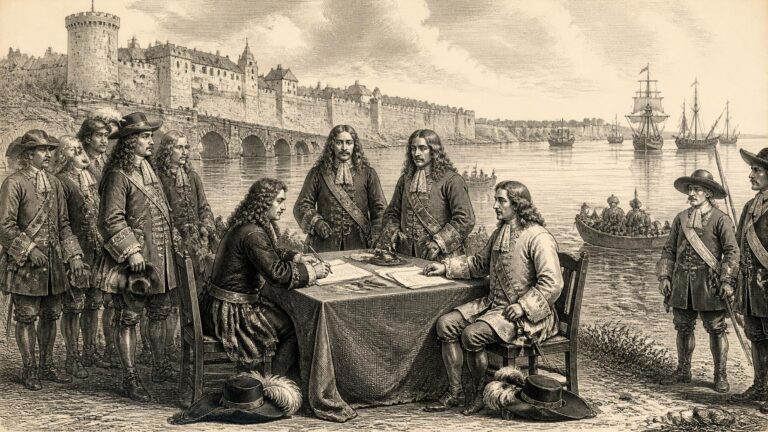
The immediate business of government was implementing the surrender terms agreed at Limerick on 3 October 1691. On 24 February 1692 William and Mary ratified the civil and military articles by letters patent under the Great Seal of England. This was a significant guarantee, but not a simple declaration of general toleration. The civil articles named particular groups—inhabitants of Limerick and other Jacobite garrisons, officers and soldiers, and people in specified western and southern counties—who submitted to the new sovereigns. Within their stated conditions, they were promised the estates, rights and privileges they had lawfully possessed under Charles II, and relief from specified arrears accumulated since Michaelmas 1688.
The campaigning season opened with the Jacobites holding the principal crossings and towns west of the Shannon. Their cause remained part of the wider Nine Years’ War: William III’s coalition was fighting Louis XIV across Europe, while French officers, equipment and hopes of relief linked the Irish theatre to continental strategy. The arrival at Limerick in May of the French lieutenant-general Charles Chalmont, marquis de Saint-Ruth, brought weapons and supplies but neither the money nor the additional troops that the hard-pressed Jacobites wanted. He found an army whose morale and material condition were poor after the previous winter.