
Year by Year
Explore Year by Year articles from the most modern historical year back to the oldest.
3,295 Articles Archived
Muirgius's Death
Archived: 29 October 2026
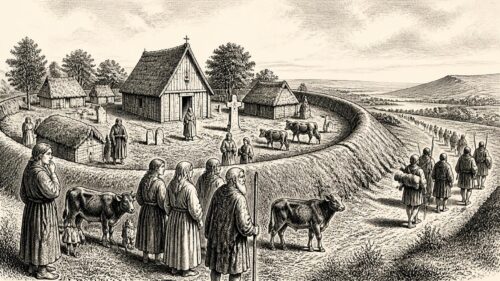
In 815, Irish annals recorded deaths, killings and the plunder of Cluain Creamha, revealing political and ecclesiastical vulnerability. Muirgius son of Tomaltach, dominant Uí Briúin overking of Connacht, died, ending a reign amid rivalries. Men of Bréifne and Síl Cathail attacked Cluain Creamha, killing people and despoiling an ecclesiastical community. Southern Brega lost kings Conall son of Niall and Fócarta son of Cernach. After Cenél Conaill killed his brother Colmán, Áed Oirdnide campaigned northwards. Annals also note deaths of churchmen at Cell Moinne, Lugmad and Iona, while no Viking raid is explicitly recorded for Ireland in the surviving annalistic sources.
Ciarán’s Law
Archived: 29 October 2026
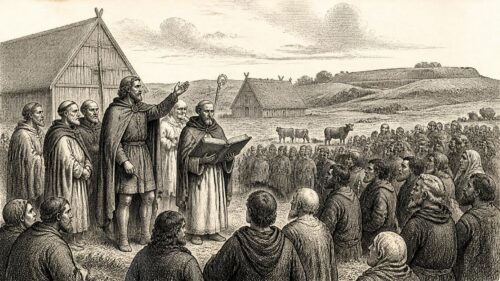
In 814, Muirgius son of Tommaltach, overking of Connacht, and Fairchellach, abbot of Clonmacnoise, campaigned through Uí Maine, killing many people described as innocents. Muirgius later promulgated Ciarán’s law at Cruachain, demonstrating cooperation between royal and ecclesiastical power. In Leinster, the sons of Bran defeated Uí Chennselaig. At Kells, completion of a Columban church preceded Iona abbot Cellach’s resignation and Diarmait’s appointment. Deaths included bishops, abbots, scribes and teachers, notably Fairchellach and the murdered Bishop Máel Dúin. Annals also recorded great distress and severe illnesses, without identifying their cause, revealing interconnected warfare, religious authority, construction, learning and hardship across Ireland.
Umall Raid
Archived: 29 October 2026
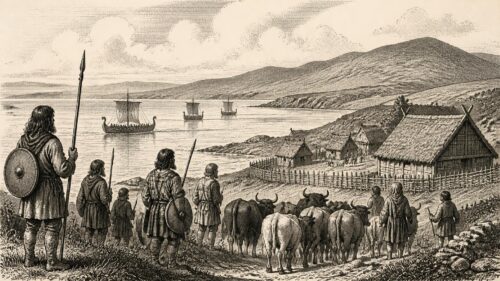
In 813, Dúnadach, king of Umall in modern County Mayo, and Coscrach son of Flannabra were killed when heathen seaborne raiders defeated local forces. The annals provide no details of the battle, loot, or lasting conquest, but place it amid western coastal fighting following Irish resistance in 812. The year also saw Daire’s law promulgated among the Uí Néill, probably protecting cattle, a vital economic resource. Obituaries for rulers and church leaders illustrate dispersed political and ecclesiastical authority. These events depict Ireland as a landscape of vulnerable coasts, regional kingdoms, valuable herds and religious communities, rather than a unified state.
Daire’s Law
Archived: 29 October 2026
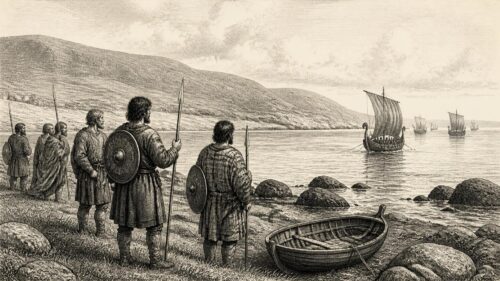
In 812, Irish communities faced Scandinavian raids along the western and south-western coasts. Men of Umall killed raiders, while heathens slaughtered Conmaicne; Cobthach, king of Loch Léin, also defeated a raiding party in Munster. These local successes did not end the threat, as later attacks showed. In Connacht, Muirgius son of Tomaltach plundered southern territories amid Uí Briúin expansion, while the Calraige of Lurg were slaughtered by the Uí Briúin. Daire’s law was promulgated in Connacht, reflecting ecclesiastical and political networks. Deaths of prominent church leaders emphasised churches’ administrative, scholarly and social importance throughout Ireland during an unsettled historical year.
Muirgius’s Hosting
Archived: 30 October 2026
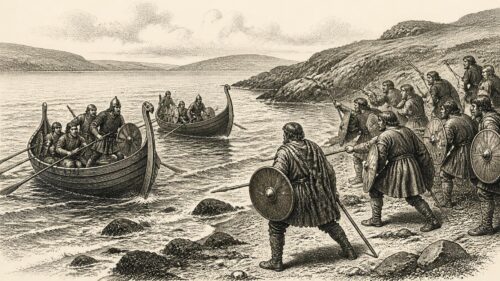
In 811, annalistic evidence records Scandinavian raiding and Irish political religious activity across Ireland. Men of Umall killed raiders, while Scandinavians defeated the Conmaicne; Cobthach of Loch Léin likewise slew raiders in Munster. These mobile incursions brought no proven permanent settlement. Muirgius son of Tomaltach, king of Connacht, led a southern hosting, though its destination and outcome remain unknown. Daire's law was promulgated in Connacht, demonstrating ecclesiastical and secular cooperation. Deaths of prominent abbots, bishops and regional kings highlighted interconnected religious institutions and fragmented political authority. The year reveals local resistance, royal ambition, church privilege, and pressures on coastal communities.
Tailtiu Disruption
Archived: 30 October 2026
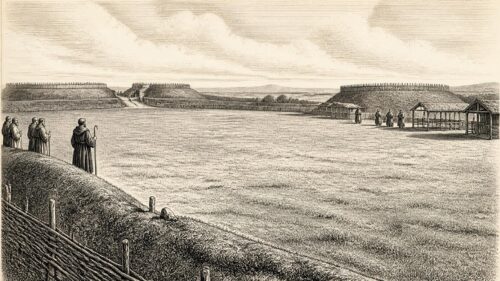
In 810, Tallaght’s monastic community prevented the royal fair at Tailtiu after the Uí Néill violated its sanctuary, leaving the assembly devoid of expected horses and chariots. Subsequent gifts to Tamlacht indicate public redress and demonstrate ecclesiastical leverage over Áed son of Niall’s kingship. Nuadu, abbot of Armagh, carried Patrick’s law and a casket to Connacht, extending Patrician claims without recorded outcome. The Ulaid defeated Scandinavian raiders, the first surviving annalistic Irish victory, though details remain unknown. Death notices recall monastic and aristocratic life, while the disrupted fair depended upon agricultural surplus and rural exchange across early medieval Irish society.
Luigni Retribution
Archived: 30 October 2026
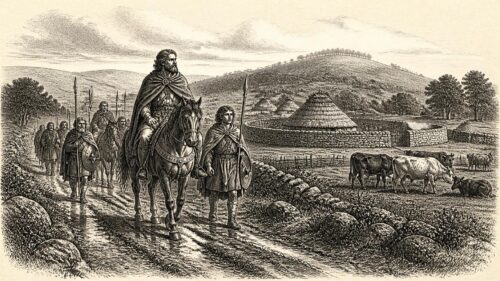
In 809, Muirgius, Uí Briúin overking of Connacht, devastated the Luigni after they killed his sons Tadc and Flaithnia, demonstrating how dynastic loss prompted collective military punishment. The episode reflected Connacht’s fragmented politics, where alliances, kinship and armed followings underpinned authority. Annals also record deaths of regional kings, churchmen and officials, highlighting unstable personal networks of power. Notices concerning Glendalough and Lorrha indicate ecclesiastical leadership changes, though sources disagree on names and chronology. Rural communities sustained kings and churches through cattle, grain and labour, while warfare endangered livelihoods. No securely dated Viking raid is recorded anywhere for Ireland that year.
Tailtiu Challenge
Archived: 30 October 2026
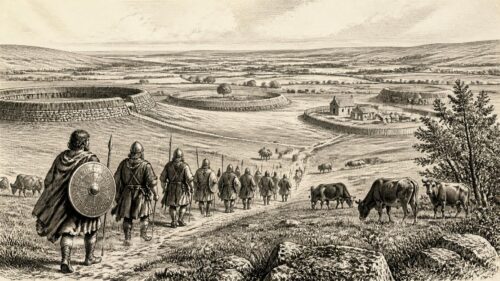
Conventionally dated to 808, the annals record a short-lived Connacht–Mide challenge to Áed Oirdnide, king of Tara. Led by Conchobar of Mide with Muirgius of Connacht’s support, a force occupied Tír ind Aenaig near Tailtiu for three nights before retreating; Áed retaliated by burning Mide’s borders. The episode illustrates contested kingship, strategic assembly sites and coercion through agricultural devastation. Other notices record the death at Kildare of the deposed Leinster king Fínnechta, and deaths of leading churchmen at Armagh, Linn Duachail and Cell Achaid. They also note Cinaed’s killing in Mag Cobo, thus revealing local violence alongside wider political rivalry.
Kells Foundation
Archived: 30 October 2026
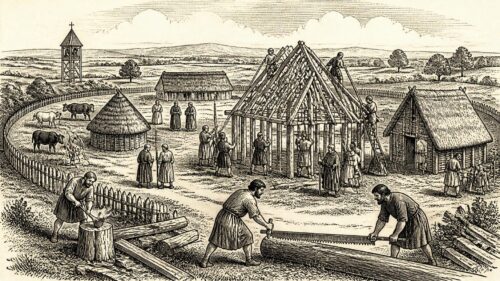
In 807, annalistic sources record the construction of a new Columban monastery at Cenannas, later Kells, probably strengthening Iona’s Irish connections after attacks on its community. Raiders described as gentiles burned Inis Muiredaig and attacked another site, possibly coastal Roscam, demonstrating monastic vulnerability to seaborne violence. Conflict also erupted between Cork and Clonfert, causing heavy losses among ecclesiastics. Deaths included Armagh’s abbot Connmach, regional rulers Artgal and Murchad, and the anchorite-scribe Elarius. Killings in Airthir and Kintyre underline political instability. Under Áed Oirdnide’s overlordship, Ireland remained fragmented. A blood-red moon was also noted, while chronology differs among annals in transmission.
Iona Massacre
Archived: 30 October 2026
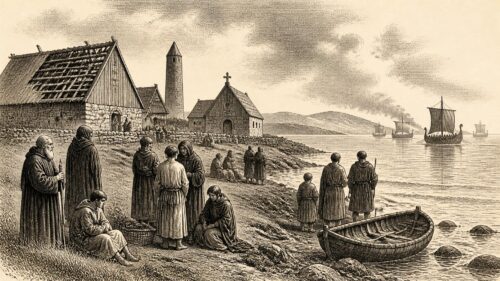
In 806, though annalistic dating varies, Ireland experienced pestilence, political upheaval, ecclesiastical losses and attacks on religious sites. A great mortality was recorded alongside abundant woodland mast, without identifying the disease. Áed Oirdnide promulgated Patrick’s law, reinforcing links between royal authority and Armagh, while Fínshnechtae regained Leinster and Flaithnia of Uí Fhailgi was killed. Leading churchmen died, and Tír dá Glas was burned for unknown reasons. Most notably, pagan seaborne raiders killed sixty-eight members of Iona’s Columban community. The massacre exposed monasteries’ maritime vulnerability, although Iona and its Irish-connected Columban network survived and remained influential throughout the Irish Sea world.
Some records do not yet have a verified historical year and are awaiting chronological placement.