
Year by Year
Explore Year by Year articles from the most modern historical year back to the oldest.
3,305 Articles Archived
Connacht Accession
Archived: 1 November 2026
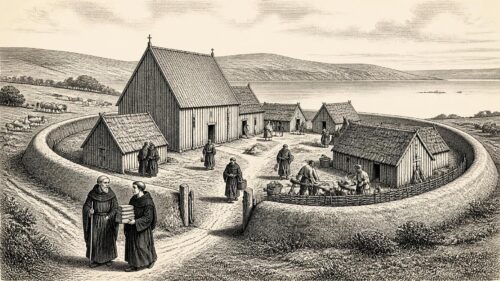
In 705 CE, Ireland’s surviving annalistic record presents a small but unusually revealing cluster of deaths, violence and political change. The notices are terse: the abbot Cenn Faelad of Bangor died; a battle was fought in Corcu Modruad, where Céilechair son of Comán fell; Cellach son of Rogallach, king of Connacht, died after entering clerical life; Conamail son of Canu was killed; and Congal Cenn Magair, son of Fergus of Fána, “begins to reign”. No contemporary narrative tells how these events unfolded. Yet, read alongside the preceding and following annals, they illuminate an Ireland in which monasteries, dynasties and local peoples were deeply entangled.
Adomnán's Death
Archived: 1 November 2026
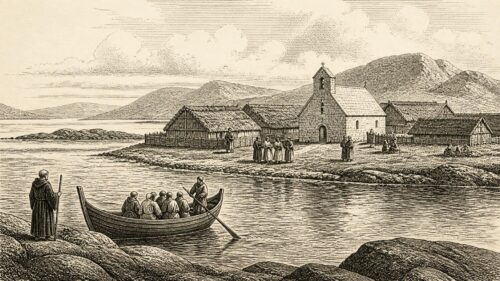
In 704, Ireland witnessed major political reversals and the death of Adomnán, abbot of Iona. On 12 July, Cellach mac Rogallaig of Connacht defeated and killed Loingsech mac Óengusso, king of Tara, with three sons, at Corann; Congal Cennmagair succeeded him. Later, Cellach Cualann of Leinster repelled a southern Uí Néill force at Clóenad, while instability affected neighbouring dynasties. Annals also note Dál Riata's destruction at Glen Leven. Adomnán died on 23 September, leaving widely influential writings, diplomatic achievements and Cáin Adomnáin. These events reveal interconnected Irish, Scottish and Northumbrian worlds, though annalistic dating remains uncertain and their social consequences.
Corann Battle
Archived: 1 November 2026
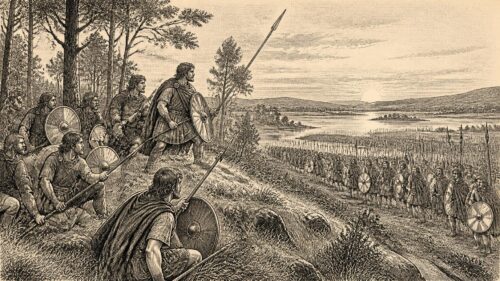
In 703, Connacht defeated an invading northern Uí Néill coalition at Corann or Claenfhinn, killing Loingsech son of Óengus, styled king of Ireland, his three sons and numerous allied rulers. The battle, probably in south-central Sligo, checked Loingsech’s claim to wider supremacy and preserved Connacht’s autonomy under Cellach son of Rogallach. Annals also record the Ulaid’s victory over Britons at Mag Cuilinn, though details remain uncertain. Colmán, abbot of Lismore, died, while notices mention Ailén Daingen’s construction and Rithe’s siege. These events reveal a rural, contested Ireland where kings, churches and fortified communities managed warfare, resources, mobility and insecure authority.
Írgalach's Death
Archived: 1 November 2026
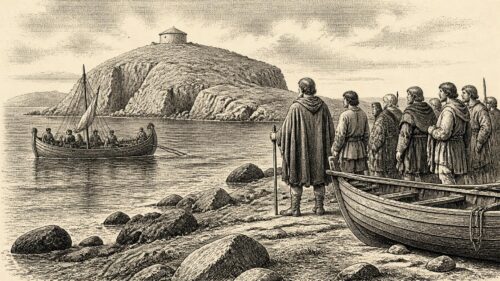
In 702, although annalistic dating varies between 701 and 702, Irish records note political and ecclesiastical deaths. Muiredach Muillethan, king of Connacht and ancestor of Síl Muiredaig, died, potentially affecting regional succession. Írgalach of Brega, grandson of Conaing, was killed by Britons at Inis Mac Nesáin, modern Ireland’s Eye, demonstrating dangerous Irish Sea connections without proving an invasion. Faeldobar of Clogher, other kings, an abbot and scholars also died. These notices reveal interdependence between rulers, churches and learning. Most people remained unrecorded, sustaining rural communities whose labour, farming, tribute and seaborne travel underpinned early medieval Irish society amid dynastic instability.
Írgalach's Killing
Archived: 1 November 2026
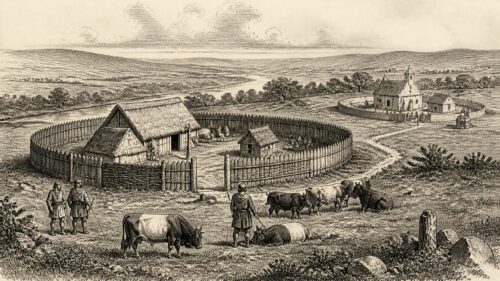
In 701, Niall son of Cernach was killed at the uncertain site of Drumain Ua Casáin by Írgalach, intensifying rivalry between branches of the southern Uí Néill in Brega. Later Columban tradition portrayed the killing as a violation of sanctuary linked to Kells and Írgalach’s death as retribution, though contemporary annals give no details. The year also recorded cattle mortality, threatening wealth, food production, tribute and rural livelihoods. In Munster, Ailill, king of Mumu, and Conall of Uí Fidgente died, prompting uncertain political transitions. Colmán ua hOrc, abbot of Clonard, also died, highlighting ecclesiastical institutions’ religious, economic and political influence.
Livestock Pestilence
Archived: 1 November 2026
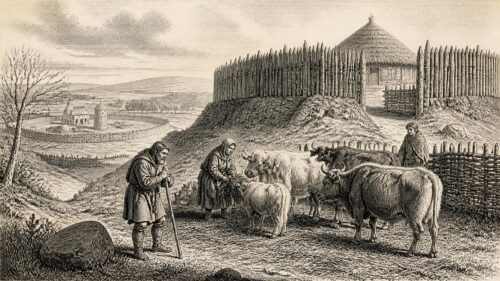
In 700, Irish annals recorded a cattle mortality beginning on 1 February at Mag Trega in Tethba, an event of major significance in a rural economy dependent on livestock for food, labour, wealth and tribute. Sources differ slightly in chronology and detail, but associate the outbreak with Ireland-wide loss and memories of famine and pestilence. Chronicon Scotorum also reports exceptional frost, without proving a causal link. Political instability continued: Fiannamail of Dál Riata was killed and Aurthuile of Cenél nÉogain expelled to Britain. Ecclesiastical institutions remained influential, while later narratives framed crisis through Christian ideas of protection, providence and judgement.
Colmán's Obituary
Archived: 1 November 2026
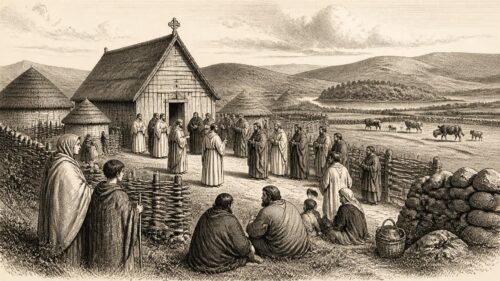
In 699, the Annals of the Four Masters record the death on 30 March of Colmán of Linn Ua Chaille, though his office remains unknown. They also assign deaths of Ailill, king of Munster, and Conall of Uí Fhidgeinte, and Írgalach’s killing of Niall Ua Cernach in Brega. Parallel annals date these political events shortly later, demonstrating chronological divergence in transmitted records. The notices illuminate ecclesiastical commemoration, unstable dynastic authority and aristocratic violence. Set after the synod of Birr, they also evoke a rural society where churches, kinship, cattle, agricultural production and local kingship shaped everyday life and political power.
Tarachin's Journey
Archived: 1 November 2026
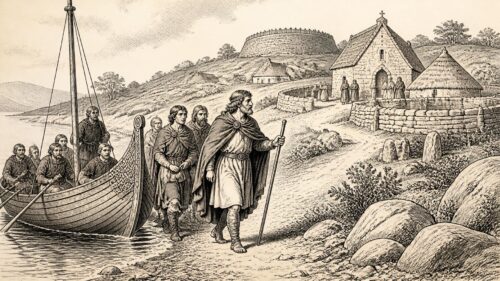
In 698, Irish annals record Tarachin’s journey to Ireland and an unexplained battle associated with Fiannamail son of Oiséne. Chronological variation requires caution: Tarachin may have been connected with the deposed Pictish ruler Taran, but neither identity nor motives are certain. His crossing nevertheless illustrates Ireland’s maritime links with Dál Riata, Pictland and western Britain, and its potential role as refuge for displaced elites. Fiannamail’s battle reflects localised violence within a fragmented political landscape under Loingsech’s influence. Churches, rural production and literate communities supported authority and preserved selective memories. Ireland was connected, decentralised, and politically active, not unified or isolated.
Cáin Adomnáin
Archived: 1 November 2026
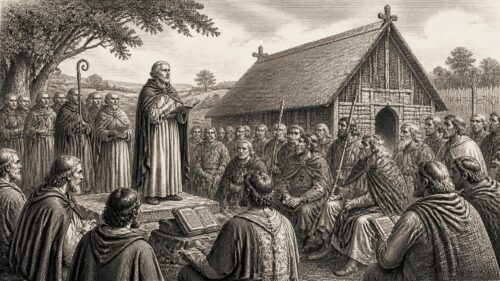
In 697, Adomnán of Iona promulgated the Cáin Adomnáin, or Law of Innocents, at the Synod of Birr. The law sought to restrain warfare by protecting women, children, clerics, churches and other non-combatants from killing, injury, sexual violence and seizure. It relied on compensation, religious penalties and the guarantees of rulers and churchmen, including figures from Ireland, Dál Riata, Pictland and Northumbria. Although Ireland remained politically divided and conflict continued, the law represented a major effort to impose moral and legal limits on violence. Its later renewal suggests that enforcement required continuing support.
Lóchéne Menn
Archived: 1 November 2026
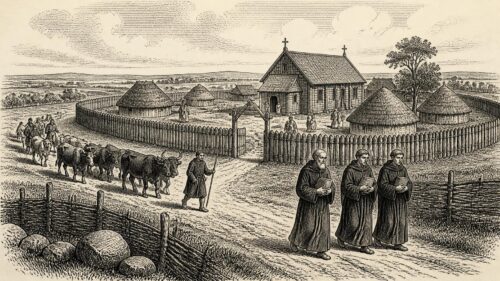
In 696, Irish annals recorded the deaths of several prominent rulers and the killings of Lóchéne Menn, learned abbot of Kildare, and Domnall son of Conall Crandomna. Finguine, king of Munster, died, while Fergal of Aidhne’s death coincided with a shift in Connacht kingship towards Muiredach Muillethan. Congalach of Brega, involved in the previous year’s overthrow of Fínnechta of Tara, also died. The sources provide few circumstances or connections between these events. They nevertheless reveal unstable authority among competing dynasties and ecclesiastical communities, while the wider lives of farming populations remain largely unrecorded.
Some records do not yet have a verified historical year and are awaiting chronological placement.