
Year by Year
Explore Year by Year articles from the most modern historical year back to the oldest.
3,305 Articles Archived
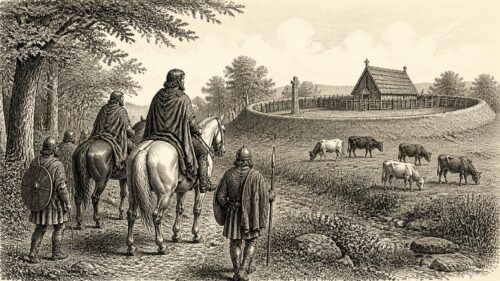
Grellach Dollaig
Archived: 2 November 2026
In 695, Fínsnechtae Fledach, king of Tara, and his son Bresal were killed at Grellach Dollaig by rivals from related Síl nÁedo Sláine branches in Brega. The annals provide few details, but the deaths disrupted Brega’s leadership and opened the way for Loingsech of the northern Cenél Conaill to claim kingship. Later tradition praised Fínsnechtae for remitting cattle tribute, reflecting the economic and political importance of livestock. The annals also record the death of Menn Bairenn, abbot of Aghaboe, illustrating the close connection between royal power, kinship, rural economy and ecclesiastical institutions.
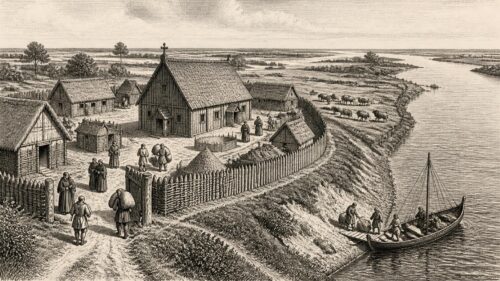
Crónán Becc
Archived: 2 November 2026
In 694, Crónán Becc, abbot of Clonmacnoise, died, an event securely associated with the year in several Irish annalistic traditions. His obituary reflects the importance of Clonmacnoise as a religious, economic and strategic centre on the Shannon, then largely built of timber. Other notices record the deaths of churchmen including Crónán of Balla, Bishop Bec Fhola and Uidréne of Mag Bili, alongside the killing of the Uí Néill king Cerball and a siege at Dún Foither. Domnall of Alt Clut also died. These sparse, chronologically uncertain records portray a politically fragmented but interconnected Ireland, linked by churches, kinship, waterways and Irish Sea contacts.
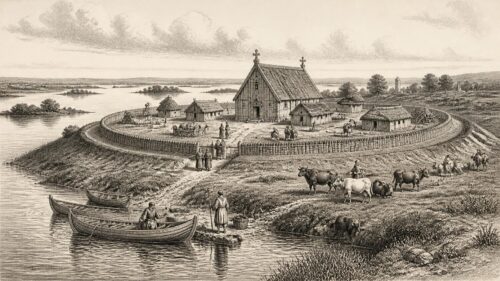
Crón Bec
Archived: 2 November 2026
In 693, Irish annals recorded the death of Crón Bec, abbot of Clonmacnoise, alongside ecclesiastical deaths at Movilla and Balla, the killing of Cerball son of Máel Odar, and the siege of Dún Foither. These brief notices reveal the importance of monasteries as religious, economic and political centres within a fragmented society. Clonmacnoise, strategically located on the Shannon, depended on rural resources and river communications. The siege may have occurred in northern Britain, reflecting Irish Sea connections. Disputed annalistic dates prevent certainty over wider struggles for Tara, but the year shows institutional succession, local violence and interconnected ecclesiastical networks.
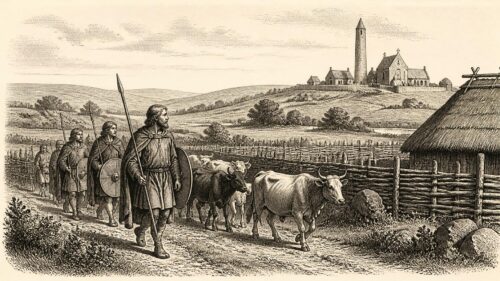
Leinster Conflict
Archived: 2 November 2026
In 692, annals record the deaths of Dirath, bishop of Ferns, and Bran, grandson of Faelán and king of Leinster. A battle between the Osraige and Laigin killed Faelchar, grandson of Máel Odor, though its cause, location and outcome are unknown. Other fragmentary notices cannot be securely interpreted. Parallel annals also associate Leinster with blood-coloured rain, perhaps an observation, portent or later elaboration. These events occurred in a rural society sustained by farming, cattle and ecclesiastical communities. The sparse records reveal political and religious change, but leave many details unrecoverable.
September Gale
Archived: 2 November 2026
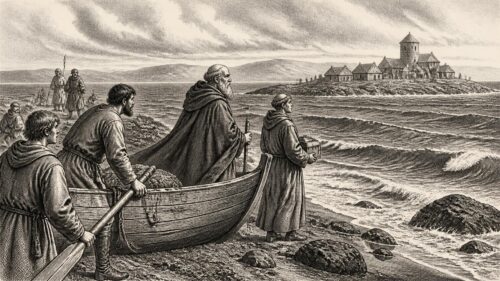
The annals conventionally associate 691 with the death of Crónán, abbot of Bangor, and Fidchellach son of Flann, king of Uí Maine. They also record a raid by Dál Riata on the Cruithin and Ulaid, illustrating the military importance of Irish Sea routes. On 16 September, a severe windstorm drowned about six members of Iona’s community, highlighting the dangers faced by coastal religious settlements. Together these sparse notices reveal interconnected yet fragmented political and ecclesiastical worlds, shaped by local kingship, influential monasteries, maritime travel and environmental hazards. The dating of some entries remains uncertain.
Iarmumu Succession
Archived: 2 November 2026
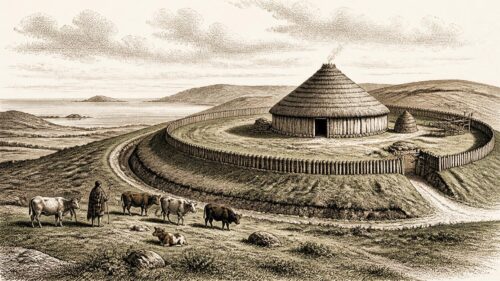
In 690, Congal son of Máel Dúin, king of Iarmumu in western Munster, was killed, creating uncertainty over regional succession. Ailill son of Dúngal, associated with the Cruthin of Éilne, and Dúnchad son of Orc Doith were also recorded as killed. The annals note a fire at Armagh and the death of Do-Bécóc of Clonard. Dating differs among surviving chronicles, and motives, locations and perpetrators remain unknown. These notices reveal an Ireland divided among regional dynasties, churches and kin-groups, where authority depended on lineage, alliances and control of resources.
Diarmait's Killing
Archived: 2 November 2026
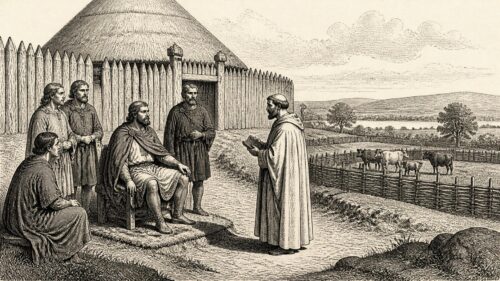
The annals traditionally associated with 689 record the killing of Diarmait son of Airmedach Cáech, king of Mide, by Áed son of Dlúthach of Fir Chúl, illustrating rivalry among regional rulers. They also note Fínnechta Fledach’s return to kingship, without establishing a link between the events. Deaths of Bishop Iolán of Cenn Garad and other figures reflect the importance of ecclesiastical and kin networks. A notice of Adomnán recovering captives may duplicate an earlier record of his diplomacy with Northumbria. A solar eclipse, probably seen on 3 July 688, reveals chronological displacement in the annals.
Imlech Pich
Archived: 2 November 2026
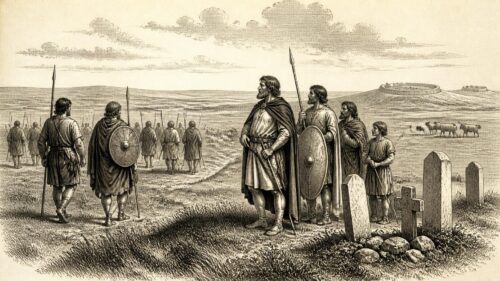
In 688, the battle of Imlech Pich reshaped power in Brega when Niall son of Cernach Sotal defeated Congalach son of Conaing. Two of Congalach’s allies, the kings of Ard Cianachta and Conaille Muirthemne, were killed, while Congalach escaped, leaving rival claims unresolved. The defeat probably reduced Ard Cianachta’s independence and strengthened southern Brega. Elegiac verse recalls the wider human and material losses of warfare. The annals also record high-king Fínnechta Fledach’s temporary entry into clerical life and the death of Ségéne of Armagh, illustrating the close interconnection of royal, ecclesiastical and regional authority.
Captive Returns
Archived: 2 November 2026
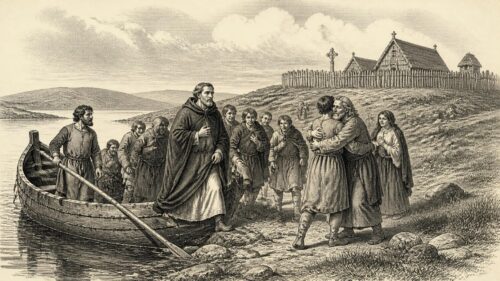
In the annalistic sequence for 687, Adomnán, abbot of Iona, returned sixty former captives to Ireland, probably people seized during King Ecgfrith of Northumbria’s raid of 684. Although the precise date and negotiations remain uncertain, Adomnán’s links with King Aldfrith and Northumbrian ecclesiastical networks likely enabled their release. The episode illustrates Irish Sea connections linking warfare, diplomacy and learning; Adomnán’s scholarly exchanges with Aldfrith may have occurred during related visits. The annals also record the deaths of abbots at Glendalough and Cork, and of a bishop attached to an uncertain monastery, alongside the unexplained killing of Feradach son of Congal.
Sixty Captives
Archived: 2 November 2026
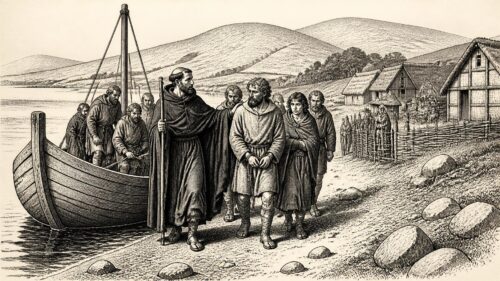
In 686, Adomnán, abbot of Iona, brought sixty former captives back to Ireland, probably following the Northumbrian raid on Brega in 684. Although the annals do not identify the captives or explain their release, the episode demonstrates links between Ireland, Iona and Northumbria, and the role of clerical diplomacy across the Irish Sea. The deaths of abbots at Glendalough and Corcach Mór, and of Bishop Oiséne, also reflect established religious communities. Ireland remained politically fragmented under regional rulers, including Fínshnechtae Fledach of Tara. Later-dated battles should not be assigned to 686.
Some records do not yet have a verified historical year and are awaiting chronological placement.