
Year by Year
Explore Year by Year articles from the most modern historical year back to the oldest.
3,294 Articles Archived

Potato Blight
Archived: 10 October 2026
In 1845, potato blight initiated Ireland’s Great Famine, although mortality remained limited compared with later years. Dependence on potatoes left labourers, cottiers and smallholders especially vulnerable, while food production continued beyond their purchasing power. Peel’s government commissioned scientific inquiries, secretly bought American maize, and linked the crisis to Corn Law repeal, but relief remained cautious. The Devon Commission documented insecure tenure and rural inequality. Educational reforms funding Maynooth and Queen’s Colleges provoked religious and nationalist disputes. Thomas Davis, Young Ireland’s inclusive cultural nationalist, died in September. By year’s end, blight, poverty, weak tenure and political division foreshadowed catastrophe to come.
O'Connell Acquittal
Archived: 10 October 2026
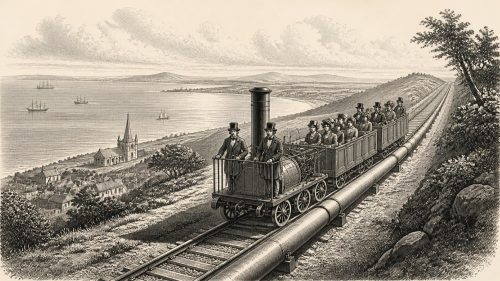
In 1844, Ireland combined political mobilisation, entrenched poverty and uneven modernisation. Daniel O’Connell’s conviction was overturned by the House of Lords, restoring him to public life but revealing limits on Repeal. Thomas Davis’s A Nation Once Again strengthened cultural nationalism within Young Ireland. Workhouses, already housing and relieving many people, exposed chronic vulnerability before the famine. The Dalkey Atmospheric Railway and Richard Turner’s engineering demonstrated technological ambition, while Belfast’s linen trade reflected industrial growth alongside insecurity. Catholic institution-building included St Malachy’s Church and Dublin’s first St Vincent de Paul conference. Francis Rynd’s hypodermic treatment illustrated Irish medical innovation amid precarity.
Repeal Meetings
Archived: 11 October 2026
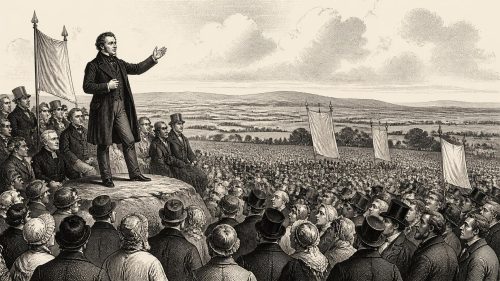
In 1843 Daniel O’Connell’s Repeal campaign sought restoration of an Irish parliament while retaining the Crown. Organised by the Repeal Association, enormous peaceful monster meetings at Trim, Tara and Mullaghmast mobilised supporters and linked self-government to Ireland’s nationhood, poverty, land insecurity and development. Thomas Davis and The Nation broadened its cultural nationalism, while clergy played organisational roles. Beneath pageantry, agricultural dependence, insecure tenancies and harsh Poor Law relief revealed social vulnerability. The prohibited Clontarf meeting marked the campaign’s defeat: O’Connell cancelled it to avert violence, after which government prosecutions began. Repeal failed, but 1843 shaped nationalism and highlighted Ireland’s crisis.
Galway Riots
Archived: 11 October 2026
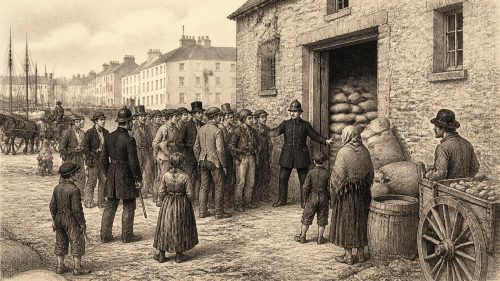
In 1842, before potato blight, Ireland experienced acute distress from scarcity, high prices, seasonal unemployment and entrenched poverty. Galway symbolised the crisis when hungry people attacked a potato store in June, reflecting fears of hoarding and food beyond local reach. The expanding Poor Law rapidly opened workhouses, offering deterrent, stigmatising relief while leaving many needy people outside. Temporary government aid acknowledged emergency conditions. Daniel O’Connell’s Repeal Association strengthened its organisation, linking constitutional demands with economic grievances and opposing slavery. Peel’s tariff reforms fuelled criticism of Westminster. In October, The Nation began promoting nationalism, connecting material hardship, identity and political self-government.
O'Connell Mayor
Archived: 11 October 2026
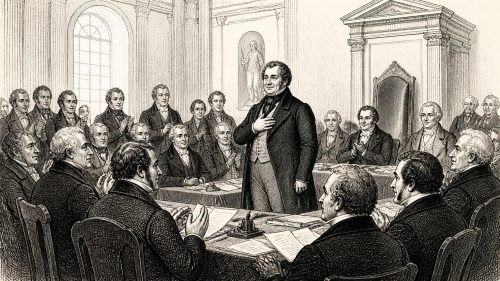
In 1841, Ireland’s census recorded 8,175,124 people, revealing a populous, unequal society where most families occupied modest cottages or single-room cabins and depended heavily on agriculture and potatoes. The general election returned Peel’s Conservatives, while Daniel O’Connell maintained repeal agitation despite restricted franchises and sectarian political division. Dublin’s reformed council elected O’Connell Lord Mayor on 1 November, the first Catholic to hold the office for over 150 years, marking expanded but limited civic participation. Poor Law workhouses embedded institutional relief, inadequately serving widespread vulnerability. Belfast combined industrial growth with confessional cooperation, while the Irish Archaeological Society published texts, reflecting recovery.
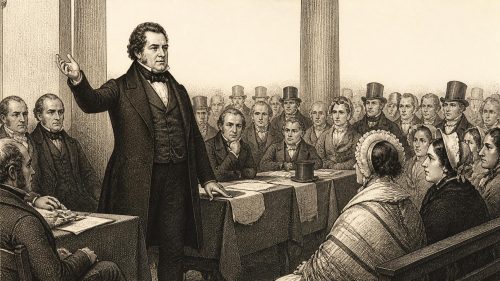
Repeal Association
Archived: 11 October 2026
In 1840 Daniel O’Connell relaunched the constitutional campaign to repeal the Act of Union through the National, later Loyal National, Repeal Association, seeking an Irish legislature within the Crown rather than separation. Though initially modest, it established subscriptions, committees and local mobilisation. Parliament’s Municipal Corporations (Ireland) Act replaced most old corporations and reformed ten boroughs, but retained restricted franchises and limited powers. The Poor Law entered operation, with Cork’s temporary workhouse admitting inmates, signalling a restrictive institutional response to poverty. Rural inequality, population pressure and regional contrasts persisted, alongside railway plans, church reforms and Father Mathew’s temperance movement across Ireland.
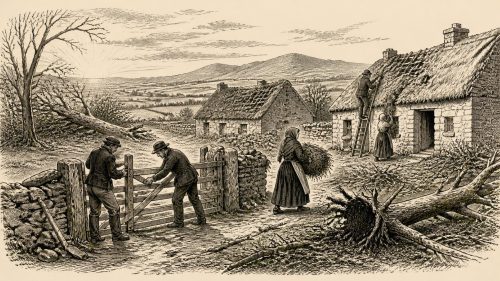
Big Wind
Archived: 11 October 2026
In 1839 Ireland experienced the Night of the Big Wind, a devastating storm of 6–7 January that damaged homes, farms, shipping and infrastructure, caused numerous deaths, and became a lasting marker in popular memory. Its effects intensified existing rural poverty and seasonal insecurity. Meanwhile, implementation of the 1838 Poor Law advanced through unions, guardians, rates and workhouse planning, while amendments refined administrative boundaries. Policing legislation strengthened state capacity in Dublin and nationally, amid O’Connell’s reform politics and continuing tithe disputes. National education and Griffith’s valuation expanded official knowledge. In August, the Belfast–Lisburn railway opened, signalling transport, commerce and institutional modernisation.
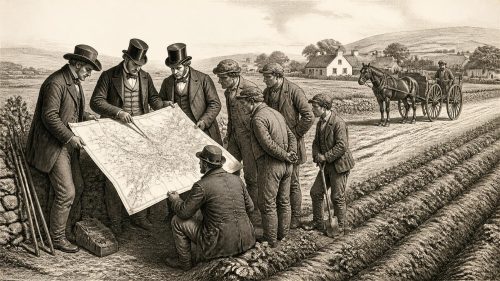
Poor Law
Archived: 11 October 2026
In 1838, Ireland was surveyed, classified and governed amid widespread rural insecurity. The Irish Railway Commissioners’ final report mapped population, trade and transport, advocated publicly directed railways, and warned of labourers’ heavy reliance on the nutritionally poor lumper potato, without predicting famine. The Poor Relief (Ireland) Act created poor-law unions, rates, guardians and a workhouse-centred system, reshaping local administration despite opposition. The Tithe Rentcharge Act replaced direct occupiers’ payments with a reduced landowners’ charge, easing but not ending religious grievance. Father Theobald Mathew’s Cork temperance campaign mobilised mass voluntary action. The Sirius voyage and surveys highlighted Atlantic and administrative links.
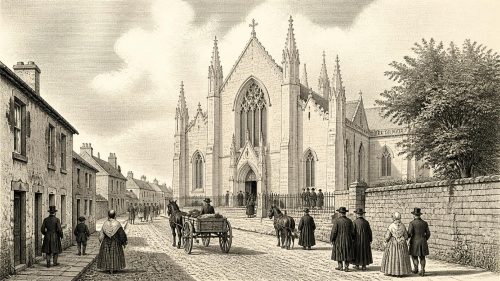
Tuam Cathedral
Archived: 11 October 2026
In 1837, Victoria’s accession prompted an Irish general election in which Daniel O’Connell and his allies demonstrated Catholic political organisation despite a restricted, public franchise. Parliament debated Irish poor relief amid widespread insecurity, but legislation followed only in 1838. Tithe grievances, local crop failures, potato dependence and uneven employment exposed rural vulnerability. Tuam’s completed Catholic cathedral symbolised post-emancipation confidence, although religious divisions endured. Samuel Lewis’s dictionary, Ordnance Survey work and Dublin policing measures reflected administrative control. Ireland remained commercially and imperially connected, illustrated by HMS Terror’s repair at Lough Swilly, yet the Union, unequal landholding, poverty and representation remained unresolved.
Constabulary Reform
Archived: 11 October 2026
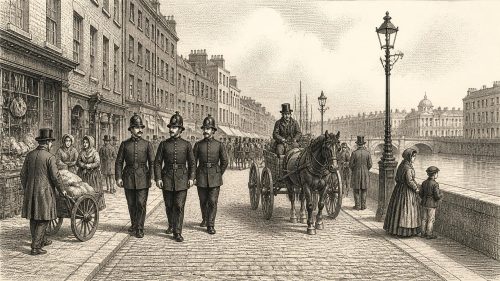
In 1836, Ireland experienced contested administrative reform rather than a decisive settlement. Westminster strengthened policing through the Constabulary and Dublin Police Acts, while licensing rules extended supervision of public houses. Tithe arrears remained unresolved: the Tithe Compositions Act merely suspended recovery proceedings, and church reforms scrutinised ecclesiastical revenues. O’Connell’s Catholic organisation demonstrated popular political strength despite a narrow franchise, notably in Longford. Municipal reform largely stalled. The Poor Inquiry documented severe, varied poverty but produced no agreed remedy; poor law followed in 1838. Crop failures heightened anxiety, while banks, newspapers and Mount Jerome cemetery reflected emerging institutional and urban change.
Some records do not yet have a verified historical year and are awaiting chronological placement.