
Year by Year
Explore Year by Year articles from the most modern historical year back to the oldest.
3,294 Articles Archived
Antrim Presbytery
Archived: 13 October 2026
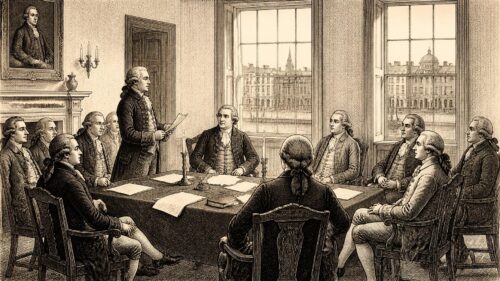
In 1725, Ireland’s significance lay in institutional and political tensions rather than a single decisive event. Lord Carteret suspended William Wood’s contested halfpence patent, demonstrating the force of opposition mobilised by Jonathan Swift while leaving Ireland subordinate to Westminster. His administration exposed a treasury deficit and renewed reliance on parliamentary patronage. The Synod of Ulster created the Presbytery of Antrim for non-subscribing ministers, deepening Presbyterian divisions over conscience and confessional authority. Dublin’s first surviving Grand Lodge meeting recorded freemasonry’s organisation. These developments unfolded within a rural, unequal Protestant state, where Catholics and Presbyterians faced disabilities and economic life remained vulnerable.

Drapier's Letters
Archived: 13 October 2026
In 1724, opposition to William Wood’s London-authorised copper coinage transformed a dispute over halfpence into a national argument about economic trust, political consent and Irish interests. Jonathan Swift’s anonymous Drapier’s Letters, printed by John Harding, encouraged householders, merchants and bankers to refuse the coins, despite official assurances of their quality. Dublin declarations, grand jury support and Harding’s prosecution threats demonstrated print’s political power, while Lord Lieutenant Carteret confronted mounting resistance. The patent remained valid until 1725, but could not circulate effectively. The year also saw Hugh Boulter’s primacy, the Neal brothers’ landmark Irish tune collection, and a total solar eclipse.

Avoca Weaving
Archived: 13 October 2026
In 1723, Avoca in County Wicklow established a co-operative weaving mill where farmers brought wool for spinning, dyeing and weaving, alongside corn-grinding. Powered by the river and serving local households and mining communities, it illustrates rural adaptation despite restrictions on Irish woollen exports. Prolonged hot, dry weather brought relative agricultural stability, though drought posed risks. Ireland’s restricted Protestant Parliament considered revenue, manufacture, policing and trade. Wood’s English-minted copper coinage provoked anxieties over consent and commerce. Catholic Archbishop Bernard O’Gara’s appointment demonstrated institutional resilience under penal laws. Claims that Dr Steevens’ Hospital opened that year are unsupported; it opened in 1733.
Wood's Patent
Archived: 13 October 2026
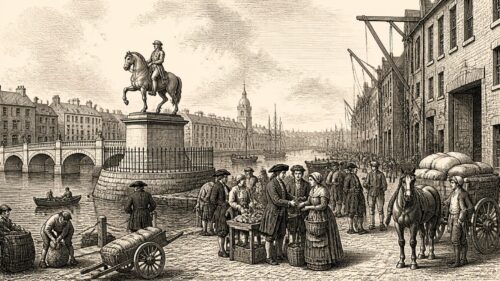
In 1722 George I authorised English ironmaster William Wood to mint up to 360 tons of copper halfpence and farthings for Ireland, initiating a controversy over currency, trade and political authority. Issued in London without Irish parliamentary consultation, the fourteen-year patent alarmed critics amid Ireland’s restricted autonomy following the 1720 Declaratory Act, although Swift’s attacks and parliamentary condemnation came later. Ireland’s rural economy, unequal imperial trade and unreliable small change formed its background. Executive government, policing proclamations and penal restrictions demonstrated state power. Dublin simultaneously celebrated Hanoverian rule with George I’s statue, while print culture widened constitutional unease more widely.

Public Bank
Archived: 13 October 2026
In 1721, Ireland’s proposed public bank collapsed amid post-South Sea Bubble distrust, disputes over credit, land, religious exclusion and dependence on Westminster, recently reinforced by the Declaratory Act. Although supporters sought cheaper loans and retained capital, the Commons rejected the scheme, first narrowly in October and decisively in December, preserving fragmented private finance. Land and influence remained central: Charles Butler regained Ormond estates under British sanction, William Ponsonby became Baron Bessborough, and Luke Gardiner acquired land developed as Henrietta Street. Linen exports linked rural households to imperial markets, while Catholic institutions endured restrictions. Government pursued disorder and imposed plague precautions.
Declaratory Act
Archived: 13 October 2026
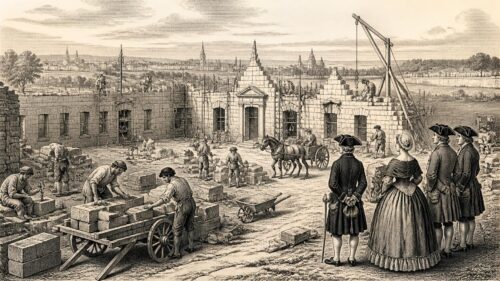
In 1720, Westminster's Sixth of George I asserted Britain's power to legislate for Ireland and made the British Lords Ireland's final appellate court, deepening dependency. Ireland's Anglican ascendancy governed a population restricted by penal laws; James Cotter's execution heightened sectarian tensions. Jonathan Swift's Irish Manufacture pamphlet urged consumers to reject English goods, articulating economic patriotism amid mercantilist constraints. A proposed national bank reflected commercial ambition, but the South Sea Bubble's collapse brought banking panic. Construction began on Dr Steevens' Hospital, promoted by Grizelda Steevens, while Cork Harbour's Water Club was founded. Together they exposed dependence, inequality, charity and elite sociability.
Sherlock Annesley
Archived: 13 October 2026
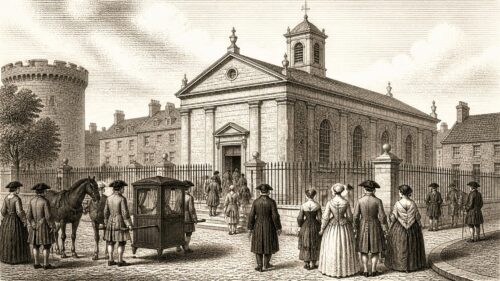
In 1719, the Sherlock v Annesley inheritance dispute escalated into a constitutional conflict between the Irish and British Houses of Lords over appellate jurisdiction. Although Westminster’s Declaratory Act followed in 1720, the controversy exposed Irish Protestant elites’ defence of judicial dignity within constrained government. Dublin’s parliament managed revenue, regulation and militia security, while granting Protestant dissenters, especially Presbyterians, limited worship protections; Catholics and non-Trinitarians remained excluded. Rebuilt St Werburgh’s Church symbolised Anglican confidence, while a 1719 issue of Cornelius Nary’s New Testament evidenced Catholic learning. Expanding linen exports linked rural households to markets, yet prosperity remained uneven and livelihoods precarious.
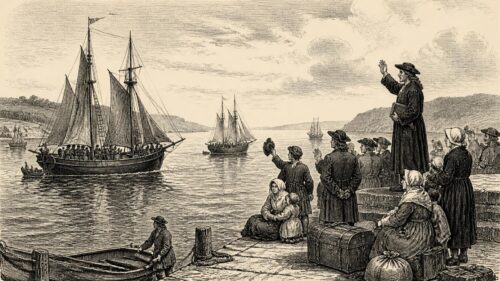
Ulster Emigration
Archived: 13 October 2026
In 1718, Ireland’s significant developments centred on migration, religion and voluntary institutions rather than rebellion. Five vessels carried Presbyterian emigrants from Ulster to Boston, beginning a durable Atlantic movement driven by tenancy insecurity, economic pressures, religious disabilities and colonial opportunity. Ireland’s Protestant ruling order continued to disadvantage Catholics and dissenters, while Sherlock v Annesley highlighted contested Irish autonomy. Six surgeons founded Dublin’s Cook Street infirmary for injured poor, precursor to Jervis Street Hospital. A Ballybough cemetery lease recorded Jewish life. Church appointments and Catholic diocesan administration demonstrated competing authorities, while Thomas Parnell’s death connected Irish culture with British literary networks.
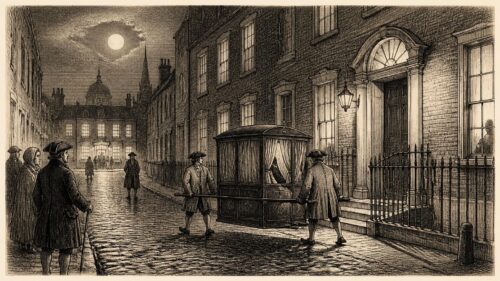
Henry Luttrell
Archived: 13 October 2026
In 1717, Ireland remained a separate kingdom under Hanoverian rule, governed by a Protestant establishment that excluded most Catholics. Charles Paulet, Duke of Bolton, became lord lieutenant, while parliament renewed revenue and reinforced Protestant municipal control in Galway and Kilkenny. Colonel Henry Luttrell, a former Jacobite accused of betrayal, was murdered in Dublin; despite official rewards and proclamations, the crime remained unsolved. Authorities also pursued mutiny and armed disorder. Penal restrictions shaped Catholic and Presbyterian life. Hugh MacCurtin defended Irish antiquity in print. Rural society depended on vulnerable agricultural and export economies amid variable weather, reflecting an anxious political order.
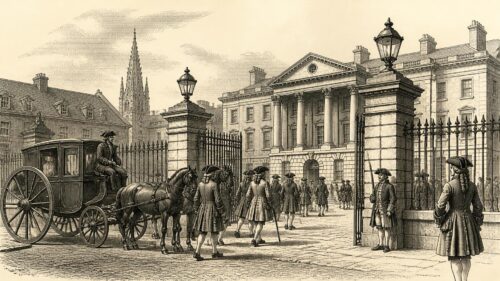
Ormond Forfeiture
Archived: 13 October 2026
In 1716, Ireland’s Hanoverian administration responded to the Jacobite rising’s aftermath through security measures, religious enforcement, ceremony and legislation. Proclamations targeted Ormond, restricted Catholic enlistment, recruited soldiers, pursued alleged rural outlaws and renewed penalties against Catholic clergy. Public thanksgiving proclaimed loyalty to George I and the established church. Parliament abolished the Duke of Ormond’s palatine jurisdiction in Tipperary and vested his estates in the Crown, while later recovery remained possible for his family. It also promoted drainage, linen, commodity standards and labour dispute settlement. Church finances and appointments reinforced Protestant institutions, while Dublin’s music and print culture retained Jacobite connections.
Some records do not yet have a verified historical year and are awaiting chronological placement.