
Year by Year
Explore Year by Year articles from the most modern historical year back to the oldest.
3,295 Articles Archived

Kilcrea Friary
Archived: 20 October 2026
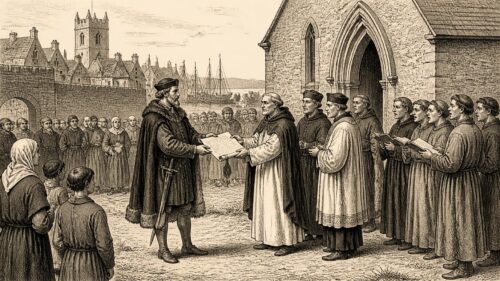
In 1465, Ireland experienced severe frost, snow and delayed spring growth, causing acute scarcity, especially recorded in Connacht. Political instability compounded hardship as Ó Conchobair and Mac Diarmata successions provoked battles, killings, raids and disputed lordships. Elsewhere, family conflict and territorial seizures occurred in Breifne, while dynastic connections and rivalries remained active across Leinster and Ulster. In the English lordship, Earl Desmond governed despite opposition and a proposed replacement, while parliament legislated on security, cultural conformity, maritime regulation and Cork’s finances. Meanwhile, Cormac Láidir MacCárthaig founded Kilcrea Friary, combining Franciscan observance, dynastic commemoration and regional ambition during a troubled year.
Youghal College
Archived: 20 October 2026
In 1464, Ireland was divided among Gaelic lordships, Anglo-Irish magnates, church jurisdictions and Dublin’s limited English administration. Thomas FitzGerald, earl of Desmond and royal lieutenant, negotiated a treaty in Dublin with Mac William Burke and Ó Domhnaill, while rival officials contested authority. Connacht experienced succession wars, burnings, cattle raids, hostage-taking and gallowglass warfare; similar dynastic violence affected Tír Chonaill, Breifne, Fermanagh and Sliabh Lugha. Illness caused numerous deaths, possibly affecting animals. Devotion remained important through miracles, burials and church offerings. On 27 December, Desmond founded Our Lady’s College at Youghal, a collegiate church supporting worship, music, learning and local administration.
Lordship Networks
Archived: 20 October 2026
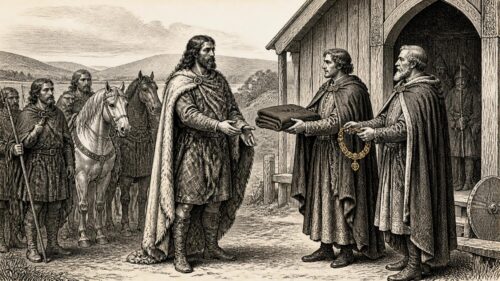
In 1463, Ireland’s political geography was not governed from a single centre. The lordship claimed by Edward IV had institutions, courts, ports and mints, but its effective reach was uneven. Beyond and across the English-controlled districts, Gaelic and Gaelicised dynasties exercised authority through kinship, clientship, tribute, military followings and negotiated alliances. The year’s surviving records are especially rich in such local dealings. They do not describe one national crisis; rather, they reveal an island linked by gifts, cattle-raids, ransoms, church offices, coinage and the movement of armed men. Most events below come from annals compiled within learned Irish traditions.

Piltown Battle
Archived: 20 October 2026
In 1462, Ireland experienced interconnected conflicts, raiding, lordship and institutional development. Butler forces, supported by English followers, contested Desmond control in the south-east; their defeat at Piltown enabled FitzGerald advances, though maritime captures and parliamentary attainder prolonged the struggle. In Ulster, Henry Ó Néill raided Tír Chonaill, devastating districts amid rivalry with Aodh Ruadh Ó Domhnaill, while killings reflected continuing northern instability. Connacht disputes involved ransoms, rents and cattle seizures. Franciscan friars founded a house at Monaghan, and Thomas Cusin taught law in Armagh. These events demonstrate power exercised through warfare, wealth, patronage, fortified places and learning across medieval Ireland.

Ceann Maghair
Archived: 20 October 2026
In 1461 Ireland experienced famine, warfare and contested lordship rather than a unified national event. At Ceann Maghair, Aodh Ruadh Ó Domhnaill, aided by the Mac Suibhnes of Fanad, defeated and mutilated Toirdhealbhach Cairbreach Ó Domhnaill, securing recognition as ruler of Tír Chonaill. Connacht saw deaths, captures, ransoms and inauguration rituals amid Ó Conchobair rivalries. Raids devastated districts across the Midlands, Meath and Connacht, worsening the recorded nationwide dearth. Annals also commemorated poets, scholars and clergy, revealing learned and ecclesiastical networks dependent on patronage. English dynastic upheaval brought Edward IV's accession and weakened Butler connection through Ormond's execution and attainder.
York’s Parliament
Archived: 20 October 2026
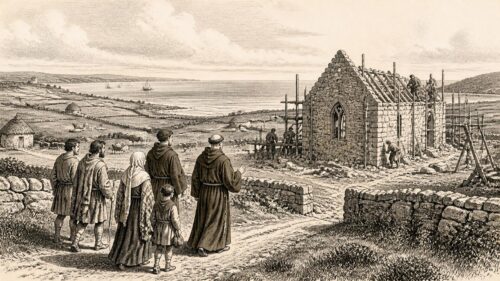
In 1460, Richard of York’s Drogheda parliament affirmed his lieutenancy and declared that Ireland was governed by laws accepted in its own parliament, while regulating defence, finance and local administration. Conflict exposed fragile frontiers: Conn O’Conor Faly defeated lordship forces, and English troops killed John O’Reilly of East Breifne, prompting Cathal O’Reilly’s succession. Captivity and maritime warfare further shaped regional politics. Franciscan patronage and Observant reform expanded through Moyne, Sherkin and Enniscorthy, although foundation dates remain uncertain. The killing of Killaloe’s bishop showed clerical vulnerability. Overall, the year revealed overlapping jurisdictions, military households, contested lordship power and resilient religious networks.

Cloyne Translation
Archived: 20 October 2026
In 1459, Ireland remained divided among lordships, churches, towns and learned families. Thomas FitzGerald, earl of Kildare, defeated and captured Conn O’Connor Faly in Offaly, strengthening Geraldine influence. Raids, burnings and killings in Breifne, Fermanagh and neighbouring territories reflected rivalry, while Toirdelbach Ó Briain’s death opened a transition in Thomond. Richard, duke of York, arrived after his defeat, making Ireland a Yorkist refuge, although Drogheda’s affirmation followed in 1460. Learned culture endured: scholars died, and Cormac Mac Duinnshléibhe completed an Irish medical translation at Cloyne. Ecclesiastical deaths marked the year, whose sources reveal conflict and patronage but little about conditions.
Aghavea Manuscripts
Archived: 20 October 2026
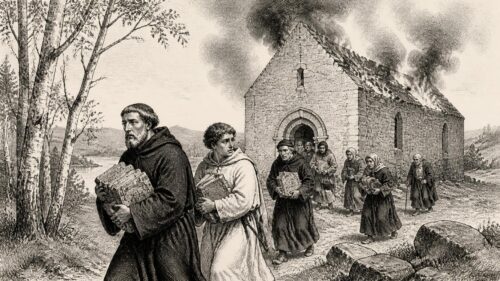
In 1458, Ireland’s overlapping Gaelic, Anglo-Irish and ecclesiastical jurisdictions were reshaped by warfare, deaths and contested authority. Henry Ó Néill, Ó Domhnaill and Mag Uidhir raided Connacht, taking hostages and burning Ó Ruairc’s settlement at Druim-da-thigher. Tomaltach Mac Diarmata, Calbach Mór Ó Conchobair Failghe and Edmund na Féasóige de Búrca died, prompting successions in Moylurg, Offaly and Lower Connacht. Their obituaries emphasised hospitality, patronage and military power. At Aghavea, a church fire destroyed many manuscripts belonging to an ecclesiastical official. Thomas Barrett’s papal provision to Annaghdown provoked resistance, illustrating Rome’s and Dublin’s limited practical reach across the island in practice.
Gráinne Battle
Archived: 20 October 2026
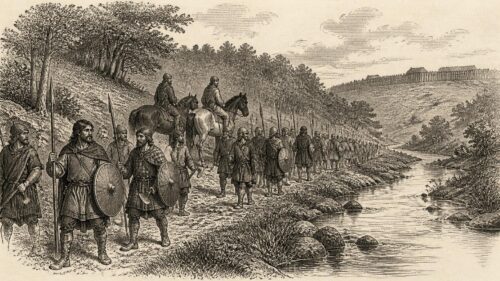
In 1457, the Maguires of Fermanagh pursued campaigns against MacMahon territory in Oriel and O’Rourke lands in Breifne, burning settlements and lordly residences after defenders secured their cattle. Philip Maguire’s raid provoked pursuit and battle, while Thomas Maguire’s meeting with Lochlainn O’Rourke near Ath Conaill ended in a decisive Maguire victory on the Gráinne river, followed by the display of sixteen noble heads. Annals portray these conflicts as contests for livestock, territory, clients and prestige. Deaths among regional elites were recorded. Ecclesiastically, John Bole became archbishop of Armagh, Murrisk friary emerged, and William Sherwood gained, in October, a Bologna doctorate.
O’Neill’s Supremacy
Archived: 20 October 2026
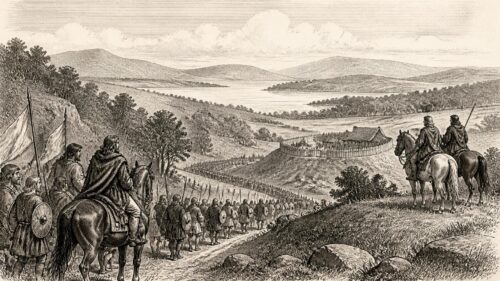
In 1456 Enrí Ó Néill consolidated power in northern Ireland after the death of his father, Eóghan, whom he had displaced as ruler of Tír Eóghain in 1455. Allied with Tomás Óg Mag Uidhir, he invaded Inis Eógain, where Domhnall Ó Domhnaill of Tír Conaill was killed on 28 May and opponents captured. Ó Néill installed Toirdelbach Cairbreach Ó Domhnaill, securing acknowledged superiority rather than annexation. Obituaries from Connacht recorded the deaths of Moylurg’s tanist Fergal Mac Diarmata, his daughter Lasarfina, and John Burke. At Lisgabhail, deaths among teachers and fosterage networks reveal ecclesiastical communities, learning, kinship and women’s roles.
Some records do not yet have a verified historical year and are awaiting chronological placement.