Aghavea Manuscripts1458 CE
In 1458, Ireland’s overlapping Gaelic, Anglo-Irish and ecclesiastical jurisdictions were reshaped by warfare, deaths and contested authority. Henry Ó Néill, Ó Domhnaill and Mag Uidhir raided Connacht, taking hostages and burning Ó Ruairc’s settlement at Druim-da-thigher. Tomaltach Mac Diarmata, Calbach Mór Ó Conchobair Failghe and Edmund na Féasóige de Búrca died, prompting successions in Moylurg, Offaly and Lower Connacht. Their obituaries emphasised hospitality, patronage and military power. At Aghavea, a church fire destroyed many manuscripts belonging to an ecclesiastical official. Thomas Barrett’s papal provision to Annaghdown provoked resistance, illustrating Rome’s and Dublin’s limited practical reach across the island in practice.
Dateline
In 1458, Ireland’s political map was made not by one central government but by the movements, bargains and bereavements of many lordships. The year is unusually revealing because the surviving annals preserve both large-scale coercion and intimate losses: an expedition into Connacht that took hostages and burned a settlement; the deaths of rulers whose authority rested on hospitality as well as force; a disputed episcopal appointment; and, in Fermanagh, the burning of a church with its books. These are not fragments of a single national story. They are records from a country of overlapping Gaelic, Anglo-Irish and ecclesiastical jurisdictions, where power travelled along roads, rivers, kinship networks and religious institutions.
Reading a Year of Annals
The evidence needs careful handling. The principal notices come from the Annals of Ulster, Annála Connacht, the Annals of Loch Cé and, for some material, the later Annals of the Four Masters. They are indispensable but were not compiled as modern calendars or newspapers. Their dating systems can differ: notably, the Annals of Loch Cé places several deaths otherwise associated with 1458 under its entry for 1457. That discrepancy should not be smoothed away by inventing precise dates. It is safest to say that the deaths and successions belong to the annalistic year conventionally identified as 1458, while reserving exact dating only for events where a source supplies it.
The annals also give value-laden portraits. A lord may be praised as generous, mighty in war or a protector of poets; such phrases were not neutral biographies. Yet they show what contemporaries expected from high status. A successful ruler was meant to defend dependants, reward learned people, receive guests and maintain a household whose fame could travel beyond its own territory. In this sense, the political and cultural history of 1458 cannot be separated.
A Northern Host in Connacht
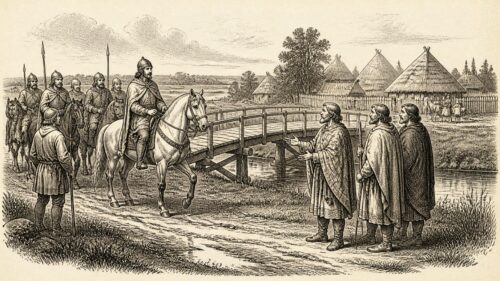
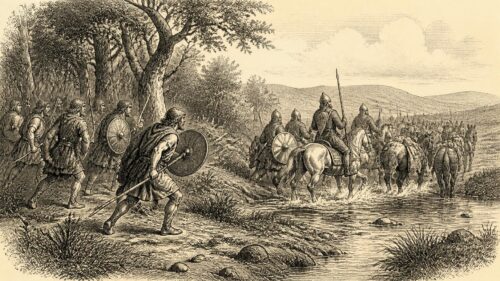
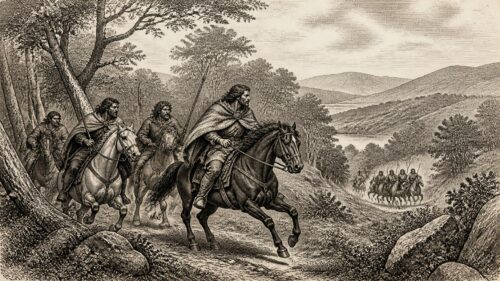
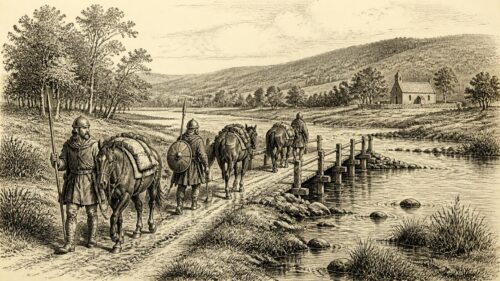
The most consequential military notice records a great hosting into Connacht by Henry Ó Néill, Ó Domhnaill and Mag Uidhir. These were not minor neighbouring captains: Henry Ó Néill led the dominant dynasty of Tír Eógain, while the Ó Domhnaills of Tír Chonaill and the Maguires of Fermanagh were major northern powers. Their combined expedition demonstrates that the northern lordships could intervene far beyond their own core territories when advantage, alliances or claims demanded it.
The Annals of Ulster say that hostages were carried away from the lower northern part of Connacht, and that the town or settlement of Ó Ruairc, Druim-da-thigher, was burned. The entry does not identify every target, describe a pitched battle, or explain the immediate diplomatic trigger. It would therefore be unsafe to turn the raid into a fully documented conquest. Nevertheless, hostages were a practical instrument of lordship: they were living sureties for obedience, agreements and future restraint. Their seizure signalled a relationship of compulsion, but also created obligations for captors, hostages’ kin and intermediaries who might negotiate their release.
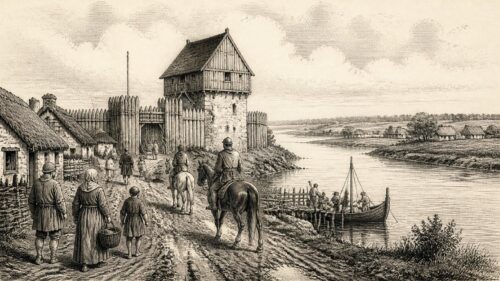
The burning of Druim-da-thigher likewise matters because settlement was central to power. A lord’s residence or principal settlement concentrated food stores, dependants, craftsmen, clerics and prestige. To burn it was to damage both material resources and political standing. Such attacks affected far more people than those named in the annals. Families could lose animals, grain, household goods and temporary security; retainers faced the expense of rebuilding; nearby religious houses might be drawn into sheltering displaced people or brokering peace. The sources do not permit a numerical estimate of the damage, but they make clear that warfare was experienced through the destruction of places as well as through casualties.
Succession in Moylurg and Offaly
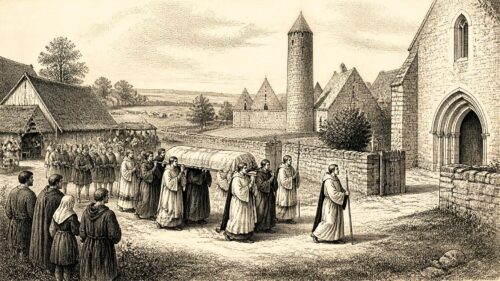
Connacht also saw major changes in leadership. Tomaltach Mac Diarmata, king of Moylurg and associated territories including Airtech, Corann and Tír Tuathail, died on the eve of St Bartholomew’s feast. His son Cathal had died a fortnight earlier. Both were buried at Boyle monastery, and Aed, another son of Conchobar Mac Diarmata, was made king in Tomaltach’s place. The close succession of deaths was potentially dangerous: a designated heir was gone, and the lordship had to move sideways within the ruling family. Yet the annals report an installation rather than a prolonged contest, suggesting that Aed’s accession was accepted sufficiently to be recorded as settled fact.
Tomaltach’s commemoration is especially revealing. The Annals of Ulster call him a general protector of Ireland’s learned companies, while the Annals of Loch Cé describe a man who refused neither guest nor stranger a night’s lodging. Such language should not be treated as a literal account of every visitor to his household. It does, however, show that learned men, poets and guests were understood as a lord’s dependants and as judges of his reputation. Hospitality required cattle, grain, ale, servants, horses, halls and secure routes. It was a form of political expenditure: generosity created prestige, alliances and a public claim to legitimate rule.
In Offaly, Calbach Mór Ó Conchobair Failghe also died, having first made his son Conn king in his place before going to Killeigh. The annals praise Calbach as a man who regained more of Leinster from opponents, Gaelic and English alike, than any ruler since the legendary Cathair Mór. This is plainly a heroic comparison rather than a measurable territorial survey. Still, Calbach’s career belongs to the hard frontier history of the midlands, where the lordship of Uí Failghe pressed against the settlements and fortifications of Meath and Kildare. His succession planning mattered: Conn inherited a formidable position, but also the strategic pressure of the colonial frontier surrounding Offaly.
Connacht’s Burke Lordship
Another prominent death was that of Edmund na Féasóige de Búrca, Mac William of Lower Connacht, whose power was centred in Mayo. The Connacht annalist calls him lord of the English of Connacht and of many of its Gaels, a formulation that captures the mixed political world of the west. The de Burgh or Burke lordships had long since developed deeply Irish political practices, relationships and cultural patronage, while retaining a dynastic inheritance ultimately connected with the Anglo-Norman conquest. In 1458, Edmund’s death brought his lordship to his brother Tomás Óg rather than automatically to a son, an example of succession shaped by the family’s Gaelicised political order rather than simple primogeniture.
This transition is important alongside the northern expedition. Connacht was not a passive region acted upon by outsiders. It contained the Mac Diarmatas, Burkes, Ó Conchobairs, Ó Ruaircs and many other lineages with their own territories and rivalries. The annals’ selection of deaths, hostages and installations gives only a partial view, but it shows how quickly authority could be recalibrated when several leading figures died in one year. In such circumstances, marriage ties, fosterage, clientship, church connections and the loyalty of fighting men could be as decisive as formal claims of inheritance.
Fermanagh’s Lost Library
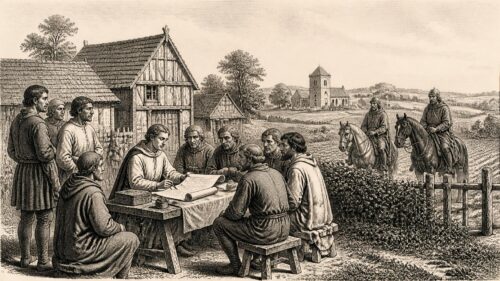
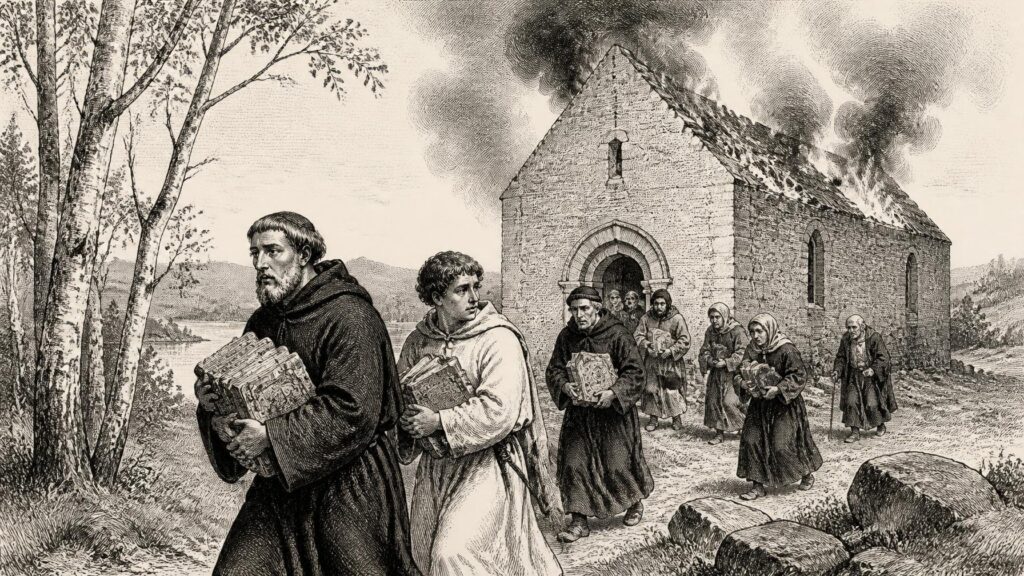
The year’s most poignant cultural loss occurred at Achadh-beithi, now Aghavea in County Fermanagh. The church there was burned, and with it “many good books” belonging to Niall, son of Mac Craith Mac Mathgamna, described as the Official Mac Mathgamna. An official was a senior ecclesiastical legal officer, and the notice points to a church institution that held manuscripts as part of its working intellectual and administrative life. The annal does not name the attackers, explain their purpose, or list the manuscripts. We cannot recover the titles, languages or contents of the books, and should not claim that an entire library was destroyed.
Even so, the wording is unusually direct about loss. Manuscripts were expensive objects, requiring paper or vellum, skilled scribes, bindings and sustained care. In fifteenth-century Ireland they could preserve religious texts, legal learning, genealogies, poetry, medical material, saints’ lives and historical record. Their destruction was therefore more than property damage. It impaired the capacity of a church household to teach, administer, remember and display learning. The notice at Aghavea is a sharp corrective to any assumption that late medieval culture survived only in great monasteries or large towns: local churches and their clerical families could be custodians of important written collections.
Church, Crown and Limited Reach
Church government also brought Connacht into contact with wider ecclesiastical and royal networks. On 17 April 1458, Thomas Barrett received papal provision to the bishopric of Annaghdown. The appointment did not settle the matter on the ground. Donatus Ó Muireadhaigh, archbishop of Tuam, already claimed authority over Annaghdown, and resisted Barrett’s provision. This was a jurisdictional dispute, not simply an administrative vacancy. It illustrates how papal appointments, local church politics and the English crown’s interests could converge without producing an immediate, effective transfer of power.
In Dublin, legislation enrolled in the regnal year 36 Henry VI repealed the earlier attainder of John Cantwell, archbishop of Cashel, citing his ill health. The measure belongs to the governmental world of the English lordship, where parliament could legislate for officeholders and political disputes. But 1458 should not be presented as a year in which Dublin ruled Ireland uniformly. The northern host in Connacht, the successions in Moylurg and Offaly, and the contested bishopric of Annaghdown all demonstrate the practical limits of any single authority. Ireland was connected—to Rome, England, Scotland and its own regions—but it was not politically centralised.
For ordinary people, the year’s events were likely felt in concrete ways: the demands of a lord’s household; the movement of armed companies and horses; the taking of hostages; the danger of burning; the obligations of church estates; and the circulation of food, livestock and hospitality. The sources name kings, clerics and nobles because they were built to remember such people. Yet the burning at Aghavea and Druim-da-thigher, the burials at Boyle, and the replacement of rulers point beyond elite biography to the communities whose labour, provisions and knowledge sustained late medieval Ireland.
Source References
Hover over a number to see the source. Select it to open the source.

- [1] The Annals of Ulster: Year U1458
- [2] Annála Connacht: Annal 1458
- [3] Annals of Loch Cé: Annals LC1457–LC1463
- [4] Annals of the Four Masters: Part 9
- [5] Annals of the Four Masters: Project and Edition Description
- [6] The Annals of Ulster: Project and Manuscript Description
- [7] Annála Connacht: Project and Edition Description
- [8] Annals of Loch Cé, A.D. 1014–1590: Irish Text
- [9] O'Connor Faly (Ó Conchobhair Failghe), An Calbach
- [10] O'Connor Faly (Ó Conchobhair Failghe), Conn
- [11] Burke (de Burgh), Walter and Edmund na Féasóige
- [12] Barrett, Thomas
- [13] Irish Script on Screen: MS C iii 1, The Annals of Connacht
- [14] Irish Script on Screen: MS A 13, Annals of the Four Masters
- [15] Excavations at Aghavea, County Fermanagh, 2000
- [16] Statute Law Revision Act 2007
- [17] The Annals of the Kingdom of Ireland
- [18] Notes on the Early History of the Dioceses of Tuam, Killala and Achonry
- [19] Diocese of Annaghdown (Eanach Dúin)
- [20] Holdings: Annála Connacht
- [21] Table of Contents: The Annals of the Four Masters
- [22] CELT Published Texts
Primary Sources
- The Annals of Ulster: Year U1458
- Annála Connacht: Annal 1458
- Annals of Loch Cé: Annals LC1457–LC1463
- Annals of the Four Masters: Part 9
- Annals of the Four Masters: Project and Edition Description
- The Annals of Ulster: Project and Manuscript Description
- Annála Connacht: Project and Edition Description
- Annals of Loch Cé, A.D. 1014–1590: Irish Text
- O'Connor Faly (Ó Conchobhair Failghe), An Calbach
- O'Connor Faly (Ó Conchobhair Failghe), Conn
- Burke (de Burgh), Walter and Edmund na Féasóige
- Barrett, Thomas
- Irish Script on Screen: MS C iii 1, The Annals of Connacht
- Irish Script on Screen: MS A 13, Annals of the Four Masters
- Excavations at Aghavea, County Fermanagh, 2000
- Statute Law Revision Act 2007
- The Annals of the Kingdom of Ireland
- Notes on the Early History of the Dioceses of Tuam, Killala and Achonry
- Diocese of Annaghdown (Eanach Dúin)
- Holdings: Annála Connacht
- Table of Contents: The Annals of the Four Masters
- CELT Published Texts