
Year by Year
Explore Year by Year articles from the most modern historical year back to the oldest.
3,295 Articles Archived

Sligo Burning
Archived: 20 October 2026
In 1445, Ireland’s fragmented political order was exposed by the burning of Sligo, attacked by O’Donnell, Maguire and discontented Ó Conchobhair kinsmen opposing Toirdhealbhach Carrach. Dynastic disputes also destabilised Annaly and West Breifne, where contested lordships prompted warfare, division or rival proclamations. Other annals record killings during raiding and travel, revealing pervasive local feud. English authority remained limited: John Talbot’s appointment as lieutenant did not bring immediate control, while Gaelic lords used written diplomacy and ecclesiastical seals. Irish nobles travelled to Santiago, clerics were commemorated, and Athenry’s Dominican friary housed thirty members, demonstrating religious networks amid conflict and political negotiation.
Clandeboye Succession
Archived: 20 October 2026
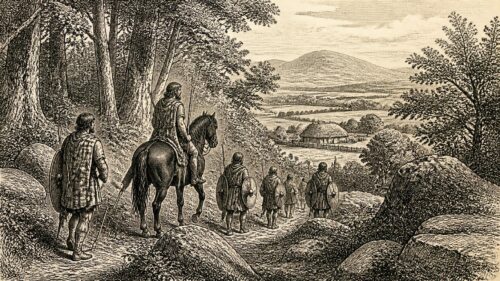
In 1444, Aodh Buidhe O’Neill of Clandeboye died from wounds received raiding Iveagh, prompting Eóghan O’Neill of Tír Eógain to intervene. Clandeboye leaders, allied with the MacQuillans, ambushed and defeated him in Dufferin, taking hostages including his son. Eóghan also compelled Dundalk to pay money and wine, while English government met at Drogheda with limited reach. Thomond suffered a violent Ó Briain succession rupture, including Mathgamain’s blinding and Toirdelbach’s seizure of power. Rome appointed Cormac Mác Shamhradháin bishop of Ardagh, while Trim’s Marian miracle cult, charity, deaths, warfare, and learned patronage reflected Ireland’s interconnected yet fragmented political and religious world.

Athlone Capture
Archived: 20 October 2026
In 1443, Muirchertach Ó Cellaigh briefly captured Athlone Castle, a key Shannon crossing, before James Dillon and William Boy Dillon recovered it; William Boy was killed, while Muirchertach received safe conduct. The episode illustrated contested authority and negotiated frontier politics. Annals also record deaths, feuds, raids, restitution and killings among Irish lordships, notably in Oriel, Ulster, Connacht, Ossory and the midlands. Aengus Mac Gilla-Fhinnein, abbot of Lisgoole, died on 17 September. Legal scholars Gilla na Naem Mac Aodhagáin and Hugh Mac Aodhagáin were commemorated. Differing annalistic dates complicate events in Thomond, showing Ireland's connected institutions amid persistent conflict and rivalry.

Castlefin Cession
Archived: 20 October 2026
In 1442, James Butler, earl of Ormond, resumed the Irish lieutenancy, governing through fragile alliances rather than centralised power. In the north-west, Énrí and Eóghan Ó Néill secured assistance from the English settlement and compelled Neachtain Ó Domhnaill to cede Castlefin, Cenél Moen and Inis Eógain’s tribute. Other struggles involved Enniskillen, Oriel, Ulster raiding and Wicklow warfare. After Muircheartach Caomhánach’s killing, his father won prisoners and compensation from Wexford. Obituaries recorded lords and clergy, while Ormond rental accounts reveal farming, rents and seigneurial justice. Together, the sources portray a connected, contested Ireland shaped by castles, kinship, tribute, negotiation and authority.
Mailin's Burial
Archived: 20 October 2026
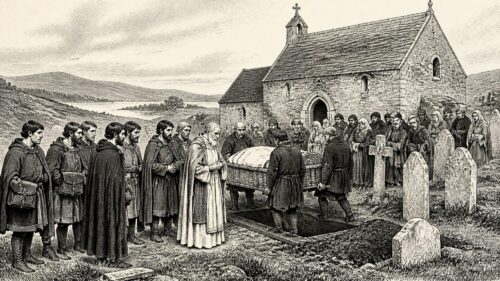
Annals for 1441 chiefly record deaths that exposed the importance of Ireland’s learned, ecclesiastical and lordly networks. Mailin mac Tanaide Ó Maolconaire, eminent historian and ollamh of Síol Muireadaigh, died in mid-February and was honourably buried at Cluain Coirpthe; other scholars, poets and churchmen also died. Conchobar Mac Donnchada, lord of Tír Oilella and patron of poets, was among them. Regional conflict continued through Mag Samradhain feuding, Maguire raids in Fermanagh, and Mac William Uachtarach’s capture of Ó Madden’s Shannon castle. Ecclesiastical offices linked kin, land and learning, while English administration remained significant chiefly in eastern Ireland during this year.

Burke Succession
Archived: 20 October 2026
Annals for 1440 depict regional political and social change rather than an island-wide event. Walter Burke, Mac William Íochtar of Lower Connacht, died of plague in early September and was promptly succeeded by his brother Edmund, illustrating Gaelicised kin-based succession. Neachtan O’Donnell and Owen O’Neill made peace, temporarily easing northern conflict. In Fermanagh, deaths and killings among Maguire kin revealed interconnected lordly households, while Matthew Mac Craith’s replacement as coarb of St Dabeoc showed hereditary ecclesiastical authority. The deaths of historian Duibhgenn Ua Duibhgennáin and lawyer Domnall Ua Breislen underscored learned orders’ political importance. Sources remain fragmentary and cautiously dated.
Enniskillen Hostages
Archived: 20 October 2026
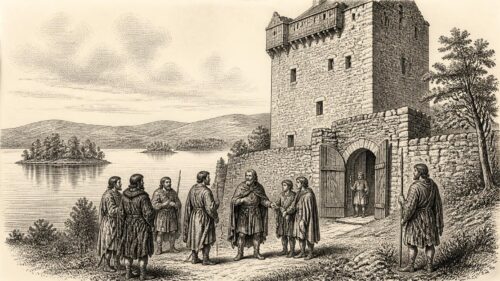
In 1439, Irish politics were shaped by local struggles over captives, castles, succession and recognition. Domhnall Ballach Maguire seized Tomás Óg Maguire at Enniskillen, securing his release only through hostages and control of the castle. Niall Garbh Ó Domhnaill died in English captivity, enabling Neachtan’s succession in Tír Chonaill, although sources dispute where he died. Cathal Ó Conchobair’s death triggered competing claims to Connacht’s kingship and warfare. Dublin suffered plague, while lordship changed through Donnchadh Dubh Ó hEadhra’s religious profession. A reported English deputy’s capture further illustrates fragmented authority, negotiated power and connections across Ireland and the Irish Sea alike.
Crawley's Return
Archived: 20 October 2026
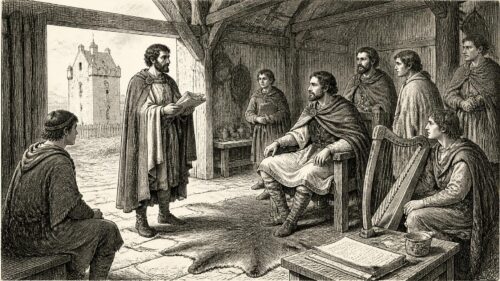
In 1438 Ireland remained divided among Gaelic lordships, Anglo-Irish communities and ecclesiastical jurisdictions, with power shaped by kinship, warfare and office. Archbishop Thomas Crawley died in England returning from the Council of Basel, linking Dublin to Church conflict, while Lionel, Lord Welles, became royal lieutenant. O’Conor Faly fought Meath’s English yet made peace with his brother. Captures, killings and depositions affected Maguires, O’Dowdas, O’Donnells and O’Briens. Deaths of bishops, clerics and heirs from disease disrupted institutions. Prominent jurists, historians and poets also died, demonstrating learned patronage’s continuing public importance. Annals record these crises unevenly rather than a unified national narrative.
Tuam Vacancy
Archived: 20 October 2026
In 1437, Ireland’s annals recorded regional transitions rather than a national event. Seoan Mac Peorais, Archbishop of Tuam, died, opening a contested ecclesiastical vacancy resolved neither quickly nor simply. Gormlaith Ó Duibgeannáin, wife of Brian Mac Aodhagáin, died as an anchorite at Loch Key, linking learned kinship and religious life. Ulster notices named three deaths, while a cautiously dated peace between Niall Garbh Ó Domhnaill and his brother Neachtan reflected strained northern lordship. Farming, trade and uneven royal authority shaped everyday life. News of James I of Scotland’s assassination demonstrated Ireland’s continuing Irish Sea connections across a politically fragmented island.

Offaly Defeat
Archived: 20 October 2026
In 1436, Ó Conchobhair Fáilghe launched raids against the English lordship, reportedly avenging the captivity of an Ó Domhnaill kinsman. English settlers of Meath, Ó Fearghail allies and the Prior of Kilmainham defeated him, though conflict continued. In Ulster, Niall Ó Néill was killed in a night attack, while Eóghan Ó Néill secured the crannóg of Loch Laoghaire before raiding Tírhugh. Annals also record local deaths and feuds. The deaths of jurist Gilla-Íosa Mac Aodhagáin and historian Geanann Mac Cruitín, alongside a 1436 Dindshenchas manuscript, attest to enduring learned culture amid fragmented, interconnected warfare and lordship across Ireland's political landscape.
Some records do not yet have a verified historical year and are awaiting chronological placement.