
Year by Year
Explore Year by Year articles from the most modern historical year back to the oldest.
3,295 Articles Archived
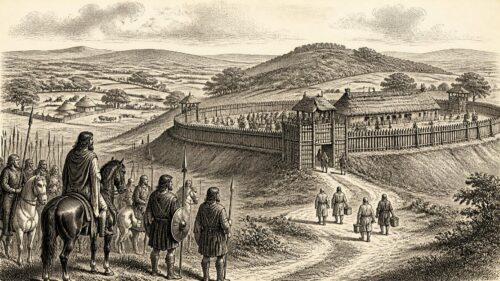
Oriel Siege
Archived: 22 October 2026
In 1365, Niall Ó Néill, newly king of Tír Eógain, led a coalition into Oriel, besieging Brian Mac Mathghamhna before an unauthorised assault shattered the settlement and killed allies. Dynastic contention also reshaped Connacht, Magh Luirg and East Bréifne, where deaths, accessions, warfare and Cú Chonnacht Ó Raghallaigh’s religious retirement altered lordship. Raids on border communities demonstrated the human cost of rivalry. Ecclesiastical leaders and learned travellers remained active across Irish Sea networks. In the English lordship, Lionel of Antwerp briefly returned England, while Thomond’s rulers submitted diplomatically. The year reveals authority as negotiated through warfare, kinship, religion and accommodation.
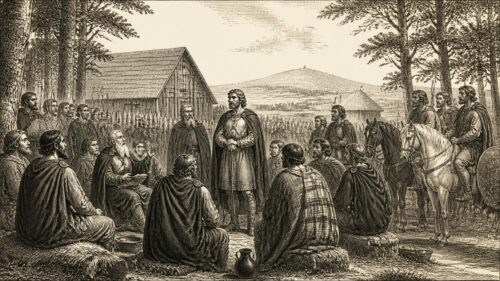
Niall Accession
Archived: 22 October 2026
In 1364, Ireland experienced interconnected transitions rather than a single crisis. Aodh Reamhar Ó Néill, influential king of Tír Eoghain, died and was succeeded by Niall Mór, whose position rested on dynastic support and military power. Diarmait Ó Briain of Thomond and several regional lords, heirs, women and learned figures also died, altering local networks. Lionel of Antwerp campaigned in Laois before returning to England; James Butler of Ormond governed temporarily amid tensions between English-born and Irish-born settlers. Annals, some uncertainly dated, record raids, alliances and mercenary warfare in western regions, revealing power sustained through lordship, kinship, resources and learning.

Guildhall Charter
Archived: 22 October 2026
In 1363, Ireland comprised overlapping political worlds rather than a unified realm. Lionel of Antwerp, Edward III’s lieutenant, received English money, troops and lordship revenues to sustain royal authority, while regulation of purveyance and weights addressed administrative abuses. Dublin remained crucial: Lionel granted civic liberties on 26 September, confirmed by Edward in November, strengthening the Guildhall’s jurisdiction and commercial governance. Elsewhere, annals recorded deaths of Magnus Ó Domhnaill and Áed Mag Uidir, killings, captivity and inter-kindred conflict in Connacht and neighbouring regions. A severe windstorm damaged churches and houses and sank vessels, disrupting communities, trade and transport networks across waterways.
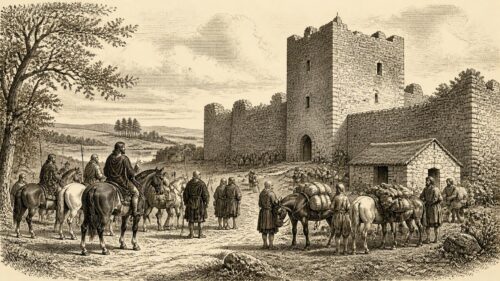
Ballintober Raid
Archived: 22 October 2026
In 1362, Ireland was divided among competing Gaelic and English authorities. Cathal Óg Ó Conchobair and King Aodh of Connacht captured Ballintober Castle, an important former de Burgh stronghold, then led a major raid into Meath, burning churches and causing extensive damage before returning safely. Meanwhile, Lionel of Antwerp held parliament in Dublin, oversaw administration, including the exchequer’s move to Carlow, and received the title duke of Clarence. Cathal Óg later died of plague at Sligo. Annals also recorded deaths among churchmen and learned families, revealing continuing religious, legal and scholarly institutions amid warfare, epidemic and unstable regional power relations.

Carlow Exchequer
Archived: 22 October 2026
In 1361, Lionel of Antwerp, Edward III’s son and earl of Ulster, arrived in Ireland as royal lieutenant with troops to reinforce the threatened English lordship. Landing at Dublin in September, he campaigned in Leinster, where Gaelic rulers remained powerful. Irish annals recorded the deceptive seizure and subsequent custodial deaths of Art Mac Murchadha and Domnall Riabach, though details remain uncertain. Lionel transferred the Exchequer to fortified Carlow, creating a forward administrative and financial base without displacing Dublin’s importance. Meanwhile, the widespread epidemic Cluiche an Rí, probably pestis secunda, intensified economic and military pressures, demonstrating the limitations of royal intervention.

Six Burnings
Archived: 23 October 2026
For Ireland, 1360 is remembered most clearly through a stark cluster of fires. The Annals of Connacht record “great burnings” at Roscommon, Devenish, Sligo, the monastery of Lisgoole, Fenagh and Drumlease. The entry gives no date within the year, no named commander and no narrative explaining whether these were connected attacks, separate raids, or destruction arising from several local conflicts. That silence matters. It would be unsafe to turn the notice into a single, neatly organised campaign. Yet its geographical reach, from Connacht into Fermanagh and the north-west, makes it an unusually vivid indication of insecurity in a year otherwise known chiefly through deaths, depositions and short notices of violence.

Ballyshannon Victory
Archived: 23 October 2026
In 1359 Cathal Óg Ó Conchobair defeated Cenél Conaill at Ballyshannon, capturing leading men and extending warfare into Tír Chonaill. The battle affected regional lordly networks across Connacht, Donegal and Breifne; the wounded claimant Matha Mag Samradháin later died. Ransom negotiations linked the victory to the transfer of Lebor na hUidre and Leabhar Gearr, demonstrating manuscripts’ political and learned value. In Desmond, Cormac Mac Carthaigh Mór died during a siege, succeeded by Domhnall Óg. Other deaths highlighted contested succession, while eminent judge Aed Mac Aedacáin’s death marked legal learning’s importance. James Butler became chief governor, reflecting Ireland’s divided political authority.
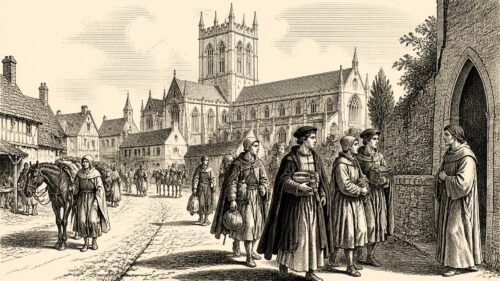
Dublin Scholars
Archived: 23 October 2026
In 1358, Edward III protected masters, scholars and clerks travelling to Dublin, reinforcing the university associated with St Patrick’s Cathedral. The petition exposed poverty, hazardous sea crossings and inadequate educational resources. Annals recorded fragmented politics: Áed Ó Néill defeated Airgialla and Fermanagh forces; Ó Mórdha overcame men identified with Dublin in Leinster; and Clann Cathmhaoil killed Manus Maguire. Bishop Brian Mac Cathmhaoil and Gaelic rulers also died. A Carbury hailstorm illustrated environmental uncertainty, while disease reports cannot be precisely dated. Together, these events reveal contested authority alongside continuing learning, religious institutions, warfare and local seasonal vulnerability across late medieval Ireland.
Art Mór
Archived: 23 October 2026
In 1357, Ireland’s surviving records reveal overlapping worlds rather than national unity. Art Mór Mac Murchadha Caomhánach was born amid unstable Leinster alliances linking Gaelic rulers, settler lordships and Dublin government. Royal administration issued commissions and relied on magnates, notably Maurice FitzGerald, Earl of Kildare, whose military resources supported authority. Annals record deaths of rulers, an earl drowned during a crossing, executions, killings and a peace, illustrating contested lordship. They also commemorate scholars, clerics and musicians. An English chronicler reported renewed pestilence devastating Gaelic communities, though its scale remains uncertain. Ireland combined political fragmentation, cultural networks, negotiation, violence and mortality.
Connacht Retribution
Archived: 23 October 2026
In 1356, Áed son of Toirrdelbach Ó Conchobair was killed at Baile Locha Deacair after allegedly abducting Donnchad Carrach Ó Cellaig’s wife, prompting allied retaliation by Ó Cellaig, Clann an Bhaird and Uí Maine. Áed son of Feidlim claimed full kingship of contested Connacht amid further dynastic deaths. Killings and successions elsewhere, including Tír Chonaill, reflected fragmented lordship. In Dublin, Justiciar Maurice fitz Thomas FitzGerald died, and Gearoidín Tyrrell was publicly executed. The deaths of Armagh’s primate, Clogher’s bishop and relic-keeper Solam Ó Melláin marked ecclesiastical losses. Sources document political violence but cannot establish precise circumstances or wider economic conditions.
Some records do not yet have a verified historical year and are awaiting chronological placement.