
Year by Year
Explore Year by Year articles from the most modern historical year back to the oldest.
3,295 Articles Archived
Claregalway Killings
Archived: 23 October 2026
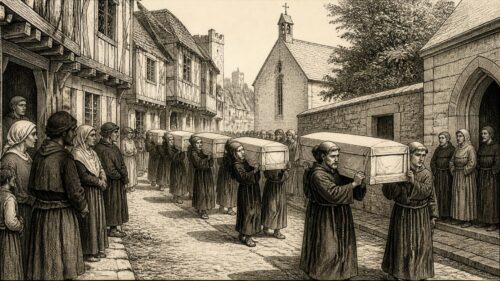
In 1335, Ireland was divided among competing Gaelic lordships, settler families, church jurisdictions, towns and royal officials. On 4 May, Lysaght Ó Mórdha’s household killed Sir Raymond le Ercedekne, relatives and allies at a meeting near Claregalway, an exceptional blow memorialised at Kilkenny. Connacht suffered raids, plunder and uneasy reconciliation amid de Burgh fragmentation after 1333. Sir John Darcy mobilised Irish ships, nobles and taxation for Edward III’s Scottish war, raiding Arran and Bute. Local warfare, captures and church disputes continued. Heavy spring snow harmed birds throughout Ireland, while devotional practices and hereditary learning, including physician Gilla-na-nAingel Ó Casaide, persisted.
Kilkenny Paving
Archived: 23 October 2026
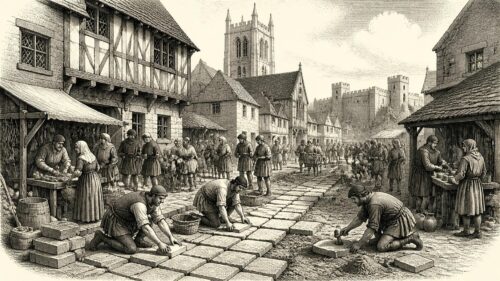
In 1334, severe winter weather injured people and livestock and damaged mills, weirs and bridges across Kilkenny’s region. Kilkenny burgesses began the town’s first recorded paving, later supported by a seven-year royal pavage grant. Local lordship remained contested: Thomas Fanyn seized Moytobyr Castle before Earl James Butler imposed temporary custody. Elsewhere, Donnchad Mac Carthaigh captured David de Barry, John de St Aubin was murdered, and a Connacht force of Gaels and settlers secured Munster hostages but burned a church, killing 180 people. Kilkenny also saw raids, erection of a market cross, crusading branding, and Desmond’s knighting campaign in late December.
Carrickfergus Murder
Archived: 23 October 2026
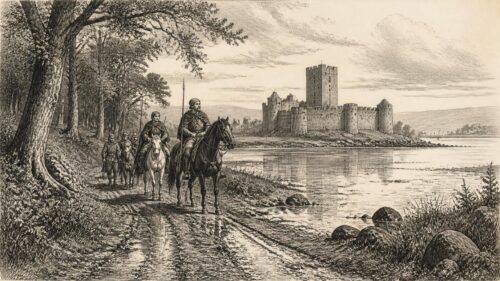
On 6 June 1333, William de Burgh, twenty-year-old earl of Ulster and lord of Connacht, was murdered near Carrickfergus by men associated with Ulster’s settler community. His death, following de Burgh family conflict, deprived vast, fragile lordships of an adult ruler. His widow fled to England with their infant heiress, while royal justice punished some killers but could not restore stability. Annals also record cattle-raiding, noble sureties, official campaigns and violence in Dublin, illustrating insecure aristocratic politics. The murder initiated divisions that later produced the Burke civil war and Mac William lordships, exposing limits of inherited power and English administration.
Bunratty Destruction
Archived: 23 October 2026
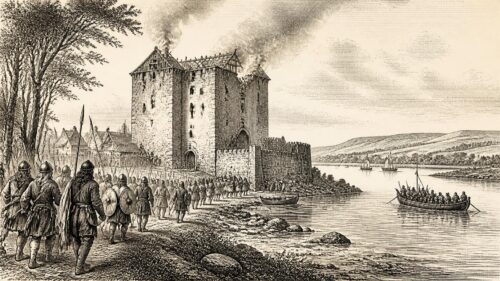
In 1332, Ireland’s lordship faced acute political and social strain. Sir William de Bermingham was executed in Dublin after politically charged conspiracy proceedings, while his son Walter was released. Thomond forces destroyed Bunratty Castle, whereas Anthony de Lucy recovered and garrisoned Arklow. Hostages seized castles at Limerick and Nenagh, exposing fragile authority; civic action restored Limerick. Raids, rivalries and warfare affected Munster, Leinster, Connacht and Ulster. Disease and exceptionally expensive wheat compounded hardship after famine. Edward III’s planned expedition was abandoned for Scotland, weakening government and leading to Lucy’s replacement by John Darcy. Richard FitzRalph’s Oxford chancellorship illustrated Irish connections.

Fragmented Authority
Archived: 23 October 2026
In 1331, authority in Ireland was asserted, evaded and fought over in several very different places at once. At Dublin, Edward III’s government sent a new justiciar and issued ambitious instructions for reform. In Leinster, raiders captured a royal castle and struck at the estates of the archbishop of Dublin. In Connacht, a lord abandoned secular rule for the monastery just as an army burned through his son’s territory. The surviving records do not create a complete national narrative: they are annals, administrative measures and later compilations, each with its own priorities.

Boyne Floods
Archived: 23 October 2026
In 1330, violent storms and flooding devastated parts of Ireland, sweeping away nearly all Boyne bridges, damaging Trim and Drogheda, delaying harvests and raising grain prices. These disruptions hindered trade, travel, government and military movement. Meanwhile, Roger Outlaw’s Kilkenny parliament sought support against Brian Bán Ó Briain in Munster, exposing rival magnates’ uncertain loyalties. Edward III warned the earls of Ulster and Desmond against private warfare, while Adam de Lymbergh became chancellor. Violence afflicted Meath, although Wexford fighting is uncertainly dated. Gilla Ísu Ruad Ó Ragallaig died at Cavan’s Franciscan friary, illustrating the links between Gaelic lordship and religious patronage.
Bermingham Murder
Archived: 23 October 2026
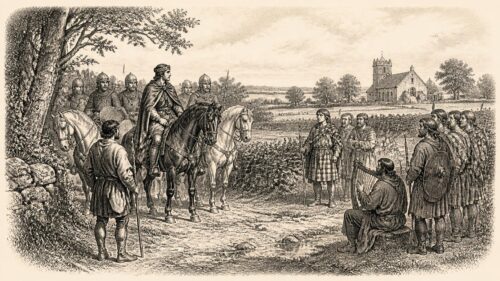
In 1329, John de Bermingham, earl of Louth, was killed at Braganstown near Ardee by Louth’s English gentry, exposing divisions within the lordship rather than an ethnic revolt. His disputed authority, kern’s alleged depredations, and weak local roots fuelled resentment. Parliament in Dublin sought to curb magnate feuds, while rivalries persisted. The killers received pardons, Bermingham’s earldom lapsed, and Mortimer acquired Louth’s liberty. Political conflict also embroiled Bishop Ledrede. Campaigns and killings in Wicklow, the midlands, Breifne and Connacht revealed continuing warfare and shifting alliances. Wet weather delayed harvests, intensifying insecurity across Ireland for tenants, townspeople, and landed communities alike.

Ormond Earldom
Archived: 24 October 2026
In 1328 Ireland endured crop damage, illness, destructive winds and scarcity, recorded across annalistic traditions. Political authority remained fragmented: William de Burgh returned to his Ulster inheritance, while royal orders sought to restrain magnates and an attempted Scottish-Irish peace meeting failed. De Burgh, Connacht and Thomond allies suffered defeat against Brian Bán Ó Briain; violence also killed John de Bermingham, earl of Louth. Obituaries reveal losses to legal, ecclesiastical and musical culture, amid church factionalism. On 2 November Edward III created James Butler earl of Ormond, granting Tipperary’s liberty and strengthening royal influence through territorial, judicial and commercial patronage networks.
Glendun Truce
Archived: 24 October 2026
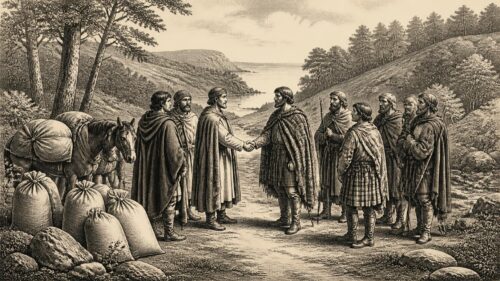
In 1327, Ireland experienced overlapping political, military and social crises amid the accession of Edward III. Thomas FitzGerald, earl of Kildare, became justiciar, but magnates contested royal authority while trade and administration continued. At Glendun, Robert Bruce secured a year’s truce with Ulster, paid for by promised wheat and barley. Domhnall Mac Murchadha was proclaimed king in Leinster before capture by royal officers. Rival Anglo-Irish lords devastated lands during private war, while O’Rourkes and O’Reillys fought over Lough Oughter. A widespread speckled sickness, probably smallpox but diagnostically uncertain, killed people across social ranks alike, disrupting labour, food supplies and lordship.
Red Earl
Archived: 24 October 2026
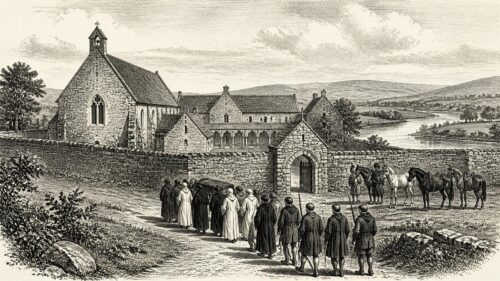
Richard de Burgh, the Red Earl of Ulster and lord of Connacht, died at Athassel on 29 July 1326, ending a powerful four-decade lordship. His fourteen-year-old grandson William inherited vast but vulnerable estates, exposing Ulster and Connacht to guardians, rivals and local conflict. Munster saw fighting between Maurice FitzGerald of Desmond and Arnold le Poer, temporarily restrained by Justiciar John Darcy. Royal administration continued through travelling chancery business and financial enforcement. Local records note Ímar Mag Ragnaill’s killing and the succession at Elphin. Meanwhile, English political crisis unsettled Ireland, making 1326 a pivotal year of insecure lordship and contested authority.
Some records do not yet have a verified historical year and are awaiting chronological placement.