
Year by Year
Explore Year by Year articles from the most modern historical year back to the oldest.
3,295 Articles Archived

Dynastic Kinslaying
Archived: 24 October 2026
In 1325, Domhnall Ó Néill, king of Tír Eógain, died at Loch Laoghaire, and his son Cú Uladh was murdered by rival kinsmen, precipitating a disputed succession eventually favouring Henry Ó Néill of Clandeboye. Intra-dynastic violence also affected Fermanagh and Thomond. Maurice fitz Thomas FitzGerald’s seizure of Bunratty Castle exposed contested Anglo-Irish authority and required intervention by justiciar John Darcy. Meanwhile, an audit at Westminster uncovered forged Irish exchequer accounts associated with Archbishop Alexander Bicknor, leading to confiscation of his temporal property. Together, these events reveal unstable, personal lordship, constrained royal power, and fragile administration across medieval Ireland at once.

Connacht Reversal
Archived: 24 October 2026
In 1324, Connacht experienced a decisive dynastic reversal when Toirrdelbach Ó Conchobair killed Cathal Ó Conchobair in Tír Briúin na Sinna in autumn and was recognised as king. Cathal, ruler since 1318, had long contested power with his rival amid Gaelic and Anglo-Irish pressures. Annála Connacht also recorded the continuing Mael Domnaig cattle murrain throughout Ireland, a severe but undiagnosed epizootic threatening food, farming, transport, wealth and lordship. John Darcy, newly appointed justiciar, administered English-controlled jurisdictions under Edward II, where common law, Dublin ordinances and local usages coexisted. Sparse annalistic evidence portrays political succession and rural vulnerability as closely intertwined.
Darcy Appointment
Archived: 24 October 2026
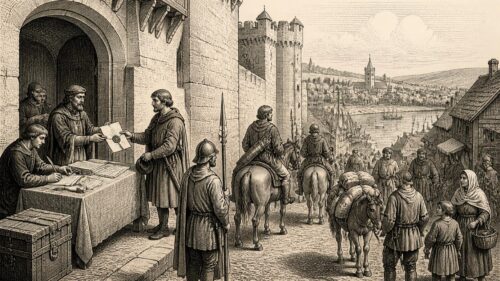
In 1323, Ireland’s importance lay in its connections with wider Plantagenet politics rather than a single decisive event. A Scottish truce cancelled planned paid military service by leading Anglo-Irish magnates, leaving local rivalries intact. Roger Mortimer’s escape from the Tower raised fears for his Irish estates and supporters, prompting Chancellor Roger Outlaw’s warning mission to Edward II. The king appointed John Darcy justiciar in November, although John de Bermingham remained in office until Darcy’s arrival in 1324. Legislation addressed official abuses, requisitioning, trade, fees and pardons. Meanwhile, Cistercian authorities condemned national exclusion in Irish monasteries, revealing ethnic and institutional tensions.
O'Nolan Attack
Archived: 24 October 2026
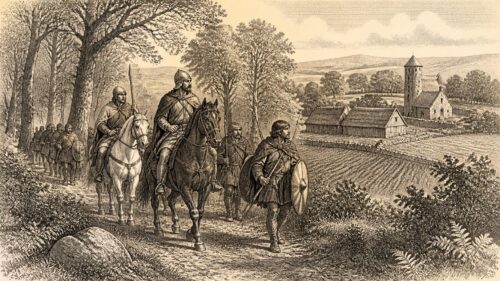
In 1322 Ireland was divided among royal, settler, ecclesiastical and Gaelic powers, while Edward II demanded troops, supplies and revenue for war against Scotland. John de Bermingham organised the Irish levy, leaving William de Bermingham deputy justiciar. On 29 September, O'Nolan forces killed Andrew Bermingham, Nicholas de la Launde and others in the unstable Leinster frontier. Dynastic murders, capture and plunder in Annaly, Connacht and the midlands revealed competition within Gaelic lordships. Obituaries recorded the deaths of Ardagh's bishop and legal scholar Andrias Mag Mailin. Uneven, sometimes misdated annals portray military, political and economic pressures rather than a nationwide crisis.
Cattle Calamity
Archived: 24 October 2026
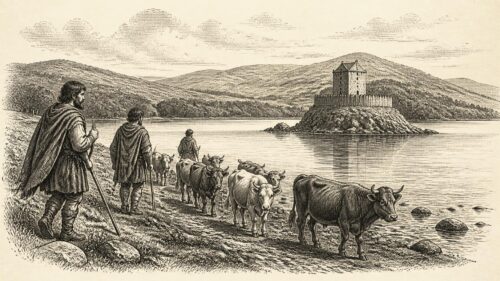
In 1321, Irish annals recorded an unprecedented cattle murrain across Ireland, corroborated in Connacht, Ulster and Munster, where famine was also noted. The disease, of unknown cause, destroyed vital sources of food, labour, wealth and political obligation, exposing fragile recovery after earlier war and subsistence crises. Conflict nevertheless continued: Cathal Ó Conchobair destroyed the Rock of Loch Key and rivals were killed; Oriel endured dynastic mutilation and assassination involving Dundalk; Meath forces defeated Offaly chiefs; and a Munster hosting sought castles and hostages. These events reveal local, interwoven Gaelic and settler politics, but cattle mortality remained the year’s island-wide calamity.
Cathedral Studium
Archived: 24 October 2026
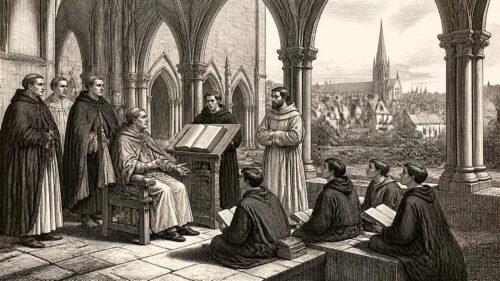
In 1320, Ireland showed contrasting efforts at order and continuing conflict after the Bruce invasion. Archbishop Alexander de Bicknor established statutes for a studium generale at St Patrick’s Cathedral, appointing teachers and a chancellor to promote theology and canon law, while strengthening ecclesiastical discipline through synodal measures. Roger Mortimer’s Dublin parliament reaffirmed English statutes, regulated administration and market measures, and named the earl of Kildare deputy justiciar. Elsewhere, authority remained contested: Cathal Ó Conchobair broke peace with Maelruanaid Mac Diarmata, seizing captives and ravaging Connacht; a Connacht claimant was killed; and Munster’s Ó Briain tanist Mathgamain died violently, unsettling succession.
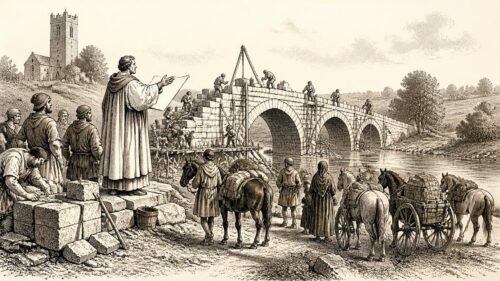
Kilcullen Bridge
Archived: 24 October 2026
In 1319, Ireland remained unsettled after Edward Bruce’s defeat, with famine, warfare and administrative disruption still affecting lordships and towns. Maurice Jakis, canon of Kildare, built a stone bridge across the Liffey at Kilcullen, improving travel and encouraging the settlement’s later growth. English officials sought missing financial accounts, reflecting weakened government. In Tyrone, Domhnall Ó Néill was expelled, sheltered in Fermanagh, restored, then lost his heir Brian to enemies. Annals also recorded killings, deaths of Gaelic and Anglo-Irish lords, and several episcopal vacancies. The year combined local reconstruction, ecclesiastical continuity, family feuds and precarious political authority across the island overall.

Bruce Defeat
Archived: 24 October 2026
In 1318, defeats at Dysert O’Dea and Faughart reshaped Ireland without bringing peace. Richard de Clare’s death ended his family’s attempt to dominate Thomond, enabling Gaelic rulers to regain regional control. Edward Bruce’s death near Dundalk ended the Scottish-backed invasion, though it exposed weaknesses within English lordship. Warfare intensified the Great Famine’s effects: requisitioning, ruined crops, disease, disrupted trade and severe weather produced acute hardship. Political alliances crossed Gaelic, settler and Scottish communities, reflecting local interests rather than national divisions. Connacht remained unstable amid dynastic conflict. Alexander de Bicknor arrived as Dublin’s archbishop and justiciar, inheriting a weakened, impoverished lordship.
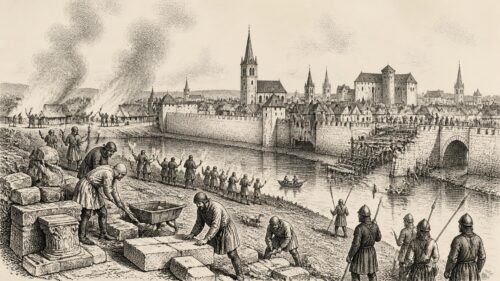
Dublin Defences
Archived: 24 October 2026
In 1317, at the height of the Bruce invasion, Robert Bruce joined his brother Edward in Ireland and marched through Meath towards Dublin. Fearing siege, Dublin’s citizens burnt western suburbs, demolished the Liffey bridge and religious buildings for defensive stone, and detained the earl of Ulster. The Bruces bypassed the fortified city, campaigned unsuccessfully in Munster, and retreated north; Robert departed in May. Famine, worsened by military requisitioning, afflicted Ireland amid warfare, dynastic struggles and castle destruction. Connacht changed kings, while learned legal culture suffered a loss. Irish leaders’ Remonstrance to Pope John XXII sought support, but Edward’s kingship endured.
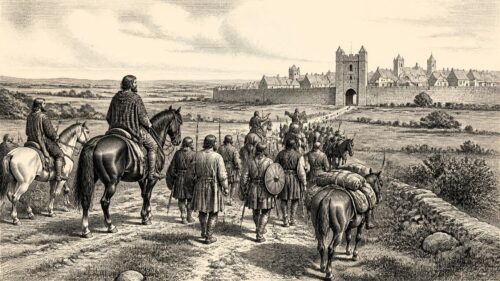
Athenry Battle
Archived: 24 October 2026
In 1316, Ireland endured Scottish invasion, provincial conflict, destructive warfare and famine. Edward Bruce, supported by Ulster allies, claimed kingship but controlled chiefly the former earldom of Ulster; his Leinster raid exposed divisions among Anglo-Irish magnates without establishing rule. In Connacht, Feidlim Ó Conchobair defeated rival Ruaidrí, built a broad coalition and attacked Anglo-Irish lordships. On 10 August, William de Burgh and the Berminghams crushed Feidlim’s army outside Athenry, killing Feidlim and leaders, and destabilising Connacht anew. Meanwhile, famine compounded military devastation. Carrickfergus surrendered to Bruce in September, yet no power secured Ireland: regional rivalries, hunger and contested lordship persisted.
Some records do not yet have a verified historical year and are awaiting chronological placement.