Citizens_carrying_mayor_in_proce…_202608041346

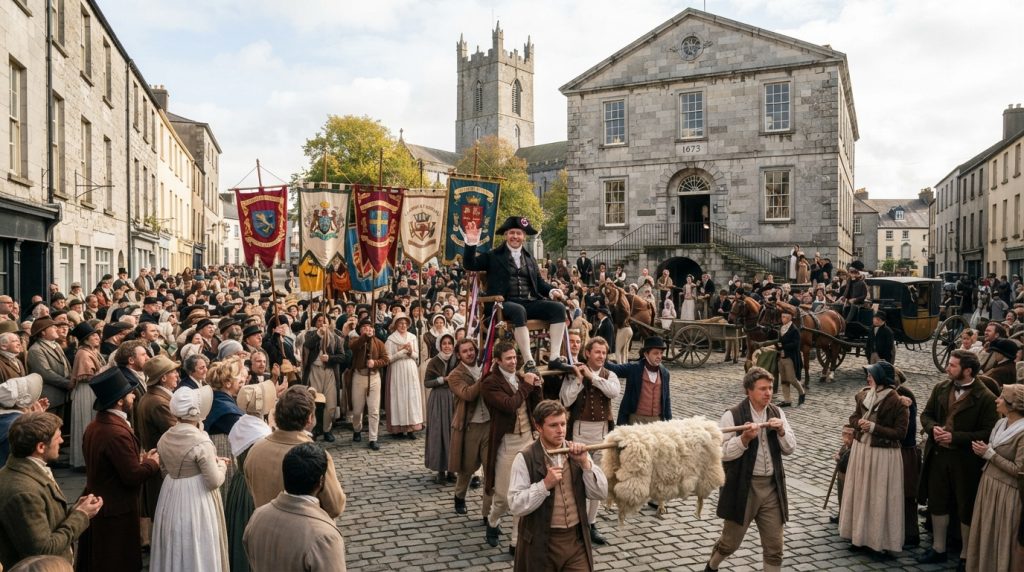
On 6 October 1824, Limerick witnessed an extraordinary civic spectacle when Mayor Henry Watson was carried through the city upon a chair. Recently re-elected, Watson had tried repeatedly to refuse the honour, but the assembled crowd insisted. From the Exchange on Nicholas Street, where the Corporation maintained its offices, citizens organised banners, summoned the Trades and planned an ambitious route. Watson finally ascended the chair before an immense gathering and was raised onto the shoulders of fellow citizens. The ceremony transformed a municipal election into a public performance of approval, filling Limerick’s streets with movement, colour, noise and political meaning.

Chairing an elected figure belonged to a long tradition of public celebration in Britain and Ireland. It allowed supporters to display loyalty physically by bearing their chosen representative above the crowd. In Limerick, however, the event also demonstrated the strength of the organised Trades. Their wardens led the procession with separate flags, while twelve banners eventually floated before Watson’s chair. The newspaper account described them as advancing in brotherly union, presenting occupational groups as civic partners. Because Watson was an alderman, mayor and newspaper proprietor, the ceremony joined municipal authority, popular participation and reporting within one carefully remembered urban occasion.

The procession first moved from Nicholas Street through Bridge Street and along the thoroughfare now called O’Connell Street. It paused outside Watson’s Glentworth Street residence for three cheers, then continued towards Boherbouy. Workers from Mr Myles’ cloth factory emerged carrying a fleece of wool, which the mayor wore as a sash. Cockades and favours presented by other Trades already covered his hat. The party returned through Upper William Street, Gerald Griffin Street, John Street, Mungret Street, High Street and Thomas Street. Carriers were replaced as exhaustion demanded, yet new volunteers continually lifted the chair and kept the celebration moving forward.

Watson’s chair then crossed the older heart of Limerick through Bank Place and Charlotte’s Quay, over Baal’s Bridge, and onwards by Mary Street, Castle Street and Thomondgate. At the Mayor’s Stone, identified as the Treaty Stone, the procession turned back by the distillery on Brown’s Quay before passing through Englishtown and Broad Street. This route linked the commercial city, medieval districts, river crossings and civic landmarks within one continuous performance. Residents encountered the mayor from windows, doorways and streets, while participating tradesmen temporarily converted ordinary roads into a symbolic ceremonial map of local identity and collective belonging for all present.

The final stages carried Watson towards the New Barracks, where garrison commander Sir John Eiley saluted the procession and remained uncovered while it passed. Travelling down Military Road and through the Crescent, the party received cheers, wine and refreshments from surrounding houses. At Watson’s home, the mayor addressed the Trades after the crowd quietened. He said he felt overpowered by the honour and had merely discharged his duty during the previous year. The day’s importance rested not upon formal ritual alone, but upon thousands of citizens claiming Limerick’s streets to celebrate municipal service, occupational solidarity and their chosen civic representative.

Primary Sources

  1. Limerick Chronicle, 6 October 1824, contemporary report describing the chairing of Mayor Henry Watson and the procession through Limerick City. Exact page and column require further verification.
  2. Henry Watson, Mayor of Limerick, letter to Henry Goulburn, Chief Secretary for Ireland, concerning enforcement against illegally caught salmon on the River Shannon, 15 April 1824, Chief Secretary’s Office Registered Papers, National Archives of Ireland. Precise archival reference requires further verification.
  3. Pigot and Company, Pigot and Co.’s City of Dublin and Hibernian Provincial Directory, 1824, Limerick section, contemporary listings of municipal officials, businesses, trades and residents.
  4. Limerick Corporation, Register of Applicants for Freeman Status, 29 August 1823–12 October 1841, Limerick Archives, reference L/OC/2/2.
  5. Commissioners Appointed to Inquire into the Municipal Corporations in Ireland, Appendix to the First Report, 1835, official evidence and report concerning the Corporation of Limerick.

Associated Archives

Social Life and Customs in LimerickSocial Life and Customs
People and Personalities of LimerickPeople and Personalities
Historic News from LimerickHistoric News

Related Articles

PeopleLifeLimerickStreetWatsonProcession

Share Your Thoughts

We welcome your thoughts, memories and local knowledge about this article. Perhaps you recognise a person, place, building or event, remember a related story, or can provide additional names, dates or details. Every contribution helps improve the historical record and may reveal information that would otherwise be lost. Please share your comments, corrections and personal recollections with us, whether they are brief observations or detailed accounts. Your knowledge can help connect families, communities and generations while strengthening Limerick Archives for future visitors. By taking part, you become an important contributor to preserving and sharing Limerick’s history with everyone worldwide today.

Your email address will not be published. Required fields are marked *

Books Supporting the Archive

Profits from every book help fund the continuing preservation, restoration and free public sharing of Limerick’s history.

Cover of Ashes

Ashes

The Ashes Trilogy, Book One

Ashes begins the story of a group of children growing up in the streets and lanes of Limerick, where poverty and hardship are balanced by humour, imagination and fierce friendship. Their city is more than a setting: it watches, remembers and gives voice to lives often absent from official history. As the children explore their neighbourhood, they encounter family pressures, faith, hunger, danger and the first signs of a changing world. Through their adventures and loyalties, the novel captures the resilience of ordinary people and introduces the characters whose lives will unfold across the three volumes of The Ashes Trilogy.

All Books Available As Instant E-Books, Paperbacks & Hardbacks Worldwide.

Cover of Gurriers

Gurriers

The Ashes Trilogy, Book Two

Gurriers continues the lives of the Limerick children introduced in Ashes as childhood freedom begins to give way to work, responsibility and harsher choices. Their friendships remain strong, but poverty, family expectations, faith and the pressures of growing older test loyalties once taken for granted. The streets and lanes still offer humour, adventure and belonging, yet the wider world increasingly intrudes upon their lives. Through vivid dialogue, memorable characters and the watchful voice of Limerick itself, the novel explores resilience, identity and change while showing how even the closest companions can be drawn towards futures by circumstances beyond their control.

All Books Available As Instant E-Books, Paperbacks & Hardbacks Worldwide.

Cover of Scattered

Scattered

The Ashes Trilogy, Book Three

Scattered concludes The Ashes Trilogy as the friends who once shared Limerick’s streets and lanes face adulthood, work, hunger, faith, family duty and emigration. Time has altered their ambitions, tested their loyalties and carried some beyond the city that formed them. Yet memory continues to bind Louie, Seamus, Joe, Sean, Peter, Tony, Bardy, Maura, Eileen, Nora, Lingo and the mysterious Gleamer. Narrated through the enduring presence of Limerick itself, the novel explores separation, sacrifice and survival while recognising the humour and affection that remain. Together, their scattered lives complete a moving portrait of friendship, community and change across changing generations.

All Books Available As Instant E-Books, Paperbacks & Hardbacks Worldwide.

Cover of Threshold

Threshold

The Troubles Trilogy, Book One

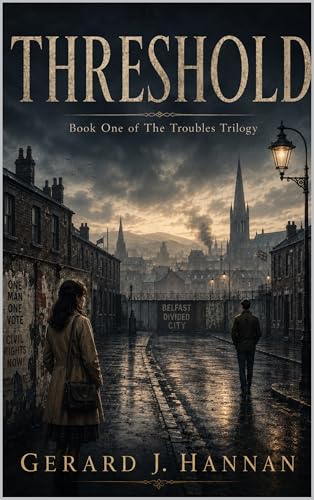
Threshold opens in Belfast in 1968, where the Catholic Devlins and Protestant Morrows confront a city divided by religion, memory and fear. Civil rights marches, police violence, riots and internment transform ordinary streets into dangerous frontiers while political conflict enters homes, workplaces and schools. At the centre are Aileen Devlin and Thomas Morrow, whose relationship challenges the boundaries their families regard as essential to survival. As loyalty hardens into suspicion, both must decide whether inherited allegiance excuses injustice. Through family arguments, upheaval and private courage, the novel explores love, conscience, division and survival during the opening years of the Troubles.

All Books Available As Instant E-Books, Paperbacks & Hardbacks Worldwide.

Cover of Hunger

Hunger

The Troubles Trilogy, Book Two

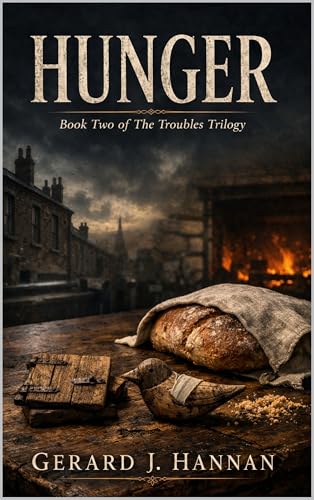
Hunger is Book Two of The Troubles Trilogy, set in Belfast during the 1980s. Aileen Devlin and Thomas Morrow have built a fragile life across the city’s sectarian divide, but the conflict threatens the home they created for their daughter, Claire. As hunger strikes, the Anglo Irish Agreement and violence reshape Northern Ireland, republican Declan and loyalist Billy exploit fear, grief and vulnerable young men. Against them stand Aileen, Kathleen and Elsie, whose quiet strength keeps their families human. This is a story of love, survival and the courage to place people before causes in a divided society under pressure.

All Books Available As Instant E-Books, Paperbacks & Hardbacks Worldwide.

Cover of Crossing

Crossing

The Troubles Trilogy, Book Three

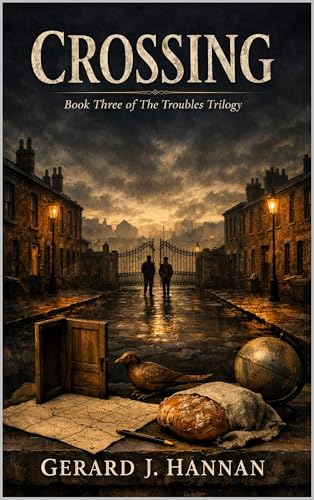
Crossing concludes The Troubles Trilogy during the decade from 1990 to 2000, as Belfast moves from violence towards negotiation, ceasefires and uncertain peace. The Devlin and Morrow families face political change alongside grief, ageing, divided loyalties and the consequences of choices made across three decades. Relationships once threatened by religious boundaries are tested by memory, mistrust and the fear that compromise may betray the dead. As the peace process gathers momentum, ordinary people must decide whether reconciliation is possible. The trilogy closes with a story of endurance, forgiveness, loss and hope beyond inherited division, proving that peace begins with courage.

All Books Available As Instant E-Books, Paperbacks & Hardbacks Worldwide.

Cover of Severance

Severance

Historical Novel

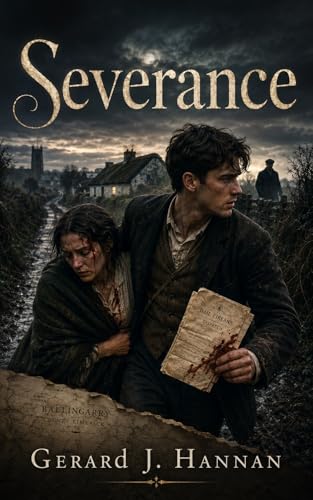
Severance is a historical novel set in Ballingarry, County Limerick, during Ireland’s struggle for independence. A torn and bloodied dispatch passes through fields, kitchens, lofts and hidden routes, placing everyone who handles it in danger. Michael Enright carries the burden of trust, while Mary, Molly and their neighbours struggle to preserve the message and protect one another. Against them, Captain Edward Harcourt studies every delay, wound and fragment for clues. As loyalty, fear and betrayal tighten around the hidden network, ordinary people must decide what they are willing to risk when history enters their homes and silence itself becomes dangerous.

All Books Available As Instant E-Books, Paperbacks & Hardbacks Worldwide.

Cover of Limerick Generations: 1900 to 1909

Limerick Generations

1900 to 1909

Limerick Decalogy, Book One

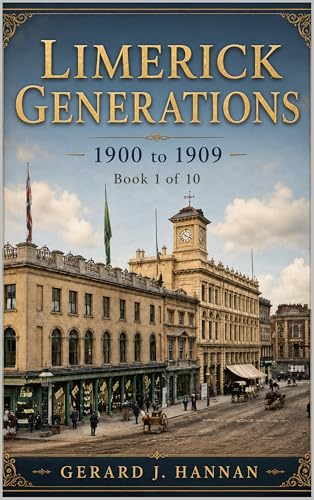
Limerick Generations: 1900 to 1909 opens the decade by documenting a city and county entering the twentieth century amid political debate, commercial activity, poverty, faith and technological change. Month by month, the book connects major Irish developments with local events, institutions, streets and communities. Public meetings, labour, transport, education, sport, business and everyday life reveal how national questions were experienced in Limerick. Historical reports and carefully reconstructed narratives bring forgotten moments and ordinary people into focus. As Book One of Limerick Decalogy, it establishes the foundation for a ten volume journey through one hundred years of local history and memory.

All Books Available As Instant E-Books, Paperbacks & Hardbacks Worldwide.

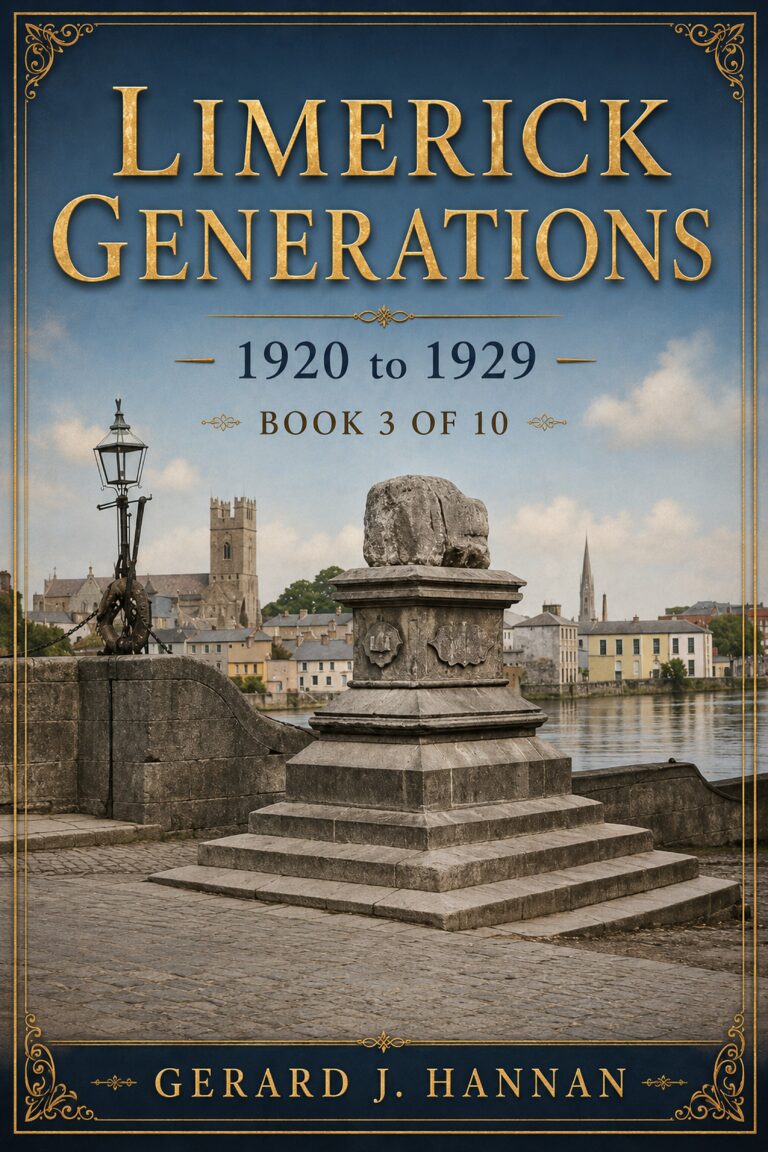
Cover of Limerick Generations: 1910 to 1919

Limerick Generations

1910 to 1919

Limerick Decalogy, Book Two

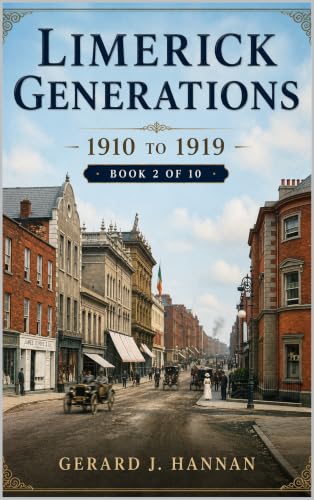
Limerick Generations: 1910 to 1919 traces a decade of political transformation, labour conflict, war, revolution and social change across Limerick city and county. Home Rule, unionist resistance, trade union organisation and the First World War entered streets, farms, schools, workplaces and family life. The Easter Rising, conscription crisis, influenza pandemic and general election altered public loyalties and expectations. The decade culminated in the Limerick Soviet of 1919, when workers challenged military restrictions through organised collective action. As Book Two of Limerick Decalogy, the volume preserves local experiences of hardship, courage, grief, endurance and change during years of intense historic upheaval.

All Books Available As Instant E-Books, Paperbacks & Hardbacks Worldwide.

Gerard J. Hannan

Books By Gerard J. Hannan

Explore Gerard J. Hannan’s published and forthcoming books, spanning historical fiction, Limerick humour, family sagas and detailed studies of local and modern Irish history. Each title offers a distinctive story, subject or perspective, reflecting his interest in people, memory, identity, conflict and social change. From comic observations rooted in Limerick life to ambitious novels shaped by major historical events, the collection presents a varied and expanding body of work. Every book is accompanied by its cover, full description and publication details, with a direct Amazon link included wherever an edition is currently available for readers to purchase or discover more.

View All Books