

Castlepook in the Cold31807 BCE
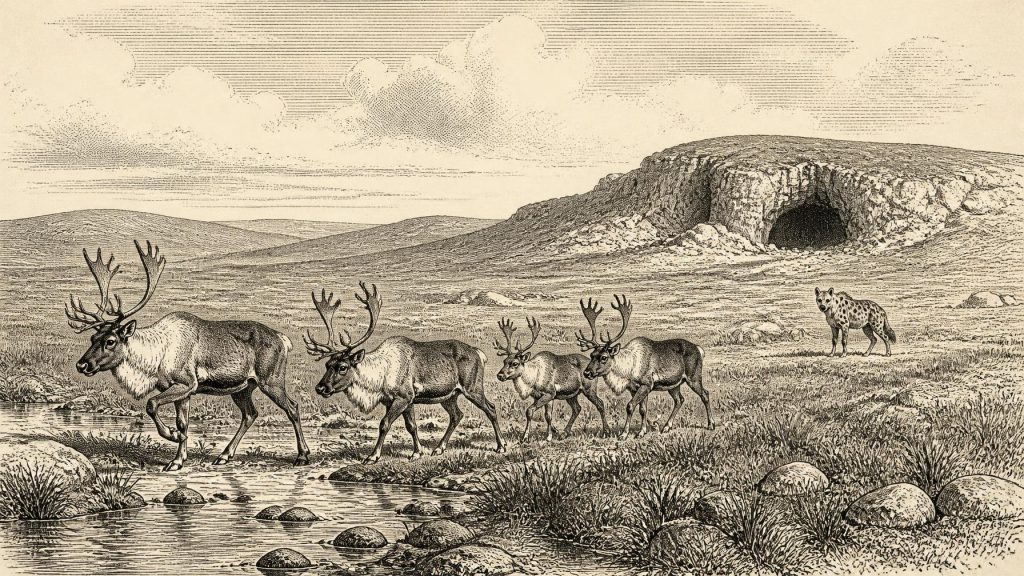
The reference year 31,807 BCE locates Ireland within a broad cold interval of the Late Pleistocene. Cave deposits, freshwater sediments and glacial geology provide environmental evidence, without securely identifying an event in that calendar year. Open tundra and cold-adapted animals persisted in parts of Ireland as regional ice expanded. Castlepook Cave in County Cork preserves significant mammal remains from the wider period. Derryvree studies, museum collections, ice reconstructions and radiocarbon calibration provide complementary context. The article explains why the surviving record supports ecological reconstruction rather than political narrative, treating annual chronology as an organising framework for a changing prehistoric landscape.
Dateline
31,807 BCE is a modern archive reference point within the Late Pleistocene. No Irish event can be fixed securely to this exact year. Evidence from cave deposits, freshwater sediments and glacial geology instead describes a broader cold interval.
Ice-Age Ireland
Open tundra habitats and cold-adapted animals remained present in parts of Ireland while the British-Irish Ice Sheet was expanding. Castlepook Cave in County Cork preserves important mammal remains from this wider period.
Interpretation
The surviving material supports an environmental reconstruction rather than a political narrative. Exact calendar precision is unavailable, so this year is best understood as one point within a changing Ice Age landscape.
Primary Sources
Research draws on National Museum of Ireland collections, Castlepook studies, Derryvree environmental evidence, BRITICE-CHRONO reconstructions and radiocarbon calibration research.