17th Century Ireland CE
Archived: 14 October 2026
Abstract
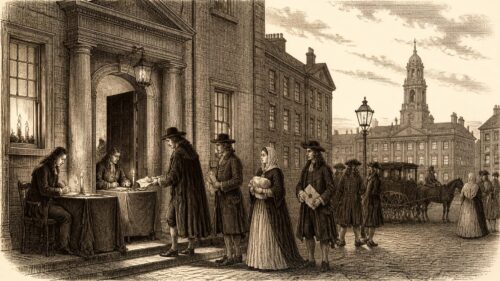
In 1700, the Act of Resumption required claimants to register interests in forfeited Irish estates at Chichester House, Dublin, producing over 3,000 claims involving families, creditors, tenants and purchasers. The process consolidated a post-Williamite Protestant order while exposing Catholic insecurity over land and rights. Ireland remained a separate but subordinate kingdom, governed through London-linked institutions amid confessional restrictions and commercial controls, notably woollen export limits. Agricultural life, regional trade and Dublin's growth continued under unequal conditions. Intellectual activity included Edward Lhuyd's antiquarian work, Ulster printing and George Berkeley's Trinity admission. Paperwork, property, religion and allegiance defined this unsettled post-war society.
Read Article

Archived: 14 October 2026
Abstract
In 1699, post-war Ireland remained shaped by land redistribution, Protestant security and contested trade. The Irish parliament concluded legislation imposing woollen export duties, supporting Church of Ireland clerical residences, protecting timber and regulating butter casks. Westminster's Woollen Act then barred most Irish wool and woollen exports to foreign markets, restricting a vital, widespread industry and encouraging, but not immediately replacing it with, linen. A parliamentary commission investigated Williamite forfeitures, reporting thousands attainted and over one million plantation acres affected, deepening uncertainty over titles. Anti-Catholic laws and proclamations restricted solicitors, arms and clerical jurisdiction. Dublin's print trade nevertheless demonstrated wider connections.
Read Article

Archived: 14 October 2026
Abstract
In 1698, enforcement of the Bishops’ Banishment Act required Catholic bishops, regular clergy and religious superiors to leave Ireland by 1 May, weakening Catholic leadership while secular priests often continued clandestine ministry. Hundreds of regular clergy were transported, though enforcement varied. The policy entrenched Protestant rule after the Williamite war without creating religious equality. In April, Protestant lawyer and parliamentarian William Molyneux published The Case of Ireland, challenging Westminster’s authority to bind Ireland and linking constitutional autonomy to disputes over appeals and trade. English concern over Irish woollens foreshadowed restrictions. Thomas Molyneux’s Giant’s Causeway observations connected Ireland to scientific inquiry.
Read Article

Archived: 14 October 2026
Abstract
In 1697, post-war Ireland faced food scarcity, political consolidation and social disruption. Grain exports were restricted amid fears of shortages, while parliament reinforced Protestant ascendancy through property, security and religious legislation. It confirmed limited treaty protections for qualifying Jacobites but secured wartime forfeitures. The Banishment Act ordered Catholic bishops and regular clergy to leave, while restrictions targeted Protestant-Catholic marriages. Peace with France ended the Nine Years’ War, yet fears of Jacobitism persisted. Lightning destroyed Athlone Castle’s powder magazine, causing major damage. Scottish migration strengthened Ulster Presbyterian communities, while commercial tensions over Irish woollens and modest rebuilding reflected an uneven recovery.
Read Article

Archived: 14 October 2026
Abstract
In 1696, Williamite Ireland consolidated its post-war authority through military, fiscal and municipal controls rather than major conflict. Alarm over French-backed Jacobitism prompted proclamations against fugitives, alleged tories and absent officers, while Catholic disarmament authorised searches and deepened inequality. At Clonmel, the corporation ordered soldiers quartered in Catholic homes to prevent meetings, illustrating domestic surveillance despite continued Catholic trading. Poll and hearth taxes, regulated measures and proclamations sustained administration. Investigations into forfeited estates exposed continuing uncertainty over Catholic property rights. State-appointed fasts and thanksgivings reinforced Protestant political culture, while action against pirate Henry Every reflected Ireland’s place in imperial policing.
Read Article

Archived: 14 October 2026
Abstract
In 1695 Lord Capell’s Dublin parliament, under Poynings’ Law, consolidated Williamite rule after the Treaty of Limerick, reconciling Crown revenue needs with Protestant demands for fiscal influence. Amid fears of France, Jacobite exile and Catholic rebellion, it initiated religious exclusion. The Disarming Act required Catholics to surrender weapons and restricted ownership of horses, extending officials’ powers of search and control. The Foreign Education Act curbed Catholic teaching, overseas study and support, attaching severe civil and property penalties. Parliament also regulated property, trade, coinage and worship. Its legislation strengthened administration while making Catholic disability a durable foundation of the post-war settlement.
Read Article

Archived: 14 October 2026
Abstract
In 1694, Ireland’s post-Williamite settlement advanced through administration rather than warfare. Commissioners began hearing claims under the Articles of Limerick, determining Jacobites’ rights to property, livelihoods and legal protection. Dublin’s Lords Justices managed revenue, including hearth-money exemptions, while debating a parliament whose supply might secure Protestant interests; no parliament met. Government fasts, Trinity College’s centenary celebration and Jonathan Swift’s diaconal ordination reflected Protestant public culture. Portarlington’s French Reformed register documented an emerging Huguenot community. Rewards for robbers and alleged rebels showed continuing insecurity. Queen Mary II’s death made William III sole monarch, leaving Ireland’s constitutional, religious and property settlement unfinished.
Read Article

Archived: 14 October 2026
Abstract
In 1693, Ireland, though no longer a battlefield after the Treaty of Limerick, remained unsettled under Williamite rule. Lord Lieutenant Henry Sydney was recalled, parliament dissolved, and lords justices governed amid English pressure. Protestant military recruitment reinforced the new settlement, while treaty claims and forfeiture investigations determined former Jacobites’ property rights. Authorities pursued suspected tories, rapparees, priests and their families. Ireland remained involved in the Nine Years’ War: Patrick Sarsfield and John Barrett died after Landen, and trade with France was banned. Dublin gained a Huguenot congregation, while Vertue Rewarded transformed war into fiction. Official thanksgiving proclaimed restoration, despite division.
Read Article
Archived: 14 October 2026
Abstract
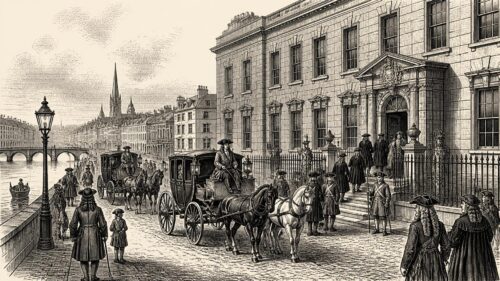
In 1692, post-war Ireland remained unsettled despite Williamite victory. Authorities ratified and administered the Treaty of Limerick, processed claims, organised Jacobite departures, restored taxation, regulated currency, disarmed Catholics and addressed billeting, crime and militia security. Lord Sydney summoned the first Williamite parliament, whose Protestant members recognised William and Mary, defined Ireland’s attachment to England, and portrayed victory as deliverance from Catholicism and French influence. Commons nevertheless contested control of money bills under Poynings’ Law. Treaty protections coexisted with tightening restrictions on Catholics. Ruvigny’s advancement foreshadowed forfeiture and Protestant settlement, while Charles O’Kelly’s Jacobite history recorded a competing memory of defeat.
Read Article
Archived: 14 October 2026
Abstract
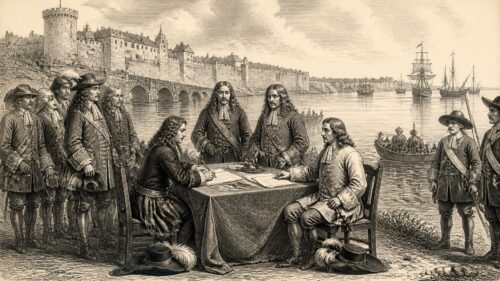
In 1691, Williamite forces broke Jacobite power in Ireland, ending the war begun after James II’s overthrow. Ginkel captured Athlone, then defeated Saint-Ruth’s army at Aughrim, where the French commander’s death precipitated rout and Galway’s surrender. Limerick, divided after Tyrconnell’s death and deprived of resources, endured siege, bombardment and a Williamite crossing of the Shannon. Articles signed on 3 October ended organised resistance, offering protections for Catholic property, trade and worship, though their wording and enforcement remained disputed. Military terms enabled departure, Williamite service or homecoming. Thousands entered French service, while William and Mary secured sovereignty amid unsettled political consequences.
Read Article
Loading more articles…




