Brian’s Northern Test1004 CE
In 1004, Brian Bórama’s claim to supremacy over Ireland remained ambitious but incomplete. Having subordinated Máel Sechnaill of Mide, he faced determined northern resistance from Cenél nEógain. The Annals of Ulster record that they obstructed his intended circuit of Ireland. At Cráeb Tulcha on 14 September, Cenél nEógain defeated Ulaid; Ulaid king Eochaid mac Ardgar and Ailech king Áed Ua Néill died, destabilising both powers. Traditions associate this period with Brian’s expedition to Armagh, demands for hostages, and gold offering, linking political display with ecclesiastical authority. Annals record clerical deaths, regional killings, Dublin’s burning, and Máel Sechnaill’s injury, revealing insecurity.
Dateline
The year 1004 stands in the difficult middle of Brian Bórama’s reign as king over Ireland: after the symbolic breakthrough that made the former king of Munster pre-eminent, but before the later campaigns that brought fuller northern submissions. The record is not a tidy narrative. Irish annals preserve short notices, sometimes placed under neighbouring years because of different chronological systems. What can responsibly be said is that 1004 was dominated by the northern question: the resistance of Cenél nEógain and their neighbours, the shock of the battle of Cráeb Tulcha, and Brian’s attempt to turn kingship into acknowledged authority across the island.
Brian’s Kingship After 1002
By 1004 Brian had already forced Máel Sechnaill mac Domnaill, king of Mide and former king of Tara, into a subordinate position. This did not make Ireland a unified state in a modern sense. Political authority still worked through provincial kings, overkings, client rulers, hostages, tribute, marriage alliances and coercive military display. Brian’s claim depended on repeated action: mustering armies, taking pledges, rewarding allies and showing that no major dynasty could ignore him.
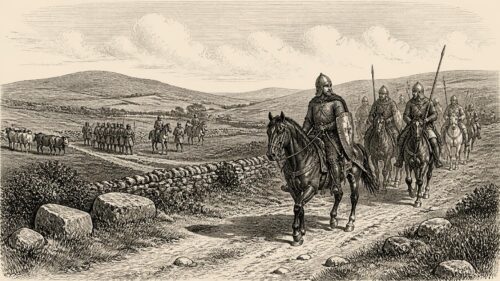
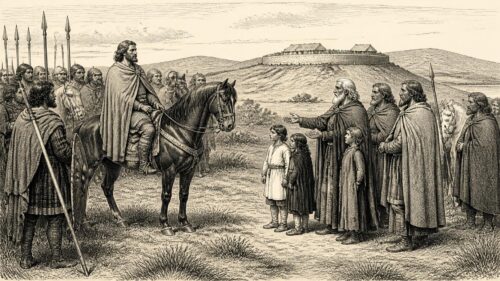
The north was the hardest test. The northern Uí Néill, especially Cenél nEógain, had deep prestige and military power, and their rulers were not inclined to accept a Munster king as uncontested overlord. The annals for the years around 1004 describe Brian trying to make a circuit of Ireland, the kind of royal progress that would publicise supremacy as much as enforce it. The Annals of Ulster place in 1004 a campaign in which Brian led an army to Trácht Eothaile, intending to make such a circuit, but was prevented by Cenél nEógain. That terse report is important: it shows not triumphant conquest, but active resistance.
Cráeb Tulcha
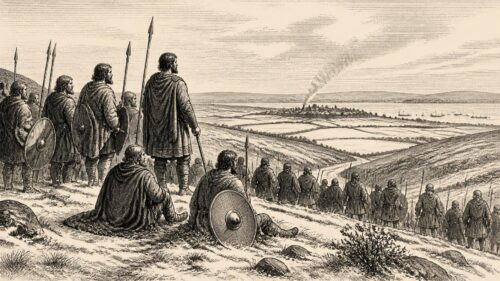
The firmest and most dramatic event of the year is the battle of Cráeb Tulcha. The Annals of Ulster date it precisely to Thursday, 14 September, and describe it as a battle between the Ulaid and Cenél nEógain. The Ulaid were defeated, and their losses were severe. Eochaid son of Ardgar, king of Ulaid, fell with members of his close kindred, including Dub Tuinne and two sons of Eochaid. The annal also names other leaders among the dead and says that the fighting and rout extended as far as Dún Echdach and Druim Bó.
Yet the victors also paid a high price. Áed son of Domnall Ua Néill, king of Ailech and a leading figure of Cenél nEógain, died in the battle. Later tradition and related annalistic versions differ in detail over the circumstances, but the political result is clear enough: two major northern powers were shaken at once. The Ulaid lost a king and much of their elite; Cenél nEógain lost Áed, opening the way for Flaithbertach Ua Néill, who would become one of the most formidable northern opponents and negotiators of Brian’s later reign.
For ordinary communities, such battles were not distant royal drama. Armies had to be fed, guided and quartered. Cattle, grain, horses, stores and hostages were the working currency of power. A defeat could mean not only the death of nobles but also the exposure of client peoples to raiding, forced billeting and renewed claims by rival dynasties. The battle at Cráeb Tulcha therefore belongs both to high politics and to the lived insecurity of the countryside.
Hostages, Routes and Armagh
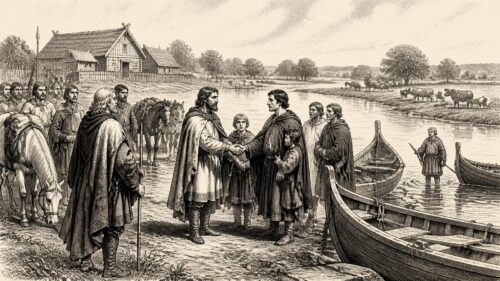
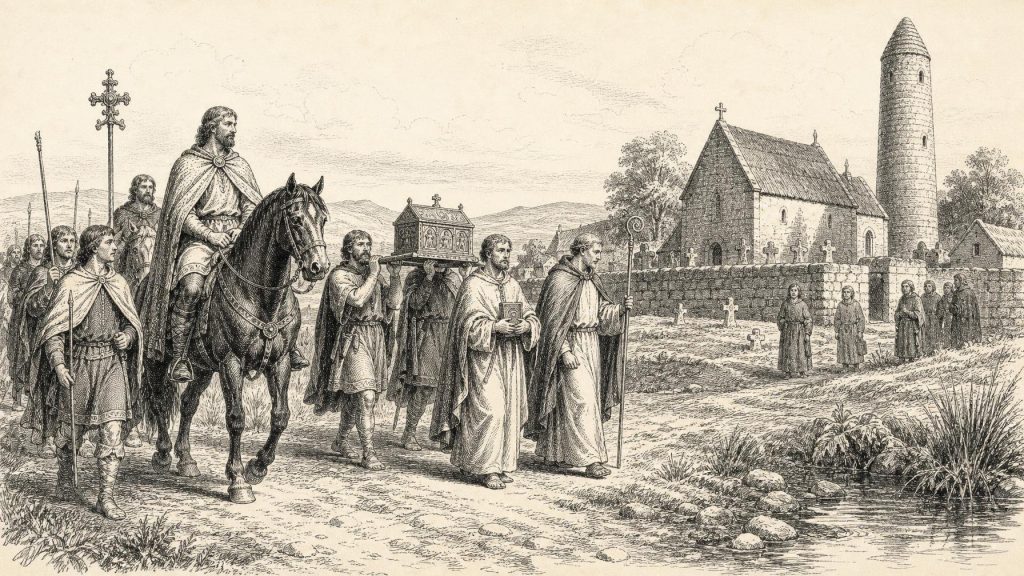
The sources also connect this period with Brian’s famous northern expedition through Mide to Armagh. The Annals of the Four Masters place under 1004 a hosting by Brian, son of Cennétig, with the men of the south into Cenél nEógain and Ulaid to demand hostages. They say the army passed through Mide, spent a night at Tailtiu, remained a week at Armagh, and that Brian left twenty ounces of gold on the altar there. The army then went into Dál Araide and took pledges from Dál Araide and Dál Fiatach.
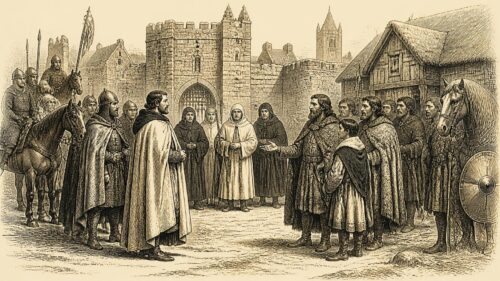
Other annalistic traditions place similar notices under 1005 or 1006, and modern scholars have warned against treating every entry as a diary-like record. The safest conclusion is that Brian’s Armagh policy belongs to the immediate years around 1004, with the Four Masters explicitly assigning one major visit and offering to 1004. It should not be embellished into a coronation, because the sources do not say that. It was instead an act of political theatre and ecclesiastical diplomacy: a southern king displaying wealth at Ireland’s most prestigious Patrician church while pressing northern rulers for submission.
Armagh mattered because it claimed the inheritance of Patrick. Its church, relics and learned community gave royal acts a sacred and island-wide language that no purely provincial centre could provide. A related note in the Book of Armagh, usually associated with this period, records an agreement involving Brian and calls him imperator Scotorum, commonly translated as “emperor of the Irish” or “emperor of the Gaels”. The dating of that note has been debated, and it should not be forced into a precise day in 1004. Its significance, however, fits the politics of the year: Brian and Armagh both benefited from presenting his overlordship and Armagh’s primacy as mutually reinforcing.
Deaths Among Clerics and Scholars
The annals for 1004 are also crowded with ecclesiastical deaths. Eochaid Ua Flannacáin, connected with Armagh and Cluain Fiachna, is described in the Annals of Ulster as a master of poetry and historical lore who died in his sixty-ninth year. The notice preserves praise for his learning, a reminder that eleventh-century Ireland valued professional memory: genealogies, origin legends, praise poetry, legal precedent and sacred history were all tools of power. A king needed warriors, but he also needed people who could articulate claims to land, precedence and legitimacy.
Other churchmen died in or near this year according to different annals: Aengus son of Bresal, successor of Cainnech, died on pilgrimage at Armagh; Dub Sláine Ua Lorcáin, superior of Imlech Ibair, also died; the Four Masters add obits for abbots and bishops including figures associated with Mainistir Buite, Iona, Cill Lamhraighe, Leighlin and Saighir. Such entries are brief, but they map a dense religious landscape. Monasteries were centres of worship, burial, schooling, manuscript work, hospitality and lordship. They were not outside politics; they were deeply embedded in it.
The fact that Armagh appears both as a place of pilgrimage and as a stage for Brian’s diplomacy shows the double nature of the great churches. They served devotion and learning, but also mediated status. Oaths could be sworn on books, bells and relics. Gifts to altars were spiritual offerings, yet they also made public statements about wealth, piety and protection.
Regional Violence and Dublin
Beyond the northern campaigns, 1004 saw smaller but revealing acts of violence. The Annals of Ulster record killings among the Uí Fhiachrach Aidni, the death of Domnall son of Flannacán, king of Fir Lí, and the death of Muiredach son of Diarmait, king of Ciarraige Luachra. They also note that two of the Uí Chanannáin were killed by Ua Maíl Doraid. These notices show a political world in which local lordships mattered. Brian’s high-kingship did not suspend regional rivalries; it operated through and against them.
The Four Masters place in 1004 the burning of Áth Cliath, Dublin, by the people of south Brega “by secrecy”. The wording is brief and the circumstances obscure, but Dublin’s inclusion is significant. By this time Dublin was not simply a raiders’ camp. Archaeology and coin evidence show a wealthy Hiberno-Scandinavian town of craft production, maritime trade and silver exchange. Sihtric Silkbeard’s Dublin coinage had begun only a few years earlier, around 997 or 998, making minted silver part of Ireland’s political economy. A raid or burning at Dublin therefore touched a centre of commerce as well as a royal stronghold.
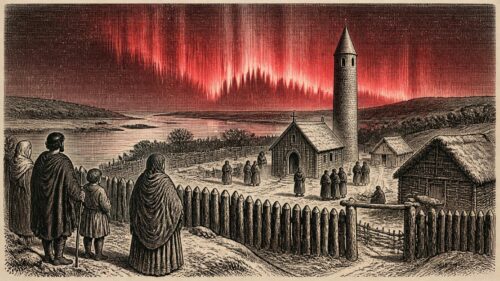
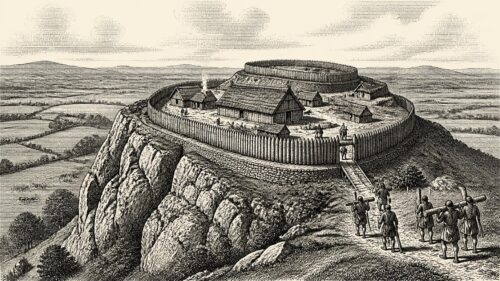
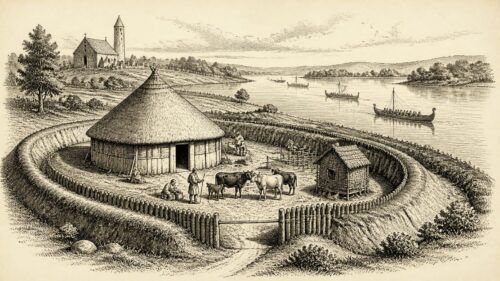
In the countryside, most people still lived from farming rather than urban trade. Early medieval settlement was dominated by enclosed farmsteads, raths, cashels, crannogs and church settlements. Cattle remained central to status, food rents and raiding, though grain, pigs, sheep, dairying, craftwork and exchange all formed part of the wider economy. The annalistic language of hostages and pledges can seem abstract, but behind it stood real transfers of food, animals, labour and honour.
An Unsettled Year
One striking late notice in the Annals of Ulster says that Máel Sechnaill, king of Tara, fell from his horse and lay dangerously ill. The entry is easy to overlook, but it hints at the fragility of politics. Máel Sechnaill was no longer the dominant king he had been, yet he remained essential to the balance of power in Mide and to Brian’s dealings with the Uí Néill. A serious injury to such a figure could unsettle alliances and expectations.
In retrospect, 1004 looks like a year in which Brian’s supremacy was visible but incomplete. He could mobilise large forces, reach the north, associate himself with Armagh and demand hostages. Yet Cenél nEógain could still block him, and the northern dynasties continued to fight their own wars. Cráeb Tulcha weakened old structures without immediately creating stable new ones. The year’s religious obits remind us that learned churches preserved the memory of these events, while the notices of raids, deaths and burnings reveal the cost of ambition on the ground. Brian’s kingship was becoming island-wide in aspiration, but in 1004 it still had to be argued, sanctified and enforced mile by mile.
Primary Sources
- The Annals of Ulster: Year U1004
- The Annals of Ulster
- Annals of the Four Masters: Part 11
- Annals of the Four Masters
- Annals of Inisfallen: Part 56
- Annals of Inisfallen
- Chronicon Scotorum
- The Book of Armagh – MS Trinity College Dublin 52
- The Liber Angeli
- Brian Boru and the Book of Armagh
- Brian Boru: imperator Scotorum
- ‘Emperor of the Irish’: Brian Boru and the Battle of Clontarf 1014 – Rise to Power
- Trinity College Dublin in Conjunction with the National Museum of Ireland Celebrate Brian Boru and the Battle of Clontarf
- 950-1450: Vikings, Normans and Medieval Mints
- Viking
- Brian Bórama (Bóruma, Boru)
- Ua Néill, Flaithbertach
- Patrick (Patricius, Pátraic, Pádraig)
- Agriculture, Settlement and Society in Early Medieval Ireland
- The Archaeology of Livestock and Cereal Production in Early Medieval Ireland, AD 400-1100
- The Early Medieval Archaeology Project: Reconstructing the Early Medieval Irish Economy
- The Primatial Claims of Armagh, Kildare and Canterbury