Power and Reform1139 CE
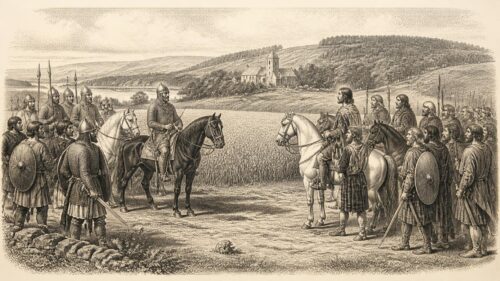
In 1139, Ireland remained politically fragmented, with Tairdelbach Ua Conchobair’s high-kingship dependent on force, alliances and hostages. He demonstrated authority by diverting the River Suck through marshes, strengthening Connacht’s eastern frontier, and by blinding a rival. Across Ireland, dynastic feuds brought killings, church burnings, plundering and violated sanctuary, while Munster’s Uí Briain exploited Cormac Mac Carthaig’s recent death. Church leaders negotiated peace between Munster and Leinster, and Malachy began his journey towards Rome, linking reformers with continental Christianity. Dublin’s religious life developed, poets and clerics died, and ordinary people directly bore warfare, tribute and labour demands during the troubled year.
Dateline
Ireland in 1139 was governed not as a single state but through an unstable hierarchy of provincial kings, regional rulers and local dynasties. Tairdelbach Ua Conchobair, king of Connacht, was the leading claimant to the high-kingship, yet his authority depended upon military strength, alliances, hostages and the cooperation of subordinate rulers. The annals present a year of killings, raids and broken protections, but also record diplomacy, major engineering work, ecclesiastical reform and the death of a celebrated poet. Their entries were compiled in different centres and sometimes disagree in detail or chronology, so events securely assigned to 1139 must be distinguished from developments that merely began or continued during the year.
A King Reshapes Connacht
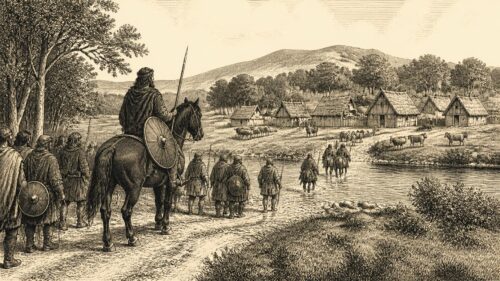
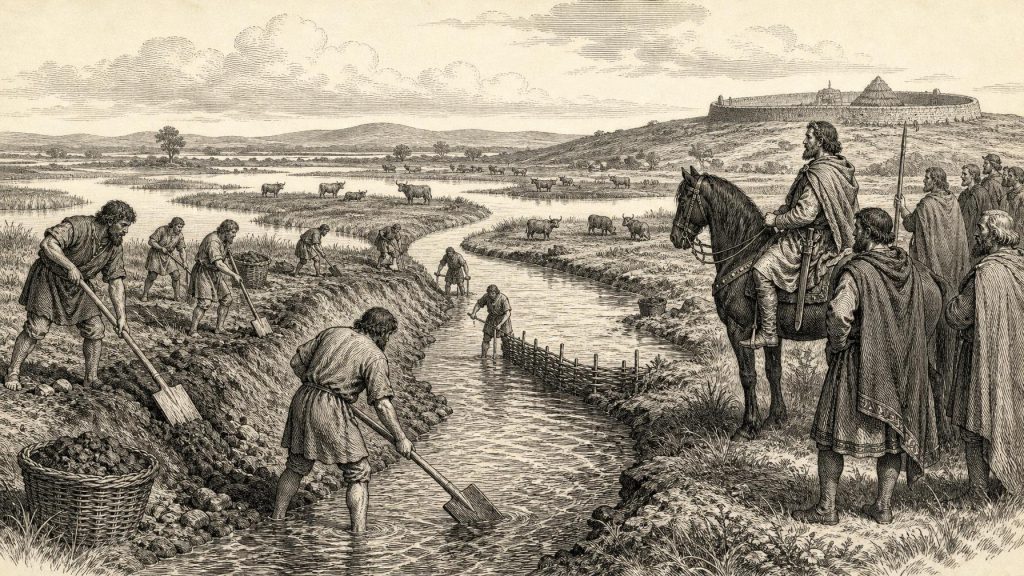
The most unusual firmly dated undertaking was Tairdelbach Ua Conchobair’s alteration of the River Suck. The Annals of Tigernach say that the river was dug so that its waters entered marshes, created large lakes and flowed onwards towards the Shannon system and Lough Ree. A muster of Connachtmen carried out the work. This was not simply drainage or water supply. It formed part of Tairdelbach’s wider programme of controlling strategic routes, river crossings and frontier strongholds, especially around Dunamon in eastern Connacht.
Such an operation required planning, tools, provisions and the compulsory or customary labour of a considerable population. It therefore reveals a capacity for organised public work rarely described so clearly in Irish annals. By redirecting water through marshy ground, Tairdelbach could strengthen a defensive boundary against forces approaching from Uí Maine and the midlands. The scheme also altered the lived landscape: pasture, tracks, fishing places and local settlement would all have been affected. Whatever its exact surviving course, the project was a deliberate royal intervention in the environment and a striking demonstration of Ua Conchobair power.
Tairdelbach also used harsher methods of political control. Donnchad, son of Tadc Ua Maelruanaid, was blinded on his orders. Blinding could remove a rival from kingship because physical wholeness was associated with legitimate rule. The punishment was therefore political as well as personal, allowing a king to disable an opponent without necessarily creating the blood-feud that execution might provoke.
Violence Across the Provinces
In the north, an army of the Ulaid advanced upon Tulach Óg, now Tullaghoge in County Tyrone, and burned the surrounding plain together with its churches. Tulach Óg was already a dynastic centre of Cenél nEógain, although its best-documented role as the inauguration place of the later Ó Néill lords belongs to subsequent centuries. The raid nevertheless struck at a politically significant landscape. The burning of churches should not be interpreted as hostility to Christianity: ecclesiastical settlements possessed food, livestock, valuables and strategic importance, and they were deeply entangled with the fortunes of ruling families.
The annals also record the killing of Mathgamain Ua Dubda, chief of Clann Laithbertaig, with leading men of his territory. Muirchertach, son of Niall, carried out the attack in vengeance for Conchobar Ua Lochlainn. Another source places the killing of Conchobar, son of Ardgar Mac Lochlainn and king of Ailech, in 1139 at the hands of Ua Gairmledaig. Because the surviving chronicles do not align perfectly, the safest conclusion is that northern politics remained unsettled by succession struggles and retaliatory violence among Cenél nEógain and neighbouring kindreds.
The midlands were similarly disturbed. Donnchad Ua Maelmuadha, ruler of Fir Cell and Cenél Fiachach, was killed while held in fetters by Murchad Ua Maelsechlainn. Another Ua Maelmuadha claimant, Muirchertach, was burned by the Uí Luainim inside the church of Rahan. Sanctuary could offer powerful protection, but it was not inviolable when local feuds reached their most intense stage. The manner of these deaths—one prisoner killed in bonds, another burned in a church—suggests attempts to eliminate rival leadership rather than ordinary battlefield casualties.
In the west, Áed Ua Cadhla, lord of Conmaicne Mara in Connemara, was killed by one of his own people. Farther east, Tigernán Ua Ruairc of Bréifne killed Fergal, chief of Muintir Eolais. The annals stress that Fergal was under the protection of the Uí Briúin and the people of Bréifne, with clergy, relics and shrines acting as guarantees. His death was consequently more than a private killing: it violated a public settlement reinforced by sacred objects and clerical authority. Such notices show how diplomacy worked. Oaths, sureties, saints’ relics and prestigious guarantors were intended to restrain violence, even though ambitious rulers sometimes ignored them.
Munster and Leinster
Munster was still reacting to the assassination in 1138 of Cormac Mac Carthaig, king of Desmond and a claimant to the overkingship of Munster. Cormac had been an energetic ruler and church patron, associated with Cormac’s Chapel at Cashel and religious building at Lismore. His removal allowed the Uí Briain to regain the initiative. The Annals of the Four Masters state that Clann Carthaig was expelled from Munster by the descendants of Brian Bóruma. This probably describes a severe but temporary displacement of the Mac Carthaig leadership rather than the permanent removal of the dynasty, which soon recovered its position in Desmond.
A one-year peace between the Munstermen and Leinstermen was negotiated by Gilla Meic Liac, successor of Patrick at Armagh, with the Bachall Ísu, or Staff of Jesus, serving as a sacred confirmation. The truce reveals the growing ability of reforming church leaders to act across provincial boundaries. It may also have given the Uí Briain freedom to consolidate their advantage against the Mac Carthaig without immediate pressure from Diarmait Mac Murchada’s Leinster.
Peace in one direction did not prevent aggression elsewhere. Mac Carthaigh’s Book records that Diarmait Mac Murchada led Leinstermen and the Norse-Irish forces of Dublin against Inis Mochta, an ecclesiastical island at or near Mentrim Lake in County Meath. They plundered the island but then suffered slaughter on the lake. The entry demonstrates that Dublin remained an independent military and commercial power whose rulers and warriors could cooperate with a Gaelic king. It also shows the continuing defensive value of islands, boats and wetlands, although isolation did not make a religious settlement safe from attack.
Clonard, one of Meath’s most renowned ecclesiastical and scholarly centres, was plundered by the men of Fernmag and the Uí Briúin. The chronicles do not provide the scale of destruction, and the raid should not automatically be connected with every other event recorded at Clonard that year. Nevertheless, attacks upon monasteries disrupted more than worship. They threatened storehouses, tenants, workshops, manuscripts, livestock and the hospitality upon which travellers, students and the poor could depend.
Malachy’s Journey
The church reform movement gave 1139 significance beyond Ireland. Máel Máedóc Ua Morgair, better known as St Malachy, began his first journey towards Rome during the year. Bernard of Clairvaux’s near-contemporary biography places the departure in 1139, while the Irish annals record Malachy’s return from Rome in 1140. The journey and its results therefore crossed the calendar boundary and should not be compressed into a single precisely dated episode.
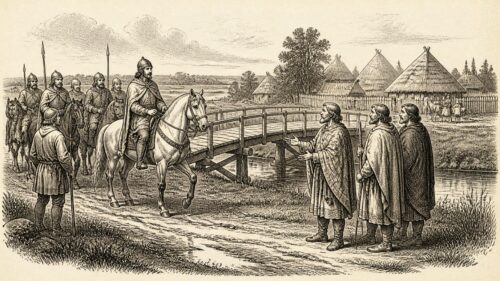
Malachy travelled through Scotland and England before reaching France, where he visited the Cistercian abbey of Clairvaux and formed a close relationship with Bernard. His purpose was to seek papal recognition, including pallia for the metropolitan sees of Armagh and Cashel. Pope Innocent II did not immediately grant them, but appointed Malachy papal legate and instructed him to advance reform through an Irish synod. These decisions most probably belong to the Roman phase of the journey in 1140, but Malachy’s departure in 1139 opened a direct channel between Irish reformers, the papacy and the rapidly expanding continental religious orders.
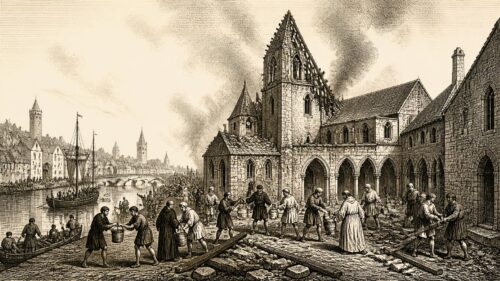
St Mary’s Abbey in Dublin is traditionally dated to 1139 as a Savigniac foundation or reorganisation of an existing religious house. The Savigniac congregation was closely related to the Cistercian movement and was absorbed into it in 1147. Although the exact circumstances of the Dublin foundation are not fully recoverable, its accepted date reflects the changing religious climate: Irish rulers and clergy were increasingly adopting communities organised according to international rules, with new architectural, liturgical and administrative practices.
Learning, Work and Memory
The death of Cú Chonnacht Ua Dálaigh was among the year’s most important cultural losses. The annals call him the best or chief ollamh of poetry in Ireland and place his death at Clonard, identifying him with Lecan in Meath. An ollamh was not simply an entertainer. Highly trained poets preserved genealogies, historical traditions and political reputations, praising generous patrons and condemning failures of lordship. Cú Chonnacht’s obituary shows the prestige already enjoyed by the Ua Dálaigh family, whose poets later served rulers across Ireland and Gaelic Scotland.
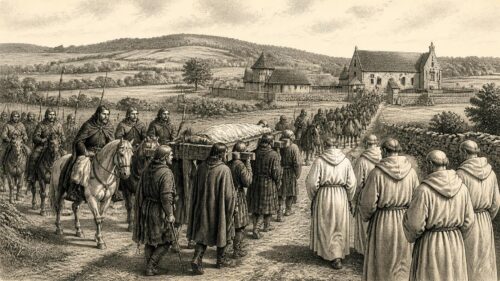
Prominent churchmen also died. The Four Masters assign the death of Máel Brigte Ua Brolcháin, bishop of Armagh, to 29 January and praise his wisdom and mildness. Cathal Mac Maelfhinn, successor of Tigernach at Clones, was remembered for providing food to clergy and laity. Such praise illuminates the social expectation placed upon religious superiors: sanctity was expressed through learning, hospitality and the redistribution of resources.
Most people appear only indirectly in the record. They cultivated cereals, tended cattle, produced butter and cheese, cut timber and turf, worked metal and moved goods along roads, rivers and coasts. Cattle remained stores of wealth, sources of food and frequent objectives of war. Dublin’s participation in Mac Murchada’s expedition reflects the connection between commerce and military politics in the port towns. The ordinary population also bore the cost of royal ambitions through labour musters, billeting, tribute, seized livestock and burned fields.
The year consequently joined destruction with institution-building. Sacred guarantees were violated, churches and islands were plundered, and rival dynasts were killed or mutilated. Yet clerics brokered provincial peace, poets and church leaders sustained learned culture, Malachy carried Irish concerns towards Rome, and Tairdelbach’s mobilisation on the River Suck displayed an exceptional command of people and landscape. Ireland in 1139 was politically fragmented, but its rulers, churches, towns and learned families were connected through networks extending across the island and far beyond it.
Primary Sources
- Annals of the Four Masters: Annal M1139
- The Annals of Tigernach
- Mac Carthaigh’s Book: Annal MCB1139
- The Annals in Cotton MS Titus A XXV
- Mac Carthaigh’s Book: CELT Document
- St Bernard of Clairvaux’s Life of St Malachy of Armagh
- Malachy (Máel-M'áedóc) Ua Morgair
- Ua Conchobair, Tairdelbach (O'Conor, Turlough)
- Gilla Meic Liac (Gelasius)
- Mac Murchada, Diarmait (MacMurrough, Dermot)
- Mac Carthaig, Cormac
- Ua Ruairc, Tigernán
- Mac Lochlainn, Muirchertach
- St Mary’s Abbey – Chapter House – Cistercian Monastery
- Religious Orders
- School of the West
- Medieval Ireland 1150–1550
- Dublin Castle Highlights
- Tullaghoge Fort
- Loch Mhiontráin / Mentrim Lake
- The Monastery of Inisnocht
- Animals and the Economy of Medieval Ireland
- Kingship, Warfare and Society in Twelfth-Century Ireland
- Have There Been Synods in Ireland in the Past?
- The Roles of Poets
- The History of Ireland: Religious Foundations