Masshouse Resistance1679 CE
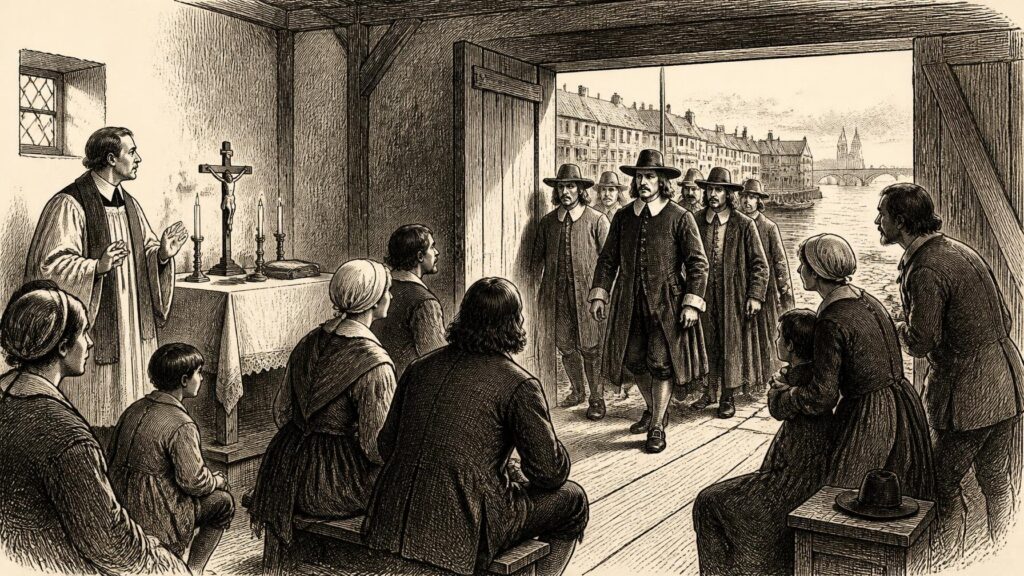
In 1679, amid the Popish Plot scare, Ormond’s Irish administration intensified measures against Catholic worship, clergy and suspected disorder. Proclamations targeted bishops, Jesuits, masshouses and tories, linking religious nonconformity with threats to royal authority. Officers entering the Merchants’ Quay masshouse met resistance, demonstrating both continuing Catholic worship and contested enforcement. A public Protestant fast nationalised fears of conspiracy. Catholic leaders, including Peter Talbot and Oliver Plunkett, faced confinement; Plunkett’s December arrest made him the scare’s principal Irish target. Authorities also guarded against Scottish unrest, pursued outlaws, regulated revenue and tobacco, and sponsored rebuilding projects, combining coercion, administration and Restoration display.
Dateline
In 1679 Ireland was governed by James Butler, duke of Ormond, Charles II’s lord lieutenant, at a moment when rumours, proclamations and local violence carried unusual political weight. The alleged ‘Popish Plot’, first publicised in England in 1678, was treated by many Protestants as evidence of an international Catholic conspiracy. In Ireland, where the memory of the 1641 rebellion, Cromwellian conquest and religious dispossession remained acute, the scare reshaped administration. It brought a sharper pursuit of Catholic clergy, pressure on public worship, and a stream of official measures against both supposed conspirators and armed robbers known in government language as tories.
Government by Proclamation
Ormond’s position was complicated. He was a durable royal servant with deep Irish connections, but he was also exposed to attack from English political opponents who accused him of insufficient vigilance. During the Exclusion Crisis, English politicians disputed whether the king’s Catholic brother, James, duke of York, should succeed to the throne. Ireland was inseparable from that wider argument: opponents of Catholic influence could present the kingdom as a potential base for a French-backed invasion or a renewed Catholic rising. Supporters of Ormond, meanwhile, stressed the importance of steady government and an army loyal to the crown.
The Irish executive answered fear with orders. A declaration of 26 March directed the imprisonment of the relatives of tories until the outlaws were killed or captured. On the same date, the government renewed its drive to discover Catholic archbishops, bishops and others exercising ecclesiastical jurisdiction derived from Rome. Four days later it offered rewards for the arrest of Catholic dignitaries and Jesuits, ordered the suppression of masshouses, and issued a further proclamation against tories. These documents do not demonstrate that a coordinated rebellion existed. They demonstrate, rather, how firmly Dublin Castle chose to connect religious nonconformity, disorder and danger to the state.
Merchants’ Quay
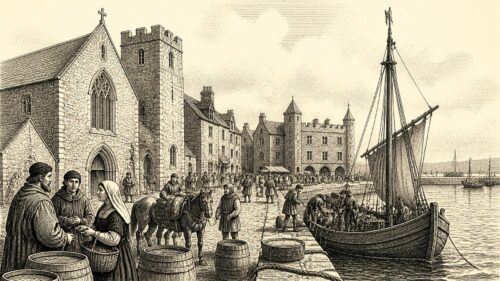
The most vivid firmly dated Dublin incident came in early April. On 1 April, John Totty, an officer at mace acting with city magistrates and other officers, entered a masshouse on Merchants’ Quay. According to the official account, a priest and a congregation were present. Totty was assaulted during the intervention. The lord lieutenant and council responded on 14 April by offering a reward for those responsible. The episode gives a rare street-level view of the year’s coercion: a Catholic gathering in a commercial riverside district, civic officers enforcing central policy, and physical resistance when worshippers and clergy were confronted.
It would be misleading to treat the surviving proclamation as a complete description of the encounter or of Catholic life in the city. It was written by the authorities and was designed to secure arrests. Yet it confirms two important things. First, Catholic worship did not disappear because statutes and proclamations condemned it; people continued to assemble. Secondly, enforcement could depend on the cooperation of Dublin’s municipal officers and could provoke conflict rather than quiet compliance. For ordinary Catholics, the distinction between a tolerated private devotion and an illegal public assembly could now carry immediate practical consequences.
A Fast for the Plot
On 14 May the Irish government appointed Wednesday 28 May as a public fast, intended to seek deliverance from ‘popish conspiracies’ and a blessing on parliament. Such fasts were political acts as much as devotional ones. They translated alarming reports from London into the ordered religious calendar of the established church, asking communities to understand insecurity through Protestant worship, prayer and collective penitence. The proclamation does not tell us how fully the observance was kept in every parish, but its issue reveals the official ambition: fear of conspiracy was to be made public, disciplined and national.
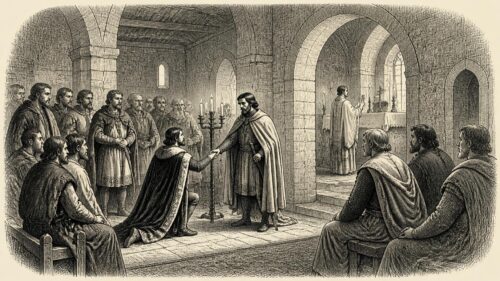
The Catholic hierarchy faced a far more dangerous landscape. Peter Talbot, Roman Catholic archbishop of Dublin, had already been imprisoned during the plot crisis and remained a conspicuous captive of the regime. His brother Richard Talbot, a Catholic courtier and later earl of Tyrconnell, had been allowed to leave for France in July 1679 after a period of restraint and substantial securities. These cases show that the government’s policy was not mechanically uniform. Family influence, court politics, evidence, sureties and Ormond’s own judgement all mattered. Nevertheless, the direction of travel was unmistakable: Catholic leaders were vulnerable to denunciation and confinement.
Oliver Plunkett’s Arrest
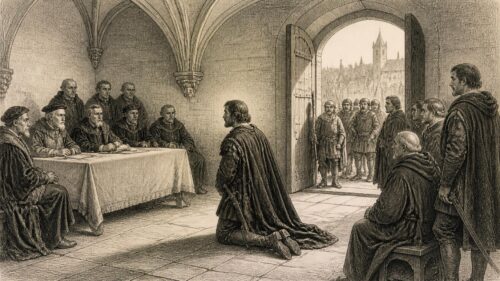
The decisive Irish arrest of the year occurred at its close. Oliver Plunkett, Roman Catholic archbishop of Armagh and primate of Ireland, had spent years attempting to restore discipline among clergy scattered by war, exile and earlier persecution. His pastoral work included visitations, synods and efforts to regulate a church which often had to operate through private houses, remote meeting places and personal networks. The plot crisis forced bishops back into concealment. In October 1679 Plunkett risked travelling to Dublin to visit the ill bishop of Meath; on 21 October the English privy council instructed Ormond to arrest Plunkett and Patrick Tyrrell, bishop of Clogher.
Plunkett was arrested in Dublin on 6 December and committed to Dublin Castle. He was accused of treasonable designs, including claims that Catholics intended to raise forces and facilitate a French landing. Those allegations belonged to the volatile political world of the Popish Plot and must not be accepted simply because they were repeated in official or hostile accounts. What is firmly placed in 1679 is the warranting of his pursuit, his arrest and his imprisonment. The later proceedings that ended in his execution belong to 1680–81; in this year, the crucial development was that one of Ireland’s senior Catholic churchmen had been removed from circulation and made the central Irish target of the scare.
Scottish Alarm and Local Violence
Ireland’s rulers also watched Scotland. On 30 June, in the aftermath of rebellion there, the Dublin administration ordered the arrest of rebels said to have come from Scotland. Officials feared that Presbyterian unrest might cross the North Channel, particularly in Ulster, where many Protestant settlers had Scottish origins and where military resources were limited. The order was precautionary, not proof that an invasion or rising had taken place in Ireland. Its significance lies in the breadth of official anxiety: the kingdom was being monitored not only for a Catholic conspiracy but also for possible spillover from Scottish dissent.
Meanwhile, robbery and outlawry were more tangible threats in some districts. The March measures against tories were followed by a December proclamation declaring Gerald Fitzgerald and his brother Richard rebels and traitors, and offering rewards for their capture after burglaries and related offences. The language of treason elevated criminal violence into a threat to royal order. For households in exposed rural areas, the immediate concern was less the grand theory of a continental plot than stolen goods, armed men, vulnerable roads and the risk that relatives might suffer for an outlaw’s actions. The government’s policy made kinship itself an instrument of policing.
Revenue, Crops and Building
Administration also reached into economic life. On 21 July an order forbade the growing of tobacco in Ireland, reflecting imperial restrictions intended to protect customs arrangements and colonial production rather than an assessment of what Irish growers might profitably cultivate. On 10 December, the same day as the renewed call for information about the plot, revenue collectors were instructed to account for money received. These measures were routine in one sense, but they underline a larger reality: a government preparing against danger also required dependable cash, records and control over taxable commerce.
Not every development in 1679 was punitive. Sir William Robinson’s patent as surveyor general was renewed on 10 April, with an increased salary supported by Ormond. Robinson was involved that year in rebuilding St Carthage’s Cathedral at Lismore, County Waterford, where work on the nave and transepts began from 1679 onwards. At Kilkenny Castle, evidence suggests that Robinson may also have entered the rebuilding of Ormond’s presence chamber. Such projects were not a simple contrast to repression: they expressed the same Restoration state and elite culture that sought order, display and permanence after decades of upheaval.
The year also saw the birth in Dublin of Thomas Parnell, later an Anglican clergyman and poet associated with the literary world of Jonathan Swift and Alexander Pope. It is a small datum beside arrest, proclamation and fear, but a useful reminder that Restoration Ireland contained more than crisis. Families educated children, churches maintained institutions, builders reshaped old ecclesiastical and aristocratic sites, and trade continued under regulation. Still, 1679 is best remembered as a year in which the machinery of government made suspicion consequential: at a riverside masshouse, in Dublin Castle’s prisons, on rural roads and in proclamations read across the kingdom.

Primary Sources
- Statute Law Revision Act 2015
- Report of the Deputy Keeper of the Public Records and of the Keeper of the State Papers in Ireland
- Whereas by our proclamation, bearing date the sixteenth day of October last, all titular popish archbishops, bishops, vicars general, abbots, and other of the Church of Rome
- Whereas it appears by the examination of John Totty, one of the officers at mace in the city of Dublin
- Ireland and the Popish plot
- The Irish Catholic Church under Charles II: the ‘Popish Plot’ and the Martyrdom of Oliver Plunkett
- Plunkett, St Oliver
- Butler, James
- BUTLER, James (1610–88)
- BUTLER, Thomas (1634–80)
- Talbot, Peter
- Talbot, Richard
- Boyle, Roger
- Robinson, Sir William
- Royal Hospital
- Biographical Dictionary of Irish Architects: Sir William Robinson
- County Waterford Urban Archaeology Survey
- Ormond Family Papers
- Parnell, Thomas
- Irish Statute Book: Pre-Union Irish Statutes