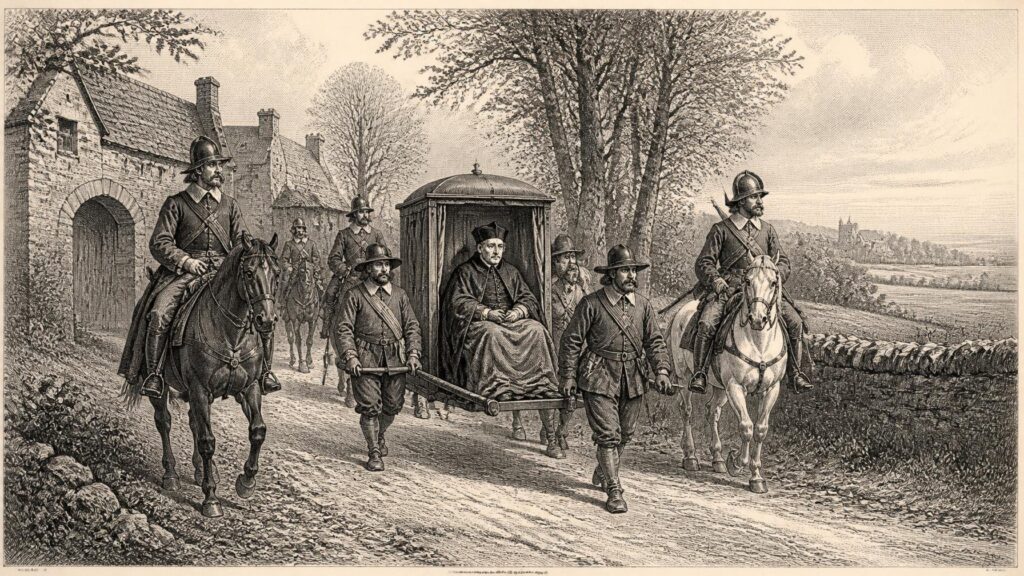
Peter Talbot1678 CE
In 1678, the English Popish Plot panic transformed Irish government despite no rebellion or parliament. Lord Lieutenant Ormond pursued revenue collection, army support and land titles, but proposed legislation failed to resolve Restoration property disputes. Catholic structures remained active: Oliver Plunkett held a synod, while Nicholas French died in exile. Peter Talbot, archbishop of Dublin, returned conditionally in May but was arrested in October and imprisoned without evidence. Thereafter proclamations expelled clergy, suppressed religious institutions, disarmed Catholics, restricted access to garrisons and demanded enforcement by officials. These measures intensified sectarian insecurity, while trade, civic regulation and unresolved political tensions continued.
Dateline
In 1678, Ireland did not witness a battle, rebellion or meeting of parliament that can be set beside the great ruptures of the preceding decades. Yet it was a consequential year because fear imported from England altered the workings of government, exposed the insecurity of Catholic religious life and put a sick archbishop in Dublin Castle without trial. The immediate setting was the so-called Popish Plot: a fabricated allegation, promoted in England from the autumn of 1678, that Catholics were preparing violence against Charles II and Protestant rule. In Ireland, where memories of 1641 and Cromwellian conquest remained politically potent, the panic was translated into proclamations, policing and military precaution.
Ormond’s Unfinished Programme
James Butler, duke of Ormond, governed as lord lieutenant for Charles II. He had returned to office in 1677 after the departure of the earl of Essex, bringing unrivalled experience of Irish politics but also deep personal entanglements in its landowning and religious divisions. His third administration sought fiscal solvency, a better-supported army and a final reassurance of property titles. These aims were connected: a parliament might confirm landholdings, grant revenue and make military expenditure more secure. But the political price of a land settlement was high, since the Restoration arrangements had left many Catholic claimants dissatisfied while Protestant proprietors feared any reopening of the question.
The year produced administrative movement rather than a settled solution. A proclamation of 12 April required claims to “discoveries” to be lodged before the end of Trinity term, a reminder that ownership and Crown rights could still generate litigation. On 27 April sheriffs, collectors and receivers were ordered to convey taxes to the Exchequer by 31 May. Such instructions were mundane but important: government rested not only on grand policy, but on local officers collecting and accounting for money in counties and towns. On 31 July, eighteen proposed Irish bills were sent to England for approval, including provision intended to confirm land titles. They did not result in the parliament Ormond wanted. The central constitutional problem of Restoration Ireland—how to make confiscated and redistributed land permanently secure without further alienating Catholics—therefore remained unresolved.
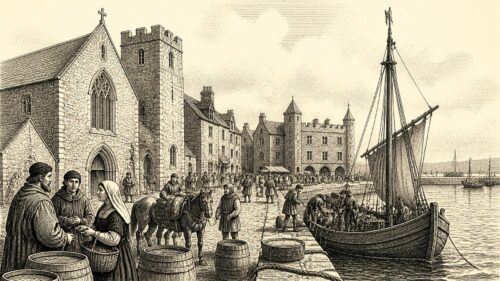
This uncertainty shaped ordinary life far beyond the landed elite. The post-war settlement had remade ownership, tenancies and the social standing of communities across the island. Protestant landowners and office-holders held much of the political authority created by the Restoration settlement, while many Catholics lived with the consequences of earlier forfeiture and transplantation. Ireland also participated in expanding commercial connections with Britain, continental Europe and the Atlantic, but that growth was conditioned by English regulation and by the fiscal demands of the state. Records of Irish wool licences beginning in 1678 offer one small indication of a trade closely watched by government, rather than a free national market.
A Church Still Organised
Before the autumn crisis, the Roman Catholic Church in Ireland had shown that it retained organisation and ambition despite legal restrictions. On 28 August, Oliver Plunkett, Catholic archbishop of Armagh, presided over a provincial synod at Ardpatrick, near Louth. Its twenty-six decrees addressed the discipline of clergy and the religious life of the faithful. The synod should not be mistaken for public religious freedom: bishops and priests were vulnerable to expulsion orders and surveillance. It does, however, demonstrate that Catholic ecclesiastical structures continued to function through clerical networks, discreet travel and local support. The later repression of 1678 therefore struck not at an extinct institution but at one actively trying to regulate its ministry.
The year also marked the passing of an older generation of Catholic political memory. Nicholas French, bishop of Ferns, died at Ghent on 23 August. A leading figure in the Catholic Confederation of the 1640s and a persistent critic of Ormond’s policies, French had spent much of his later life abroad. His death in exile illustrates the international character of Irish Catholic life: Irish churchmen were linked to seminaries, patrons and publishing networks in the Spanish Netherlands, France and Italy as well as to congregations at home. In 1678 the impoverished Catholic see of Leighlin was also entrusted in commendam to the bishop of Kildare, a practical response to its very small revenues.
Peter Talbot Returns
Peter Talbot, Catholic archbishop of Dublin, was the person most directly caught in the year’s change. He had left Ireland after the anti-clerical measures of 1673, but Ormond allowed him to return in May 1678 on the condition that he did not intervene in temporal affairs. In poor health, Talbot lived privately under the protection of his brother Richard Talbot. His return itself shows the limited, conditional toleration that could exist before the Plot panic gathered force: a senior Catholic cleric could be admitted, but only at the lord lieutenant’s pleasure and under a political restriction that blurred spiritual and civil authority.
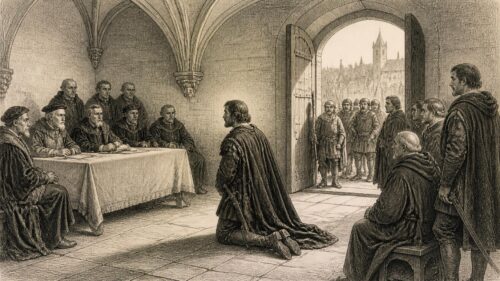
That precarious arrangement ended in October. Ormond signed a warrant for Talbot’s arrest on 8 October; Talbot was taken into custody on 11 October and confined in Dublin Castle. The accusation connected him with an alleged Catholic conspiracy and, specifically, with a supposed design against Ormond’s life. No credible evidence established such a plot. Even accounts sympathetic to Ormond indicate his private scepticism about the accusations, particularly given Talbot’s grave illness. Nevertheless, public scepticism was politically difficult when English opinion demanded vigilance against Catholic treason. Talbot’s imprisonment was thus both an act against an individual and a signal that Irish government would conform to the new alarm.
Proclamations and Precaution
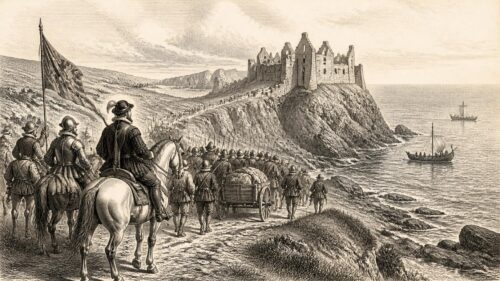
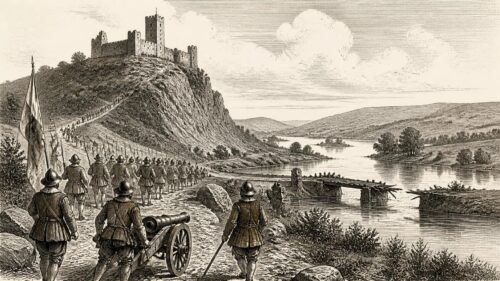
The sequence of official orders makes the escalation unusually clear. On 14 October, army officers and soldiers were directed to return to their garrisons or remain in their quarters. Two days later, the lord lieutenant and council ordered Catholic archbishops, bishops, vicars-general, abbots, Jesuits and other regular clergy exercising ecclesiastical jurisdiction to leave Ireland, while Catholic religious institutions were to be suppressed. A further order of 6 November regulated their transportation abroad. These were not simply theological statements. They sought to remove the personnel through whom Catholic communities were administered, educated and connected across regions.
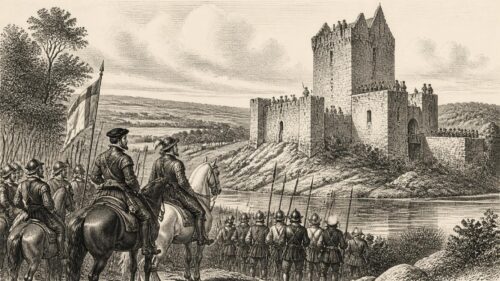
Security measures soon reached lay households and commerce. On 2 November, Catholics were required to surrender unlicensed firearms, while merchants and shopkeepers had to provide particulars of gunpowder in their possession. On 20 November, Catholics were excluded from forts, citadels and garrison towns, and rewards were offered for information about converts to Catholicism within the army. A proclamation of 12 December pressed sheriffs, justices and officers to enforce the earlier disarming order. These measures did not prove that an Irish rising had existed; rather, they show how the government attempted to make one impossible—or to demonstrate, to anxious observers in England, that it was doing so.
The burden fell unevenly but widely. A Catholic household with a weapon faced scrutiny; a trader holding powder had to account for stock that might be entirely legitimate; a priest had to consider concealment, departure or arrest. Protestant soldiers and officials were simultaneously reassured that the army and fortified towns would be guarded against supposed Catholic danger. The policy deepened the link between political trustworthiness and membership of the established Church of Ireland. It also made religion a matter of administrative record, mobility and access to urban space, rather than private belief alone.
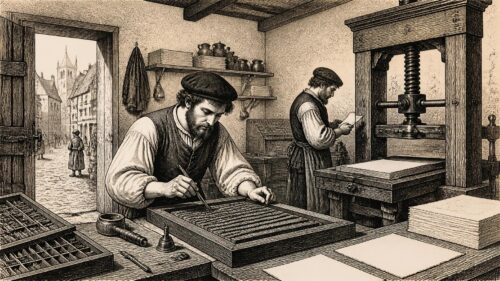
Dublin’s government did not cease attending to other civic matters. On 15 November, a proclamation ordered taverns, tippling houses and tobacco shops removed from the vaults and cellars of Christ Church Cathedral. The order offers a brief glimpse of the city’s dense everyday geography: sacred precinct, drinking place, tobacco retail and commercial storage could occupy the same central space. Printed in Dublin by the royal printer Benjamin Tooke and sold through Mary Crooke’s premises in Skinner Row, proclamations were themselves instruments of government, carrying orders from Castle and council into the streets, ports and county offices.
Fear Without War
By December, an alleged design against Ormond himself had prompted an official reward for information. This should be read with care. The proclamation records governmental fear and political theatre, not the discovery of a proven conspiracy. Ireland in 1678 experienced no general Catholic insurrection. Its defining conflict was instead one of suspicion: an English anti-Catholic crisis reshaped Irish policy, gave old statutes and prohibitions renewed force, and turned a vulnerable archbishop into a state prisoner.
For contemporaries, the consequences were immediate. Catholic worship and clerical leadership were forced further into uncertainty; officials were drawn into searches, returns and enforcement; soldiers were recalled to garrisons; and unresolved arguments over land, revenue and authority continued beneath the new religious emergency. For later history, 1678 stands as the year in which Restoration Ireland’s uneasy balance was sharply disturbed. Talbot’s arrest did not begin the island’s sectarian divisions, nor did it settle them. It revealed how swiftly the machinery of a Protestant monarchy could be directed against Irish Catholics when rumour in London became policy in Dublin.

Primary Sources
- Talbot, Peter | Dictionary of Irish Biography
- Butler, James | Dictionary of Irish Biography
- Plunkett, St Oliver | Dictionary of Irish Biography
- French, Nicholas | Dictionary of Irish Biography
- Statute Law Revision Act 2015
- By the Lord Lieutenant and Council, Ormonde
- State Papers Ireland 1509–1782: government papers on Irish affairs
- Letters and Papers, 1677, 1678
- Calendar of the Manuscripts of the Marquess of Ormonde, K.P., Preserved at Kilkenny Castle
- Ireland and the Popish Plot
- Charles II and his ministers in Ireland
- Through the Looking Glass: Restoration Ireland
- Restoration Ireland, 1660–88
- Kildare and Leighlin
- History – Diocese of Ferns
- History of the Commercial and Financial Relations between England and Ireland from the Period of the Restoration, Part 3
- State formation in seventeenth-century Ireland: the Restoration financial settlement, 1660–62
- Calendar of State Papers, Domestic series, of the reign of Charles II
- Copy of a letter of the Duke of Ormond to the King, concerning the state of the revenue in Ireland
- The Proclamations of Ireland 1660–1820