Clandeboye Colony1573 CE
In 1573, crown policy in Ireland combined pardons, restoration and colonisation, but failed to produce lasting stability. James fitz Maurice Fitzgerald’s theatrical submission to Sir John Perrot at Kilmallock temporarily checked the Desmond revolt, while Gerald Desmond’s return and escape to Munster revived Geraldine authority. Warfare continued to burden civilian communities. In Ulster, denization for Sorley Boy MacDonnell contrasted with Walter Devereux, earl of Essex’s grant to colonise Clandeboye. Resistance by Brian MacPhelim O’Neill, the burning of Carrickfergus, logistical weakness and Thomas Smith’s death exposed the venture’s fragility. These events made landholding, allegiance, religion and security contested within Elizabethan rule.
Dateline
In 1573, two apparently separate crises revealed the changing shape of power in Ireland. In Munster, the submission of James fitz Maurice Fitzgerald appeared to end four years of Desmond revolt. In north-east Ulster, meanwhile, Queen Elizabeth’s government authorised a new colonial venture under Walter Devereux, earl of Essex, which helped turn Carrickfergus and Clandeboye into a contested military frontier. Neither development brought the durable settlement its promoters claimed to seek. The year instead showed how quickly an agreement, pardon or royal grant could become another source of war.
A Submission at Kilmallock
On 23 February, James fitz Maurice Fitzgerald submitted to Sir John Perrot at Kilmallock. Fitz Maurice had led the continuing armed resistance associated with the first Desmond rebellion after Gerald Fitzgerald, fifteenth earl of Desmond, had been held in England. The revolt had mixed several causes: rivalry within Munster lordship, resistance to the growing authority of the Dublin government, anxiety about the intrusion of royal troops and officials, and, for Fitz Maurice himself, a strong commitment to restoring Roman Catholic observance. By 1573, prolonged campaigning had reduced his room for manoeuvre. Perrot’s earlier capture of Castlemaine had deprived the rebels of an important stronghold, while allies had submitted or found the costs of continued war too great.
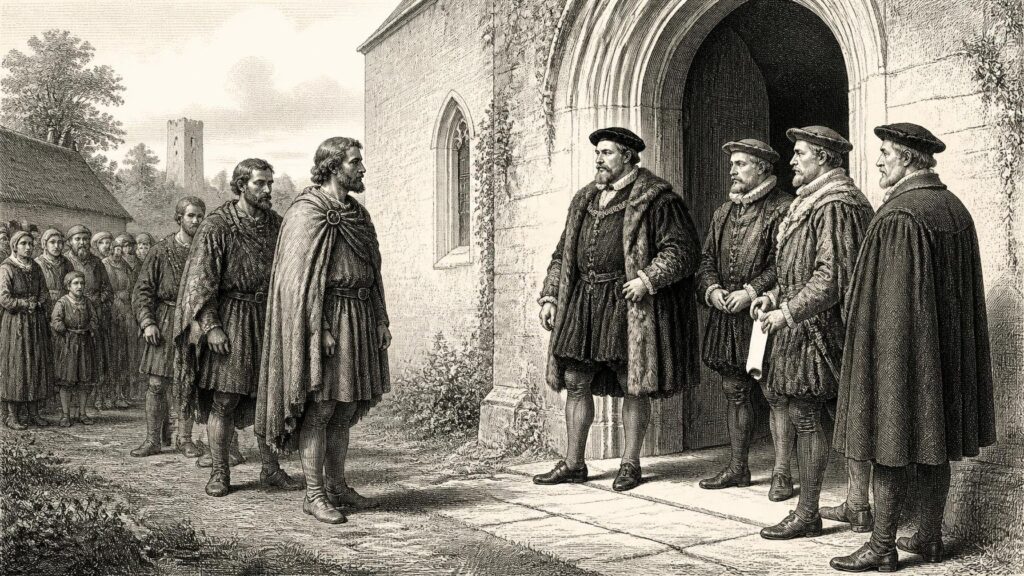
The ceremony at Kilmallock was deliberately theatrical. Later accounts describe Fitz Maurice entering the church with a halter and submitting himself to Perrot’s mercy. The details should not be treated as a neutral record of his feelings, but the public character of the act mattered. It represented the crown’s insistence that rebellion was personal disobedience to be pardoned, not a negotiation between equal political communities. Perrot supported a full pardon, hoping that the formidable Geraldine captain could be converted from opponent into useful servant. It was a pragmatic calculation: the government lacked the money, troops and local consent needed to hunt every resisting company through Munster indefinitely.
For communities in the war zone, peace meant more than a change in the allegiance of one commander. Campaigning had depended on the taking of cattle and provisions, the quartering of soldiers, raids on crops and settlements, and the occupation or reduction of castles. Kilmallock itself had already suffered in the conflict. The Annals of the Four Masters, compiled later but drawing on Irish annalistic traditions, remembered Perrot’s departure from Munster that year as a loss felt by “the poor, the widows, the feeble, and the unwarlike”. That judgement should not erase Perrot’s harsh methods, but it conveys a real condition of sixteenth-century warfare: people with least control over lordly and governmental decisions bore a heavy share of its consequences.
Desmond Returns, Then Escapes
The settlement in Munster was tied to a wider attempt to restore the Earl of Desmond on conditions favourable to the crown. Desmond had agreed articles governing his future conduct in January. On 25 March he and his brother, Sir John fitz James Fitzgerald, landed at Dublin after years of confinement in England. Sir John was soon allowed to go south. Desmond, however, was kept in Dublin because the lord deputy, Sir William Fitzwilliam, and Perrot feared that releasing him without further safeguards would revive the very power structure they had spent years trying to contain.
This was not merely a quarrel over an individual prisoner. Desmond’s lordship rested on relationships of military service, landholding, fostering, tribute and local jurisdiction which could not easily be fitted into the crown’s preferred model of sheriffs, fixed rents and obedient office-holders. The government wanted an earl who would be a great subject; many Geraldine followers expected the return of a lord able to protect their interests and command their service. Those expectations were incompatible. In November, Desmond escaped from Dublin and reached Munster, where Fitz Maurice welcomed him at Limerick. The first rebellion had therefore ended in one sense with the Kilmallock submission, but its underlying contest over authority in south-west Ireland had plainly not been resolved.
Perrot had already left his presidency of Munster without permission in July, frustrated by political attacks and by what he regarded as inadequate support. His departure weakened the appearance of a settled provincial regime. By the year’s close, Fitz Maurice had occupied Carrigafoyle Castle, while Desmond’s return restored a rival centre of Geraldine authority. It would be misleading to describe 1573 as the beginning of the second Desmond rebellion, which did not break out until 1579. Yet it was a decisive interval in which the negotiated peace of February gave way to an unstable stand-off.
Denization and the Ulster Enterprise
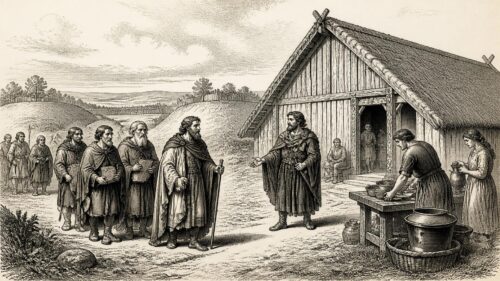
At the opposite end of the island, policy was moving in a more openly colonial direction. On 14 April, Sorley Boy MacDonnell and others connected with the Scottish settler population of north-east Ulster received denization. This made them legally capable, on stated conditions of obedience, of being treated as subjects rather than outsiders. The grant was an attempt to draw powerful Scots and local Irish landholders into the crown’s legal orbit. It acknowledged a practical reality: the MacDonnells were too important in the Glens, the Route and the islands to be ignored or simply expelled.
That conciliatory gesture was soon compromised. In July Elizabeth granted Walter Devereux, the recently created earl of Essex, extensive rights to establish an English colony in Clandeboye and neighbouring parts of north-east Ulster. Essex envisaged a venture funded partly by the crown and partly by English “adventurers”, who would provide men and money in expectation of land and profit. The project promised security, commercial privilege and a future royal revenue. In practice, it rested on treating inhabited lordships as territory available for redistribution. It also overlapped with the earlier, troubled plantation scheme of Sir Thomas Smith in the Ards.
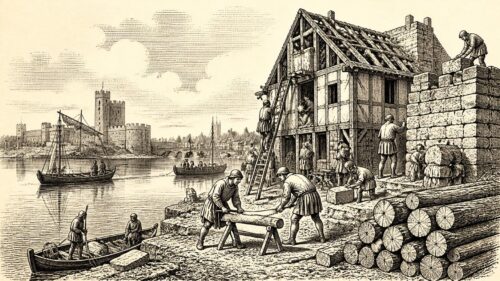
Essex’s expedition encountered difficulty from the beginning. Ships carrying men and supplies were scattered by storm after leaving England, and the force that eventually reached the region was smaller and less secure than its promoters had intended. By the autumn, Essex and his associates were based at Carrickfergus, a walled harbour town and royal garrison facing the North Channel. The place was strategically useful but poorly suited to sustaining a large new army: accommodation, storage, fuel, food and transport all became urgent problems. The undertaking was not a settled plantation in 1573. It was a fragile armed encampment, dependent on imports, credit, military discipline and uncertain local alliances.
Fire at Carrickfergus
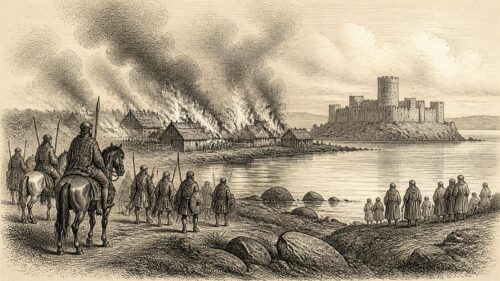
Those alliances had already collapsed. Brian MacPhelim O’Neill, lord of Lower Clandeboye, had initially dealt with crown representatives and had even been knighted for earlier service. But proposed colonisation threatened the territorial authority on which his position depended. In May 1573 he burned and almost destroyed Carrickfergus. The attack exposed the vulnerability of the principal royal base in the area and demonstrated that local resistance could strike a port town as well as evade troops in woods and difficult country.
The crisis deepened in October when Thomas Smith the younger, leader of the separate Ards enterprise, was killed by a Gaelic member of his household. This did not make every Irish lord or Scots settler an ally of O’Neill, nor did it produce a united Ulster front. Politics in the region involved competing O’Neill branches, MacDonnell interests, English officers, would-be settlers and the ambitions of Hugh O’Neill, baron of Dungannon. But the events of 1573 made clear that English schemes for land, forts and settlement would reshape those rivalries rather than stand outside them.
Law, Land and Everyday Security
The year’s Munster and Ulster developments shared a central issue: how land and authority were to be held. In Munster, the crown alternated between pardoning a major lordly following and imposing conditions intended to limit its military independence. In Ulster, it offered denization to some established inhabitants while issuing a vast grant that endangered their security. Conor O’Brien, third earl of Thomond, also received a warrant in June for the restoration of lands after his earlier submission. Such measures show that restoration was a principal instrument of Tudor rule. Yet restoring land by royal favour also underlined that tenure, inheritance and political standing could be reopened by government decision.
Religion was inseparable from these tensions, though it should not be made the sole explanation for every dispute. Fitz Maurice’s Catholic programme gave the Munster conflict an international and confessional dimension at a time when English officials feared contact between Irish opponents and Catholic powers abroad. For most households, however, the immediate realities of 1573 were more tangible: whether cattle could be kept, rents collected, roads travelled, harvests protected and armed men kept from the door. The crown’s promised order and the lords’ claims to customary protection were both judged against those everyday tests.
Learning Amid Upheaval
The annals also record the death in 1573 of William Magrath, described as an ollamh of Dál Cais in poetry and as learned in sciences and agriculture. The notice is brief, but valuable. It reminds us that learned families and Irish-language intellectual life continued alongside military and governmental change. Poets, genealogists, legal experts and teachers remained important to lordly society, preserving memory, status and practical knowledge even when the political landscape was unstable.
Thus 1573 was neither a simple year of pacification nor merely a prelude to later disasters. At Kilmallock, the crown achieved a conspicuous submission. At Dublin, it failed to secure Desmond’s compliance. At Carrickfergus, a projected English colony arrived amid resistance and logistical weakness. These linked developments made Ireland’s conflicts more deeply concerned with territory, settlement and the terms on which powerful communities could belong within Elizabeth’s kingdom.

Primary Sources
- Annals of the Four Masters, Part 8
- Annals of the Kingdom of Ireland: CELT digital edition record
- Calendar of the State Papers Relating to Ireland, 1509–1573
- Calendar of the Carew Manuscripts, 1515–1574
- State Papers Ireland 1509–1782: government papers on Irish affairs
- Calendar of State Papers, Ireland, Tudor Period, 1571–1575
- Fitzgerald, James fitz Maurice
- Fitzgerald, Gerald fitz James
- Fitzgerald, Sir John fitz James
- Perrot, Sir John
- Fitzwilliam, Sir William
- Devereux, Walter
- MacDonnell, Sorley Boy
- Smith, Sir Thomas
- O'Brien, Conor
- Waterhouse, Sir Edward
- Piers, William
- O'Neill, Hugh
- Norris (Norreys), Sir John
- Essex’s ‘Enterprise’
- Essex’s ‘Enterprise’ and Plantation in Early Modern Ireland
- Creating Facts on the Ground: The Destruction of Clandeboye
- Beyond Reform: Martial Law and the Tudor Reconquest of Ireland