Thomond Succession1558 CE
In 1558, Ireland’s politics were shaped by dynastic struggles, crown intervention and Mary I’s death. Thomas Radcliffe, earl of Sussex, installed Conor O’Brien as earl of Thomond, using military force against his uncle Sir Donal, while leaving local Gaelic authority intact. Gerald FitzGerald inherited Desmond after his father’s death, amid unresolved tensions with Ormond and the government. In Ulster, Shane O’Neill had his crown-backed half-brother Matthew killed, intensifying the Tyrone succession dispute. Sussex’s unsuccessful Kintyre expedition exposed Scottish-Irish connections. Elizabeth I’s accession opened a new era, but Ireland retained Mary’s religious settlement largely unchanged in practice until legislation in 1559.
Dateline
In 1558 Ireland was not transformed by one single event, but it was reshaped by a remarkable concentration of successions, military decisions and changes of allegiance. In Thomond, the crown intervened decisively in an O’Brien dynastic contest. In Munster, the death of the earl of Desmond brought Gerald FitzGerald to a powerful inheritance. In Ulster, Shane O’Neill eliminated a rival whose standing rested partly on English recognition. Above all, the death of Queen Mary on 17 November and the accession of Elizabeth placed Ireland’s contested politics within a new reign. Yet the year closed before Elizabeth’s Irish religious settlement had been legislated. The immediate Irish story was therefore one of continuity under a newly proclaimed monarch, rather than an instant constitutional revolution.
Thomond and the Crown’s Choice
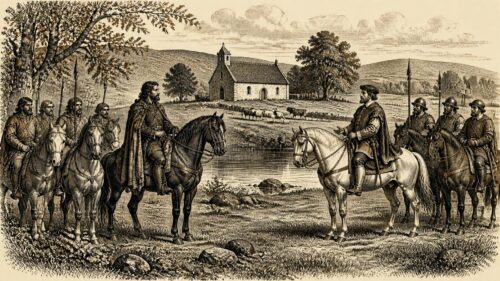
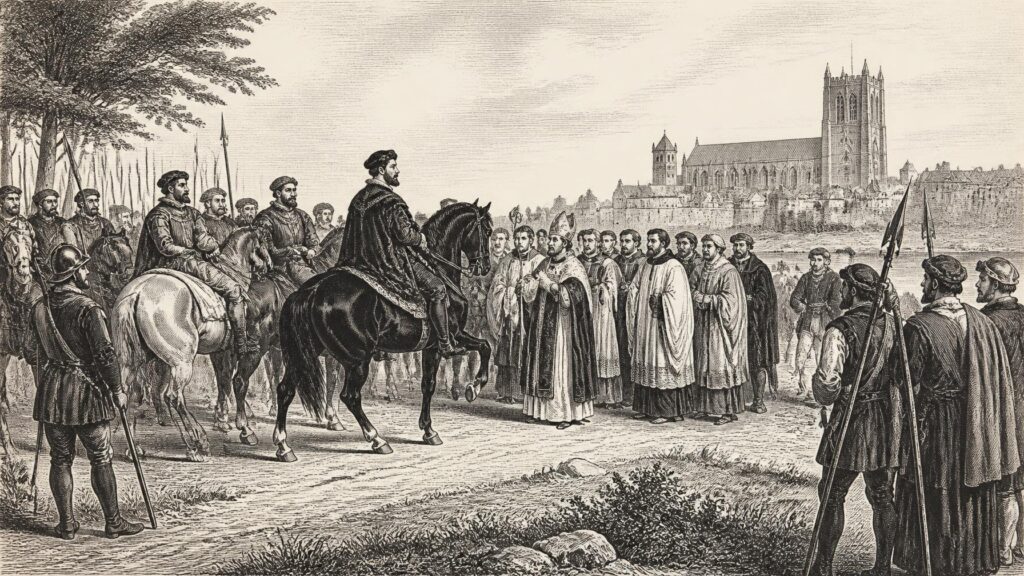
The clearest firmly dated event of the year occurred in Thomond. On 10 July, in Limerick cathedral, Conor O’Brien swore loyalty to the monarch and was installed as earl of Thomond. He had a strong hereditary claim: he was the eldest son of Donough O’Brien, second earl of Thomond. But after Donough’s death in 1553, Conor’s uncle Sir Donal O’Brien had gained control locally and had been accepted by many as The O’Brien, the Gaelic head of the kindred. The dispute exposed a basic problem in sixteenth-century Irish politics. A crown patent and a Gaelic inauguration could point to different, competing candidates for authority.
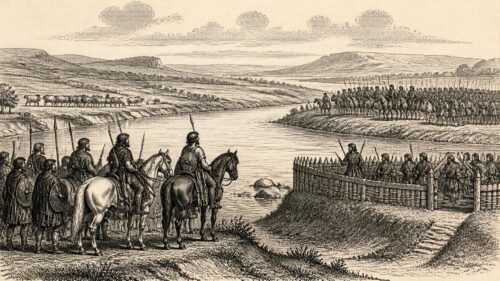
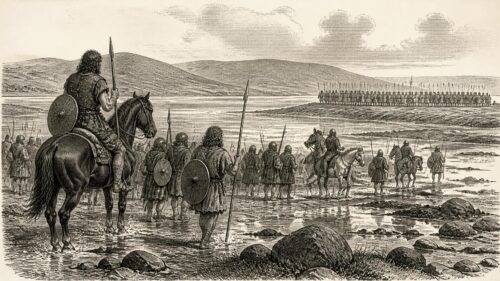
Thomas Radcliffe, earl of Sussex and lord deputy, made the English government’s preference unmistakable. He entered the region with a substantial force, proclaimed Sir Donal and two of his brothers traitors, and restored Conor to the earldom. A contemporary-associated poetic account of the installation describes a display of armed power at Magh Áine, attended by Sussex and leading magnates including the earls of Ormond, Clanricarde and Desmond. Such ceremony was not decorative surplus. It made public the combination on which Conor’s position rested: royal authority, military capacity, aristocratic witnesses and the validation supplied by Gaelic learned culture.
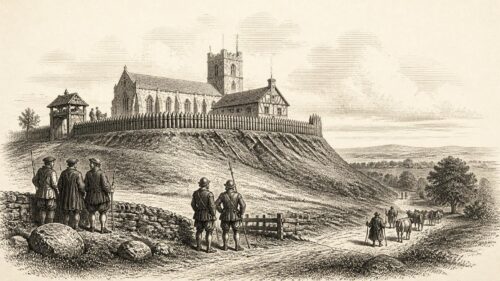
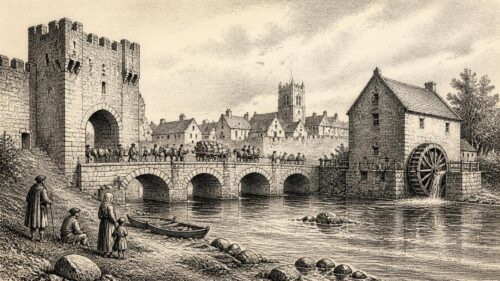
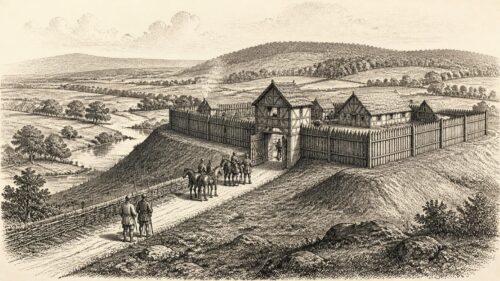
The settlement did not end the rivalry. Sir Donal remained an influential figure in Thomond and was later accommodated by the administration as sheriff. That qualification matters. It is misleading to describe the events of 1558 as a straightforward English conquest of Thomond, or as the final destruction of Gaelic political practice. Rather, Sussex temporarily secured one claimant by using crown military power, while still having to reckon with the local standing of his defeated uncle. The fortified places named in later annalistic accounts—Clonroad, Bunratty and Clare—were more than castles on a map: control of them meant access to households, routes, cattle country, rents and the practical machinery of lordship.
Desmond’s Inheritance
Munster saw another succession, although initially a less violent one. James fitz John FitzGerald, fourteenth earl of Desmond, died on 14 October after a terminal illness and was buried at the Franciscan friary at Askeaton on 1 November. The seventeenth-century Annals of the Four Masters, drawing on an older tradition, praised the security of his rule in expansive terms: cattle supposedly needed no watching and doors no closing across a wide Munster landscape. This should not be read literally as a crime statistic. It is an elegiac judgement, using the language of peace, hospitality and protected property to describe a good lord.
His son Gerald succeeded as fifteenth earl of Desmond. The transition was formally recognised in November. A state-paper entry dated 28 November, associated with Waterford, preserves Gerald’s oath at his first admission to the earldom. Significantly, the document still used the regnal years of Philip and Mary, expressly because news of Mary’s death had not yet reached those concerned. That small administrative detail conveys the practical pace of political communication across the Irish Sea and within Ireland. Dynastic government relied on messengers, sealed instructions, local councils and public ceremonies; sovereignty was proclaimed, not electronically transmitted.
Gerald inherited a formidable lordship but also difficult relationships. His father had criticised Sussex’s military government early in 1558, objecting especially to the burden of billeted soldiers and urging more conciliatory methods. Sussex visited Desmond during the summer and achieved an uneasy reconciliation; he even stood godfather to the earl’s infant son. In November, shortly before Gerald’s recognition, Sussex also attempted to reconcile the new earl with Thomas Butler, earl of Ormond. That agreement was only a pause in a long rivalry over territory, jurisdiction and the profitable wine duties of Youghal and Kinsale. Nothing in 1558 made later conflict inevitable, but the principal fault-lines were already visible.
Ulster’s Violent Succession
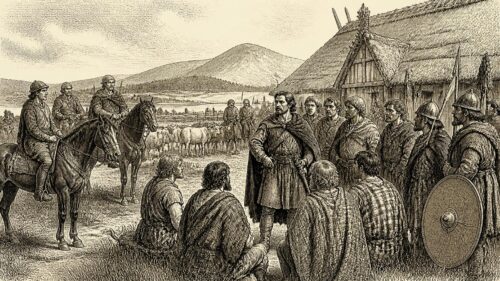
In Ulster, the struggle within the O’Neill dynasty became still more dangerous. During 1558 Shane O’Neill had his half-brother Matthew—Baron of Dungannon in the English peerage—killed by members of the O’Donnelly client family. The surviving evidence places the killing in the year, and a later official account linked it to the period when Queen Mary lay dangerously ill; it does not provide a secure day or month. Matthew’s position was especially threatening to Shane because the crown had recognised him as Conn Bacach O’Neill’s successor in the earldom of Tyrone. Shane, by contrast, presented himself as defender of the wider O’Neill inheritance and of the political authority attached to it.
The murder did not itself make Shane earl, nor did it settle the question of leadership. Conn Bacach, first earl of Tyrone, was still alive in 1558 and died the following year. But Shane’s move removed the foremost rival created by the crown’s earlier policy of surrender and regrant. It also drove Conn towards the Pale for protection. The episode shows why titles granted from Dublin could not simply replace kinship, military following, fosterage and election within a Gaelic lordship. Conversely, Shane could not disregard the crown: he wanted recognition of his claims, while Sussex insisted that disputes in Tyrone first be submitted to government arbitration. Their positions were incompatible, though open war between them lay ahead.
Sea Routes and Scottish Power
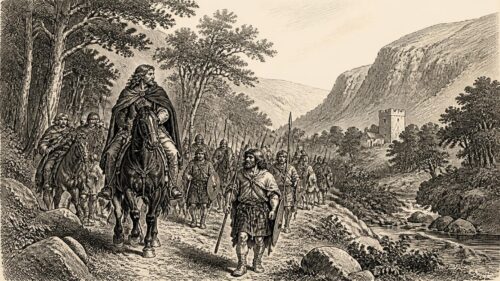
Ulster’s politics were inseparable from the sea. The MacDonnells, a Gaelic-speaking kindred with bases in the Scottish Isles and north-east Ireland, were a major military and diplomatic force. Sussex had already campaigned against them, and in September 1558 he mounted an assault on their headquarters in Kintyre. The expedition inflicted losses but achieved no durable settlement. Its failure demonstrated the limits of a policy that treated the North Channel as a frontier to be sealed by one punitive operation. Men, ships, provisions and mercenary fighters could move between western Scotland and Ulster; regional power crossed the channel more readily than the administrative categories of London or Dublin suggested.
Shane O’Neill’s relations with the MacDonnells were equally pragmatic. He had previously benefited from Scottish mercenary support, yet Sussex expected him to assist crown operations against them. Shane’s evasions when summoned for the campaigns of 1557 and 1558 deepened official suspicion. Thus the northern crisis was not a simple contest between an English state and an Irish resistance. It involved O’Neills, O’Donnells, MacDonnells, client families, Scottish sea-lords, the garrison at Carrickfergus, Newry interests and a Dublin administration seeking allies it could not fully command.
A New Queen, Not Yet a New Settlement
Mary I died on 17 November, and Elizabeth succeeded as queen of England and Ireland. Orders sent to Sussex and the Irish council instructed them to publish the accession in convenient places. The administrative record for late November also includes directions to investigate the seizure in Irish ports of a Hamburg ship by Englishmen, punish those responsible and restore ship and goods. This is a useful reminder that government in Ireland included more than campaigns: it touched maritime commerce, property, port discipline and the protection of foreign merchants.
Elizabeth’s accession is often treated as the immediate beginning of a Protestant Irish regime. That is too abrupt for the calendar year itself. Mary’s Catholic restoration remained the formal religious position in Ireland through the end of 1558; Elizabeth’s Irish parliament, royal supremacy and uniformity measures belonged to 1559. Churches, clergy, friars, parishioners and patrons therefore entered the winter under existing arrangements, although the change of monarch naturally created uncertainty. The accession mattered enormously because it altered future expectations, not because every altar, service or jurisdiction changed overnight.
Land, Labour and Local Government
The year’s documents expose pressures felt beyond the households of earls and chiefs. Desmond’s complaint about the quartering of soldiers points to the cost of maintaining an enlarged crown force. Sussex’s government had expanded the garrison dramatically, and the ordinary demands of transport, food, fodder, lodging and wages could fall upon communities near routes and military centres. In Gaelic lordships, raiding and counter-raiding likewise endangered herds, crops and movement. Cattle were capital, food, status and a principal object of conflict; their security was central to the political ideals voiced in the Desmond elegy.
In the Decies of County Waterford, the council issued orders for the ‘reformation’ of a territory under Sir Maurice FitzGerald’s rule. The word should not be over-read as evidence of a completed programme. It indicates an attempt to regulate an unstable district through a local intermediary. Similarly, a September chancery fiant granting the wardship and lands of the Luttrell heir to the earl and countess of Kildare records the everyday legal business of inheritance, minority and revenue. Ireland in 1558 was governed through such overlapping mechanisms: family lordship, crown law, wardship, negotiated service, clerical institutions, borough commerce and armed force.
The evidence for 1558 is uneven, but its pattern is clear. Conor O’Brien’s restoration showed the crown intervening visibly in a provincial succession; Gerald Desmond’s inheritance showed the value of formal recognition and local continuity; Matthew O’Neill’s killing revealed the lethal fragility of imposed arrangements in Ulster; and Elizabeth’s accession opened a new political horizon without instantly remaking Irish society. The year was a hinge not because Ireland became something wholly new, but because old contests over lordship, law, religion and regional power now had to be pursued under a new queen.

Primary Sources
- Annals of the Four Masters, Volume 5: Annal M1558
- Calendar of State Papers Relating to Ireland, 1509–1573
- State Papers Ireland 1509–1782: Government Papers on Irish Affairs
- Fiant: 5 & 6 Philip and Mary, Item 250, 12 September 1558
- O'Brien, Conor
- Radcliffe, Thomas
- O'Neill, Shane (Seaán)
- Fitzgerald, James fitz John
- Fitzgerald, Gerald fitz James
- Campaign Journals of the Elizabethan Irish War: Preview
- Calendar of Ormond Deeds, Volume V, 1547–1584
- Patentee Officers and High Sheriffs in Ireland, 1173–1826
- Elizabeth I and Ireland, ed. Brendan Kane and Valerie McGowan-Doyle
- Cuius Regio, Eius Religio? The Churches, Politics, and Religious Identities, 1558–1600
- Elizabeth I (1533–1603), Queen of England and Ireland
- Why the Reformation Failed in Ireland
- Religious Communities and Their Closures in Ireland during the Sixteenth Century
- Patronage Networks in Gaelic Ireland ca. 1541–ca. 1660
- The Complaints of Shane O'Neill
- Fiants: Electronic Calendar of Irish Chancery Fiants from the Tudor Dynasty, 1522–1603
- The Irish Manuscripts Commission: Digital Publications
- Chapters Towards a History of Ireland in the Reign of Elizabeth, Part 26