Crois Shliabh1289 CE
In 1289, Ireland’s overlapping lordships were tested by warfare, alliance and royal intervention. Richard Tuite led Meath settlers and Connacht’s king Maghnus against Uí Máel Sechlainn, but was killed when their coalition lost at Crois-Shliabh. Fiachra Ó Flainn was murdered while seeking a marriage alliance with settlers, while Mac Muiris and Mac Feorais suffered defeat against Leinster princes, losing Meyler de Exeter, horses and spoils. John fitz Thomas FitzGerald secured Peter Bermingham’s lifetime military service. Archbishop John of Sandford, keeper of Ireland, campaigned in Laois, enforcing the king’s peace. Annalistic deaths also reveal active ecclesiastical and learned institutions amid instability.
Dateline
In 1289 Ireland’s political geography was defined less by a single frontier than by overlapping lordships, kin-groups, churches and armed followings. The year’s securely dated evidence is concentrated in the midlands, Connacht and the Irish lordship’s southern marches. It records defeated expeditions, the death of a major baron, a marriage alliance turned into murder, a formal contract of military service, and a royal campaign in Laois and Offaly. These were not isolated episodes. Together they show how authority was made and unmade through mounted warfare, hostages and plunder, patronage, family ties and the ability to assemble allies quickly.
The sources also demand care. Annála Connacht and the Annals of the Four Masters place several major events under 1289, including the defeat and death of Richard Tuite. The Annals of Ulster, by contrast, preserve an entry headed 1289 but explicitly equate that annal-year with 1293. Its account of Sligo Castle, changes in the Connacht kingship and the translation of saints’ relics therefore cannot responsibly be treated as events of calendar year 1289. They belong to a later sequence, however useful they may be for understanding the tensions already visible in this year.
A Defeat in Meath
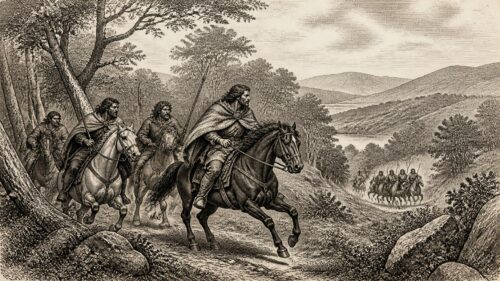
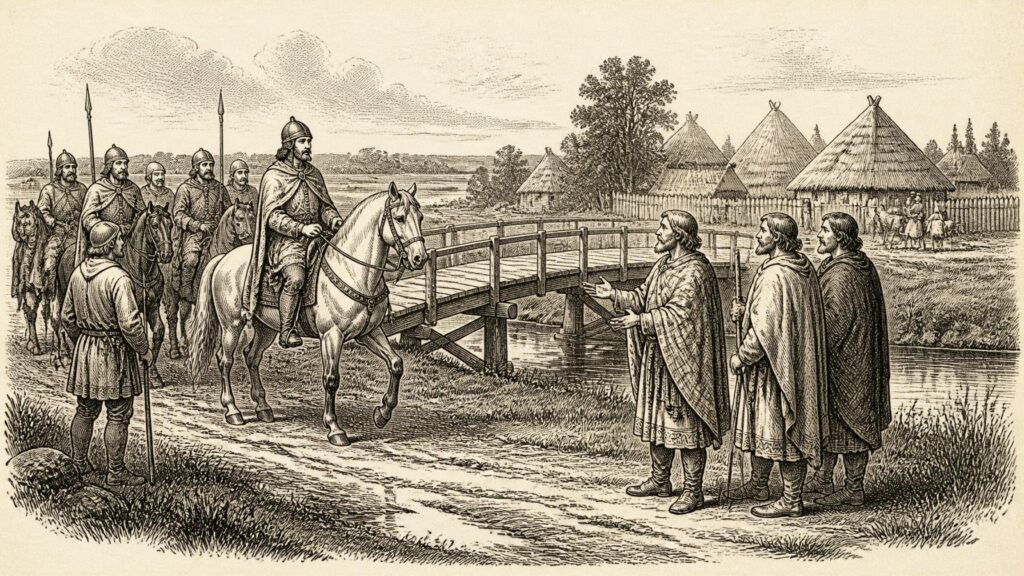
The clearest military event of 1289 was an expedition against the Uí Máel Sechlainn of Meath. Richard Tuite marched with the English of Meath and with Maghnus Ó Conchobair, king of Connacht, against Ó Máel Sechlainn and “all the men of Meath”. The Annals of the Four Masters locate the encounter at Crois-Shliabh. The coalition was defeated. Richard Tuite, described in Annála Connacht as the foremost baron among the settlers in Ireland at that time, was killed with kinsmen; a figure rendered as Siecus Jacques Ó Ceallaigh also died.
This was a serious reversal, not a routine cattle raid. Tuite belonged to a powerful Anglo-Norman family long established in Meath and its borderlands. His death exposed the limits of lordly military resources even where the settler colony had deep roots. The annals’ phrasing is equally important: this was not simply “English” against “Irish”. A Connacht king fought alongside the Meath colonists, while the Uí Máel Sechlainn rallied the men of Meath against them. Political necessity, landholding and local rivalries could produce alliances across linguistic and cultural lines.
Maghnus’s involvement also placed the battle within Connacht’s unsettled recent history. In 1288, according to the Four Masters, he had displaced his brother Cathal in a struggle for the Connacht kingship, then faced the advance of Richard de Burgh, the Red Earl of Ulster, as far as Roscommon. De Burgh withdrew when Maghnus, FitzGerald and the king’s men assembled in opposition. That immediate background helps explain why a Connacht ruler might seek partners east of the Shannon in 1289. Yet the defeat at Crois-Shliabh demonstrates that such a partnership did not assure success.
Marriage, Murder and Marcher War
Another Connacht episode reveals a harsher side of diplomacy. Fiachra Ó Flainn, chief of Síl Máel Ruain, travelled to conclude a marriage alliance with the Gaill, the term commonly used in Irish annals for the settler community. Instead, he was killed treacherously by the son of Richard Finn de Burgh and by Mac Feorais Bermingham. The annalist’s praise of Fiachra — for clemency, loyalty, protection, generosity and valour — should be read as the conventional but meaningful language used for an admired lord. Its presence underscores the political weight attributed to his death.
Marriage was a practical instrument of power. It could bind families, settle claims, open access to land and military help, or turn a former enemy into a kinsman. That Fiachra was murdered while pursuing such an alliance illustrates both the value and danger of the undertaking. The killing also involved families who were themselves embedded in Connacht’s mixed political world. The de Burghs and Berminghams possessed lordships, castles and retainers, but their fortunes depended on dealings with Gaelic rulers as well as on royal favour. The division between settler and Gaelic society was real, especially in law and landholding, but it did not prevent negotiation, intermarriage or shared military action.
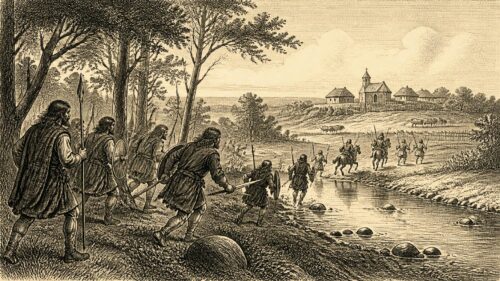
The year brought a further reverse for an Anglo-Norman force. Annála Connacht says that Mac Muiris and Mac Feorais led an expedition against Calbach Mór Ó Conchobair and other Leinster princes. Their force was heavily defeated; Meyler de Exeter and many other settlers were killed, and numerous horses were taken. The Four Masters similarly name Calvagh Ó Conor and record the seizure of horses and other spoils. The loss of horses mattered greatly. Mounted men gave a lord’s following speed, prestige and striking power; horses were valuable property as well as battlefield assets. Their capture converted victory into a material gain for the victors and a costly reduction in the defeated force’s capacity to campaign again.
Service and the Keeper’s Campaign
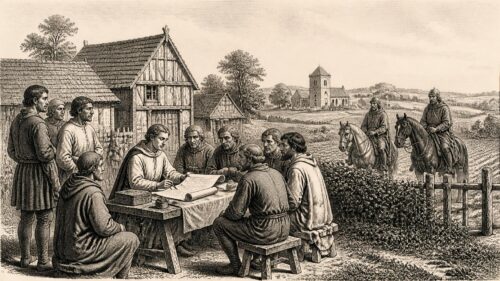
Violence in 1289 was not confined to clashes recorded in Gaelic annals. On 26 April, John fitz Thomas FitzGerald of Offaly and Peter, son of James Bermingham, sealed an agreement for Peter’s lifetime service. The agreement survives through the Red Book of the Earls of Kildare. Peter owed fealty to FitzGerald, entered his household and promised to wear his lord’s robes or livery. Historians regard it as one of the earliest surviving Irish examples of a lifetime military indenture.
This document gives a rare close view of how a magnate built dependable power. A lord needed more than estates and legal titles. He needed men who could be called upon, supplied, identified with his household and expected to stand by him in danger. Livery was practical clothing, but it was also a visible declaration of belonging. The agreement therefore linked service, material reward and public political identity. In a decade marked by insecurity along the Leinster marches, that kind of personal bond could be as consequential as a castle or charter.
At the level of royal government, John of Sandford, archbishop of Dublin, was serving as keeper of Ireland after the death of Stephen of Fulbourn in 1288. Sandford’s position was unusual: he was a senior churchman acting as the crown’s chief administrator in the lordship. During autumn 1289 he led a substantial royal army into Laois and compelled the Irish there to the king’s peace. John fitz Thomas was associated with him in Offaly in September. This campaign should not be mistaken for the final pacification of the region; the battles and contracts of the year show why that would be implausible. It did, however, demonstrate that Dublin’s government could still organise a large intervention and require local lords to cooperate in containing disorder.
Church, Learning and Local Loss
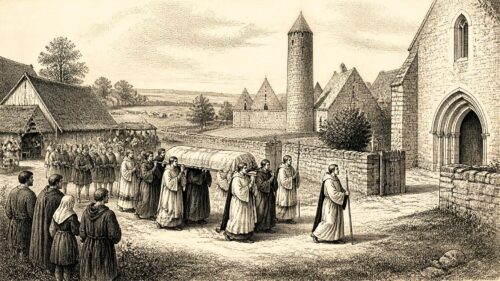
The annals also record deaths that illuminate institutions often obscured by warfare. Miles, called the “foreign bishop” of Conmaicne, died, as did Simon Ó Finnachta, archdeacon of Elphin. The description of Miles reflects the annalist’s perspective rather than a simple modern national category, but it is evidence of clerical mobility and of the close contact between diocesan structures and the settler world. Elphin, Conmaicne and their churches lay within the same western and midland zone unsettled by lordly competition.
Matha Ó Scingin, ollav of Cenél Conaill, also died. An ollav was a learned master of high standing, and the Four Masters call him chief historian of Ireland. Such titles should not be read as modern academic appointments, yet they point to the organised cultivation of history, genealogy, law and literary learning in elite households and ecclesiastical centres. Even in a year of campaigns, political society depended upon people able to preserve pedigrees, articulate claims and sustain inherited learning. The death of Tadc Ó Flannacain, chief of Clann Cathail, adds another reminder that succession and local leadership changed continually beneath the headline events of war.
A Year of Contested Authority
For ordinary communities, the surviving evidence does not justify confident claims about harvests, prices or general living conditions in 1289. It does show the pressures that conflict could impose: armed hostings moved through territories; rulers sought allies; horses and other movable wealth were taken; and a failed marriage negotiation could end in assassination. Churches and learned households persisted within this landscape, but they were not separate from it. Bishops, archdeacons, historians and magnates all belonged to networks affected by war and patronage.
1289 thus stands out not for one decisive national event but for several sharply documented tests of power. At Crois-Shliabh, a coalition of Meath settlers and a Connacht king failed before the men of Meath. In Leinster, another settler force lost Meyler de Exeter and its horses. In Connacht, Fiachra Ó Flainn’s intended marriage alliance ended in murder. Meanwhile, John of Sandford’s army asserted the king’s peace in Laois, and FitzGerald and Bermingham formalised the private service on which magnates relied. Ireland’s political order was neither neatly divided nor securely settled: it was continually negotiated, and frequently fought over.
Source References
Hover over a number to see the source. Select it to open the source.

- [1] Part 66 of Annála Connacht
- [2] Annála Connacht
- [3] Part 12 of Annals of the Four Masters
- [4] Annals of the Four Masters
- [5] Part 92 of The Annals of Ulster
- [6] Annala Uladh: Annals of Ulster otherwise Annala Senait, Annals of Senat
- [7] The Red Book of the Earls of Kildare
- [8] The Red Book of the Earls of Kildare
- [9] Sandford (Sanford), John of
- [10] FitzGerald, John fitz Thomas
- [11] Bermingham, Peter
- [12] Bermingham, Peter (Piers) of Athenry
- [13] Burgh, Richard de
- [14] Vescy (Vesci), William de
- [15] Factions, Feuds and Noble Power in the Lordship of Ireland
- [16] Ráth Iomgháin/Rathangan
- [17] View of Sligo, Looking South, 1831 (Baynes)
- [18] Sligo Castle
- [19] Iona and the Shrine of Columba, c. 800–1200
- [20] Evidence for the Earliest Relic of St Brigid?
- [21] CSI St Patrick: Just Where Is the Saint's Body?
- [22] The Crusades to 1291 in the Annals of Medieval Ireland
Primary Sources
- Part 66 of Annála Connacht
- Annála Connacht
- Part 12 of Annals of the Four Masters
- Annals of the Four Masters
- Part 92 of The Annals of Ulster
- Annala Uladh: Annals of Ulster otherwise Annala Senait, Annals of Senat
- The Red Book of the Earls of Kildare
- The Red Book of the Earls of Kildare
- Sandford (Sanford), John of
- FitzGerald, John fitz Thomas
- Bermingham, Peter
- Bermingham, Peter (Piers) of Athenry
- Burgh, Richard de
- Vescy (Vesci), William de
- Factions, Feuds and Noble Power in the Lordship of Ireland
- Ráth Iomgháin/Rathangan
- View of Sligo, Looking South, 1831 (Baynes)
- Sligo Castle
- Iona and the Shrine of Columba, c. 800–1200
- Evidence for the Earliest Relic of St Brigid?
- CSI St Patrick: Just Where Is the Saint's Body?
- The Crusades to 1291 in the Annals of Medieval Ireland