Bunratty’s May Betrayal1278 CE
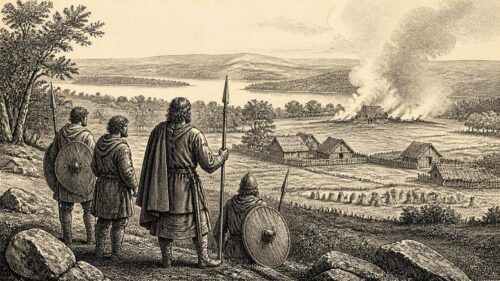
In 1278, Thomas de Clare’s ambitious lordship of Thomond provoked sustained conflict. On 11 May, he executed the displaced king Brian Ruad Ó Briain at Bunratty, allegedly with assistance from Brian’s captains. Brian’s son Donnchad later defeated de Clare’s forces at Quin, where a church was burned and many died. Connacht suffered violent succession struggles: King Tadc Ó Conchobair was killed, followed by further dynastic murders and Áed Muimnech’s contested accession. Violent deaths also affected regional rulers. Bishop Thomas Ó Cuinn died, while Cashel’s archbishop visited England. These events revealed authority’s dependence on alliances, hostages, resources and force across Ireland.
Dateline
The most sharply dated Irish event of 1278 occurred at Bunratty on 11 May. Brian Ruad Ó Briain, the displaced king of Thomond, was put to death by Thomas de Clare. The Annals of Inisfallen add the grave suggestion that some of Brian’s own captains had assisted in his betrayal. This was not simply the killing of a defeated rival. It exposed the hazardous bargain by which an Irish claimant had sought help from a newly empowered Anglo-Norman lord, and it helped make western Munster a theatre of sustained war.
A Lordship Won by Charter
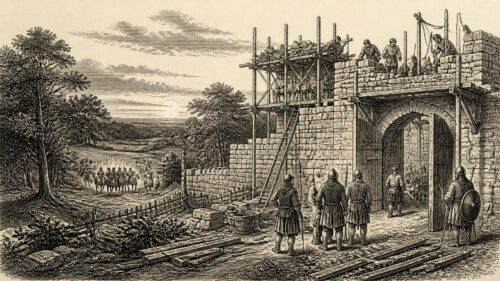
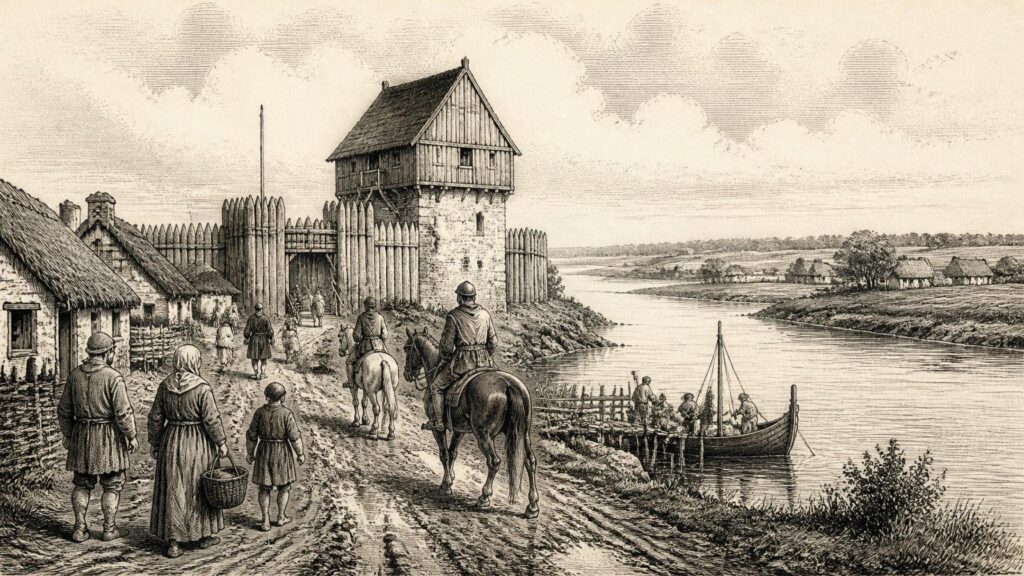
Thomas de Clare was the younger son of Richard de Clare, earl of Gloucester and Hertford, and a close associate of Edward I. In January 1276 the king granted him Thomond as a hereditary fief, nominally in return for the service of ten knights. The grant was ambitious rather than a description of effective possession: Thomond was an Ó Briain kingdom, divided by dynastic competition and only partly penetrated by Anglo-Norman lordship. De Clare had acquired Bunratty and the neighbouring lands of Tradraige through exchange, giving him a strategic base beside the lower Shannon and its approaches.
Brian Ruad had turned to de Clare after losing the Thomond kingship to his grandnephew Toirdelbach mac Taidg Ó Briain. English military assistance could be decisive in such contests, but it came at a price. A royal charter gave de Clare a legal claim in the eyes of Edward I’s government; it did not make local authority automatic. The practical work of lordship meant retaining armed followers, securing routes, taking pledges, making alliances with Irish chiefs and building a dependable territorial base around Bunratty. Brian Ruad’s death revealed how rapidly an alliance of convenience could become subordination and then fatal vulnerability.
The precise circumstances should not be embellished beyond the evidence. Inisfallen firmly dates the execution to 11 May 1278 and names Thomas de Clare. A much later Thomond narrative, Caithréim Thoirdhealbhaigh, supplies a fuller and strongly partisan account of de Clare’s manoeuvring among the Ó Briain branches. It is valuable evidence for the political memory of the conflict, but it is not a contemporary day-by-day record. What can be said securely is that Brian Ruad was killed at Bunratty, that betrayal was alleged, and that his sons remained central to the struggle that followed.
Quin and the Limits of Force
The same year brought a setback to de Clare’s interest at Quin, east of modern Ennis. Annála Connacht records that Donnchad, son of Brian Ruad, and other Ó Briains defeated “the son of the Earl of Clare” there. The phrase is generally understood to identify Thomas de Clare, himself son of an earl. The annal’s stark detail is that Ó Briain’s men burned Quin church while attacking the opposing force sheltering in or around it. It says that a very great number died in burning and killing, while the Clare leader escaped secretly.
That entry is an important corrective to any picture of 1278 as straightforward conquest. A charter, castle and household troops did not neutralise the military resources of the Ó Briains or the value of their local alliances. The attack also demonstrates the terrible pressure placed upon churches in warfare. Ecclesiastical sites could be places of sanctuary, centres of settlement and conspicuous defensible landmarks; in a raid or pursuit, they might become killing grounds. The annalist condemns neither side in a modern legal vocabulary, but the choice to preserve the burning of the church makes clear its exceptional horror.
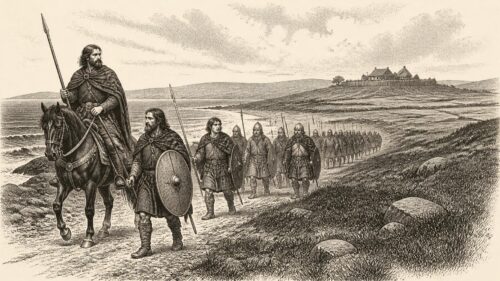
For ordinary people, such conflict was experienced less through formal claims to kingship than through sudden mobilisation, the movement of armed men, confiscation of cattle and food, danger on roads, and the insecurity of church lands and dependent settlements. The records do not permit a detailed reconstruction of any one household’s experience in 1278. They do, however, show that political conflict in Thomond directly endangered the spaces in which local communities worshipped, traded and sought protection. Bunratty’s lordship was therefore being made not merely in documents but amid coercion, flight and counter-attack.
Connacht’s Violent Succession
While Thomond was convulsed by the consequences of de Clare’s intervention, Connacht underwent an abrupt change of kingship. Tadc, son of Toirdelbach Ó Conchobair and descendant of Cathal Crobderg, was killed by the sons of Cathal Mac Diarmata after three years as king of Connacht. The annalist preserves a short verse by Donnchad Losc Ó Maelchonaire which says that Tadc had gathered the hostages of the land and that all obeyed him while he reigned. Hostages were an instrument of high politics: their delivery bound lesser rulers and kindreds to an agreement, while their custody testified to a king’s reach. The verse therefore presents Tadc as a ruler who had achieved significant authority, even if only briefly.
His death was followed by further killings within and around the Ó Conchobair kin-group. Ruaidri, another son of Toirdelbach and an eligible royal claimant, was killed near Drumcliff by Gilla Crist Mag Flannchaid and the Dartraige; the annal also names Persun Riabach, or the Swarthy Parson, son of Tigernán Ó Conchobair, among the dead. Tadc of Erris killed three sons of Muirgius Ó Maelruanaid. These notices do not amount to a full narrative of a single campaign, but together they show a succession crisis conducted through targeted killing as well as public claims to rule.
Áed Muimnech, son of Fedlimid, then assumed the kingship of Connacht. The wording matters. It records accession, not calm acceptance. Subsequent annals show that his rule was contested and short-lived, so 1278 should be understood as the opening of a fragile settlement rather than the restoration of durable provincial unity. In the same year Tomaltach Mag Oirechtaig, king-chief of Síol Muiredaig, was killed by the Tuatha, while Flaithbertach Ó Doimin, king of Fir Manach, also died violently. The political map of the north and west remained a mosaic of regional lordships whose rulers could be powerful, but whose security was never assured.
A further Connacht encounter recorded in the Annals of the Four Masters saw Brian Ó Dubda and Art na gCapall Ó hEgra, lord of Luighne, defeat Clann Feorais. Two sons of Maoilir Mór and Conchobar Ruad Mac Feorais were among those killed. The notice is brief, yet it points to the continuing importance of lordship below the provincial level. Control of Luighne, Moylurg, Síol Muiredaig and other districts rested on kin networks, cattle wealth, clientage and the ability to raise fighting men, not on a single central administration.
Church, Learning and Overseas Authority
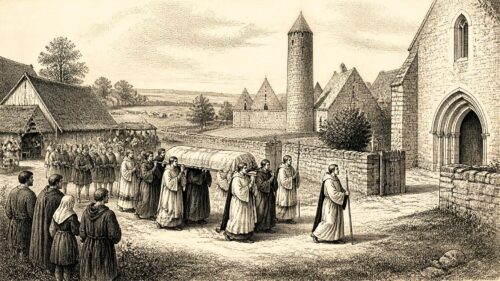
Violence did not exhaust the year’s history. Thomas Ó Cuinn, bishop of Clonmacnoise, died in 1278. His see centred on one of Ireland’s most celebrated ecclesiastical landscapes, a place of churches, graves, learning and river communications on the Shannon. The annal gives no account of his career, but recording his death alongside kings and dynasts shows the standing still attached to an episcopal office rooted in an ancient monastic centre. Such institutions joined religious observance to landholding, hospitality, writing and the circulation of people and goods.
The archbishop of Cashel, Dáuíd Mac Cerbaill, travelled overseas to the king of England and, according to Inisfallen, remained there for a long time. This was a reminder that Ireland’s church operated simultaneously in local and wider political worlds. An archbishop’s journey required resources, contacts and sea passage; it also shows that the relationship between Irish ecclesiastics and royal government could be pursued in person across the Irish Sea. The annal does not state his business, so it should not be assigned a purpose that the evidence does not provide.
Inisfallen and the short Latin chronicle known as Annales Hiberniae also place the deaths of David de Barry the younger and John de Cogan in 1278. Both belonged to prominent Anglo-Norman lineages in Munster. Their deaths, like Brian Ruad’s, underline the instability of an expanding but uneven colonial frontier. Yet the surviving evidence does not suggest a single island-wide war or a uniform experience. Ireland in 1278 contained port towns and lordly manors linked to England and Wales, older ecclesiastical centres connected by rivers and roads, and Gaelic territories where provincial and local kingship still mattered intensely.
A Year of Precarious Power
What joins the events of 1278 is not national unity but the precariousness of authority. At Bunratty, Thomas de Clare turned a partnership with an Ó Briain claimant into a bid for a new lordship. At Quin, that project met fierce resistance and the destruction of a church. In Connacht, Tadc Ó Conchobair’s killing broke a three-year reign and ushered in Áed Muimnech’s uncertain accession. Deaths in Fir Manach and Síol Muiredaig show that comparable pressures ran through the northern and western lordships.
The sources are themselves part of the story. Annalists measured the year through the deaths of rulers and bishops, battles, accessions and celestial calendrical formulae. Their terse notices leave silences about the labourers, traders, clergy, tenants and families who sustained every lordship. But those notices also preserve enough to see the human consequences of high politics: hostages gathered and lost, alliances broken, a church burned, a king betrayed, and communities compelled to live beside armed power. In 1278, authority in Ireland was claimed through charters and inaugurations alike, but maintained only as long as allies, resources and force held together.
Primary Sources
- Annála Connacht: Annal 1278
- Annála Connacht: Irish Text, Annal 1278
- Annals of the Four Masters: Annal M1278
- Annals of the Four Masters, Part 11
- Annals of Inisfallen, Part 80
- The Annals of Ulster, Part 80
- Annals of Ulster: Irish Text and Translation
- Annala Uladh: Annals of Ulster Otherwise Annala Senait, Part 9
- Annales Hiberniae
- Caithréim Thoirdhealbhaigh, Part 1
- Caithréim Thoirdhealbhaigh: Irish Text
- Clare, Thomas de
- O’Brien (Ó Briain), Brian Ruad
- Clare, Richard de
- English Lords in Late Thirteenth and Early Fourteenth Century Ireland: Roger Bigod and the de Clare Lords of Thomond
- English lords in late thirteenth and early fourteenth-century Ireland: Roger Bigod and the de Clare lords of Thomond
- The Battle of Dysert O’Dea and the Gaelic Resurgence in Thomond
- The Normans in Thomond
- English Rule in Ireland, c.1272–c.1315
- Who Was Who in Medieval Limerick City
- The Crusades to 1291 in the Annals of Medieval Ireland