Route Endorsed
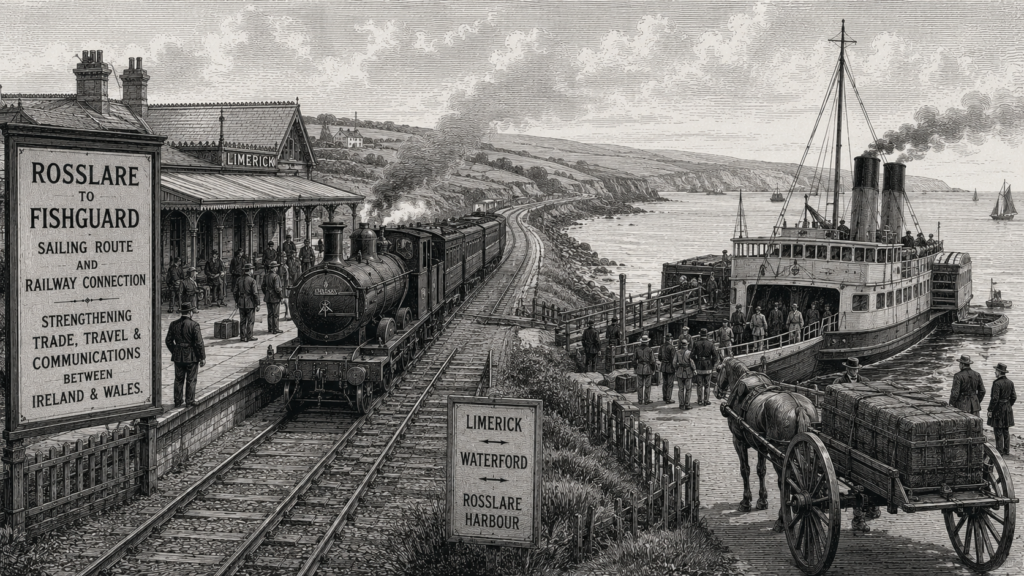
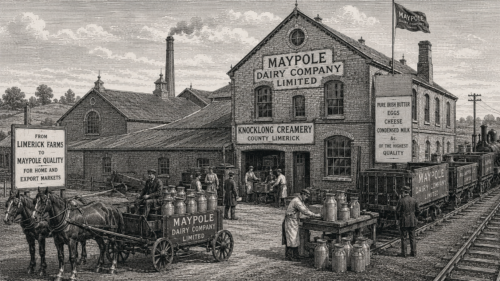
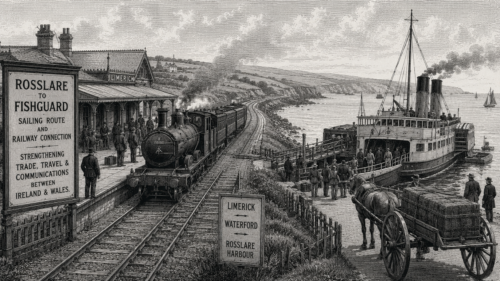
Limerick County Council looked towards the Irish Sea in 1900 when it supported proposals for the developing railway and steamship connection between Rosslare in County Wexford and Fishguard in Wales. The surviving account mistakenly calls the Irish port “Roeselare,” the name of a Belgian city, but the intended destination was Rosslare. Although both harbours lay far from County Limerick, councillors recognised that a through route from the Shannon region towards Waterford and the south-eastern coast might improve passenger travel, commercial communication and access to markets in Britain.
The Fishguard and Rosslare Railways and Harbours Company had emerged from plans advanced during the late 1890s by interests associated with the Great Western Railway and the Great Southern and Western Railway. Parliament authorised the undertaking through the Fishguard and Rosslare Railways and Harbours Act of 1898. The project required considerably more than the introduction of a ferry. New harbour works, railway approaches and connecting lines were needed on both sides of the Irish Sea before trains and steamships could operate as parts of one coordinated transport system.
Further parliamentary powers followed in 1900, permitting additional harbour construction at Rosslare and alterations to portions of the authorised railway. Limerick already possessed a rail connection towards Waterford through the former Waterford and Limerick Railway, known by then as the Waterford, Limerick and Western Railway. Supporters could therefore envisage passengers and agricultural consignments travelling eastward from Limerick through Clonmel and Waterford before continuing towards Rosslare. The route promised an alternative link with Britain, though substantial engineering, financial and administrative difficulties still stood between parliamentary approval and regular operation.
The council’s support reflected the economic ambitions of a county dependent upon agriculture, trade and reliable transport. A more direct south-eastern crossing offered the possibility of shorter journeys, improved mail communication and more efficient movement of produce towards British towns. Yet the benefits remained prospective in 1900. The company’s obligations and proposed railway works became subjects of continuing parliamentary scrutiny, while disputes arose over connecting lines and the fulfilment of earlier undertakings. Local enthusiasm could encourage the project, but Limerick County Council did not control the construction timetable, the harbour engineering or the companies responsible for completing the route.
Regular passenger operations between Rosslare and Fishguard did not begin until 1906, six years after the Limerick discussion. The eventual opening nevertheless fulfilled much of the vision that had attracted support: a linked railway and sea passage joining southern Ireland with Wales and the Great Western route towards London. For Limerick, the episode demonstrated that transport policy extended beyond roads and railways lying within the county boundary. Decisions concerning distant harbours could influence local commerce by reshaping the routes through which people, letters, livestock and goods travelled between western Ireland and Britain.
- Limerick Archives, “Revolutionising Maritime Transportation Between Ireland and England: The Roeselare-Fishguard Sailing Route,” 20 May 2023.
- Fishguard and Rosslare Railways and Harbours Act 1898, 61 & 62 Victoria, chapter cclii.
- Fishguard and Rosslare Railways and Harbours Act 1900, 63 & 64 Victoria, chapter cvi, 30 July 1900.
- CIÉ Group Archives, CIE/FRR/2, Legal and Property Records, Fishguard and Rosslare Railways and Harbours Company, 1897–1925.
- CIÉ Group Archives, CIE/FRR/2/2, Fishguard and Rosslare Railways and Harbours Company Bill 1897: Brief on Opposition from the Dublin, Wicklow and Wexford Railway Company.
- Great Southern and Western and Waterford, Limerick and Western Railway Companies Amalgamation Act 1900, 63 & 64 Victoria, chapter ccxlvii.
- House of Commons Debates, 21 June 1901, vol. 95, “Fermoy and Cork Direct Railway.”