
Archived: 7 October 2026
Abstract
Around 30,167 BCE, Ireland’s history is reconstructed from environmental evidence rather than recorded events. At Derryvree, County Fermanagh, organic freshwater deposits between glacial tills, dated broadly to this interval, reveal tundra vegetation, pools and severe periglacial conditions during an ice-free phase. Castlepook Cave, County Cork, preserves diverse cold-stage fauna, including mammoth, reindeer and giant deer, although its mixed deposits span a long period. A marked reindeer bone may indicate human carcass processing, but remains unconfirmed and does not demonstrate settlement. Changing ice margins, sea levels and regional conditions shaped a fragmented Late Pleistocene landscape across the island and through time.
Read Article

Archived: 7 October 2026
Abstract
Around 30,168 BCE, Ireland lay in a climatically unstable Late Pleistocene world as the British–Irish Ice Sheet expanded. Conditions varied regionally; exposed ground supported patches of cold, open habitat and mobile fauna, including reindeer, horse, mammoth and predators. Castlepook Cave preserves animal remains and a reindeer femur bearing a possible stone-tool cut mark. This may indicate brief human carcass processing roughly 33,000 years ago, but does not prove settlement. No securely documented Palaeolithic habitation, polity, economy or culture is known. The period’s history is reconstructed from uncertain radiocarbon ranges, cave deposits, fauna and glacial evidence, leaving Castlepook an unresolved clue.
Read Article
Archived: 7 October 2026
Abstract
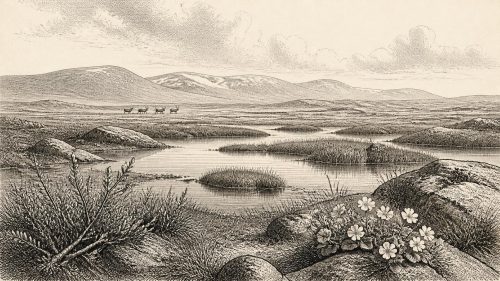
Around 30,169 BCE, Ireland’s history is reconstructed from environmental evidence rather than events. Derryvree, County Fermanagh, preserves organic sediments between glacial tills, dated approximately 30,500 radiocarbon years BP, indicating an ice-free freshwater tundra landscape with grasses, sedges, mosses, juniper and low shrubs. Climate and ice extent fluctuated during MIS 3, producing strong regional variation before the Last Glacial Maximum. Castlepook Cave, County Cork, yielded mammoth, reindeer, giant deer, hyaena and other fauna, demonstrating connections with north-west Europe. A possible tool mark suggests transient human activity, but sustained occupation remains unproven. These records reveal ecological richness, not a precise annual history.
Read Article

Archived: 6 October 2026
Abstract
Around 30,170 BCE, Ireland lay in the Late Pleistocene, but no precise historical event can be reconstructed. Derryvree, County Fermanagh, preserves freshwater organic sediments between glacial tills, dated broadly to 34,950–29,750 BCE. Mosses, sedges, aquatic plants and cold-adapted insects indicate locally ice-free, treeless wetlands amid unstable periglacial conditions. Comparable Fermanagh deposits suggest intermittent open habitats, while advancing ice repeatedly transformed landscapes. Castlepook Cave's animal remains, including reindeer, mammoth, bear and hyaena, demonstrate varied Ice-Age fauna but cannot represent one moment. A possibly tool-marked reindeer bone hints at early human presence, yet proves neither settlement nor occupation. Environmental evidence is strongest.
Read Article

Archived: 6 October 2026
Abstract
At 30,171 BCE, Ireland experienced unstable Marine Isotope Stage 3 conditions, a period unsuitable for conventional historical narrative. Growing ice, tundra wetlands and fragmented habitats characterised a varied landscape, later heavily altered by glaciation. Derryvree deposits in Fermanagh preserve sedges, mosses, dwarf willow and aquatic plants from periglacial freshwater environments. Castlepook Cave in County Cork records mammoth, reindeer, giant deer, predators and spotted hyaena, whose bones accumulated over long periods. A marked reindeer bone may indicate human carcass processing around 33,000 years ago, but cannot establish settlement, culture or a specific visit. Evidence reveals environmental change, animal movement and uncertainty.
Read Article

Archived: 6 October 2026
Abstract
Thirty-thousand years BCE is best understood as a broad Late Pleistocene horizon, not a date for a recorded Irish event. During Marine Isotope Stage 3, Ireland experienced unstable climates, fluctuating ice and altered coastlines. Derryvree, County Fermanagh, preserves treeless wetland sediments between glacial tills, indicating cold, open habitats during an ice-free interval. Crag Cave flowstones in Kerry show liquid-water infiltration around 32,100 years ago, suggesting locally above-freezing annual conditions. Southern caves contain cold-stage fauna, including mammoth and reindeer. A possibly butchered reindeer bone at Castlepook hints at human activity, but permanent settlement remains unproven before later extensive glaciation across Ireland.
Read Article

Archived: 6 October 2026
Abstract
30,173 BCE cannot be identified as a recoverable Irish historical year; it falls within a broad calibrated radiocarbon range for the Late Pleistocene. At Derryvree, County Fermanagh, freshwater sediments sealed between glacial tills record a cold, treeless, periglacial wetland with herbaceous pollen, mosses, sedges, bogbean and other cold-adapted plants. The site demonstrates environmental intervals between ice advances, not island-wide conditions. Castlepook Cave preserves diverse cold-stage fauna and a possibly cut-marked reindeer bone, suggesting but not proving brief human visits. No evidence establishes settlement, politics or farming. Ireland instead experienced fluctuating water, open vegetation, animal life and increasingly influential glaciation change.
Read Article

Archived: 6 October 2026
Abstract
Thirty thousand one hundred and seventy-four BCE is a calendar label within Marine Isotope Stage 3, not a datable event. Derryvree, County Fermanagh, preserves freshwater sediments between glacial tills, showing a locally ice-free, cold, treeless wetland during a broadly dated interval. Plant, insect and pollen remains indicate sedges, grasses, mosses, herbs and shallow pools, rather than forest or settlement. Castlepook Cave, County Cork, holds long-accumulated remains of mammoth, giant deer, reindeer, bears and hyaenas, demonstrating varied fauna but not a contemporary community. No secure evidence confirms human occupation. These fragmentary deposits document changing habitats before Last Glacial Maximum ice growth.
Read Article
Archived: 6 October 2026
Abstract
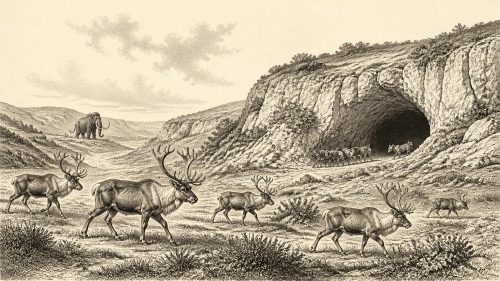
Around 30,175 BCE, Ireland lay within the unstable later Pleistocene, before maximum expansion of the last British–Irish Ice Sheet. Precise dating is impossible, and evidence survives chiefly in disturbed cave deposits. Castlepook Cave, County Cork, preserves remains of mammoth, reindeer, giant deer, hyaena, bear and other cold-adapted animals, accumulated across millennia rather than in one episode. Open tundra-like habitats and lower sea levels shaped a landscape. A marked reindeer femur may indicate Upper Palaeolithic butchery, but lacks secure context and cannot prove settlement. No wider reconstruction is justified. Castlepook instead records intermittent animal life and a possible fleeting human encounter.
Read Article

Archived: 6 October 2026
Abstract
Around 32,125 cal BP, rather than a precisely knowable 30,176 BCE, Ireland experienced unstable late MIS 3 conditions. Crag Cave stalagmites ceased growing, indicating colder, drier or frozen local ground. As the British-Irish Ice Sheet expanded, Ireland remained regionally varied, with lower seas and shifting routes rather than uniform ice cover or a permanent land bridge. Open habitats supported reindeer, mammoth, giant deer, hare, lemmings, wolves and hyaenas, evidenced especially at Castlepook Cave. A possibly stone-cut reindeer bone may indicate brief Upper Palaeolithic carcass processing, but proves neither settlement nor continuous occupation. Environmental archives document climate, fauna, hydrology and ice.
Read Article

