Archived: 14 October 2026
Abstract
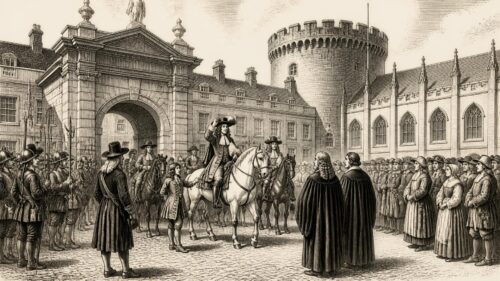
In 1677 James Butler, duke of Ormond, resumed the lord lieutenancy, succeeding Essex amid consequences of war, conquest and Restoration land settlement. His authority was constrained by control of revenue through Ranelagh’s undertaking, while his hoped-for parliament did not meet. Government addressed claims of 1649 royalist officers, currency regulation, night watches, local crime, fortifications and property disputes. Honours and ecclesiastical appointments reinforced Protestant authority, while Catholics remained restricted but not yet subject to later repression. Francis O’Molloy published the printed Irish grammar in Rome, exemplifying Catholic scholarship abroad. The deaths of Bellings, Lynch and Taaffe marked a passing political generation.
Read Article

Archived: 14 October 2026
Abstract
In 1678, the English Popish Plot panic transformed Irish government despite no rebellion or parliament. Lord Lieutenant Ormond pursued revenue collection, army support and land titles, but proposed legislation failed to resolve Restoration property disputes. Catholic structures remained active: Oliver Plunkett held a synod, while Nicholas French died in exile. Peter Talbot, archbishop of Dublin, returned conditionally in May but was arrested in October and imprisoned without evidence. Thereafter proclamations expelled clergy, suppressed religious institutions, disarmed Catholics, restricted access to garrisons and demanded enforcement by officials. These measures intensified sectarian insecurity, while trade, civic regulation and unresolved political tensions continued.
Read Article
Archived: 14 October 2026
Abstract
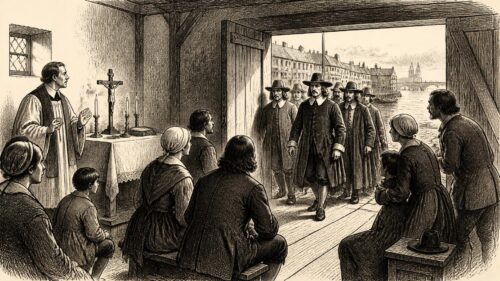
In 1679, amid the Popish Plot scare, Ormond's Irish administration intensified measures against Catholic worship, clergy and suspected disorder. Proclamations targeted bishops, Jesuits, masshouses and tories, linking religious nonconformity with threats to royal authority. Officers entering the Merchants' Quay masshouse met resistance, demonstrating both continuing Catholic worship and contested enforcement. A public Protestant fast nationalised fears of conspiracy. Catholic leaders, including Peter Talbot and Oliver Plunkett, faced confinement; Plunkett's December arrest made him the scare's principal Irish target. Authorities also guarded against Scottish unrest, pursued outlaws, regulated revenue and tobacco, and sponsored rebuilding projects, combining coercion, administration and Restoration display.
Read Article
Archived: 14 October 2026
Abstract
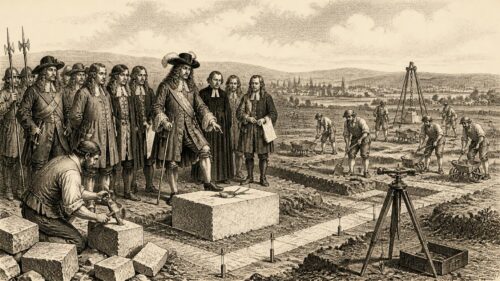
In 1680, Popish Plot fears shaped Irish government despite no rebellion. Ormond sought English approval for proposed legislation, including measures against Catholic clergy, but no parliament met. He laid the foundation stone of the Royal Hospital at Kilmainham, a home for retired soldiers. At Dundalk, the prosecution of Archbishop Oliver Plunkett collapsed when witnesses failed to appear; he was nevertheless sent to London, while Archbishop Peter Talbot died untried in Dublin prison. Gaelic learning endured through the copying of Leabhar Cloinne Aodha Buidhe in Antrim. Borlase’s history of 1641 reinforced Protestant fears, demonstrating how memory, coercion and institutions governed Ireland.
Read Article

Archived: 14 October 2026
Abstract
In 1681, Ireland’s most memorable event was the London execution of Oliver Plunkett, Catholic archbishop of Armagh, after a flawed Popish Plot treason trial. His death exposed Catholic insecurity under Restoration rule. Governed by the duke of Ormond, Ireland lacked a parliament and relied on proclamations, courts and armed institutions. A November order required militia and army officers to receive Church of Ireland communion, affirming confessional loyalty. A July ban on grain exports reflected concern over provisioning, without proving famine. In September, Quakers led by William Bates sailed from Dublin for West Jersey, demonstrating Ireland’s Atlantic religious and migratory connections.
Read Article
Archived: 14 October 2026
Abstract
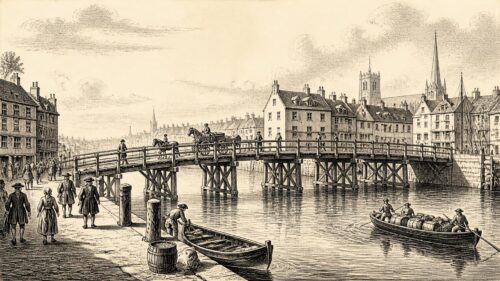
In 1682, James Butler, duke of Ormond, retained the lord lieutenancy while his son Richard, earl of Arran, governed from Dublin Castle as lord deputy, maintaining Butler influence under Whitehall’s authority. No parliament met, leaving administration to council, courts, revenue and patronage. Dublin expanded with timber Ormond and Arran Bridges across the Liffey, improving commerce and commemorating the family. Appointments included William Sheridan as bishop of Kilmore and Ardagh, John Lyndon as Third Serjeant-at-Law, and baronetcies. Beneath stability lay Protestant dominance, Catholic exclusion, land settlements, debt disputes and confessional tensions. Ormond’s dukedom affirmed favour but emphasised Ireland’s dependence on court.
Read Article
Archived: 14 October 2026
Abstract
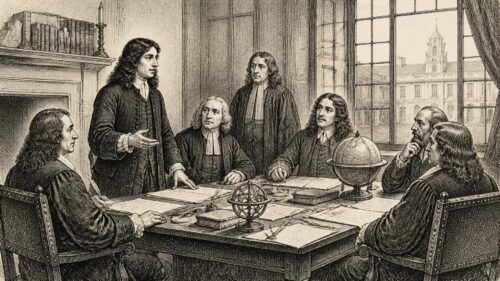
In 1683, Restoration Ireland reflected vigilant government, Protestant consolidation, Catholic resilience and emerging scientific enquiry. Following England’s Rye House Plot, Lord Deputy Arran and Ormond monitored suspected dissenters, linking officeholding to Church of Ireland conformity; Richard Talbot’s return also signalled Catholic court influence. Randal MacDonnell’s death ended the Antrim marquessate amid indebted estate arrangements. William Molyneux convened Dublin’s first philosophical society, promoting observation and practical knowledge. Archbishop Boyle’s new Blessington church embodied Anglican landlord power, while Dominic Maguire’s selection as Catholic primate demonstrated ecclesiastical continuity. Trade remained pastoral, Greatrakes died, and the severe winter threatened livelihoods across the island’s communities.
Read Article
Archived: 14 October 2026
Abstract
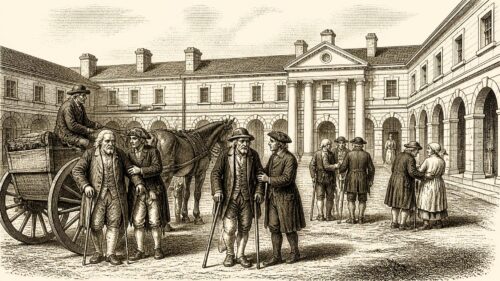
In 1684, Restoration Ireland combined outward peace with unresolved political, military and property tensions. King Charles II chartered the Royal Hospital at Kilmainham for aged and disabled soldiers, linking welfare to the permanent army. A fire damaged Dublin Castle, threatening records and prompting later rebuilding. The Duke of Ormond returned as lord lieutenant but received notice of dismissal, reflecting shifting court influence. The Commission and Court of Grace sought to regularise defective land titles without overturning Protestant dominance. Granard’s regiment improved military organisation. Dublin’s scientific society and Ruaidhrí Ó Flaithbheartaigh’s regional study fostered inquiry, while winter damage exposed material vulnerability.
Read Article

Archived: 14 October 2026
Abstract
In 1685 James II’s accession raised Catholic hopes and Protestant fears in Ireland, although laws and land settlements remained unchanged. Richard Talbot, created earl of Tyrconnell, gained authority to reshape the army, admitting Catholic officers and weakening the exclusively Protestant military establishment. Security measures in Ulster coincided with tensions over religion, land and memories of 1641. Henry Hyde, earl of Clarendon, was appointed lord lieutenant, signalling divided governance. Economic life continued amid political uncertainty. Cultural developments included publication of Bedell’s Irish Old Testament, the first Irish newspaper, and Ó Flaithbheartaigh’s Ogygia. Francis Harold’s death in Rome reflected continental Catholic networks.
Read Article

Archived: 14 October 2026
Abstract
In 1686, James II’s government rapidly reshaped Ireland’s confessional political order. Lord Lieutenant Clarendon’s administration was increasingly challenged by Richard Talbot, earl of Tyrconnell, whose influence advanced Catholic participation in government and the army. Royal payments to Catholic bishops, appointments of Catholic judges and officials, and military recruitment signalled a reversal of longstanding exclusion. These changes alarmed Protestant proprietors, whose security depended on Restoration land settlements. Richard Nagle’s Coventry Letter linked Catholic political advancement to restitution of confiscated estates, intensifying fears of property redistribution. Despite revenue and commerce, uncertainty affected confidence. Swift’s Trinity degree marked the year’s life amid tensions.
Read Article
