Archived: 2 November 2026
Abstract
In 693 CE, Ireland’s surviving annalistic record is unusually compact but revealing. The Annals of Ulster, whose annal headed 694 is synchronised to AD 693, record the death of Crón Bec, abbot of Clonmacnoise; the deaths of ecclesiastics at Movilla and Balla; the killing of a layman named Cerball son of Máel Odar; and a siege at Dún Foither. No contemporary narrative explains how these events were connected. Yet together they show an island in which monastic communities, local lordship and fortified places formed the essential framework of public life. The year was not one of a single, island-wide turning
Read Article
Archived: 2 November 2026
Abstract
In 694 CE, the clearest securely associated Irish event was the death of Crónán Becc, or Crónán “the Little”, abbot of Cluain Moccu Nóis—Clonmacnoise—on the River Shannon. It is a modest record beside the spectacular battles and royal killings that often dominate the annals, but it offers an unusually useful view of Ireland’s real centres of gravity. An abbot’s death mattered because a major monastery was not simply a retreat for prayer: it was a religious community, a landholder, a place of learning and writing, a destination for visitors, and a point at which regional politics met the wider Irish
Read Article
Archived: 2 November 2026
Abstract
In 695 CE, the most securely placed Irish development was the killing of Fínsnechtae Fledach, king of Tara, and of his son Bresal at Grellach Dollaig. The Annals of Tigernach and Chronicon Scotorum assign the event to this year, naming the killers as Áed son of Dlúthach and Congalach son of Conaing. Their terse record calls it a battle, but supplies neither day nor season, nor a narrative of manoeuvres or troop numbers. It nevertheless marked a decisive rupture in the leadership of Brega and in the wider overkingship which Fínsnechtae had exercised for about two decades. An Annalistic Date,
Read Article
Archived: 1 November 2026
Abstract
In 696 CE, Irish annalists recorded a striking concentration of deaths and killings among rulers, ecclesiastics and men of high rank. The fullest contemporary-looking notices name the killing of Lóchéne Menn, the learned abbot of Cell Dara (Kildare); the deaths of Finguine, king of Munster, Fergal of Aidhne, and Congalach of Brega; and the killing of Domnall son of Conall Crandomna. The notices are brief, often frustratingly so, but they reveal a year in which power changed hands across several regions and in which a leading monastery suffered the violent loss of its head. Dating a Sparse Year The evidence
Read Article
Archived: 1 November 2026
Abstract
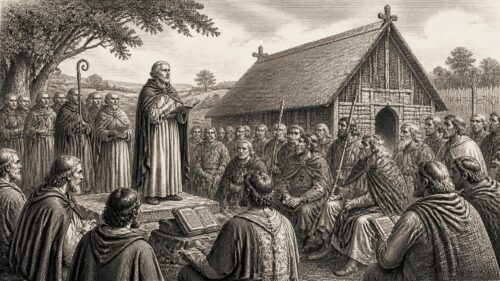
In 697 CE, the most consequential Irish development securely associated with the year was Adomnán of Iona’s promulgation of the Cáin Adomnáin, the ‘Law of Adomnán’, at Birr in what is now County Offaly. The Irish annals record tersely that Adomnán came to Ireland and gave the Lex Innocentium, or Law of Innocents, to the people. Behind that spare notice lies an unusually ambitious attempt to regulate the conduct of war across a politically divided island and, in principle, across the Irish Sea. A Year with a Chronological Caveat Early Irish annals do not always align neatly with modern calendar
Read Article
Archived: 1 November 2026
Abstract
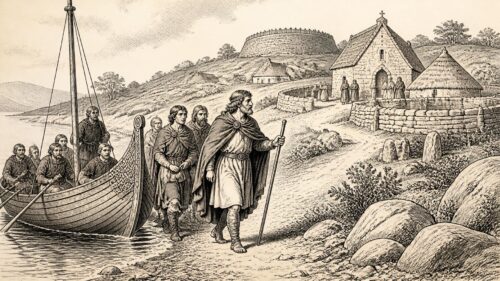
In 698, Irish annals record Tarachin’s journey to Ireland and an unexplained battle associated with Fiannamail son of Oiséne. Chronological variation requires caution: Tarachin may have been connected with the deposed Pictish ruler Taran, but neither identity nor motives are certain. His crossing nevertheless illustrates Ireland’s maritime links with Dál Riata, Pictland and western Britain, and its potential role as refuge for displaced elites. Fiannamail’s battle reflects localised violence within a fragmented political landscape under Loingsech’s influence. Churches, rural production and literate communities supported authority and preserved selective memories. Ireland was connected, decentralised, and politically active, not unified or isolated.
Read Article
Archived: 1 November 2026
Abstract
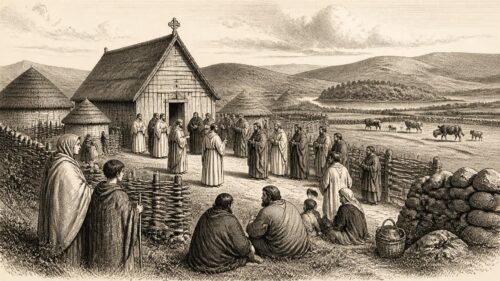
In 699, the Annals of the Four Masters record the death on 30 March of Colmán of Linn Ua Chaille, though his office remains unknown. They also assign deaths of Ailill, king of Munster, and Conall of Uí Fhidgeinte, and Írgalach’s killing of Niall Ua Cernach in Brega. Parallel annals date these political events shortly later, demonstrating chronological divergence in transmitted records. The notices illuminate ecclesiastical commemoration, unstable dynastic authority and aristocratic violence. Set after the synod of Birr, they also evoke a rural society where churches, kinship, cattle, agricultural production and local kingship shaped everyday life and political power.
Read Article
Archived: 1 November 2026
Abstract
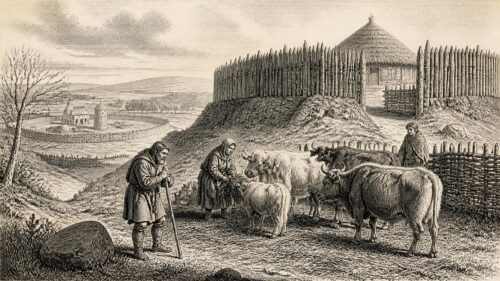
In 700, Irish annals recorded a cattle mortality beginning on 1 February at Mag Trega in Tethba, an event of major significance in a rural economy dependent on livestock for food, labour, wealth and tribute. Sources differ slightly in chronology and detail, but associate the outbreak with Ireland-wide loss and memories of famine and pestilence. Chronicon Scotorum also reports exceptional frost, without proving a causal link. Political instability continued: Fiannamail of Dál Riata was killed and Aurthuile of Cenél nÉogain expelled to Britain. Ecclesiastical institutions remained influential, while later narratives framed crisis through Christian ideas of protection, providence and judgement.
Read Article
Archived: 1 November 2026
Abstract
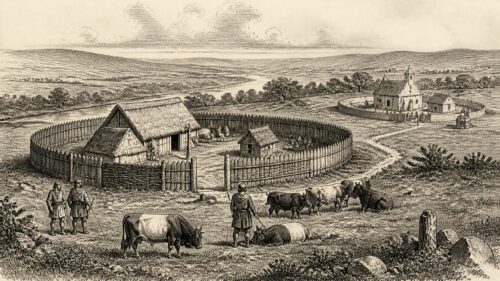
In 701, Niall son of Cernach was killed at the uncertain site of Drumain Ua Casáin by Írgalach, intensifying rivalry between branches of the southern Uí Néill in Brega. Later Columban tradition portrayed the killing as a violation of sanctuary linked to Kells and Írgalach’s death as retribution, though contemporary annals give no details. The year also recorded cattle mortality, threatening wealth, food production, tribute and rural livelihoods. In Munster, Ailill, king of Mumu, and Conall of Uí Fidgente died, prompting uncertain political transitions. Colmán ua hOrc, abbot of Clonard, also died, highlighting ecclesiastical institutions’ religious, economic and political influence.
Read Article
Archived: 1 November 2026
Abstract
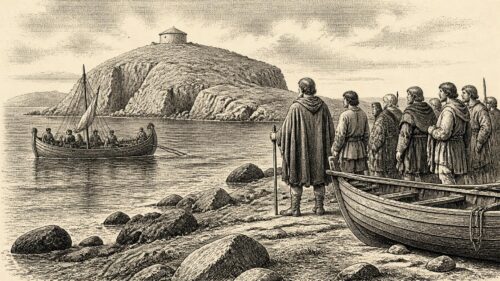
In 702, although annalistic dating varies between 701 and 702, Irish records note political and ecclesiastical deaths. Muiredach Muillethan, king of Connacht and ancestor of Síl Muiredaig, died, potentially affecting regional succession. Írgalach of Brega, grandson of Conaing, was killed by Britons at Inis Mac Nesáin, modern Ireland’s Eye, demonstrating dangerous Irish Sea connections without proving an invasion. Faeldobar of Clogher, other kings, an abbot and scholars also died. These notices reveal interdependence between rulers, churches and learning. Most people remained unrecorded, sustaining rural communities whose labour, farming, tribute and seaborne travel underpinned early medieval Irish society amid dynastic instability.
Read Article
