Archived: 2 November 2026
Abstract
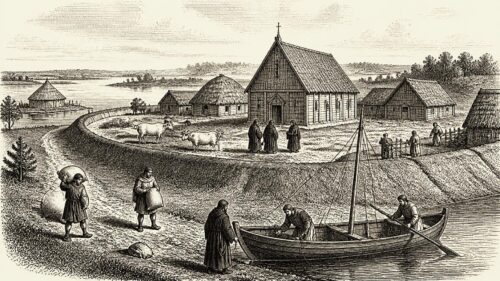
In 683 CE, Ireland’s surviving annalistic record places political violence, contested provincial authority and the first reported onset of a grave mortality within the same year. The entries are terse, but their conjunction is striking: Dúnchad Muirisce, king of Connacht, was killed; Colgu, son of the former Tara ruler Blathmac, fell in the battle of Corann alongside Fergus, king of Cenél Cairpri; two strongholds were besieged; and, in October, a disease described as the “mortality of children” began. For a society whose history was usually recorded through the fates of rulers, clerics and religious houses, this last notice points beyond
Read Article
Archived: 2 November 2026
Abstract
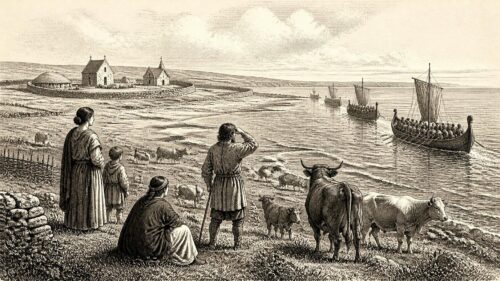
In 684 CE, a Northumbrian force crossed the Irish Sea and devastated Mag Breg, the rich plain of Brega in the eastern midlands. The expedition, sent by Ecgfrith, king of Northumbria, and led by his ealdorman Berht, is the year’s firmly dated Irish event. It was brief in the surviving record, but its targets make it unusually revealing: the raiders struck a politically central region and, according to both Irish and Northumbrian testimony, did not spare churches. For the communities of Brega, June brought not an abstract clash between distant kingdoms but the loss of movable wealth, damaged settlements, disrupted
Read Article
Archived: 2 November 2026
Abstract
In 685 CE, Ireland’s surviving record is unusually sparse, but it is not empty. The year is best approached through a small, difficult cluster of annalistic notices: the death of Banbán ‘Os Cach’, described as a learned man and, in the fuller notice of the Annals of Tigernach, lector of Kildare; the repose of Forcrann, abbot of Clonmacnoise; and events in northern Britain recorded by Irish writers, above all the defeat and death of the Northumbrian king Ecgfrith at Dún Nechtain on 20 May. These sources do not preserve a single narrative of Ireland in 685. Their differing chronological systems
Read Article
Archived: 2 November 2026
Abstract
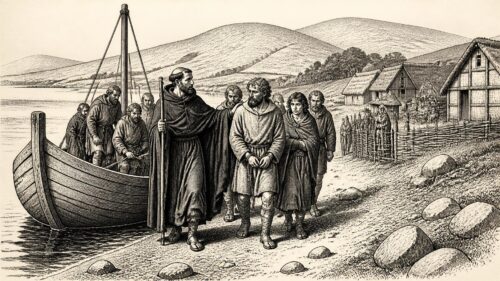
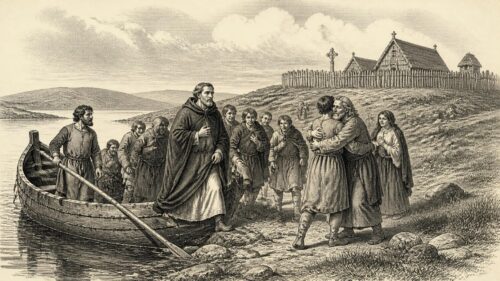
In 686 CE, the clearest securely dated Irish development was an act of return rather than a battle: Adomnán, abbot of Iona, brought sixty former captives back to Ireland. The notice in the Annals of Ulster is exceptionally brief, naming neither the people released nor their home districts, the port at which they landed, or the terms on which freedom was obtained. Yet its precise number and its place amid notices of deaths and killings make it one of the most human records preserved for this year. It also reveals an Ireland connected, and vulnerable, across the Irish Sea. A
Read Article
Archived: 2 November 2026
Abstract
In the annalistic sequence for 687, Adomnán, abbot of Iona, returned sixty former captives to Ireland, probably people seized during King Ecgfrith of Northumbria’s raid of 684. Although the precise date and negotiations remain uncertain, Adomnán’s links with King Aldfrith and Northumbrian ecclesiastical networks likely enabled their release. The episode illustrates Irish Sea connections linking warfare, diplomacy and learning; Adomnán’s scholarly exchanges with Aldfrith may have occurred during related visits. The annals also record the deaths of abbots at Glendalough and Cork, and of a bishop attached to an uncertain monastery, alongside the unexplained killing of Feradach son of Congal.
Read Article
Archived: 2 November 2026
Abstract
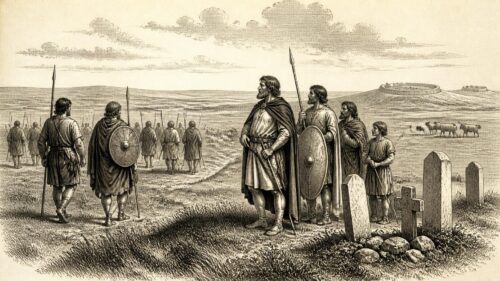
In 688 CE, a battle remembered as Imlech Pich exposed the fragility of power in Brega, the politically important plain north of the River Liffey. The early Irish annals agree on the core result: Niall son of Cernach Sotal defeated Congalach son of Conaing; Dub dá Inber, king of Ard Cianachta, and Uarchride, king of Conaille Muirthemne, were killed; Congalach escaped. They also record the death of Ségéne, bishop of Armagh, and state that the high-king Fínnechta Fledach entered clerical life. These are unusually consequential notices for one year, but they require careful handling. No annal supplies a day, a
Read Article
Archived: 2 November 2026
Abstract
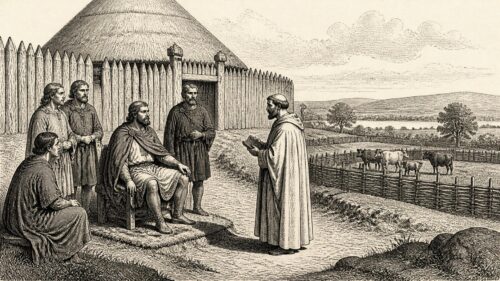
In 689 CE, Ireland’s surviving annalistic record preserves a compact but revealing cluster of political, ecclesiastical and celestial notices. It must, however, be read with unusual care. The material conventionally grouped under the annal-heading 689 is not securely tied to the modern calendar year: the Annals of Ulster label their corresponding entry “AD 688”, and a modern synchronism identifies the reported solar eclipse with 3 July 688. This article therefore treats the events as the evidence traditionally associated with 689 CE, while distinguishing that association from a firm modern date. The clearest political event is the killing of Diarmait, king
Read Article
Archived: 2 November 2026
Abstract
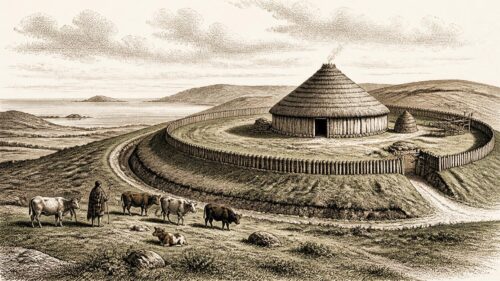
In 690 CE, Ireland’s surviving annalistic tradition places a cluster of violent deaths and ecclesiastical losses within a single, unsettled political landscape. The clearest event is the killing of Congal, son of Máel Dúin and grandson of Áed Bennán, whom the Annals of Ulster call king of Iarmumu, or western Munster. The same annal sequence also records the deaths of Ailill son of Dúngal, associated with Éilne among the Cruthin in the north, and of Dúnchad son of Orc Doith. These terse notices do not supply a battlefield, motive or victor. Yet their concentration is revealing: authority in Ireland rested
Read Article
Archived: 2 November 2026
Abstract
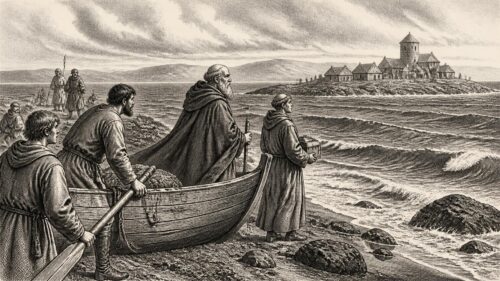
In 691 CE, the surviving Irish annals preserve a small but revealing cluster of notices: the death of Crónán moccu Cuailne, abbot of Bangor; a raid by Dál Riata upon the Cruithin and Ulaid; the death of Fidchellach son of Flann, king of Uí Maine; and a violent windstorm which drowned about six members of Iona’s community on 16 September. These entries do not amount to a continuous narrative of the year, and they should not be made to do so. Yet, set beside the political and ecclesiastical landscape of the late seventh century, they show an Ireland joined to
Read Article
Archived: 2 November 2026
Abstract
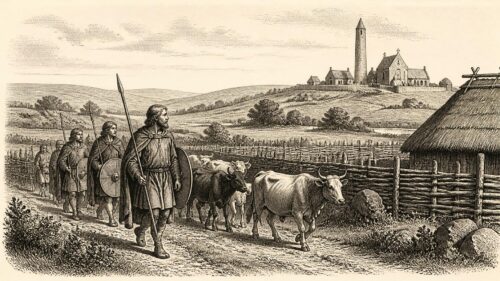
In 692 CE, Ireland’s surviving annalistic record centres on Leinster and its western neighbour Osraige. The firmest items are terse but consequential: Dirath, bishop of Ferns, died; Bran, grandson of Faelán and king of Leinster, also died; and a battle between the Osraige and the Laigin cost the life of Faelchar, grandson of Máel Odor. These entries occur under the following annal heading in the Annals of Ulster, whose calendrical apparatus explicitly equates that heading with AD 692. The precision is important. Irish annals preserve a sequence of notices copied and reshaped over centuries, and their year numbers do not
Read Article
