Archived: 1 November 2026
Abstract
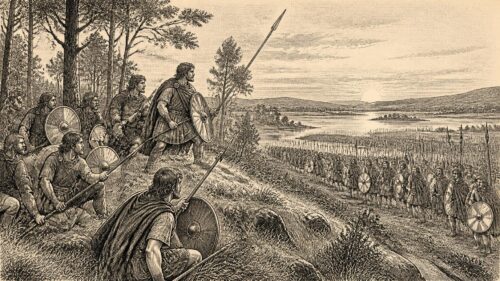
In 703, Connacht defeated an invading northern Uí Néill coalition at Corann or Claenfhinn, killing Loingsech son of Óengus, styled king of Ireland, his three sons and numerous allied rulers. The battle, probably in south-central Sligo, checked Loingsech’s claim to wider supremacy and preserved Connacht’s autonomy under Cellach son of Rogallach. Annals also record the Ulaid’s victory over Britons at Mag Cuilinn, though details remain uncertain. Colmán, abbot of Lismore, died, while notices mention Ailén Daingen’s construction and Rithe’s siege. These events reveal a rural, contested Ireland where kings, churches and fortified communities managed warfare, resources, mobility and insecure authority.
Read Article
Archived: 1 November 2026
Abstract
In 704, Ireland witnessed major political reversals and the death of Adomnán, abbot of Iona. On 12 July, Cellach mac Rogallaig of Connacht defeated and killed Loingsech mac Óengusso, king of Tara, with three sons, at Corann; Congal Cennmagair succeeded him. Later, Cellach Cualann of Leinster repelled a southern Uí Néill force at Clóenad, while instability affected neighbouring dynasties. Annals also note Dál Riata's destruction at Glen Leven. Adomnán died on 23 September, leaving widely influential writings, diplomatic achievements and Cáin Adomnáin. These events reveal interconnected Irish, Scottish and Northumbrian worlds, though annalistic dating remains uncertain and their social consequences.
Read Article
Archived: 1 November 2026
Abstract
In 705 CE, Ireland’s surviving annalistic record presents a small but unusually revealing cluster of deaths, violence and political change. The notices are terse: the abbot Cenn Faelad of Bangor died; a battle was fought in Corcu Modruad, where Céilechair son of Comán fell; Cellach son of Rogallach, king of Connacht, died after entering clerical life; Conamail son of Canu was killed; and Congal Cenn Magair, son of Fergus of Fána, “begins to reign”. No contemporary narrative tells how these events unfolded. Yet, read alongside the preceding and following annals, they illuminate an Ireland in which monasteries, dynasties and local
Read Article
Archived: 1 November 2026
Abstract
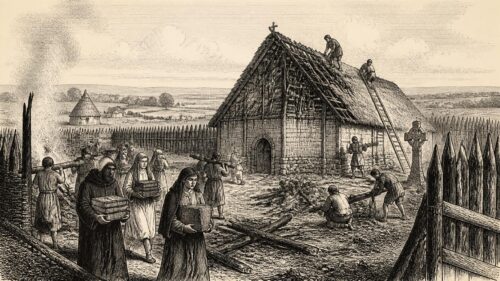
In 708, Cill Dara, modern Kildare, suffered a destructive fire, although annals provide no cause, casualties or details of damage. The disaster followed the death of its bishop, Mael Dóbarchon, and required resources and patronage for recovery. Congal Cennmagair of Cenél Conaill, a leading Uí Néill overking, also died suddenly, prompting Fergal of Cenél nEógain’s accession around 708–709. Obituaries for the abbots of Iona and Lorrha demonstrate ecclesiastical networks extending across Ireland and the Irish Sea. These events reveal a rural, politically fragmented society dependent on churches, agriculture, kinship, tribute and personal leadership, vulnerable to fire, death and shifting alliances.
Read Article
Archived: 1 November 2026
Abstract
In 709, although annalistic year-numbering varies, Congal Cennmagair of Cenél Conaill died suddenly, reportedly in a fit, ending his kingship of Tara. Fergal son of Máel Dúin of Cenél nÉogain succeeded, reflecting competitive Uí Néill dynastic politics rather than automatic inheritance or unified national rule. The annals also record the burning of Cell Dara, later Kildare, a wealthy and influential Leinster ecclesiastical centre, but provide neither cause nor extent of damage. Deaths of the abbots of Iona and Lorrha underline interconnected Irish Sea religious networks. Together these notices reveal entwined royal, ecclesiastical, economic and patronage systems amid persistent historical uncertainty.
Read Article
Archived: 1 November 2026
Abstract
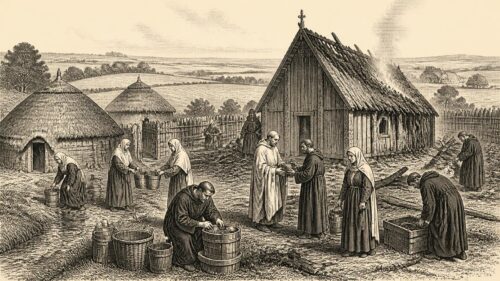
In 710, Irish annals recorded the burning of Kildare, a major Leinster ecclesiastical centre, alongside the death of Congal Cennmagair, king of Tara. Congal’s sudden death enabled Fergal son of Máel Dúin of Cenél nÉogain to assume the kingship, shifting northern Uí Néill power from Cenél Conaill. The sources provide no evidence linking the fire to political events or identifying its cause and damage. Conamail, abbot of Iona, also died amid complex Columban leadership arrangements. Violence around the Irish Sea and Pictish religious change formed a wider context. These events reveal interconnected religious, political and economic institutions adapting to disruption.
Read Article
Archived: 1 November 2026
Abstract
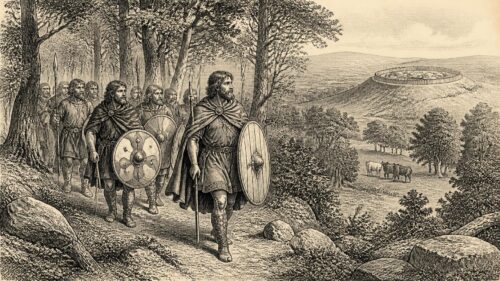
In 711, Fergal son of Máel Dúin of Cenél nÉogain defeated Uí Méith at Sliab Fúait in south Armagh, killing their king Tnúthach and Cú Raí of the Brega-based descendants of Áed Sláine. The victory strengthened Fergal’s authority in a contested borderland, though it did not establish national rule. Annals also record Cenn Fáelad, abbot of Fore, illustrating churches’ economic and political importance. Across the Irish Sea, Dál Riata defeated Britons at Lorg Ecclet, reflecting maritime connections. Annalistic date differences require caution, but together these notices portray competing kingdoms, religious communities and interconnected Irish Sea politics in early medieval Ireland.
Read Article
Archived: 1 November 2026
Abstract
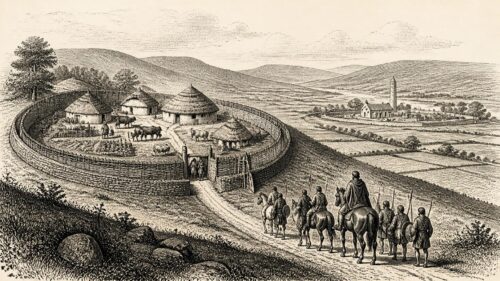
In 712, Irish annals record regional conflicts, dynastic deaths and ecclesiastical losses rather than a unified national crisis. Maíne, a descendant of Áed Sláine, was killed by Flann in Brega, while violence also affected the Ulaid, Cenél Laegaire and southern Leinster. Cú Cerca of Osraige died, and Cormac son of Máenach, king of Munster, fell to the Northern Déisi at Carn Feradaig. Ceode of Iona and Dub Guaile of Glendalough died. An annal noted Bede’s scholarly work. Rural society, farming, maritime connections and monastic networks continued, although sources provide little detail on causes, places or outcomes in the surviving record.
Read Article
Archived: 1 November 2026
Abstract
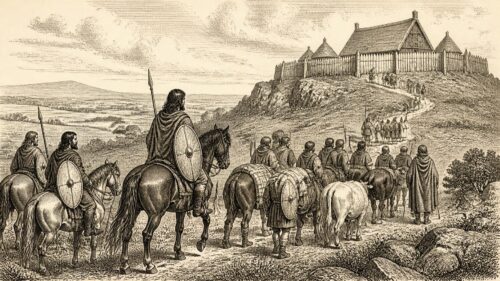
In 715, annalistic notices, dated by modern synchronisation despite displacement in the Annals of Ulster, record political and ecclesiastical change across Ireland. Cellach Cualann’s death ended Uí Máil dominance in Leinster and enabled the rising Uí Dúnlainge, represented by Murchad son of Bran. Murchad’s hosting to Cashel demonstrated Leinster’s ability to project force into Munster, although no outcome is recorded. Murchad son of Diarmait, a Uí Néill king, was killed amid midland rivalry. Deaths of Armagh’s abbot Flann Febla, Ferns’s Bishop Cilléne, King Áed Dub, and the learned Flaithnia marked leadership losses, while rural agricultural society sustained these power networks.
Read Article
Archived: 1 November 2026
Abstract
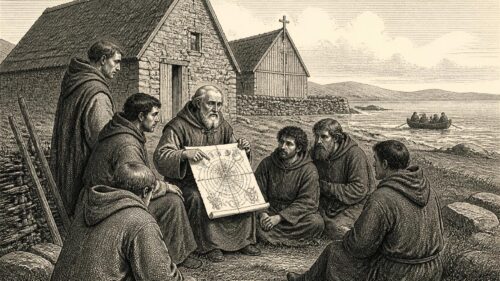
In 716, Northumbrian priest Ecgberht persuaded Iona to adopt the Roman Easter calculation and clerical tonsure, ending its adherence to the older 84-year cycle. Confirmed by Bede and Irish annals, this change affected the Columban network across Ireland, Scotland and Northumbria, requiring new tables, learning and acceptance among dependent houses. Fáelchú assumed Columba’s seat on 29 August, amid uncertain leadership arrangements before Abbot Dúnchad’s death in 717. In Ireland, Fogartach of Síl nÁedo Sláine regained power in Brega, though authority remained contested. The death of Clones’s abbot illustrates monastic networks embedded within rural, agrarian society and their dependence on labour.
Read Article
