
Archived: 26 September 2026
Abstract
In 1153, rivalry between high king Toirdelbach Ua Conchobair and Muirchertach Mac Lochlainn reshaped Ireland’s political order. Following Murchad Ua Máelshechlainn’s death, his son secured Mide through violence, while Derbfhorgaill returned from Leinster to Tigernán Ua Ruairc amid circumstances. Connacht allies partitioned Munster, expelling Toirdelbach Ua Briain, but Mac Lochlainn restored him, defeated Ruaidrí Ua Conchobair at Fordruim, and imposed settlements across Mide. Control of Shannon crossings, hostages, cattle and alliances underpinned power. Church visitations, monastic developments, rural production and a fatal sea voyage reveal religious, economic and social conditions. Mac Lochlainn ended year strengthened, though no settlement was permanent.
Read Article

Archived: 26 September 2026
Abstract
In 1151, Munster's internal dynastic conflict enabled Tairdelbach Ua Conchobair of Connacht to intervene, supporting rival Uí Briain and Mac Carthaig claimants. His coalition defeated Tairdelbach Ua Briain at Móin Mór, devastating Munster and killing many aristocrats. Ua Conchobair took southern hostages and dominated Munster, but Muirchertach Mac Lochlainn soon compelled submissions from Connacht and Leinster, confirming contested overkingship. Raiding, captivity and treasure redistribution continued. Cardinal Iohannes Paparo arrived to advance church reform before Kells. Ecclesiastical visitations, a new stone church, notable deaths, and a wet winter accompanied warfare's heavy burdens on ordinary people across much of Ireland that year.
Read Article
Archived: 26 September 2026
Abstract
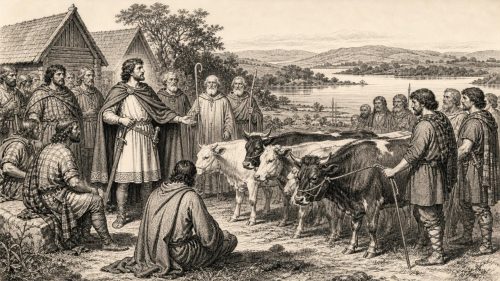
In 1144, Conchobar Ua Conchobair, Tairdelbach of Connacht’s son and king of Meath, was assassinated by Meath conspirators after six months’ rule. Tairdelbach invaded, inflicted heavy losses, accepted 400 cows in compensation, and reorganised Meath between Ua Mael Sechlainn rulers and neighbouring powers. Epidemic claimed his son Tadc and others, while clergy secured the conditional release of imprisoned Ruaidrí Ua Conchobair and mediated peace with Munster. Annals also record aristocratic deaths, kindred violence, Kells burning three times, and losses at Clonard. Events exposed high-kingship’s dependence on local dynasties, hostages, wealth, negotiation and ecclesiastical authority during a year of widespread disruption.
Read Article

Archived: 26 September 2026
Abstract
In 1128 Ireland was marked by warfare, shifting alliances and ecclesiastical intervention. Toirdelbach Ua Conchobair raided Leinster, Wexford and Dublin, reaffirming Connacht’s reach after resistance to his rule. Tigernán Ua Ruairc suffered defeats amid northern and midland conflicts, while attacks on Cellach of Armagh’s entourage brought moral condemnation. Conchobar Mac Lochlainn expanded power through hostages and victories but was censured for burning Trim’s churches. Local rulers also faced violent succession struggles. Cellach negotiated a temporary Connacht–Munster peace, demonstrating Armagh’s diplomatic influence. Church offices remained politically contested, while ports, cattle wealth, monasteries and the Cross of Cong reflected Ireland’s connected culture.
Read Article

Archived: 26 September 2026
Abstract
In 1123, Tairdelbach Ua Conchobair, Connacht’s dominant king, campaigned through southern Ireland, securing Desmond hostages amid Mac Carthaig succession disputes and asserting, rather than fully controlling, high-kingship. In Mide, Gailenga attackers burned Murchad Ua Máelshechlainn’s residence at Duleek, exposing regional instability. Violence also struck Emly’s church and Osraige. A fragment of the True Cross reached Ireland; Tairdelbach secured part for Roscommon and commissioned the Cross of Cong, combining devotion, patronage and artistry. Clerical deaths and pilgrimage reflected church reform. Annals also reveal warfare’s effects on agrarian life, urban trade, maritime travel, and fragile local allegiances throughout Ireland’s contested political order.
Read Article

Archived: 26 September 2026
Abstract
In 1119, Muirchertach Ua Briain died at Killaloe, ending a weakened southern bid for island-wide overlordship as Tairdelbach Ua Conchobair expanded Connacht influence across Munster. Ireland remained divided: Domnall Ua Lochlainn retained northern power, while Ua Briain successors faced rivalry, partition and Connacht intervention. Tairdelbach’s Shannon fleet, supported by Leinster, Osraige and Dublin allies, depleted Munster’s resources, though Thomond forces suffered defeat in Kerry. The year also saw massacre of poet Cú Collchaille Ua Baigelláin’s household and Niall Ua Lochlainn’s killing, threatening northern succession. Church reform, monasteries, farming, towns and waterways underpinned political, economic and cultural life in significant ways.
Read Article
Archived: 26 September 2026
Abstract
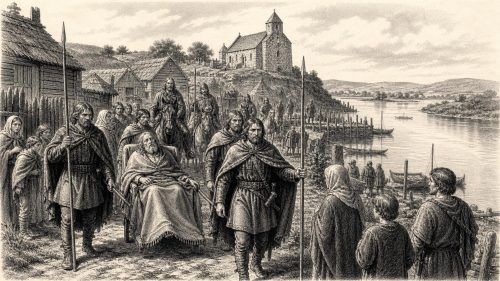
In 1114, Muirchertach Ua Briain’s illness shattered his dominance of Ireland, enabling his brother Diarmait to seize Munster and confine him at Killaloe. Domnall Ua Lochlainn led a northern coalition into Munster, but its campaign ended in a year’s truce, influenced by the independent Connacht king, Tairdelbach Ua Conchobair. Tairdelbach suppressed rivals, raided Meath and consolidated Connacht. Elsewhere, warfare, killings, depositions and blinding exposed unstable successions. Church reform coexisted with monastic institutions, whose leaders’ deaths and fires were recorded. Raids, forced provisioning and livestock disease damaged communities. No settlement emerged: Uí Briain power waned as Connacht became a decisive rival.
Read Article

Archived: 26 September 2026
Abstract
In 1111 Ireland remained divided among competing rulers, notably Muirchertach Ua Briain in the south and Domnall Ua Lochlainn in the north, while Tairdelbach Ua Conchobair extended Connacht’s influence. Raids, hostage-taking, dynastic conflict and attacks on churches, including Clonmacnoise, demonstrated political instability. The Synod of Ráith Bressail, attended by leading clerics and royal patrons, promoted ecclesiastical discipline and a territorial diocesan framework under Armagh and Cashel, though implementation was uneven. A Meath synod also negotiated church boundaries. Ulaid’s conflict with Cenél nÉogain, harsh winter conditions, and fires at several settlements further affected society, trade and rural livelihoods across Ireland broadly.
Read Article

Archived: 26 September 2026
Abstract
In 1098, Ireland remained divided among competing kings, with Muirchertach Ua Briain’s northern campaign checked by Domnall Ua Lochlainn, while succession disputes devastated Meath, Leinster, Connacht and other regions. Cenél nEógain defeated Cenél Conaill, and Ulaid captured three ships of unnamed Isles foreigners, probably linked to Magnus Barelegs’ western expedition. Deaths of reformer Domnall Ua hÉnna and numerous bishops, scholars and clerics highlighted active religious networks and emerging church reform. Rain, fertility and heavy snow shaped rural life; fires damaged Cork and Clonmacnoise. The chronicles depict political fragmentation, local violence, maritime connections, learning, pilgrimage and resilient ecclesiastical centres throughout Ireland.
Read Article

Archived: 26 September 2026
Abstract
In 1092, Ruaidrí na Saide Buide Ua Conchobair, overking of Connacht, was treacherously blinded by rivals, enabling Muirchertach Ua Briain of Munster to claim supremacy, take hostages and manipulate local contenders. Muirchertach also campaigned in Leinster, while his brother Diarmait was exiled to Ulaid. Regional instability included Énna of Uí Chennselaig’s killing and Éoganacht deaths. Armagh’s church and settlement burned, while a Munster fleet plundered Clonmacnoise. Dublin remained under Gofraid Méránach. Raids devastated Mag Aí’s cattle, and severe winter frost followed. Divergent annals nevertheless portray authority as dependent on alliances, violence, hostages, wealth and unreliable regional obedience throughout medieval Ireland.
Read Article

Archived: 26 September 2026
Abstract
In 1076, Ireland experienced fragile kingship, regional warfare, religious losses and food scarcity. Murchad Ua Mael Sechlainn claimed Tara’s supremacy at Kells but was killed after three days and nights by Amlaíb of Gailenga; Amlaíb was subsequently slain, reportedly through Colum Cille’s justice. Tairdelbach Ua Briain invaded Connacht, imprisoned Ruaidrí Ua Conchobair, then released him as a dependent ruler, demonstrating Munster’s limited ascendancy. Northern and midland rulers were killed in conflicts, including at Devenish. Churchmen, Gormlaith, queen of Munster, and scholars died. Scarcity threatened farming communities, while Ua Briain control of Dublin strengthened their power. The annals portray unstable authority.
Read Article

Archived: 26 September 2026
Abstract
Irish annals portray 1066 as a year of fractured kingship, diplomacy, violence, religious authority and remarkable natural phenomena. Diarmait mac Maíl na mBó, Tairdelbach Ua Briain and Áed Ua Conchobair shaped high politics, with gold payments illustrating competitive alliances. Deaths and killings, particularly in Bréifne, exposed contested succession and conflict involving churches. Annals commemorated leading ecclesiastics, reflecting monasteries’ political, economic and spiritual roles. Observers recorded Halley’s Comet in late April and an exceptional hazelnut harvest. Dublin’s trade and coinage connected Ireland internationally. Irish writers also noted William’s English conquest, though it caused no immediate major transformation in domestic Irish politics.
Read Article

Archived: 26 September 2026
Abstract
In 1059, Irish annals record widespread warfare, raiding and dynastic upheaval amid a politically fragmented island. Diarmait mac Máel na mBó of Leinster campaigned in Mide and pressured Munster, while his son Murchad killed rival heirs but was defeated by Conchobar Ua Máelshechlainn at Durrow. Northern rulers seized cattle and captives in Airgíalla and Dál Araide. Connacht and neighbouring regions saw multiple killings and deaths among ruling lineages. Obituaries of church leaders underline ecclesiastical power and learning. Despite conflict, rural farming, herding, crafts, trade and Dublin’s Norse-Gaelic economy sustained society, supplying the wealth and resources contested by kings across Ireland.
Read Article

Archived: 26 September 2026
Abstract
In 1050 Ireland remained politically fragmented, with Donnchad mac Briain of Munster pursuing overlordship through hostages, alliances and force, while rival rulers strengthened elsewhere. He proclaimed a law at Killaloe, intended to curb violence, protect agreements and demonstrate royal guardianship of Christian order amid scarcity. Clonmacnoise was repeatedly plundered by neighbouring Irish groups, while Kildare, Emly and Lann Léire suffered fires or attacks, revealing ecclesiastical centres’ wealth and vulnerability. Kings died violently, rivals were imprisoned, and churchmen continued teaching and collecting renders. Rural livelihoods depended on livestock and crops alongside trading towns. Muirchertach Ua Briain, a future king, was born.
Read Article

Archived: 26 September 2026
Abstract
In 1044 Ireland remained politically fragmented, with provincial kings, local dynasties, Norse-Irish Dublin and influential churches competing through raids, tribute, hostages and violence. Northern rulers avenged the unexplained profanation of Patrick’s Bell by seizing cattle and captives, demonstrating how sacred legitimacy supported political gain. Dublin’s Ímar mac Arailt attacked Patrick’s shrine and campaigned in the north. Clonmacnoise suffered plundering, while later tradition reports restitution by Donnchad mac Briain. Dynastic killings, blinding and regional defeats reshaped alliances across Ireland. Annals also record religious deaths, learning and rural life, revealing cattle, captives and monasteries as central sources of wealth, authority and conflict.
Read Article

Archived: 26 September 2026
Abstract
In 1043 Ireland remained politically fragmented, with Donnchad mac Briain’s prestige contested and Diarmait mac Máel na mBó consolidating Leinster. Annals record local warfare, killings and cattle raids, including violence at Glendalough, where sanctuary was breached, and fighting around the Suir. Northern conflicts involved Uí Méith, Ua Ruairc, and competing Uí Néill dynasties. Churches were both targets and political actors: Ciarán’s community ritually denounced Aed Ua Con Fhiacla, whose subsequent death was viewed as saintly vengeance. Cathal of Connacht died while pilgrim at Armagh. Despite insecurity, ecclesiastical centres sustained learning, wealth, pilgrimage and networks alongside rural farming and maritime trade.
Read Article
Archived: 26 September 2026
Abstract
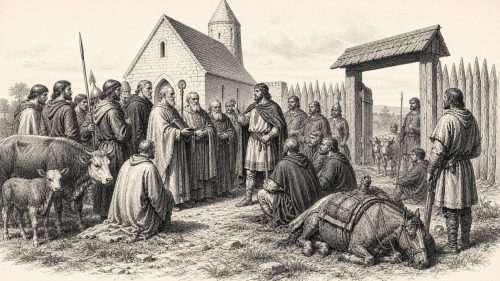
In 1040, Ireland remained politically divided after the decline of overarching high kingship. Donnchad mac Briain of Munster issued a Sunday law restricting theft, armed activity, labour and cattle movements, linking royal order with Christian observance. Rivalries continued through battle, assassination, imprisonment and raiding. Hiberno-Norse forces allied with a Mac Briain against Cerball mac Fáeláin, reflecting integrated Irish Sea politics. In Leinster, Diarmait mac Máel na mBó plundered churches and seized captives. Fires devastated Kildare, Kells, Downpatrick and other churches. Ecclesiastical leaders and scholars remained influential, while rural cattle wealth, ports, trade and warfare shaped society throughout this turbulent year.
Read Article
Archived: 26 September 2026
Abstract
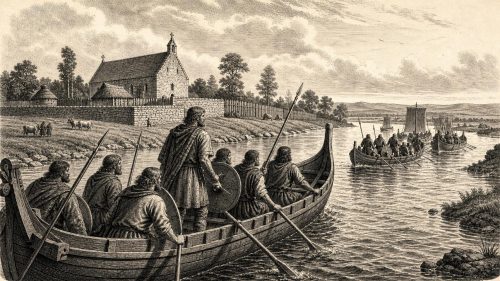
In 1035, Ireland comprised competing regional kingdoms, with no universally accepted high king since 1022. Annals record raids, killings and church plundering, though clerical priorities obscure ordinary life. Donnchad mac Briain defeated Bréifne raiders after their attack on Clonfert, demonstrating the Shannon’s military importance. In Dublin, Sitriuc Silkbeard killed Waterford’s Ragnall ua Ímair and raided Ardbraccan; Mide’s Conchobar retaliated against Swords. Other conflicts involved Leinster, Mide and Donegal, often for cattle, captives and prestige. Churches were political and economic targets, while farming, craftsmanship, learning and trade continued. Archaeology reveals interconnected Gaelic and Hiberno-Norse communities, and annalistic dating remains sometimes uncertain.
Read Article

Archived: 26 September 2026
Abstract
Irish annals portray 1033 as a fragmented year of regional rivalry, ecclesiastical authority and economic pressure. Donnchad mac Gilla Pátraic of Osraige asserted Leinster kingship by holding the Fair of Carman, a public demonstration of rule, clerical support, trade and legal order. In Mide, Ua Máel Sechnaill conflicts brought battlefield deaths, plundering and Murchad's assassination. Áed Ua Néill, heir designate to Ireland’s high-kingship, died, while killings destabilised Ciarraige, Éile, Munster and northern territories. Church obituaries and a reported bleeding shrine at Armagh underlined sacred authority. Cattle disease, farming and Hiberno-Norse maritime networks shaped everyday life amid political uncertainty across Ireland.
Read Article
Archived: 26 September 2026
Abstract
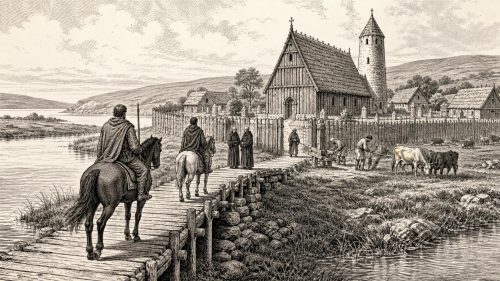
In 1027, Irish annals recorded a politically fragmented island where regional rulers, Dublin and monasteries shaped events. Donnchad mac Briain of Munster invaded Osraige, taking booty and captives, but suffered a costly defeat against local resistance. In Mide, forces of Sitriuc Silkbeard’s Dublin and Brega fought Mide, killing both Ráen ua Máel Sechnaill and Donnchad ua Duinn. Northern cattle raids and local conflicts underscored persistent border warfare. Deaths, pilgrimages and ecclesiastical successions linked Ireland to Iona, Rome and Cologne. The reported desecration of the Staff of Jesus demonstrated relics’ public importance. Warfare, trade, lordship and Christian learning were deeply interconnected.
Read Article

Archived: 26 September 2026
Abstract
In 1024, Ireland remained fragmented after Máel Sechnaill’s death, with authority contested among provincial dynasties, Norse-Gaelic towns and church interests. Leinster suffered upheaval when Úgaire, king of Leinster, and Máel Mórda of Uí Cheinnselaig were killed during Donn Sléibe’s seizure and burning of a house; Donn Sléibe was later slain. Fighting marked Corann, Ulster and the midlands, while Irish forces raided Foreigners for hostages and wealth. Ecclesiastical deaths, pilgrimages and attacks on Slane and Kildare demonstrated churches’ scholarly, economic and political importance. Cúán ua Lothcháin, Ireland’s chief poet-historian, was murdered, emphasising the learned class’s prestige amid endemic violence and instability.
Read Article

Archived: 26 September 2026
Abstract
In 1016, two years after Clontarf, Máel Sechnaill mac Domnaill reasserted authority by taking Ulaid hostages, while Donnchad mac Briain raided Shannon islands, seized boats and consolidated Munster. Northern conflict between Ulaid and Dál Araide killed several rulers, and Osraige’s king slew Leinster and Uí Drona leaders at Leithglenn. Other regional dynastic deaths revealed fragmented power. Ecclesiastical life remained influential despite fires at Clonmacnoise, Clonfert, Kells and Downpatrick; church officers and the chief poet Mac Liag died. Raiding, hostage-taking and an autumn storm burdened communities. Annalistic peace meant relative stability after Clontarf, not an end to violence or political rivalry.
Read Article

Archived: 26 September 2026
Abstract
In 1008, Irish annals recorded no battle but revealed pressures shaping Brian Boru's overkingship. Chronological discrepancies require caution, yet Inisfallen and Ulster agree on a severe winter, ecclesiastical deaths and political violence. Muiredach son of Matudán, heir designate of Ulaid, was killed by his own people, exposing dynastic division amid northern rivalries. The deaths of abbots and coarbs, including Ferdomnach of Colum Cille's familia, prompted transitions in institutions controlling land, relics, learning and legitimacy. Frost and snow from January to Easter threatened livestock, farming and communications. Together, events illuminate a weather-vulnerable society governed through churches, dynasties, tribute, negotiation and force.
Read Article
Archived: 13 October 2026
Abstract
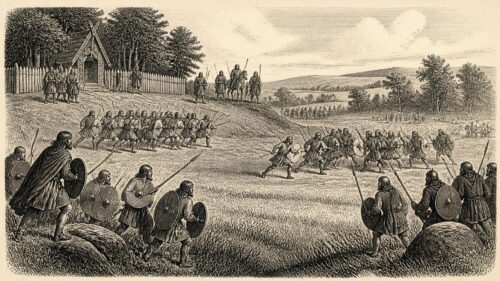
In 714, Irish annals recorded concentrated warfare, political upheaval and environmental strain. Murchad Midi of Clann Cholmáin defeated Brega rivals in two encounters at Bile Tened, while Fogartach of southern Brega was expelled to Britain and Forbassach of Uí Fhailgi was killed in Mide. Other conflicts occurred among Uí Echach and Bairche, and Munstermen killed Clárainech’s travelling religious community. Selbach rebuilt Dún Ollaig in Dál Riata, highlighting Irish Sea links. Ailén Daingen, probably a fortified lake settlement, was destroyed. A great drought and bright autumn night were also noted, revealing a fragmented society vulnerable to conflict and natural pressures alike.
Read Article
Archived: 13 October 2026
Abstract
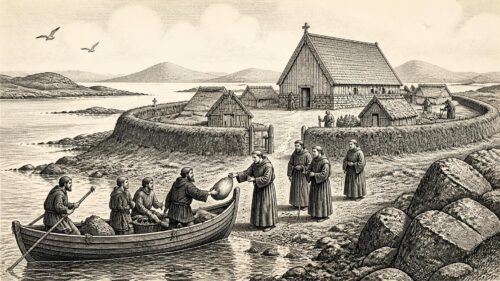
In 713, annalistic evidence records political and ecclesiastical transitions across Ireland and the Gaelic sea-world. Cormac, king of Munster, died in battle at Cam or Carn Feradaig, opening a succession from which Cathal son of Finguine emerged. Cú Cherca of Osraige and Sechnasach of Uí Maine also died, while other killings illustrate regional violence. Church leaders Fáilbe Bec of Clonmacnoise and Bishop Baetán died. At Iona, Dorbéne held the primacy for five months before dying on 28 October. These notices reveal overlapping local kingships, influential monastic networks, and links between Ireland, Iona, Pictland and Northumbria during a year of change.
Read Article

Archived: 13 September 2026
Abstract
The reference year 31,801 BCE places Ireland within the Late Pleistocene, without claiming an event datable to that precise year. Glacial deposits, freshwater sediments and cave faunas suggest cold conditions before greater ice expansion. Open ground and freshwater environments could persist locally as the British-Irish Ice Sheet developed unevenly. Later glaciation destroyed or buried earlier surfaces, making annual reconstruction impossible. Evidence from Derryvree, Castlepook and regional ice studies instead supports environmental sequences. The article treats the date as an archival marker, explaining how fragmentary deposits, animal remains and calibrated dating inform cautious accounts of Ireland’s changing prehistoric landscape and ecology.
Read Article
Archived: 13 September 2026
Abstract
The reference year 31,802 BCE represents a Late Pleistocene setting rather than a securely dated Irish event. Cave remains, freshwater deposits and glacial geology provide the surviving evidence. Open landscapes supported tundra vegetation, freshwater habitats and large mammals while ice expanded unevenly across the British-Irish region. Later glaciation removed much of the earlier surface record, limiting certainty about local conditions and their timing. Castlepook research, Derryvree evidence, regional reconstructions and radiocarbon calibration therefore require cautious interpretation. The article explores habitable environments before wider ice cover while distinguishing modern archival chronology from the broad dating ranges supported by surviving scientific evidence.
Read Article
Archived: 13 September 2026
Abstract
The reference year 31,804 BCE situates Ireland near a glacial frontier within the Late Pleistocene. Glacial geology, freshwater sediments and cave faunas suggest uneven ice development across the British-Irish region. Some landscapes remained open and biologically active while others experienced stronger glacial influence. Subsequent ice movement removed or buried earlier material, leaving scattered evidence and broad dating ranges. Research concerning Derryvree, Castlepook, regional ice histories and radiocarbon calibration supports cautious environmental reconstruction. The article uses its date as an archival reference rather than an exact event, stressing the distinction between annual organisation and the limited precision of Ireland’s prehistoric record.
Read Article




