Archived: 26 September 2026
Abstract
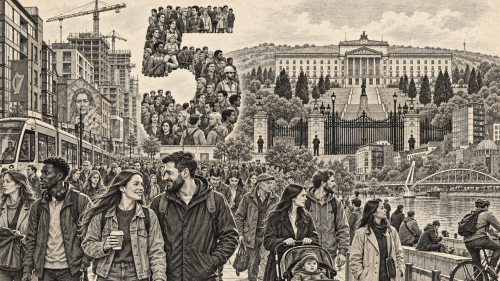
In 2022, Ireland lifted most Covid restrictions, restoring public life while health services retained pandemic pressures. Russia’s invasion of Ukraine brought sanctions, temporary protection and more than 64,000 arrivals, intensifying housing shortages and inflation; government introduced energy and welfare supports. Census results recorded 5,123,536 residents, the first population above five million since 1851. Housing, homelessness and maternity-hospital governance remained contentious. Sinn Féin became Northern Ireland’s largest Assembly party, but DUP opposition to the Protocol prevented an Executive. Ireland experienced its warmest recorded year, set emissions ceilings, marked cultural and revolutionary centenaries, and completed the orderly Martin-Varadkar Taoiseach rotation in December.
Read Article

Archived: 26 September 2026
Abstract
In 2020, Ireland experienced political realignment, pandemic emergency and Brexit transition. February’s inconclusive election saw Sinn Féin lead first-preference votes, Fianna Fáil win most seats, and caretaker Taoiseach Leo Varadkar govern until Fianna Fáil, Fine Gael and Greens formed an unprecedented coalition under Micheál Martin in June. COVID-19 transformed daily life: closures, lockdowns, the two-kilometre exercise rule, remote work and restricted funerals accompanied 1,928 deaths. Schools adopted remote teaching and calculated Leaving Certificate grades; emergency payments addressed severe job losses amid housing pressure. Northern Ireland restored devolution; Brexit ended in EU-UK trade agreement; Ireland returned to Level 5 awaiting vaccination.
Read Article
Archived: 26 September 2026
Abstract
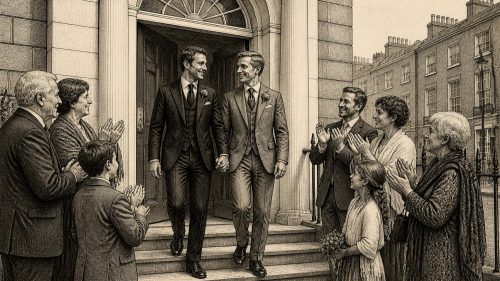
In 2015, Ireland experienced uneven recovery from the financial crash amid water-charge protests, emigration and approaching elections. Voters overwhelmingly approved marriage equality in May, followed by legislation enabling same-sex marriage, while family-law and gender-recognition reforms broadened legal recognition. The State established an inquiry into mother-and-baby homes, confronting institutional abuses. Economic growth and falling unemployment coexisted with insecurity, outward migration and misleading GDP expansion driven by multinational restructuring. Ireland expanded Mediterranean rescue and refugee commitments, supported Northern Ireland's Fresh Start Agreement, and enacted climate-governance legislation. The year combined change with disputes over austerity, historical accountability, public services, peace and international responsibility.
Read Article
Archived: 26 September 2026
Abstract
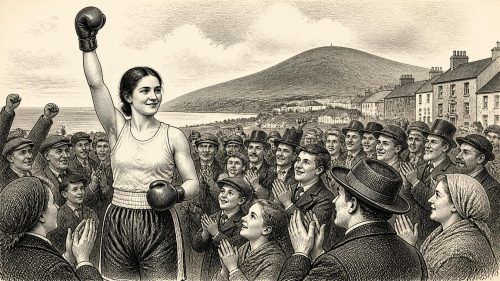
In 2012, Ireland pursued recovery under EU–IMF bailout conditions while households faced austerity, unemployment and renewed emigration. Voters approved the Fiscal Compact, reinforcing permanent budgetary discipline, and endorsed the Children’s Referendum, though it had not commenced by year’s end. The Government introduced the household charge, employment activation measures, constitutional convention and Gaeltacht legislation. Savita Halappanavar’s death during miscarriage complications intensified demands for abortion-law clarity and healthcare accountability. Dublin hosted the Eucharistic Congress amid diminished Church authority, while Katie Taylor’s Olympic gold lifted morale. In Northern Ireland, Titanic Belfast opened, McGuinness met the Queen, and flag protests exposed enduring identity tensions.
Read Article

Archived: 26 September 2026
Abstract
In 2007, Northern Ireland’s devolved government returned, with DUP leader Ian Paisley and Sinn Féin’s Martin McGuinness jointly heading an Executive, turning power-sharing into practical administration. In the Republic, Bertie Ahern won a third election and formed a coalition with the Greens and Progressive Democrats amid Celtic Tiger prosperity. However, cooling house prices and reliance on construction exposed economic vulnerability. Census results highlighted immigration, changing households and religious diversity, while Irish gained EU official-language status. Corrib gas protests, scrutiny of Ahern’s finances and criminal-justice legislation raised questions of trust and authority. Cultural initiatives and smoke-free rules reflected wider social change.
Read Article
Archived: 26 September 2026
Abstract
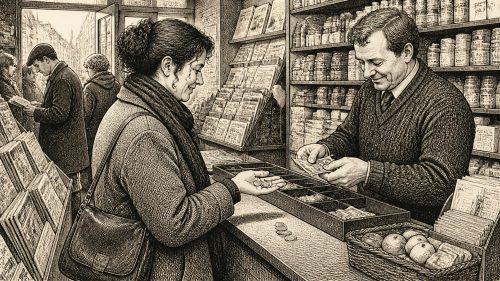
In 2002, euro notes and coins replaced the Irish pound, symbolising deeper European integration. Ireland’s Celtic Tiger economy remained strong in GDP terms, but weak GNP growth exposed dependence on foreign-owned firms. Census results recorded rapid population growth, immigration and Dublin-centred expansion, straining housing and services. Voters rejected tighter abortion provisions but approved the Nice Treaty, enabling EU enlargement. Bertie Ahern’s coalition won re-election. Clerical abuse controversies intensified scrutiny of Church authority. Northern Ireland’s institutions faltered despite IRA decommissioning, leading to suspension of devolved government. Ireland’s World Cup run provided national unity amid profound wider social, economic and constitutional change.
Read Article

Archived: 26 September 2026
Abstract
In 1999, Northern Ireland’s devolved Executive began work at Stormont, led by David Trimble and Seamus Mallon, while new North/South and British-Irish bodies implemented the Good Friday Agreement. The Republic amended its Constitution, replacing territorial claims with consent-based unity, though decommissioning and policing reform remained disputed. Ireland joined the euro’s non-cash phase amid rapid economic growth, but nurses’ industrial action revealed pressure on public services. Kosovar refugees arrived and immigration law changed. States of Fear prompted official acknowledgement of institutional abuse. Gay Byrne left The Late Late Show, Heaney published Beowulf, and Cork won the All-Ireland hurling final in September.
Read Article
Archived: 26 September 2026
Abstract
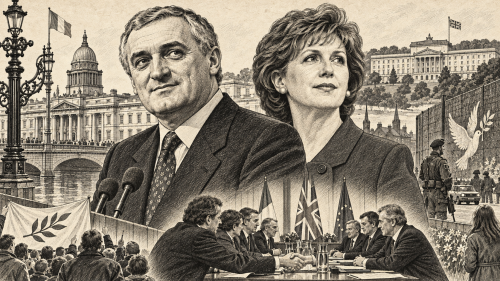
In 1997, Ireland underwent major political, social and economic change. Bertie Ahern became Taoiseach after Fianna Fáil formed a coalition with the Progressive Democrats, as rapid growth and falling unemployment strengthened the emerging Celtic Tiger. Divorce became legally available under the 1996 Act, reflecting changing social attitudes. The IRA restored its ceasefire, enabling Sinn Féin to join Stormont talks chaired by George Mitchell, despite unionist opposition. Mary McAleese, Belfast-born, was elected President and promoted reconciliation through “Building Bridges”. European integration, investment and social partnership supported expansion, though benefits were uneven. These developments established conditions for following year’s Good Friday Agreement.
Read Article
Archived: 26 September 2026
Abstract
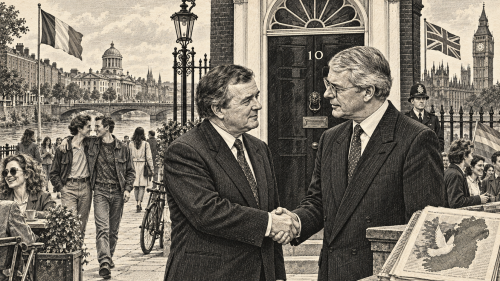
In 1993, Albert Reynolds led Ireland's first Fianna Fáil–Labour coalition, with Dick Spring as Tánaiste and Foreign Affairs Minister, reflecting changing electoral politics. The Criminal Law (Sexual Offences) Act decriminalised consensual sex between adult men, ending Victorian-era provisions after David Norris's campaign and European court ruling. European integration advanced through the single market and Maastricht Treaty's creation of the European Union. Reynolds and John Major's Downing Street Declaration provided a constitutional, peaceful framework for Northern Ireland, despite continuing violence. Unemployment remained 15.7 per cent, but investment, European funding and policy reforms foreshadowed growth, while social divisions and emigration persisted nationally.
Read Article
Archived: 26 September 2026
Abstract
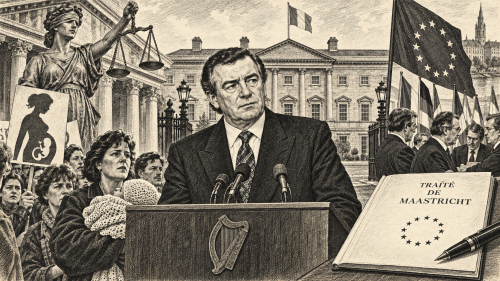
In 1992, Charles Haughey resigned and Albert Reynolds became Taoiseach amid economic hardship and coalition tensions. The X Case, involving a raped fourteen-year-old prevented from travelling for an abortion, led the Supreme Court to permit abortion where a woman’s life faced a real and substantial risk, including suicide. Referendums rejected limiting this ruling but protected travel and information rights. Ireland overwhelmingly approved Maastricht, endorsing European Union membership and deeper integration. November’s election weakened Fianna Fáil, boosted Labour and led to a Fianna Fáil-Labour coalition in 1993. Northern peace talks continued despite violence, laying foundations for later progress in later years.
Read Article
Archived: 26 September 2026
Abstract
In 1983, Ireland confronted constitutional, political and security questions that would echo for decades. Voters approved the Eighth Amendment, inserting constitutional protection for the unborn. Garret FitzGerald’s coalition launched the New Ireland Forum, while Gerry Adams won West Belfast at Westminster. In Northern Ireland, thirty-eight IRA prisoners escaped from the Maze Prison, intensifying debate over security. The kidnapping of supermarket executive Don Tidey ended with two members of the security forces killed during his rescue. Economic recession, unemployment and emigration remained severe. Together, these events made 1983 a year of constitutional change, political realignment, conflict and social strain across Ireland.
Read Article
Archived: 8 October 2026
Abstract
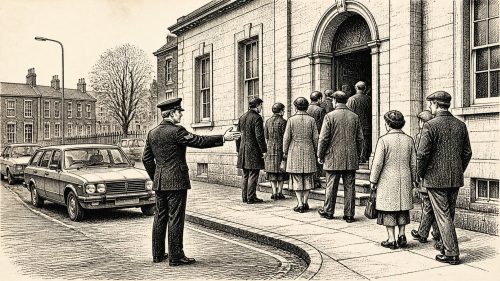
In 1977, Fianna Fáil won a record general-election landslide, giving Jack Lynch a nine-seat Dáil majority after campaigning on tax relief, rates abolition and jobs amid inflation and unemployment. Employment equality and youth-work laws strengthened workplace protections. Northern Ireland, under direct rule, remained marked by violence, prison protest and communal division. Ian Paisley’s loyalist-backed May strike, seeking tougher security and majority-rule devolution, failed despite recalling 1974. British authorities maintained services and opposed intimidation. International attention included Jimmy Carter’s policy statement, Lynch’s talks with James Callaghan, and the Nobel Peace Prize for Betty Williams and Mairead Corrigan. Sport remained culturally significant.
Read Article

Archived: 8 October 2026
Abstract
In 1971, Ireland underwent modernisation while Northern Ireland descended into deeper conflict. Decimalisation transformed transactions across the island, while censuses recorded populations north and south. Northern reforms included local-government boundaries and a province-wide Housing Executive; southern welfare and health changes also reshaped public services. Brian Faulkner succeeded James Chichester-Clark amid worsening unrest. Internment without trial, introduced in August, alienated nationalists, prompted killings, displacement and the SDLP’s withdrawal from Stormont, and led Ireland to challenge Britain in Europe. Republican and loyalist violence persisted, including the McGurk’s Bar bombing. Meanwhile, European Community negotiations, colour television, broadcasting restrictions and literary publication reflected society.
Read Article
Archived: 8 October 2026
Abstract
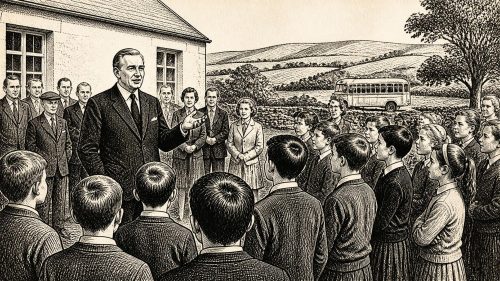
During 1966, Ireland marked the Easter Rising’s fiftieth anniversary with major ceremonies, the Garden of Remembrance’s opening, and the destruction of Nelson’s Pillar. A census recorded population growth and continuing urbanisation, while the Anglo-Irish Free Trade Area signalled export-oriented economic policy despite farmers’ protests over low incomes. Education Minister Donogh O’Malley promised free post-primary schooling and transport from 1967. Seán Lemass resigned as Taoiseach and Jack Lynch succeeded him. De Valera began another presidential term. In Northern Ireland, competing commemorations, UVF violence, sectarian murders and political tensions foreshadowed the coming conflict, underscoring Ireland’s unresolved division amid social and economic change.
Read Article

Archived: 8 October 2026
Abstract
In 1964, Lemass’s government pursued industrial growth, exports and European integration, while emigration, rural change and dependence on British markets persisted. Ireland committed a voluntary battalion to the United Nations peacekeeping force in Cyprus, extending its international role after the Congo without abandoning neutrality. Domestic legislation addressed adoption, welfare, financial institutions, industry and regional development. Britain’s import charge exposed economic vulnerability, prompting talks between Lemass and Harold Wilson. Belfast’s Divis Street disturbances over an Irish tricolour revealed sectarian inequalities and policing grievances in Northern Ireland. Cultural life marked Seán O’Casey’s death and notable work by Brian Friel and Flann O’Brien.
Read Article

Archived: 8 October 2026
Abstract
In 1962, Seán Lemass advanced Ireland’s application to join the European Economic Community, arguing that economic modernisation required wider markets despite dependence on Britain. Growth after 1958 tempered, but did not end, emigration, rural decline and weak infrastructure; new housing, sanitation and welfare measures addressed domestic needs. The IRA ended Operation Harvest, while Ireland continued demanding UN service in the Congo. Television expanded national culture through Radharc and The Late Late Show, as the Theatre Royal closed and The Chieftains formed. Catholic influence remained strong, yet Vatican II signalled change. Ireland balanced European ambition, international engagement, tradition and unresolved partition.
Read Article
Archived: 8 October 2026
Abstract
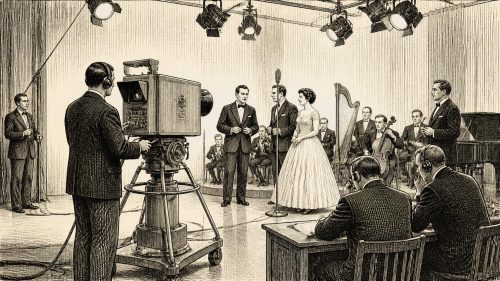
In 1961, Ireland remained rural, economically dependent on Britain and affected by emigration, as the census population fell to 2,818,341. Seán Lemass's government pursued modernisation through legislation, industrial development and outward-looking trade policy. Fianna Fáil retained office after October's general election but lacked a majority, leaving Lemass dependent on a narrow Dáil vote. Ireland applied to join the European Economic Community, chiefly to protect trade links and agricultural exports amid Britain's application. In Katanga, Commandant Pat Quinlan's A Company fought at Jadotville, surrendered after isolation, and returned from captivity. Telefís Éireann's inaugural broadcast on 31 December marked a new medium.
Read Article

Archived: 8 October 2026
Abstract
1960 marked Ireland’s transition towards modernisation amid emigration, low incomes and rural decline. Seán Lemass’s government advanced the Programme for Economic Expansion, promoting investment, exports, infrastructure and overseas industry, while extending state institutions through legislation. The Broadcasting Authority Act established the basis for national television, conceived as both modern medium and cultural instrument. Ireland’s international role expanded when troops joined the UN Congo mission and Frederick Boland became General Assembly president; nine soldiers’ deaths at Niemba exposed peacekeeping’s dangers. Partition remained unresolved, while disasters at Shannon and the Plassy rescue highlighted transport risks and resilience. The year set uncertain directions.
Read Article
Archived: 8 October 2026
Abstract
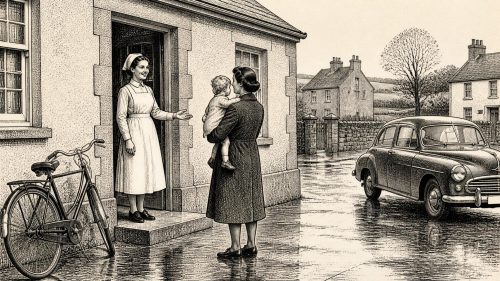
In 1950, Ireland combined republican independence with economic dependence on Britain, persistent poverty, emigration and partition. Dr Noël Browne’s June memorandum proposing free healthcare for mothers and children exposed conflict between universal welfare, medical interests, Catholic authority and parental rights, foreshadowing his 1951 resignation. Tuberculosis remained severe despite expanded State treatment. Legislation reorganised social welfare, improved agricultural workers’ rights, addressed housing, and strengthened transport and industrial development. Ireland appointed its first ambassador to London and signed the European Convention on Human Rights. Cultural events included Alfred Chester Beatty’s arrival and George Bernard Shaw’s death. Social and economic problems remained unresolved.
Read Article

Archived: 8 October 2026
Abstract
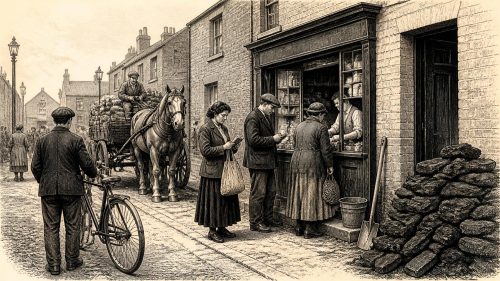
In 1946, post-Emergency Ireland faced continuing shortages, emigration and uneven development despite the war’s end. The census recorded 2,955,107 people, with growth in Leinster but decline elsewhere, highlighting housing and employment pressures. Emergency powers formally expired, though temporary controls remained amid rationing and a poor harvest. The Turf Development Act created Bord na Móna to exploit peat as a strategic fuel resource, while forestry legislation promoted timber security. The Industrial Relations Act established the Labour Court. Clann na Poblachta emerged under Seán MacBride, challenging Fianna Fáil. Ireland’s UN application was vetoed by the Soviet Union, exposing limits to its standing.
Read Article
Archived: 8 October 2026
Abstract
In 1945, Ireland emerged cautiously from wartime neutrality, retaining rationing, shortages and emergency powers despite Europe’s liberation. De Valera’s condolences on Hitler’s death provoked international condemnation, while VE Day renewed disputes over neutrality, partition and Allied relations. Censorship ended, but wartime administration unwound gradually. Seán T. Ó Ceallaigh became the second President after defeating Seán MacEoin, symbolising continuity and change. Legislation addressed drainage, tuberculosis and mental treatment, while supply functions returned to Industry and Commerce. Northern Ireland elections confirmed Unionist dominance, though Labour and nationalist representation exposed political divisions. Ireland entered peace facing economic constraint, institutional transition and diplomatic isolation.
Read Article

Archived: 8 October 2026
Abstract
In 1943, neutral Ireland faced the Second World War’s political, economic and human pressures. A wartime election left Éamon de Valera’s Fianna Fáil governing without a majority, while Labour advanced and Oliver Flanagan’s antisemitic maiden speech exposed prejudice. Emergency legislation, censorship and diplomacy defended neutrality amid Allied pressure and partition. War reached Donegal when a mine killed eighteen at Ballymanus, and U-607 sank the marked Irish Oak, though its crew survived. Rationing, compulsory tillage and fuel shortages burdened households and commerce. In December, the coaster Kerlogue rescued 168 German sailors in the Bay of Biscay, clearly demonstrating neutrality’s humanitarian responsibilities.
Read Article

Archived: 8 October 2026
Abstract
In 1942, neutral Ireland endured the Emergency while Northern Ireland became an Allied base after American troops arrived in Belfast. De Valera’s government maintained neutrality, emergency controls and censorship, while creating the Central Bank and confronting extremist politics. Shortages of fuel, rubber, food and consumer goods reshaped work, travel and household life; labour migration to Britain remained significant. Irish merchant ships risked Atlantic attack while rescuing survivors, until the Irish Pine was torpedoed with all thirty-three crew lost. Cultural life persisted through Cavan Cathedral, Kavanagh’s The Great Hunger and folklore scholarship, alongside censorship disputes. Ireland faced constraint, danger and change.
Read Article
Archived: 9 October 2026
Abstract
In 1937, Éamon de Valera’s government drafted, debated and submitted a Constitution to voters, replacing much of the Irish Free State’s imperial framework. Approved by the Dáil and endorsed in the 1 July plebiscite by 685,105 votes to 526,945, it came into force on 29 December, naming the State Éire/Ireland. It established the presidency, Taoiseach, reconstituted Seanad and Supreme Court, while asserting an all-island claim. Its Catholic-inflected provisions on religion and family prompted criticism. Fianna Fáil retained power without a majority. Amid poverty, emigration and dependence on Britain, legislation addressed housing and welfare, while Spain and insecurity shaped foreign policy.
Read Article
Archived: 9 October 2026
Abstract
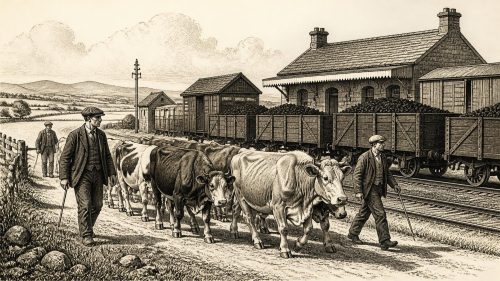
In 1935, the Irish Free State pursued autonomy amid economic hardship and the continuing Anglo-Irish Economic War. The Coal–Cattle Pact expanded cattle exports to Britain in return for coal purchases, easing but not resolving agricultural distress. Citizenship legislation and constitutional planning strengthened state identity, while laws regulating dance halls, contraception, labour and agricultural production extended official control. Interventionist measures addressed bacon, dairy, transport and employment, yet emigration and insecurity persisted. Belfast’s July sectarian riots, causing ten deaths, revealed partition’s instability; Carson’s funeral affirmed unionism. At Geneva, de Valera supported League collective security during Italy’s Abyssinia crisis, demonstrating Ireland’s international ambitions.
Read Article

Archived: 9 October 2026
Abstract
During 1934, de Valera’s Free State confronted Blueshirt militancy by restricting political uniforms, while seeking unsuccessfully to abolish the Seanad. The Economic War strained rural Ireland, contributing to violence at Cork’s Copley Street cattle sale, though December’s cattle-and-coal agreement provided limited relief without ending the dispute. Republican Congress emerged at Athlone, linking independence with socialism, but rapidly divided. In Northern Ireland, Craigavon’s declaration of a Protestant state highlighted entrenched Unionist dominance, alongside civic developments including Belfast Zoo. Cultural life included Man of Aran, Dublin’s Theatre Royal closure, a newspaper strike, and Adolf Mahr’s National Museum directorship, reflecting contested Irish identities.
Read Article

Archived: 10 October 2026
Abstract
In 1886, Gladstone’s First Home Rule Bill offered Ireland limited self-government under the Crown, but Liberal divisions defeated it and strengthened Conservative and Unionist politics. Elections sharpened nationalist and unionist electoral blocs, particularly in Ulster. Belfast suffered prolonged sectarian riots, causing 31 deaths and exposing communal insecurity. Rural hardship persisted amid falling agricultural prices, emigration and increased poor relief. In October, John Dillon and William O’Brien launched the Plan of Campaign, organising tenants to seek collective rent reductions and support evicted families, despite Parnell’s reservations. Labourers’ and tramway legislation continued modest reform, while Yeats’s early publication indicated enduring cultural activity.
Read Article
Archived: 10 October 2026
Abstract
In 1878, Ireland faced mounting tensions before the Land War. Lord Leitrim, notorious among tenants, was killed with two companions in Donegal, highlighting grievances over eviction and insecure tenure. Agricultural depression, poor harvests, emigration and severe disease increased hardship, though conditions varied regionally. The Public Health (Ireland) Act strengthened sanitary administration amid high mortality. The Intermediate Education Act created examination-based support for secondary schooling, including potential provision for girls. Sunday licensing restrictions reshaped social life, with urban exemptions. Politically, Isaac Butt weakened as Charles Stewart Parnell advanced tenant-rights agitation and contacts associated with the emerging New Departure in Irish politics.
Read Article

Archived: 10 October 2026
Abstract
In 1860, Ireland remained shaped by post-Famine population loss, insecure rural tenancies and religious division. Deasy’s Act recast landlord–tenant relations as contractual, consolidating rules while failing to secure customary tenant-right or resolve ownership of improvements. Census legislation prepared a detailed 1861 enumeration, though household returns were later destroyed. Education expanded but attendance and progression remained limited, amid denominational conflict. Sectarian disturbances in Ulster prompted restrictions on party emblems and renewal of coercive policing. Railways, coaches, ports and emigration strengthened internal and Atlantic links, while the Irish Republican Brotherhood stayed clandestine. Boucicault’s The Colleen Bawn popularised a commercial theatrical Ireland abroad.
Read Article
Archived: 10 October 2026
Abstract
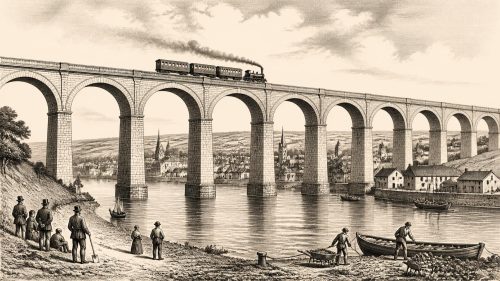
In 1855, post-Famine Ireland combined reconstruction with enduring demographic loss, poverty and emigration. The Boyne Viaduct opened on 5 April, completing rail travel between Dublin and Belfast and strengthening commerce, while offering no cure for insecure livelihoods. Agriculture increasingly favoured livestock, larger holdings and grazing; Encumbered Estates Court sales, workhouses and migration continued to reshape communities. Charles Gavan Duffy’s August farewell and departure for Australia, followed by Frederick Lucas’s death, symbolised the Tenant League’s collapse. Irish people served in the Crimean War. St Mary’s Cathedral, Killarney, was consecrated; George Petrie published traditional melodies; library legislation and Dublin Zoo reflected institutions.
Read Article




