
Archived: 15 October 2026
Abstract
In 1644, Confederate Ireland governed extensive territory from Kilkenny while negotiating with Charles I’s administration for Catholic worship, property, officeholding and parliamentary freedoms. Ormond pursued peace, but no settlement emerged. A major Confederate expedition under Castlehaven and Owen Roe O’Neill failed to dislodge Robert Monro’s Covenanter forces in Ulster, exposing divisions and supply weaknesses. Meanwhile, Alasdair MacColla’s troops crossed to Scotland to support royalists, prompting Westminster’s no-quarter ordinance. In Munster, Lord Inchiquin repudiated the cessation, joined Parliament, and expelled Catholics from Cork, Youghal and Kinsale. Trade continued amid war, but requisitioning, displacement and insecurity afflicted civilians deeply throughout the island.
Read Article

Archived: 15 October 2026
Abstract
In 1642, Ireland’s uprising became organised war amid the Wars of the Three Kingdoms. Catholic leaders united Gaelic and Old English interests around defence of worship, property and liberties, while professing loyalty to Charles I. Synods at Kells and Kilkenny promoted an oath of association. In October, the Kilkenny General Assembly established a Supreme Council, subordinate councils, military administration and taxation, creating a fragile Catholic government. Royalist, Protestant and Scottish forces retained key territories; defeats at Kilrush and Liscarroll checked Catholic arms. Owen Roe O’Neill’s return aided Ulster’s future resistance. War brought displacement, requisitioning and violence to all communities nationwide.
Read Article

Archived: 15 October 2026
Abstract
In October 1641, Catholic grievances over plantation, exclusion and religious constraints combined with Stuart political instability to trigger rebellion in Ireland. A planned seizure of Dublin Castle failed, but Sir Phelim O’Neill’s Ulster rising captured Dungannon and Charlemont. His proclamation professed loyalty to Charles I and protection for Protestants, while a later forged royal commission fuelled confusion. The conflict brought flight, plunder, killings, dispossession and winter hardship, alongside retaliatory violence. Testimony in the 1641 Depositions records crisis but requires critical reading. Fighting spread towards Dublin, Leinster and Munster, intensified English and Scottish political conflict, and left Ireland fractured without settlement.
Read Article

Archived: 15 October 2026
Abstract
In 1640, Ireland remained formally peaceful, but Charles I’s war against Scotland exposed mounting political divisions. Parliament granted four subsidies and discussed an enlarged army, then challenged the government’s methods of taxation and collection. Christopher Wandesford, succeeding Strafford as lord deputy, lacked his authority and repeatedly prorogued parliament. The Commons’ November remonstrance denounced Strafford’s arbitrary administration, monopolies, financial exactions and land policies, linking Irish grievances to his Westminster impeachment. Wandesford’s removal of parliamentary journal entries worsened distrust. His death in December, followed by Bishop John Atherton’s execution, weakened government further. Theatre and Gaelic scholarship continued amid crisis, foreshadowing 1641’s upheaval.
Read Article

Archived: 16 October 2026
Abstract
In 1639, Thomas Wentworth’s Dublin administration treated Ulster’s Scottish settlers as a security threat amid the Covenanters’ revolt. Commissioners imposed a compulsory loyalty oath, later called the Black Oath, requiring Scots to reject unauthorised covenants; 1,500 troops enforced compliance. Although no uprising occurred, departures, religious division and distrust deepened. Ireland also figured in Charles I’s abortive war plans against Scotland, including Randal MacDonnell’s ambitions, but no expedition sailed. Wentworth’s land policies faced resistance in Connacht, while Catholic grievances remained unresolved. Despite political strain, Dublin produced scholarly works by James Ussher and James Ware, revealing a brittle yet culturally active kingdom.
Read Article

Archived: 16 October 2026
Abstract
In 1638, Wentworth’s administration strengthened revenue, episcopal authority and executive power through monopolies, revenue farms, land investigations and prerogative courts. His suspension and imprisonment of Lord Chancellor Adam Loftus demonstrated the vulnerability of even senior opponents, while proposed Connacht plantations heightened landowners’ fears. Scottish resistance to Charles I’s religious policies brought anxiety to Ulster, where Scottish settlers maintained links with Covenanting communities. Troops moved north as a precaution. Bishop Henry Leslie’s Lisnagarvey sermon and Antrim communion records revealed pressure for conformity. Meanwhile, church revenues expanded and Dublin’s theatre flourished. Ireland remained peaceful, but coercive government and religious division presaged crisis.
Read Article
Archived: 16 October 2026
Abstract
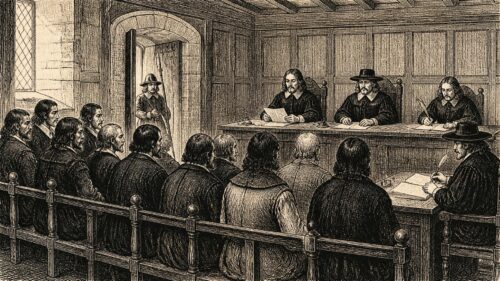
In 1636, Thomas Wentworth’s administration intensified royal control in Ireland through land, religion, economic regulation and culture. Galway jurors who rejected the Crown’s Connacht title were fined and imprisoned, demonstrating the coercive defence of plantation policy. Although Wentworth departed for England in July, trusted officials maintained his programme with royal support. Linen regulations sought to standardise rural spinning and promote exports. In Ulster, Bishop Henry Leslie silenced five ministers refusing Anglican canons, narrowing religious latitude. Meanwhile, the Four Masters completed their Irish annals, and Dublin’s Werburgh Street theatre flourished. These developments revealed an apparently peaceful kingdom under mounting centralised pressure.
Read Article
Archived: 16 October 2026
Abstract
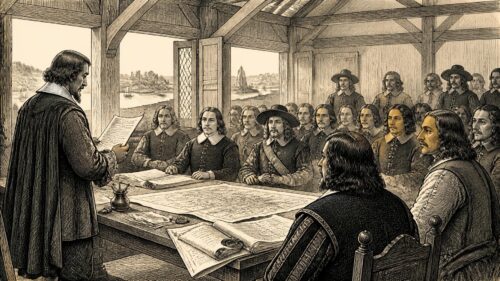
In 1635, Thomas Wentworth’s Dublin administration intensified efforts to reshape Ireland through parliamentary legislation, religious conformity, economic regulation and investigations of land title. Parliament passed measures on correction houses, alehouses, husbandry, clergy and Protestant schools, but failed to secure promised protections for established estates. Crown pressure reached Ulster when London plantation companies lost their charter, and peaked in Connacht, where Galway jurors at Portumna rejected the king’s claimed title and were fined and imprisoned. Wentworth also crushed Lord Mountnorris politically. Meanwhile, Hugh Ward’s death at Louvain marked a loss to Irish scholarship. The year revealed widening distrust of coercive government.
Read Article

Archived: 16 October 2026
Abstract
In 1634, Thomas Wentworth convened Charles I’s first Irish parliament, tightly managing elections, procedure and debate from Dublin Castle. Parliament unanimously granted six subsidies, expecting enactment of the Graces, concessions sought by Catholic and Old English elites, especially secure land titles. Wentworth subsequently refused the crucial land-security measure, confirming that revenue did not purchase limits on royal power. He also constrained parliamentary action over Sir Vincent Gookin’s inflammatory letter. Church convocation adopted the English Thirty-Nine Articles under pressure, advancing conformity despite resistance. Meanwhile, Geoffrey Keating completed Irish-language history; customs, trade and emigration to Spanish Flanders linked Ireland to Stuart Europe.
Read Article
Archived: 16 October 2026
Abstract
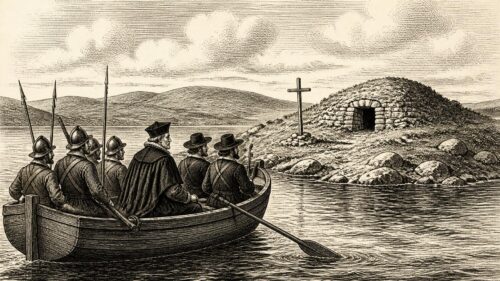
In 1632, Ireland experienced mounting political, fiscal and religious strain under Lords Justices Adam Loftus and Richard Boyle, while Charles I appointed Thomas Wentworth as future lord deputy. Government need for army revenue prompted Boyle’s proposed recusancy fines, but Loftus and Wentworth favoured negotiation, preserving fragile Catholic expectations surrounding the Graces. In October, Bishop James Spottiswood destroyed St Patrick’s Purgatory cave at Lough Derg, forcefully suppressing a major Catholic pilgrimage. Meanwhile Catholic synodical discipline, Ussher’s historical scholarship, plantations and planned towns reflected competing religious and colonial visions. The year exposed an uneasy peace, foreshadowing Wentworth’s more rigorous administration in Ireland.
Read Article

Archived: 16 October 2026
Abstract
In 1630, Ireland experienced contested government, religion and cultural memory rather than a single decisive event. Lords Justices Adam Loftus and Richard Boyle governed after Falkland’s departure, amid rivalries, plantation ambitions and uncertainty over Catholic concessions. Authorities suppressed visible Catholic houses in Dublin, although household networks sustained recusant worship. Malachy Ó Queely’s appointment as Tuam archbishop demonstrated continuing Catholic organisation. On 19 April, Franciscan scholar Mícheál Ó Cléirigh completed the Martyrology of Donegal, preserving Irish sacred learning and helping establish collaboration later associated with the Four Masters. Cork’s tomb commission highlighted elite Protestant power, Catholic insecurity, and uneven state authority.
Read Article
Archived: 16 October 2026
Abstract
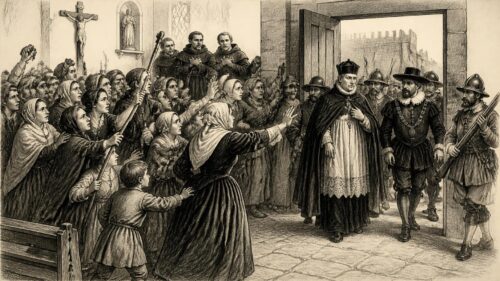
In 1629, Ireland experienced administrative change, religious tension and renewed Catholic confidence. Henry Cary’s recall left Richard Boyle and Adam Loftus as lords justices, committed to royal order and Protestant ascendancy. Despite pressure on recusancy, Dublin’s Catholic networks expanded, exemplified by Poor Clares returning from Flanders to found a convent. On St Stephen’s Day, officials led by Archbishop Lancelot Bulkeley raided the Franciscan chapel in Cook Street. Congregants, notably merchant widow Elinor Nugent and other women, rescued friars and drove raiders into hostile streets. The incident exposed Catholic urban solidarity, women’s agency, transnational links, and the limits of state coercion.
Read Article
Archived: 16 October 2026
Abstract
In 1628, Charles I’s government negotiated the Graces with Irish Catholic and Old English elites, exchanging reforms for £120,000 towards the army. The package sought security of land titles, limits on martial law, billeting, monopolies and administrative abuses, and relief from Catholic disabilities. Lord Deputy Falkland prepared an Irish parliament to ratify these measures, but procedural defects under Poynings’ Law caused its October deferral, leaving guarantees unconfirmed. Official proclamations revealed concern over grain supply, poverty and disorder. Catholic life gained an Irish College in Rome, while William Daniel died. The unresolved settlement deepened tensions over land, religion and Crown authority.
Read Article
Archived: 16 October 2026
Abstract
In 1627, Irish politics centred on negotiations over Crown funding, land security and Catholic disabilities. After failed discussions with Lord Deputy Falkland, a convention appointed eleven agents, mainly Old English Catholics but including Protestants, to negotiate in England. Their mission anticipated, but did not yet constitute, the Graces agreed in 1628. Spanish invasion rumours heightened security concerns without producing an expedition. Government business included Adam Loftus’s recall, creation of a Second Serjeant-at-Law, and William Brabazon’s elevation as earl of Meath. William Bedell became Trinity’s provost, encouraging Irish-language ministry. Robert Boyle was born at Lismore, within the prominent Protestant plantation elite.
Read Article
Archived: 16 October 2026
Abstract
In 1626, Lord Deputy Falkland governed Ireland amid fiscal, religious and landholding tensions. Charles I restored Waterford’s charter, withdrawn after civic officers refused the oath of supremacy, enabling Catholic municipal leadership within Protestant legal constraints for an alleged £3,000. The Crown advanced plantation in Upper Ossory, reshaping contested Fitzpatrick lands. To fund 5,500 troops during war with Spain, Falkland offered proposed Graces, including land-title security, reduced recusancy penalties and officeholding opportunities for Catholics. Protestant bishops, led intellectually by James Ussher, opposed toleration. Aodh Mac Cathmhaoil became Catholic archbishop of Armagh, dying in Rome; Niall Garvach O’Donnell died imprisoned in Tower.
Read Article
Archived: 16 October 2026
Abstract
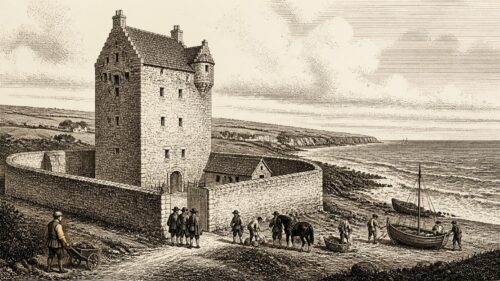
Charles I’s accession in 1625 retained Henry Cary, Viscount Falkland, as lord deputy of an Irish administration dependent on London yet weakened by faction, financial shortages and religious division. Fears of war with Spain exposed decayed coastal defences and unpaid troops; Falkland’s cess shifted military costs onto communities. James Ussher became archbishop of Armagh, strengthening the Protestant establishment despite enduring Catholic networks and no settlement on toleration. Oaths imposed on Connacht officeholders demonstrated administrative expansion. Land disputes after Robert Ponte’s killing in Wicklow illustrated plantation pressures. Ballygally Castle reflected continuing settlement in Ulster, while Moryson’s writing preserved conquest-era attitudes enduring.
Read Article

