Archived: 3 October 2026
Abstract
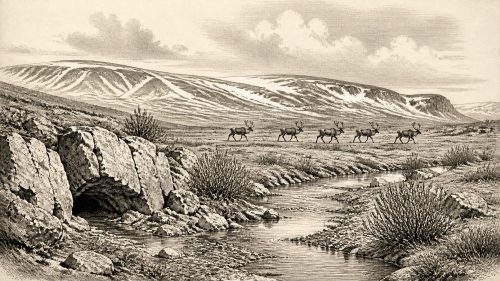
Around 30,322 BCE, Ireland lay in the Late Pleistocene, before the British–Irish Ice Sheet reached its maximum extent. Climate and landscapes changed repeatedly, producing mosaics of ice, exposed ground, tundra, wetlands and meltwater. Organic deposits at Derryvree, Fermanagh, suggest cold freshwater habitats, although their radiocarbon date is imprecise and low-confidence. Castlepook Cave’s fauna, including mammoth, reindeer, lemmings, predators and giant deer, demonstrates varied cold-environment ecosystems over long periods. A possibly cut-marked reindeer bone may indicate Upper Palaeolithic butchery, but cannot prove permanent human settlement. No evidence identifies polities, conflict, trade, religion or calendar-year events; interpretation depends on uncertain surviving traces.
Read Article

Archived: 30 September 2026
Abstract
Around 30,462 BCE, Ireland’s evidence is geological rather than historical. Organic silts at Derryvree, County Fermanagh, dated approximately 30,500 radiocarbon years BP, preserve a cold, ice-free freshwater environment beneath later glacial tills. Mosses, sedges, herbs, dwarf willow and insects indicate treeless, waterlogged tundra with short growing seasons and severe winters. As the British–Irish Ice Sheet expanded, conditions varied greatly across the island. Castlepook Cave, County Cork, yielded mammoth, reindeer and hyaena remains; a possibly cut-marked reindeer bone suggests fleeting human activity. However, no contemporary settlements, tools, human remains or cultural record confirms occupation. Later ice and rising seas obscured evidence.
Read Article

Archived: 28 September 2026
Abstract
30,546 BCE is a modern label within a broad Late Pleistocene range, not a recoverable Irish date. Derryvree, County Fermanagh, preserves freshwater silts and organic remains between glacial tills, demonstrating a local ice-free interval before renewed ice cover. Radiocarbon calibration places its deposits roughly between 34,950 and 29,750 BCE. Plants and insects indicate cold, treeless, periglacial wetland with mosses, sedges and open ground. Cave fauna elsewhere records mammoth, reindeer, giant deer and predators. A possibly cut-marked reindeer bone from Castlepook may indicate human activity, but cannot establish settlement. The evidence documents fluctuating ice, freshwater habitats and intermittent Ice-Age ecological possibilities.
Read Article
Archived: 26 September 2026
Abstract
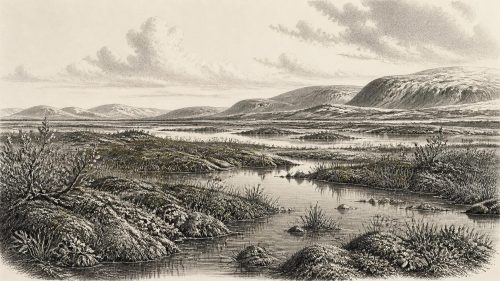
Thirty thousand six hundred and seventeen BCE cannot identify a recoverable Irish year, but falls within a broadly dated Late Pleistocene interval represented at Derryvree, County Fermanagh. There, freshwater silts and organic muds between glacial tills show that an ice-free hollow supported tundra-like wetland vegetation, insects and shallow water before renewed glaciation. The deposit’s wide calibrated range precludes precise reconstruction. Elsewhere, changing ice, sea levels and routes created shifting habitats. Southern cave faunas demonstrate that cold-adapted mammals reached Ireland. A marked reindeer bone may suggest human carcass processing, but proves neither settlement nor population. Evidence records environmental change, not societies
Read Article

Archived: 25 September 2026
Abstract
Thirty thousand, six hundred and seventy-seven BCE is a modern chronological label, not a recorded Irish year. At Derryvree, County Fermanagh, freshwater silts, organic deposits and sands lie between two glacial tills, demonstrating an ice-free interval during climatically unstable Marine Isotope Stage 3. Radiocarbon evidence broadly dates these deposits to 36,900–31,700 calibrated years BP. Mosses, sedges, aquatic plants and insects indicate cold, open periglacial wetland. Other records show fluctuating ice, water and fauna, including mammals from Castlepook Cave. A possibly cut-marked reindeer bone suggests human visits, but no settlement is proven. The evidence documents landscape, not society, in Ice-Age Ireland.
Read Article

Archived: 23 September 2026
Abstract
30,808 BCE is a modern label within a broad Late Glacial interval, not a recoverable Irish calendar year. At Derryvree, County Fermanagh, freshwater sediments sealed beneath tills date broadly to this period, showing locally ice-free or limited-ice periglacial conditions before major ice-sheet expansion. Pollen, plants, mosses and insects reveal wet, open tundra-like habitats with pools, sedges, grasses, herbs and scarce trees. Castlepook Cave in Cork records cold-adapted fauna, including mammoth, reindeer and predators, but its mixed deposits are not precisely contemporary. A possibly butchered reindeer bone suggests uncertain early human activity; no secure evidence demonstrates settlement, society, politics or trade.
Read Article

Archived: 21 September 2026
Abstract
At about 30,962 BCE, Ireland lay within the climatically unstable MIS 3, before the Last Glacial Maximum. Derryvree’s Fermanagh freshwater deposits, sealed between glacial tills, document an interval of cold, largely open tundra and periglacial wetland conditions. Mosses, sedges, grasses and aquatic plants indicate pools, marshes and frost-affected ground, rather than familiar woodland. Crag Cave records episodic milder conditions, while Castlepook’s mixed fauna demonstrates cold-stage habitats supporting large mammals and predators. A possibly tool-marked reindeer bone suggests Upper Palaeolithic human activity, but remains unconfirmed and does not establish settlement. Later ice destroyed or buried much evidence, leaving exceptional environmental archives.
Read Article

Archived: 20 September 2026
Abstract
Around 31,010 BCE, Ireland’s history is reconstructed from environmental and archaeological evidence, not dated events. Derryvree, County Fermanagh, preserves freshwater wetland sediments between glacial tills, indicating cold, treeless, locally ice-free terrain with mosses, sedges, herbs and shallow pools during MIS 3. Crag Cave records episodic climatic improvement. Castlepook Cave, County Cork, contains a long-accumulated Ice Age fauna including mammoth, giant deer, reindeer, bear and hyaena, although species were not necessarily contemporary. Possible tool damage on one bone is inconclusive. No secure evidence exists for settlements, polities or sustained human occupation. Later ice buried or erased much of this fragmented record.
Read Article
Archived: 20 September 2026
Abstract
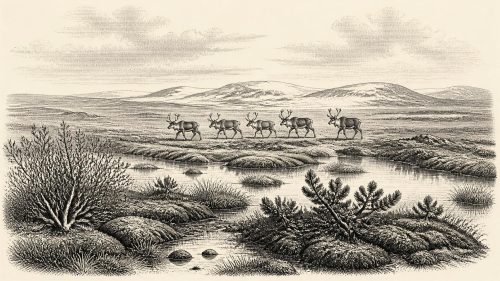
Although 31,048 BCE cannot be resolved as a specific Irish year, evidence places it within a fluctuating MIS 3 glacial environment. At Derryvree, County Fermanagh, organic deposits between tills indicate an ice-free interval with treeless freshwater wetland, mosses and cold-adapted plants. Crag Cave speleothems demonstrate climatic variability, while Castlepook Cave preserves MIS 3 remains of mammoth, reindeer, giant deer, predators and cold-country fauna. A possibly modified reindeer bone suggests early human activity, but does not prove settlement or continuous occupation. No political, cultural or economic history is recoverable. The period is understood through dates, sediments, fossils, deposits and ice margins.
Read Article
Archived: 20 September 2026
Abstract
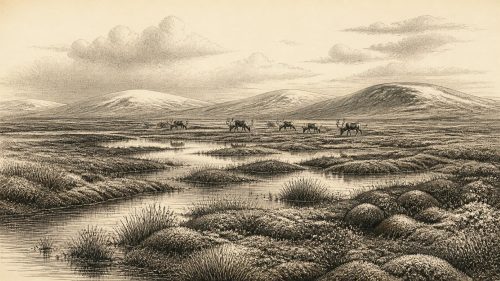
Labelled 31,073 BCE, this horizon cannot be reconstructed as a single observed year, but belongs broadly to unstable MIS 3 before Ireland’s glacial maximum. Derryvree, County Fermanagh, preserves moss-rich freshwater sediments between tills, indicating an ice-free, treeless tundra wetland during an earlier cold-stage interval. Castlepook Cave, County Cork, documents MIS 3 fauna including reindeer, giant deer and spotted hyaena, though mixed deposits complicate interpretation. A possibly cut-marked reindeer bone suggests only tentative human activity. Ireland was cold, open and ecologically active, yet evidence supports no known population, polity, culture, settlement or economy; later ice obscured much of its surviving record.
Read Article

Archived: 18 September 2026
Abstract
Around 31,267 BCE, Ireland was in the climatically variable later Last Glacial Period, not an era of recorded events. Freshwater deposits sealed between tills at Derryvree, County Fermanagh, preserve mosses, plants, insects and sediments indicating open, treeless tundra-like wetlands with cold-adapted vegetation. Castlepook Cave, County Cork, contains a long, mixed assemblage of Ice Age mammals, including mammoth, reindeer, giant deer, predators and lemmings, demonstrating intermittent animal movement. A possibly cut-marked reindeer bone suggests, but cannot confirm, early human contact. These fragmentary archives predate the later expansion of the British–Irish Ice Sheet and reveal changing cold-stage environments rather than settled society.
Read Article

Archived: 17 September 2026
Abstract
31,368 BCE is not recoverable as a specific Irish year, but falls within unstable MIS 3 during the last Ice Age. Derryvree, County Fermanagh, provides the best environmental archive: freshwater silts between glacial tills indicate an ice-free interval with cold, treeless, moss-rich wetland supporting grasses, sedges, herbs and aquatic plants. Ireland was approaching major ice-sheet expansion, amid variable climate and uncertain coastal connections. Cave evidence shows intermittent cold-stage fauna, though assemblages cannot date species precisely. Possible butchery on a Castlepook reindeer bone suggests debated early human activity, not settlement. Environmental evidence, rather than political or cultural history, defines this period.
Read Article
Archived: 17 September 2026
Abstract
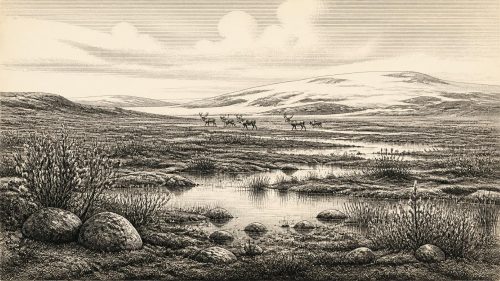
31,419 BCE is a label within a broad Pleistocene dating range, not a recoverable Irish year. At Derryvree, County Fermanagh, organic silts beneath later glacial till, including Birm-166, show a locally ice-free interval during Marine Isotope Stage 3. Mosses, sedges, grasses, plants and insects indicate cold, treeless, waterlogged tundra. Castlepook Cave, County Cork, preserves remains of mammoth, reindeer, giant deer and predators, although cave deposits are selective and mixed. A possibly cut-marked reindeer bone suggests brief human contact, not settlement. Later expansion of the British-Irish Ice Sheet buried deposits and reshaped landscapes, leaving sparse, local evidence of Ice Age habitats.
Read Article
Archived: 17 September 2026
Abstract
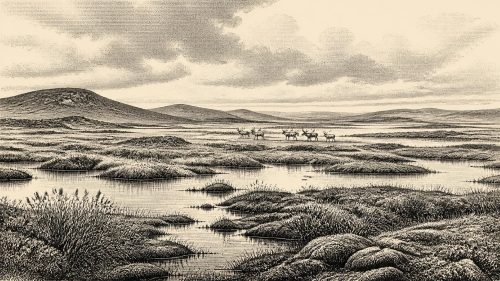
Around 31,438 BCE, Ireland had no historical calendar, communities or written record; evidence instead describes a changing Late Pleistocene environment. At Derryvree, County Fermanagh, organic sediments between glacial tills indicate a locally ice-free, open tundra wetland during a broad, uncertain interval, later buried by ice. Plant and insect remains reveal cold, damp, sparsely vegetated ground. Castlepook Cave, County Cork, preserves mixed remains of mammoths, reindeer, giant deer, predators and other cold-adapted animals, demonstrating intermittent access to suitable habitats. A marked reindeer bone may indicate human butchery, but cannot establish settlement. Subsequent glaciation destroyed or obscured evidence of Ireland’s earliest visitors.
Read Article

Archived: 16 September 2026
Abstract
Around 31,552 BCE, Ireland has no recoverable yearly history; evidence instead describes a fluctuating Late Pleistocene environment. At Derryvree, County Fermanagh, freshwater sediments between glacial tills preserve a treeless tundra wetland of sedges, grasses, mosses, bogbean, juniper and sparse herbs, formed during an interval between ice advances. Castlepook Cave, County Cork, contains MIS 3 remains of mammoth, reindeer and other open-country, cold-adapted animals, although its deposits are mixed. A marked reindeer femur may indicate Upper Palaeolithic butchery, but cannot prove occupation. The evidence shows changing ice, wetlands and fauna, not settled communities, politics, farming or identifiable peoples for this date.
Read Article

Archived: 16 September 2026
Abstract
At the nominal date of 31,594 BCE, Ireland’s evidence is environmental and archaeological, not historical in the political sense. Derryvree, County Fermanagh, preserves wetland sediments between glacial tills, indicating a locally ice-free MIS 3 interval with cold, open, treeless vegetation of mosses, sedges, grasses and shrubs. Castlepook Cave, County Cork, records a time-mixed cold-stage fauna including mammoth, reindeer, giant deer, predators and smaller mammals. Possible cut marks on reindeer bone suggest fleeting human activity, but cannot establish settlement. Changing sea levels and advancing ice shaped access and survival of evidence before extensive later glaciation erased much of Ireland’s earlier landscape.
Read Article
Archived: 14 September 2026
Abstract
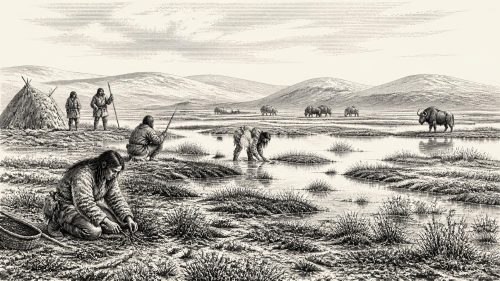
31,743 BCE is not a datable Irish event but an approximate point within unstable Marine Isotope Stage 3. At Derryvree, County Fermanagh, organic freshwater beds between glacial tills indicate a temporarily ice-free wetland, with mosses, sedges, open pools and treeless tundra vegetation. Cave calcite records show recurrent climatic warming episodes. Southern cave remains demonstrate that reindeer, mammoth, giant deer, bears and hyaenas occupied Ireland intermittently, although assemblages span long periods. A cut-marked Castlepook reindeer bone may indicate short human visits, not settlement. No institutions, farming or trade are evidenced. Before maximum glaciation, Ireland supported shifting habitats, fauna and transient foragers.
Read Article
Archived: 10 September 2026
Abstract
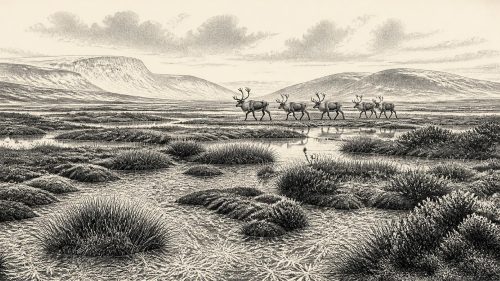
The modern label 31,846 BCE denotes a broad MIS 3 Ice Age interval, not a datable Irish event. At Derryvree, County Fermanagh, buried organic silts, pollen, plants and insects record cold, treeless tundra wetlands, indicating that parts of Ireland supported freshwater habitats before major ice-sheet expansion. Castlepook Cave, County Cork, preserves disturbed but important remains of reindeer, mammoth, bears, wolves, lemmings and other fauna, though species were not necessarily contemporaneous. A cut-marked reindeer femur may indicate Upper Palaeolithic butchery around 31,000 BCE, yet cannot prove settlement. No secure tools, hearths, dwellings or human remains exist. Possible human presence remains unconfirmed.
Read Article




