
Archived: 19 October 2026
Abstract
In 1497, Ireland remained divided among competing Gaelic and Anglo-Irish lordships despite Henry VII’s nominal authority and Kildare’s Dublin administration. Perkin Warbeck briefly landed at Cork but gained no support before departing for Cornwall. In the south-east, Piers Ruadh Butler killed Sir James Ormond, strengthening his territorial position. Conn Ó Domhnaill succeeded in Tír Chonaill in May, yet succession conflict, defeat and invasion brought his death in October. Local peace-making and raiding continued elsewhere. A severe island-wide famine caused hunger, mortality and extraordinary food prices for communities. Religious developments included regulation of Lough Derg pilgrimage and Franciscan reform at Carrickfergus.
Read Article
Archived: 20 October 2026
Abstract
In 1427, Ireland’s fragmented political order was shaped by dynastic rivalry, constrained English administration and local military action. Donnchadh Mac Murchadha, king of Leinster, returned after eight years’ imprisonment in England, challenging his brother Gerald’s authority while receiving English support. Lord Grey briefly assumed the lieutenancy, reliant on local deputies amid fiscal and factional weakness. English or Anglo-Irish forces demolished Edenderry Castle, while an Ulster coalition led by Niall Garbh Ó Domhnaill defeated MacQuillan’s forces, taking prisoners and booty. Annalistic obituaries emphasised penitence, hospitality and charitable guest-houses, demonstrating that reputation, kinship and religious patronage remained central to power and standing.
Read Article
Archived: 20 October 2026
Abstract
In 1425, Edmund Mortimer, the king’s lieutenant and earl of March and Ulster, died suddenly at Trim while pursuing agreements with northern Gaelic lords. His death undermined a fragile settlement, followed by arrests of visitors and worsening Ulster conflict. James Butler, earl of Ormond, became lieutenant and negotiated written alliances with the Meic Mathghamhna and Éoghan Ó Néill. In Connacht, Toirrdelbach Ruad Ó Conchobair died and Cathal, son of Ruaidrí, succeeded amid violence. Brian Ballach Mac Uí Néill Buidhe was killed at Carrickfergus. Severe winter weather devastated cattle, crops and people, while records showed religious and learned life across Ireland.
Read Article
Archived: 20 October 2026
Abstract
In 1424, Ireland’s political map was defined less by a single national struggle than by a series of overlapping lordships, rival dynasties and negotiated allegiances. The English crown governed most directly from Dublin and its surrounding lordship, but royal office depended upon the cooperation of magnates whose power reached well beyond the formal limits of crown administration. Gaelic rulers, Hiberno-Irish dynasties and English settlers all made and remade local political worlds through warfare, tribute, marriage, submission and the possession of castles. The year is especially notable for the arrival in Ireland of Edmund Mortimer, earl of March and Ulster, as
Read Article
Archived: 21 October 2026
Abstract
In 1405, Art Mór Mac Murchadha Caomhánach devastated County Wexford and burned Carlow and Tristledermot, demonstrating the vulnerability of English lordship towns and routes in Leinster. His campaign reflected conflicts over land, tribute, jurisdiction and authority, despite earlier interventions by Richard II. Government continued through appointments and James Butler, earl of Ormond’s deputyship, although his death added uncertainty. Elsewhere, warfare over dues in Moylurg killed Tadc Mac Diarmata and prompted succession. Annals also record local feuds, gallowglasses, learned men’s deaths, monastic burials and an early reference to uisce beatha. Ireland remained politically fragmented, culturally sophisticated and shaped by local power.
Read Article

Archived: 23 October 2026
Abstract
In 1348, pestilence reached Ireland by sea, devastating Dublin and Drogheda from late summer, though its extent elsewhere remains uncertain. John Clyn recorded a fearful pilgrimage by clergy, magnates and ordinary people to St Moling’s water at Taughmoling, seeking spiritual protection amid mass mortality. Meanwhile, Fulk de la Frêne fortified and coerced Ormond tenants around Nenagh, before James Butler received the earldom. Bishop Richard of Ossory gained independence from Dublin’s archbishop. In Connacht, killings, captures and war between kindreds ravaged Moylurg, while learned poets still travelled for patronage. The year combined disease, warfare, lordship, worship and cultural continuity under strain.
Read Article
Archived: 23 October 2026
Abstract
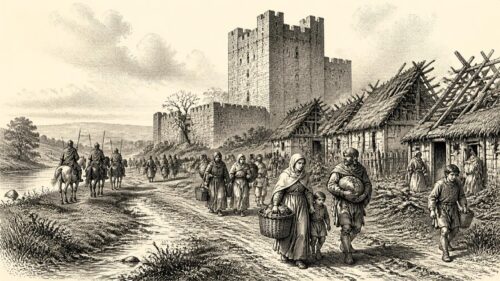
In 1347, Ireland comprised competing lordships, dynasties, church jurisdictions and towns. At Christmas, Domhnall Ó Ceinnéidigh led forces reportedly drawn from several provinces in a devastating assault on Nenagh and Ormond, sparing Nenagh Castle but exposing Butler authority while young Earl James Butler served in France. Annals also record killings, captures and successions across Connacht, Breifne, Ulster, Annaly and the south-east, revealing warfare affecting cultivation. Churches remained active through building, patronage and papal links. Learned figures were commemorated. Although plague spread in Europe, surviving Irish records place its arrival in 1348, making 1347 a year of political crisis before pandemic.
Read Article
Archived: 23 October 2026
Abstract
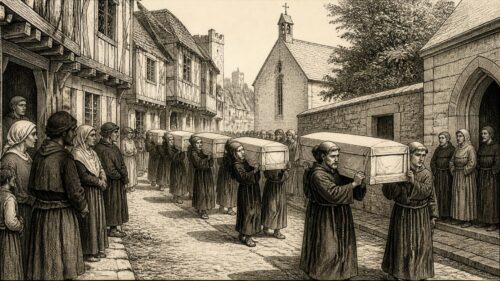
In 1335, Ireland was divided among competing Gaelic lordships, settler families, church jurisdictions, towns and royal officials. On 4 May, Lysaght Ó Mórdha’s household killed Sir Raymond le Ercedekne, relatives and allies at a meeting near Claregalway, an exceptional blow memorialised at Kilkenny. Connacht suffered raids, plunder and uneasy reconciliation amid de Burgh fragmentation after 1333. Sir John Darcy mobilised Irish ships, nobles and taxation for Edward III’s Scottish war, raiding Arran and Bute. Local warfare, captures and church disputes continued. Heavy spring snow harmed birds throughout Ireland, while devotional practices and hereditary learning, including physician Gilla-na-nAingel Ó Casaide, persisted.
Read Article
Archived: 23 October 2026
Abstract
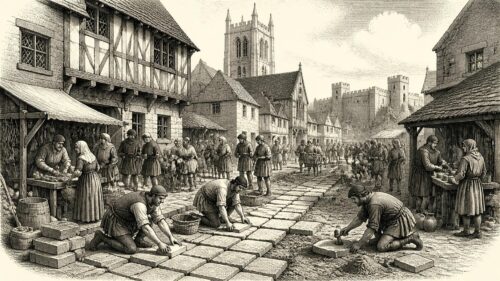
In 1334, severe winter weather injured people and livestock and damaged mills, weirs and bridges across Kilkenny’s region. Kilkenny burgesses began the town’s first recorded paving, later supported by a seven-year royal pavage grant. Local lordship remained contested: Thomas Fanyn seized Moytobyr Castle before Earl James Butler imposed temporary custody. Elsewhere, Donnchad Mac Carthaigh captured David de Barry, John de St Aubin was murdered, and a Connacht force of Gaels and settlers secured Munster hostages but burned a church, killing 180 people. Kilkenny also saw raids, erection of a market cross, crusading branding, and Desmond’s knighting campaign in late December.
Read Article





