Image
13 July 2026
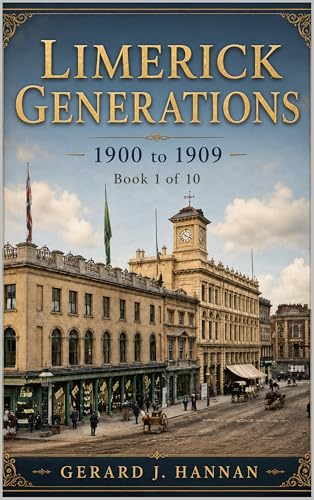
George Street
George Street, now O’Connell Street, formed the bustling commercial and social heart of Limerick around 1900. Elegant Georgian and Victorian façades lined the thoroughfare, their ornate shopfronts illuminated by gaslight and filled with goods for local shoppers. Horse-drawn carriages, jaunting cars and merchant carts crowded the roadway, while pedestrians in heavy coats and hats moved between businesses and hotels. The grand Cruises Royal Hotel stood among the street’s most prominent landmarks, welcoming merchants, travellers and visitors. This scene reflects the energy of late-Victorian Limerick before motor traffic transformed the city’s principal shopping street and historic urban centre during a changing…
View ImageImage
11 July 2026
Limerick Market
This photograph, dated 1 March 1937, captures a busy market day in Limerick city. Horse-drawn carts, traders, shoppers, and farmers crowd the wet street, creating a vivid picture of everyday commercial life. On the right, a man drives a horse and trap, a form of transport commonly associated with more prosperous Irish farmers. Market goods are displayed on carts and stalls, while pedestrians move between the buildings lining the street. The scene records the importance of markets to Limerick’s economy, bringing rural producers and urban customers together during a period when horses remained central to transport and trade throughout Ireland.
View ImageImage
31 July 2026
Ryans Garage
This early photograph captures Dan Ryan’s Garage at Punch’s Cross, Limerick, during the 1940s. The premises stood at an important junction serving motorists, cyclists and local residents as traffic through the area steadily increased. Its pumps, workshop and roadside position reflect the growing importance of motor transport in mid-twentieth-century Limerick. The image also preserves the appearance of Punch’s Cross before later development transformed the surrounding streetscape. Beyond its commercial role, the garage became a familiar local landmark and meeting point. Today, the photograph offers a valuable glimpse of everyday business, transport and community life in wartime and post-war Limerick city.
View ImageImage
9 July 2026
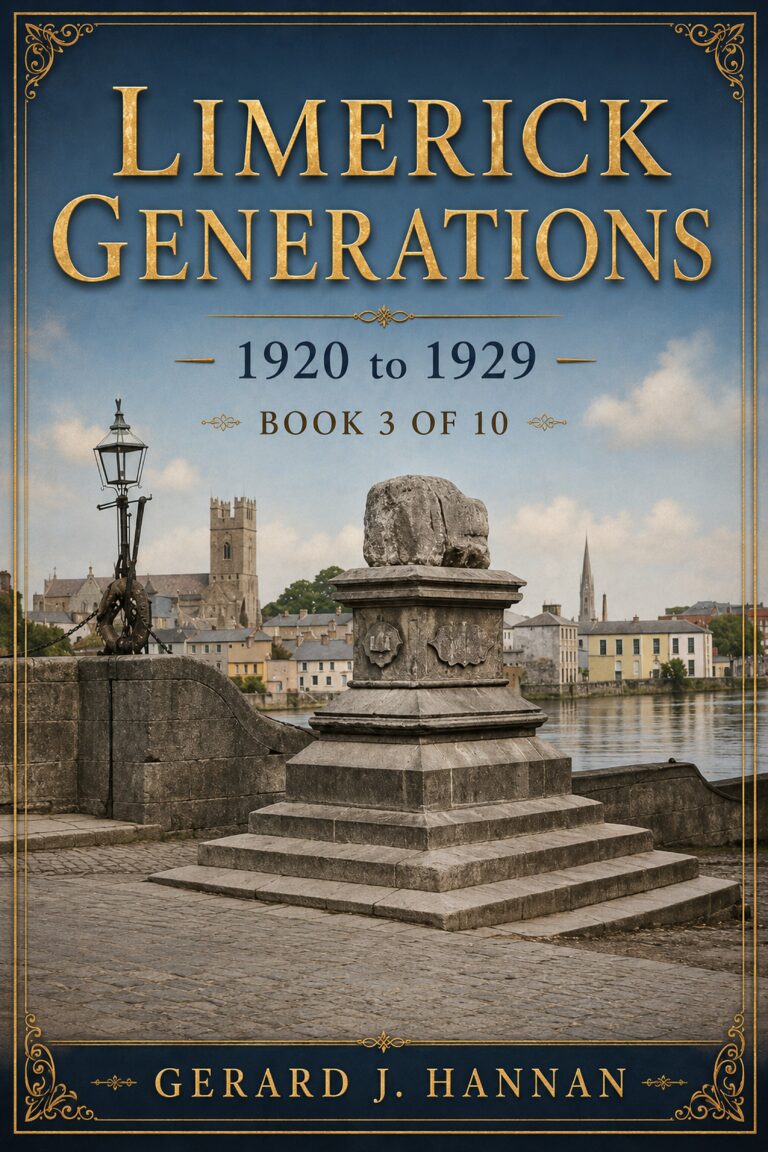
Treaty Stone
AI-assisted archival reconstruction showing the Treaty Stone on Thomond Bridge, Limerick, with the riverside castle buildings and historic bridge approach in the background. The scene presents the monument, cobbled roadway, bridge parapet, pedestrians, and horse-drawn traffic in a restored early twentieth-century setting, preserving the atmosphere of the original historical source image.
View ImageArticle
26 June 2026
Route Endorsed
Limerick County Council looked towards the Irish Sea in 1900 when it supported proposals for the developing railway and steamship connection between Rosslare in County Wexford and Fishguard in Wales. The surviving account mistakenly calls the Irish port “Roeselare,” the name of a Belgian city, but the intended destination was Rosslare. Although both harbours lay far from County Limerick, councillors recognised that a through route from the Shannon region towards Waterford and the south-eastern coast might improve passenger travel, commercial communication and access to markets in Britain.
Read ArticleArticle
22 June 2026
Estates Reorganised
The Congested Districts Board is continuing its efforts to purchase and reorganise estates in the poorest districts of western Ireland. Created in 1891 to relieve chronic rural poverty, the Board has increasingly turned towards land purchase as a means of enlarging uneconomic farms, combining scattered plots and moving selected families from overcrowded districts onto more productive ground. Its work is concentrated principally in Connacht and the western counties, where generations of subdivision have left many households dependent upon holdings too small or infertile to provide a secure living. The Board’s method involves acquiring an estate, examining the condition of its…
Read ArticleArticle
24 June 2026
Unity Resolutions
Local political organisations passed resolutions supporting a united Irish parliamentary representation as dissatisfaction deepened with the factional divisions inherited from the fall of Charles Stewart Parnell. United Irish League branches, nationalist associations and constituency bodies increasingly treated reunion as a public obligation rather than a private matter for rival leaders. Their resolutions urged parliamentarians to restore cooperation, accept common discipline and present Ireland’s claims through one organised party at Westminster. Such declarations did not possess formal authority over every MP, but they demonstrated that continued separation risked alienating local supporters whose votes, subscriptions and organisational labour sustained constitutional nationalism.
Read ArticleArticle
25 June 2026
Health Inquiry
A government investigation into the causes of exceptionally high death rates in Irish cities was extended to Limerick, according to an announcement published on 27 January 1900. The Local Government Board was expected to apply machinery similar to that already established for examining public health in Dublin. The proposed scrutiny would reach beyond mortality statistics and examine how Limerick Corporation discharged its sanitary responsibilities. Drainage, cleansing, water supply, dairies and slaughterhouses were all identified for investigation. The announcement placed the city’s everyday environment under official examination and signalled that preventable illness and premature death would be treated as failures of…
Read ArticleArticle
19 June 2026
Military Review
Queen Victoria has reviewed troops drawn from the Dublin garrison and the Curragh Camp during her final visit to Ireland, placing the British Army prominently within the royal programme. The review was held in Phoenix Park, where infantry, cavalry and artillery units assembled before large crowds. Soldiers marched past the Queen in formal order while officers, mounted escorts and military bands completed the spectacle. Reports reaching Limerick describe an event intended to honour the armed forces and demonstrate their discipline. The ceremony also connected Ireland directly with the continuing war in South Africa, where Irish regiments were serving throughout the…
Read Article