Article
19 June 2026
Divided Loyalties
Irish soldiers continue to fight with British forces in South Africa while nationalist opposition to the war grows increasingly vocal at home. The conflict has produced divided feelings across Limerick city and county, where military service has long provided wages, regular employment and support for working-class families. Some residents regard the soldiers as courageous representatives of Ireland within the Empire, while others condemn the campaign against the Boer republics as an act of imperial aggression. Many households occupy a more painful position, opposing British policy while anxiously awaiting news from relatives serving in distant regiments under British command. Military service…
Read ArticleArticle
22 June 2026
Rural Unrest
Agrarian agitation has become especially influential across Connacht and parts of Munster, where tenant farmers, smallholders and agricultural labourers continue to demand a fairer distribution of Irish land. County Limerick has not escaped the dispute. Rural families living on cramped or uneconomic holdings have watched substantial grazing farms occupy fertile ground while labourers struggle to secure cottages, gardens and dependable employment. Meetings connected with the United Irish League have provided an organised outlet for grievances concerning rents, evicted tenants, disputed farms and the slow progress of land purchase under legislation already introduced by Westminster. The agitation is strongest where poverty…
Read ArticleArticle
21 June 2026
Purchase Delayed
Tenant purchase continues under the existing Irish Land Acts, allowing some farmers to replace rent payments with annual instalments towards ownership of their holdings. The principle has won broad support among tenants who believe possession of the soil would provide greater independence, security and confidence in improving their farms. Yet the number of completed sales remains insufficient to satisfy many rural communities. In County Limerick, farmers continue to wait upon negotiations between landlords, tenants, the Irish Land Commission and the Treasury, while political organisers argue that a reform intended to settle the land question is proceeding far too slowly.
Read ArticleArticle
25 June 2026
Reservist Released
The Limerick Board of Guardians granted six months’ leave without salary to James Ryan, an employee who had been summoned to rejoin the colours during the South African War. The decision, reported on 25 January 1900, allowed Ryan to answer his military obligation without immediately forfeiting his position under the Board. Guardians also agreed that a temporary worker should be appointed during his absence, ensuring that the institution’s daily duties continued without interruption. The arrangement balanced the demands of wartime mobilisation with the Board’s responsibility towards a member of staff called away from civilian employment.
Read ArticleImage
9 July 2026
Treaty Stone
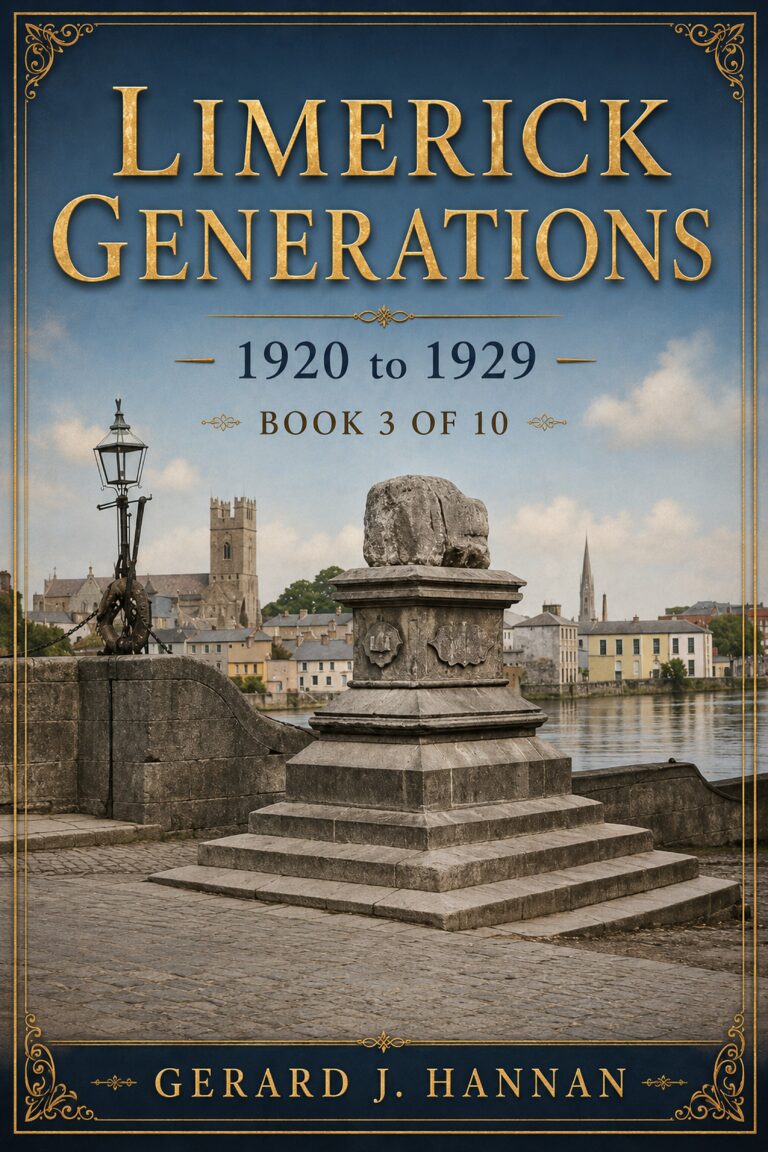
AI-assisted archival reconstruction showing the Treaty Stone on Thomond Bridge, Limerick, with the riverside castle buildings and historic bridge approach in the background. The scene presents the monument, cobbled roadway, bridge parapet, pedestrians, and horse-drawn traffic in a restored early twentieth-century setting, preserving the atmosphere of the original historical source image.
View ImageImage
31 July 2026
ODwyer Bridge
This rare 1932 photograph shows the newly completed Bishop O’Dwyer Bridge linking Limerick city with Corbally. Constructed between 1929 and 1931 at a cost of £21,308, the concrete structure replaced the older Park Bridge, which had served the district since 1798. It was named in honour of Dr Edward Thomas O’Dwyer, Bishop of Limerick from 1886 to 1917. The bridge represented a new era of engineering, transport and urban development, while maintaining a crossing essential to local life for generations. Nearly a century later, it remains a familiar landmark, practical route and enduring part of Limerick’s architectural and social history.
View ImageImage
16 July 2026
George Street
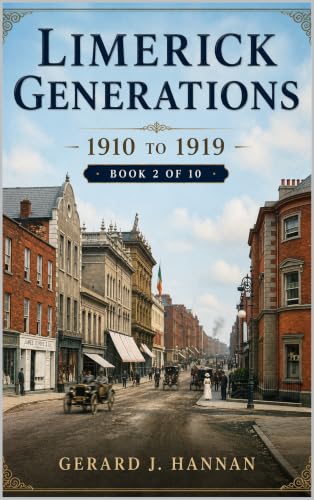
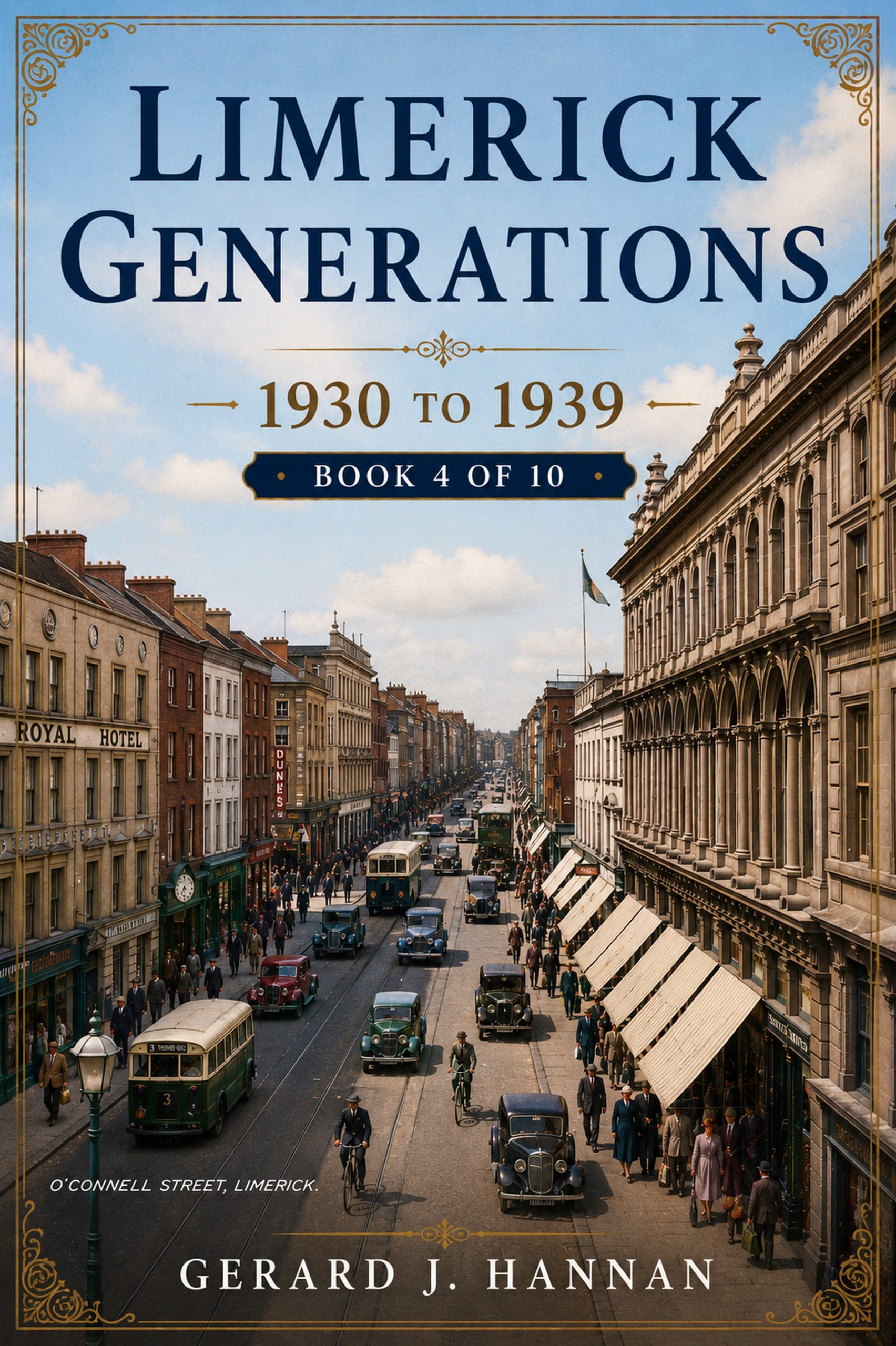
Before becoming Cannocks, the premises at 134 George Street, now O’Connell Street, housed a successful drapery business dating from around 1814. By the mid-nineteenth century, the shop was operated by Cumine and Mitchell and was regarded as a high-class retail establishment. In 1850, Scottish businessmen George Cannock and John Arnott purchased the property, establishing Cannocks and Company, which developed into one of Limerick’s best-known department stores. The business remained a prominent feature of the city’s commercial life for generations. In 1980, the store was sold to Penneys, which continues to occupy the historic site today on O’Connell Street in Limerick.
View ImageImage
15 July 2026
George Street
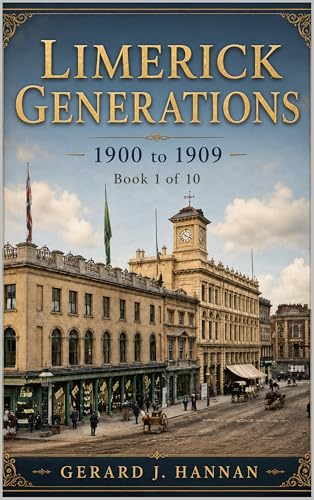
In 1900, George Street, now O’Connell Street, formed the commercial heart of Edwardian Limerick. Its broad thoroughfare was lined with elegant Georgian buildings, busy shops, hotels and offices, while horse-drawn carts, carriages and pedestrians filled the roadway. Street traders added colour and activity to the city’s principal avenue. Among its notable establishments were the Cruises Royal Hotel, MacMahon’s Temperance Hotel and respected merchants such as O’Mahony & Company. The street reflected Limerick’s growing prosperity at the opening of the twentieth century, combining refined architecture with energetic daily commerce and serving as a central meeting place for residents, visitors and travellers…
View ImageImage
16 July 2026
Mountshannon House
Mountshannon House, near Castleconnell in County Limerick, was one of Ireland’s grandest eighteenth-century mansions. Built around 1750, it later gained a monumental Ionic portico during an 1813 remodelling by architect Lewis Wyatt. Tradition claimed the house contained 365 windows, while its vast entrance hall could accommodate a horse-drawn carriage. Surrounded by a 900-acre demesne between the River Shannon and Mulkear River, its celebrated gardens were designed by John Sutherland. Home to the powerful FitzGibbon family, including John “Black Jack” FitzGibbon, 1st Earl of Clare, the mansion became a renowned centre of political influence, hospitality, wealth, political power, and aristocratic life.
View ImageArticle
24 June 2026
Recruitment Intensifies
A fresh sequence of enlistments was entered for the Royal Irish Regiment as recruiting activity increased during the South African War. The new names reflected the widening demand for soldiers after the British Army suffered heavy reverses during the closing weeks of 1899. Recruiting offices were encouraging suitable men to enter regular service, while reservists were being recalled and additional forces prepared for overseas deployment. For many Irish families, the war was no longer a remote imperial struggle reported from distant battlefields. It had begun to influence employment decisions, household income and the movements of young men across towns and…
Read Article