Membership is completely free, giving members unlimited access to all available resources, services, features, and benefits without any restrictions or fees.
Welcome back. Sign in to continue enjoying unlimited access to all available resources, services, features, and member benefits at no cost.
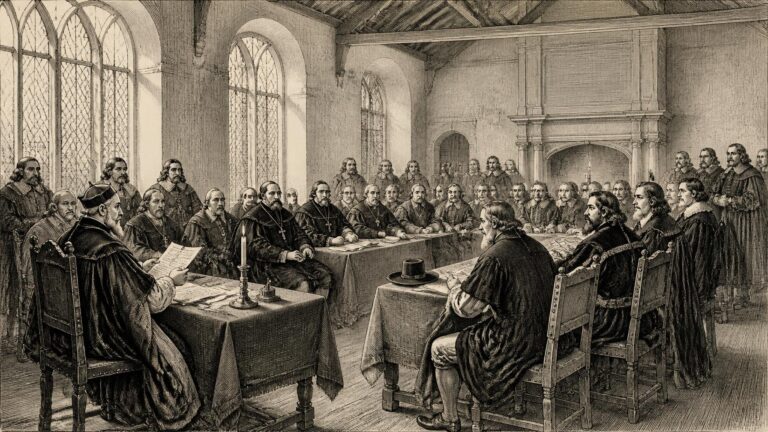
The Confederate leadership entered 1644 with a difficult calculation. The cessation agreed with Ormond in September 1643 had suspended much fighting between the Confederates and the royalist administration, but it was only a truce. It gave the Catholic leadership time to pursue a permanent settlement with Charles I, yet it also left the Covenanter army in Ulster and parliamentarian-aligned forces in Ireland outside the arrangement. The Confederacy had built a functioning wartime administration: a General Assembly, a Supreme Council, provincial armies, taxation and courts. But its political authority was uneven. The Assembly was representative by the standards of the day, bringing together peers, clergy and commoners, but the franchise was confined to male property holders; by 1644 the Supreme Council was increasingly directing policy between assemblies.
Ireland’s emergency was inseparable from the mounting conflict across the Stuart monarchies. Charles I was king of Ireland, Scotland and England, but his authority was being disputed in each kingdom. English parliamentarians feared that the Irish rebellion might be used to strengthen royal power; Irish Catholics feared renewed dispossession, religious coercion and the punishment of all who had taken up arms. In March, the English Parliament secured royal assent to the Adventurers’ Act, which raised money for war in Ireland by promising subscribers repayment in confiscated Irish land. The measure did not determine who would eventually own those lands, but it gave a stark financial form to Catholic anxieties: military defeat might bring not only penalties but wholesale loss of estates.
The conditions behind the outbreak were older than the year, but were acutely felt in 1641. Catholic landowners, both Gaelic Irish and Old English, had experienced decades of plantation, land-title challenges, political exclusion and religious constraint. In Ulster, the Plantation had created densely settled English and Scottish Protestant communities beside dispossessed or politically diminished Catholic families. That arrangement brought commercial farming, market links and new forms of local administration, but it also made landholding, worship and allegiance inseparable from questions of power.
In 1640, Ireland was not yet at war within itself. The uprising usually called the Irish Rebellion would not begin until October 1641, and the Catholic Confederation belonged to the following year. Yet this was a year in which the political arrangements that had held the kingdom together began to fail visibly. Ireland’s government was drawn into Charles I’s attempt to subdue the Scottish Covenanters in the Second Bishops’ War; its parliament became an arena for arguments about taxation, law and arbitrary rule; and confidence in the administration of Thomas Wentworth, earl of Strafford, drained away. By December, the lord deputy was dead, a prominent bishop had been executed, and the authority of Dublin Castle looked markedly less secure than it had in spring.