
Year by Year
Explore Year by Year articles from the most modern historical year back to the oldest.
3,295 Articles Archived
Tadc Usurpation
Archived: 27 October 2026
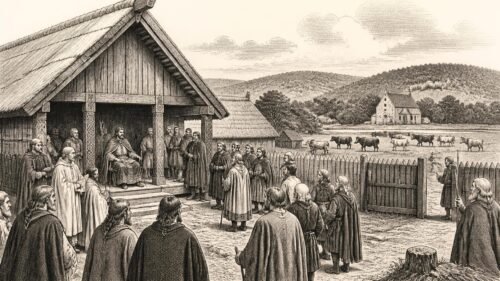
In 925, Connacht underwent a decisive dynastic change after Cathal son of Conchobar, king since about 900, died in penitence. His son Domnall and other leading men were treacherously killed by their kinsman Tadc, who assumed the kingship and founded a durable ruling line. Annalistic chronology requires caution, but modern scholarship dates these events to 925. Elsewhere, Dubgall, king of Ulaid, was killed by his own people, while Lorcán, king of Brega, died in old age. These events exposed fragile regional kingship beneath Tara’s limited overlordship, amid church influence, rural continuity, Dublin’s maritime power, and competing dynastic interests across Ireland.
Erne Raiding
Archived: 27 October 2026
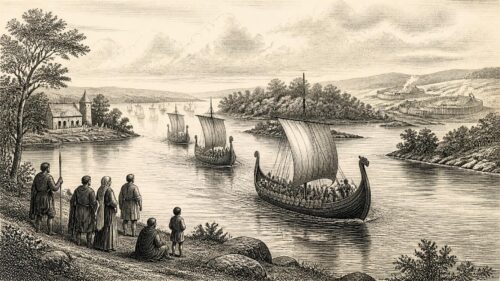
In 924, Ireland’s waterways became theatres of prolonged violence. The most securely associated annalistic record, the Annals of Ulster entry conventionally cited as U924, describes a foreign naval force operating on Lough Erne, raiding its islands and the districts around the lake before withdrawing only in the following summer. Other entries place raiders in Strangford Lough, report a catastrophic wreck at the entrance to Dundrum Bay, and record an unsuccessful expedition sent from Dublin towards Limerick. Taken together, these notices show an island in which ships could bring danger far inland, but also one in which Viking leaders competed sharply with one another rather than acting as a single force.
Cell Shléibe
Archived: 27 October 2026
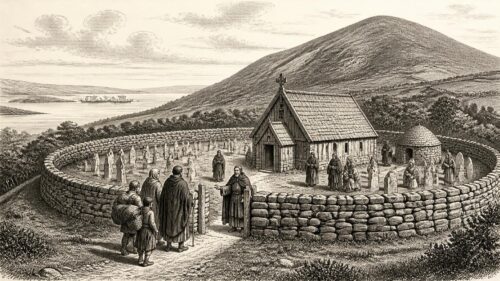
In the annalistic year conventionally associated with 923, Scandinavian raiders from Carlingford Lough plundered Cell Shléibe, modern Killeavy, and killed Duiblitir, a priest of Armagh. Other plundering struck ecclesiastical districts in Louth, while obituaries of clergy and church officers reveal institutions linking learning, estates and regional authority. Political insecurity appeared in the treacherous killings of rulers and designated heirs in Conaille, Connacht and Leinster. The death of Lígach, queen of Brega, highlighted dynastic marriage and memory. Sources offer no full social or economic picture, but depict interconnected churches and kindreds vulnerable to maritime raiding and internal rivalry throughout the island.
Tomrair’s Raid
Archived: 27 October 2026
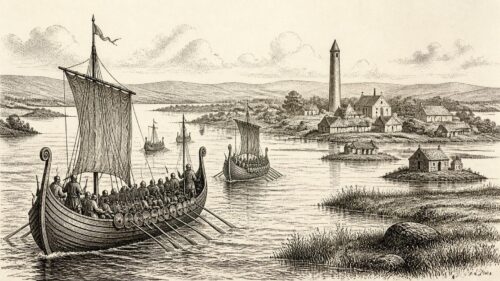
In 922, despite differing annalistic dates, Tomrair son of Elgi led a Limerick-based Scandinavian fleet up the Shannon. The force plundered Inis Cealtra, Muicinis, Clonmacnoise and Lough Ree’s islands, burned Clonmacnoise, and ravaged Mide, carrying away gold, silver and other wealth. The campaign demonstrated the Shannon’s strategic importance and exposed the vulnerability of major ecclesiastical and political networks. Clonmacnoise was a populous, wealthy religious and economic centre, not an isolated monastery. The expedition indicates Limerick’s capacity as a naval base, though not proven urban foundation. Meanwhile, Donnchadh of Tara suffered defeat near Athlone, highlighting Ireland’s fragmented authority and raiders’ opportunities.
Gofraid’s Raid
Archived: 27 October 2026
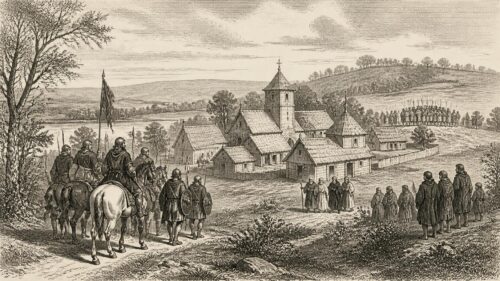
In 921, amid uncertain annalistic dating, Ragnall grandson of Ímar died and Gofraid assumed control of Dublin, reshaping Irish Sea politics alongside Sitriuc’s succession in York. Donnchad Donn strengthened his precarious position through the deceitful killing of his brother Domnall, while another heir died. Scandinavian fleets operated in the north-west, but Fergal’s forces destroyed one vessel. On 10 November Gofraid raided Armagh’s hinterland, sparing its principal religious community yet inflicting serious disruption; Muirchertach later defeated part of his force. Ecclesiastical leaders died, one source recorded plague, and warfare threatened rural livelihoods across politically fragmented Ireland and its interconnected maritime world.
Cormac’s Death
Archived: 27 October 2026
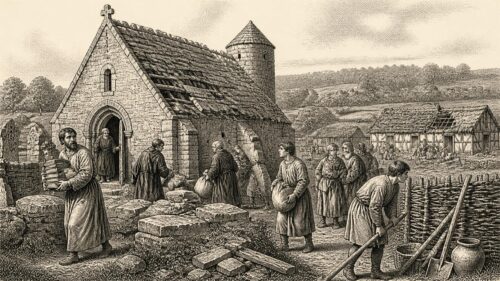
Accounts conventionally dated to 920 depict Ireland under political, military and ecclesiastical pressure. Donnchad Donn, newly king of Tara, won a notable but imprecisely located victory over Scandinavian-associated forces, strengthening a contested claim to overlordship. Sitriuc Cáech left Dublin, signalling a change in leadership rather than the settlement’s collapse. Foreigners attacked Cenannas (Kells), damaging its stone church, killing many people and burning Tuilén’s church. In Munster, Cormac son of Cuilennán, bishop, abbot, king of the Déisi and counsellor, was killed by Uí Fhothaid Aiched. The notices, chronologically uncertain in detail, reveal intertwined warfare, regional kingship, church wealth and maritime power.
Niall's Defeat
Archived: 27 October 2026
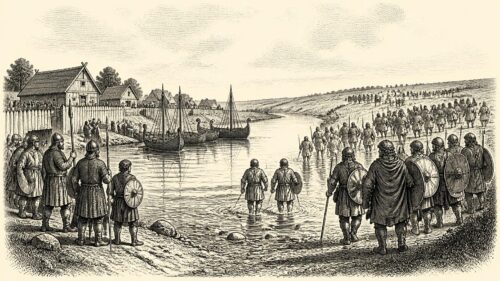
In 919, the struggle for Dublin produced one of the most consequential defeats of early medieval Irish politics. Niall Glúndub, king of Tara and leading figure of the northern Uí Néill, was killed when an Irish coalition attacked the Scandinavian rulers of the reoccupied settlement at Áth Cliath. The annals’ stark notice of a battle conceals a disaster of unusual scale: regional kings, royal heirs and noblemen from several northern dynasties died alongside him. Dublin’s rulers, led by Sitriuc Cáech, survived the assault. Their success did not make Ireland a Scandinavian kingdom, but it secured a major coastal power at the mouth of the Liffey and exposed the limits of any single Irish king’s authority.
Ragnall's Expedition
Archived: 27 October 2026
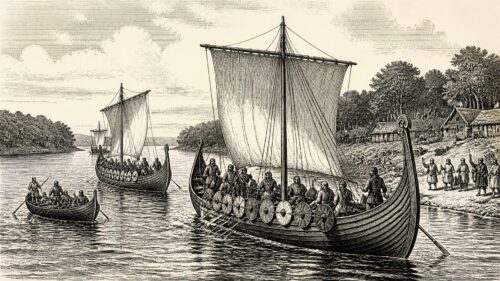
In 918, Ragnall ua Ímair, king of the dark foreigners, left Waterford Harbour with jarls Oitir and Gragabai, joining an Irish-Sea campaign that culminated in the inconclusive battle of Corbridge on the Tyne. Their force showed the Uí Ímair dynasty’s links between Ireland and Britain. In Ireland, Niall Glúndub of Tara continued warfare with Dublin’s Sitriuc Cáech, while Máel Mithig of Brega unsuccessfully sought Scandinavian assistance. Annals also recorded deaths of church leaders, scholar Dainél and Kildare’s abbess Muirenn. Evidence reveals political instability, maritime connections and ecclesiastical continuity, but records no harvest, famine or everyday events. Annalistic dating remains uncertain.
Dublin Recaptured
Archived: 27 October 2026
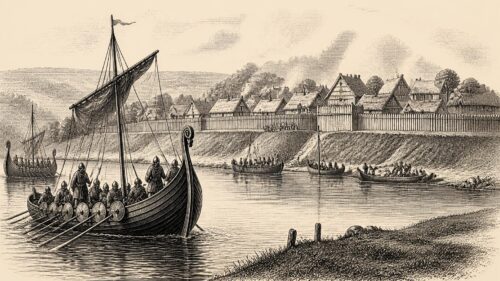
In 917, amid severe frost, animal mortality and portents recorded by annalists, related Scandinavian fleets led by Sitriuc and Ragnall ua Ímair returned to Ireland. Munster forces inflicted notable defeats, while high king Niall Glúndub campaigned in Mag Femen, fighting the invaders on 22 August without destroying them. Niall sought Leinster’s aid, but Sitriuc routed its army at Cenn Fuait, killing King Ugaire, lesser rulers and a leading bishop. The victory shattered Leinster’s leadership; Kildare was subsequently plundered. Sitriuc then forcibly seized Dublin, restoring Uí Ímair power and establishing a durable maritime, military and economic centre on Ireland’s eastern seaboard.
Tailtiu Renewal
Archived: 27 October 2026
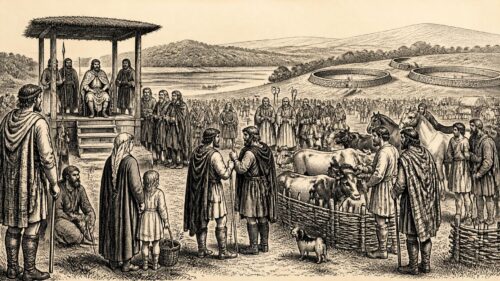
In 916, Flann Sinna died on 25 May after ruling Tara since 879, ending a long southern Uí Néill ascendancy. His son Conchobar succeeded in Mide, while Niall Glúndub of Cenél nÉogain became king of Tara, reflecting dynastic alternation rather than unified monarchy. Niall renewed the neglected Fair of Tailtiu, publicly asserting royal authority and the capacity to organise exchange, obligations and assembly. Elsewhere, raiders from Loch Dá Chae harried Munster and Leinster, killing Ainnle of Uaithne. Deaths among leading ecclesiastics and a lightning fire at Armagh exposed institutional vulnerability amid ceremony, rivalry and Scandinavian pressure throughout much of Ireland.
Some records do not yet have a verified historical year and are awaiting chronological placement.