
Year by Year
Explore Year by Year articles from the most modern historical year back to the oldest.
3,295 Articles Archived
Niall's Ascendancy
Archived: 27 October 2026
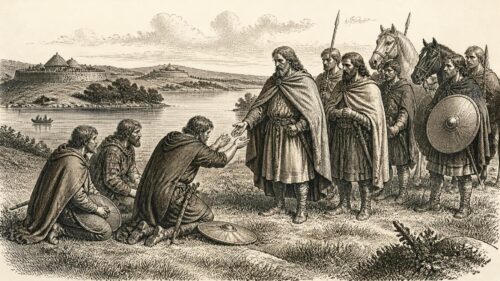
In 915, Ireland experienced interconnected political, religious and military pressures rather than a decisive battle. Óengus, Flann Sinna’s designated heir, died, weakening the ageing king of Tara, while Domnall of Ailech died in penitence, confirming his half-brother Niall Glúndub’s northern prominence. Flann’s sons Donnchad and Conchobor rebelled in Mide, but Niall’s army secured their submission and a truce with Brega, enhancing his influence. Scandinavian forces based at Waterford Harbour plundered Munster churches and settlements. Deaths of leading clerics and the treacherous wounding of a local king reveal institutional and regional instability. The year foreshadowed later succession conflicts and Viking warfare.
Waterford Fleet
Archived: 27 October 2026
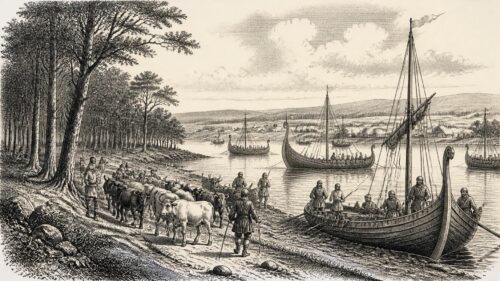
In 914, a great Scandinavian fleet entered Waterford harbour, raided northern Osraige, and inaugurated a renewed phase of Viking power in Ireland. The sheltered waterways offered access to south-eastern resources, while wider Irish Sea rivalries linked the newcomers to maritime politics. Meanwhile, Niall of Ailech defeated Ulaid forces, made peace with Áed of Ulaid, then suffered heavy losses when Mide men ambushed his foragers. Flann Sinna campaigned amid accusations of church profanation. Flaithbertach became king of Cashel and Eochu abbot of Emly. These events showed enduring Irish rivalries, institutions, and negotiated authority alongside Waterford's growing strategic importance in subsequent decades.
Umall Defeat
Archived: 27 October 2026
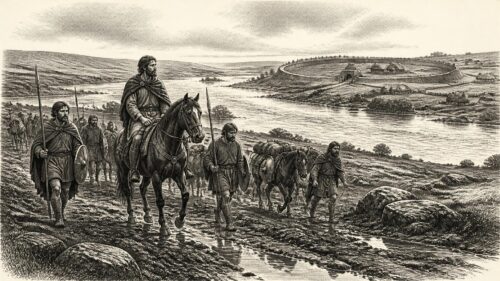
In the annalistic year conventionally called 913, Niall son of Áed, king of Ailech, campaigned in north Connacht, routing the Uí Amalgada and men of Umall, killing or capturing many. Elsewhere, Donnchad and Máel Mithig defeated forces from southern Brega and Leinster, while Congalach of Conaille Muirthemne was killed by his brother after attacking a church household. Vikings defeated a new Ulaid fleet off England, with Irish losses. Churchman Máel Brigte travelled to Munster to ransom a Welsh pilgrim. Death notices recorded clerics, nobles and a chief poet. Annals called the year dark and rainy, reflecting an interconnected, fractured island.
Armagh Sanctuary
Archived: 27 October 2026
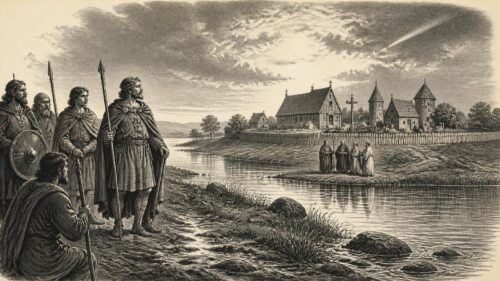
In 912, Irish annals centre on Cernachán son of Duiligén, who removed a captive from Armagh’s sanctuary and who was then killed at Loch Cerr. Niall son of Áed, king of Ailech, drowned Cernachán there, asserting Patrick’s church protection and northern Uí Néill authority. The episode reveals sanctuary, kinship and violence within fragmented kingship. Nearby notices record Niall’s campaigning, conflict between Brega and Leinster, clerical deaths and an accidental fire at Armagh. Annals also describe wet, dark weather and an appearance of Halley’s Comet. Maritime entries show Ulaid fleets, Welsh captives, ransom networks and Scandinavian activity across the Irish Sea.
Ailech Succession
Archived: 27 October 2026
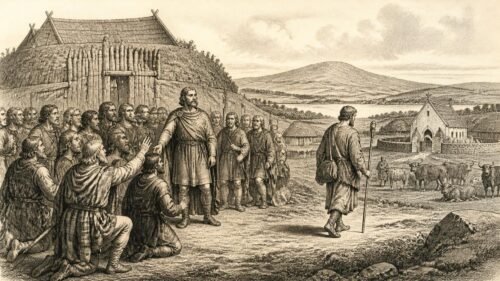
In 911 Domnall, son of Áed Findliath, relinquished the kingship of Ailech by adopting the pilgrim’s staff, a religious renunciation, and his brother Niall succeeded him. Annals of Inisfallen, Chronicon Scotorum and Ulster support the succession, although dating conventions preclude fuller detail. The transfer preserved Cenél nÉogain control of a major northern power, whose authority relied on clientage, tribute, military service and ecclesiastical connections. Domnall died in penitence in 915. Ireland remained politically fragmented under Flann Sinna of Tara; Niall was commander. Records also note a Leinster heir’s death and a phenomenon, while communities sustained networks through agriculture and obligations.
Bréifne Defeat
Archived: 27 October 2026
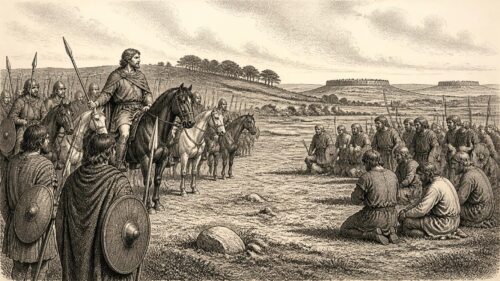
The securely dated core of 910 is not a Viking landing or a famous royal death, but a hard-fought assertion of power in Ireland’s central and western midlands. Flann Sinna, king of Tara and leading ruler of the southern Uí Néill, defeated the men of Bréifne with the help of his sons. The encounter, recorded in the Annals of Ulster and more fully in Chronicon Scotorum, cost the life of Flann son of Tigernán, king of Bréifne, as well as other nobles.
Clonmacnoise Church
Archived: 27 October 2026
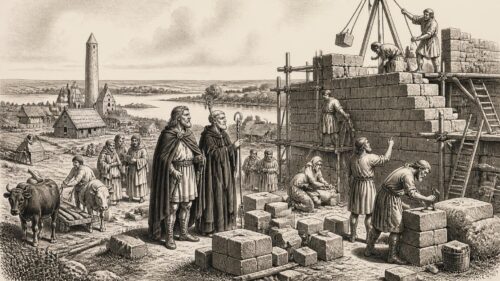
In 909, Flann Sinna, king of Tara, and Colmán Conaillech sponsored a stone church and sacristy at Clonmacnoise, whose surviving north wall attests early Irish monumental masonry. Situated beside the Shannon, the foundation served a populous religious and lay settlement while displaying royal power, ecclesiastical wealth and political connections. The nearby Cross of the Scriptures similarly linked Christian teaching with patronal commemoration. Following Flann’s victory at Belach Mugna in 908, his ally and son-in-law Cerball of Leinster died, prompting dynastic change. Annals also note regional rulers’ and churchmen’s deaths, cattle disease, and killings in Brega. Some battles remain insecurely dated.
Belach Mugna
Archived: 28 October 2026
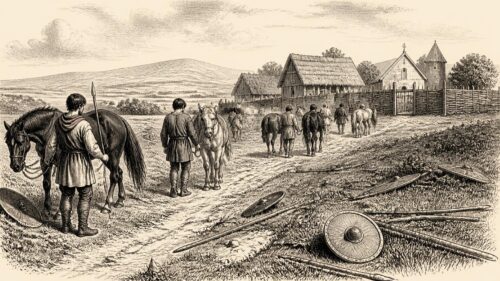
On 13 September 908, Munster’s king-bishop Cormac mac Cuilennáin was defeated and killed at Belach Mugna, or Mag Ailbe, by forces led by Flann Sinna of Tara, Cerball of Leinster and Cathal of Connacht. The battle ended Munster’s expansion, killing allied rulers and ecclesiastical leaders, including Cellach of Osraige, and strengthened Flann’s influence without unifying Ireland. Cormac’s reputation as scholar, scribe, bishop and anchorite illustrates overlapping royal and clerical authority. Annals record northern aggression, church deaths and uncertain reports, revealing rivalry, institutional Christianity and Irish Sea connections. Sources caution against treating later narratives, casualty totals or Viking involvement as certain.
Munster Campaign
Archived: 28 October 2026
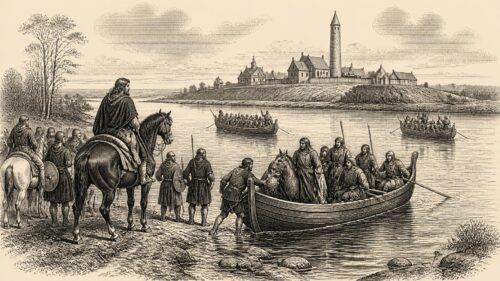
In 907, Cormac mac Cuilennáin, king-bishop of Cashel, and Flaithbertach mac Inmainén led Munster forces through the midlands, challenging Flann Sinna and Uí Néill influence. Annals record fighting at Mag Léna, the death of Máel Craíbe of Cenél Fiachrach, Connacht hostages, and fleet-borne plundering around Lough Ree. Their Christmas campaign reached Uí Néill territories, Mag Aí and Clonmacnoise, requiring eighty ferryings, an uncertain phrase indicating arduous transport. These expeditions demonstrated Munster’s mobile, alliance-based power without creating unified rule. Cét became king of Corcu Modruad locally. Mortality is noted cautiously in Ulster’s annals; Cormac’s defeat came the following year in 908.
Gabrán Ravaging
Archived: 28 October 2026
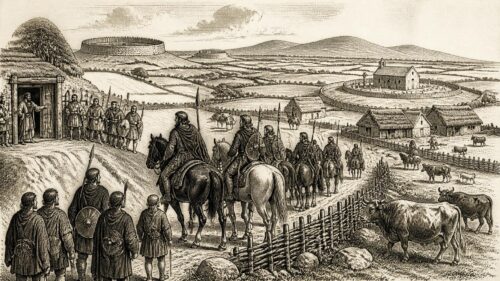
In 906 Flann Sinna, king of Tara, led a major campaign into Munster, apparently with Cerball of Leinster, ravaging territory described as stretching from Gabrán to Limerick. Annalistic evidence confirms the expedition but provides no precise route, battles, captures or settlement. The raid demonstrated Tara’s capacity to project force, while exposing the contested nature of Irish overlordship. Munster, led by Cormac of Cashel, remained powerful and retaliated in 907; conflict culminated in Cormac’s defeat and death in 908. Deaths of northern rulers, Ciarmac of Uí Fhidgeinte, and Bangor’s abbot Indrechtach also marked the year, illustrating intertwined political and ecclesiastical change.
Some records do not yet have a verified historical year and are awaiting chronological placement.