
Year by Year
Explore Year by Year articles from the most modern historical year back to the oldest.
3,295 Articles Archived
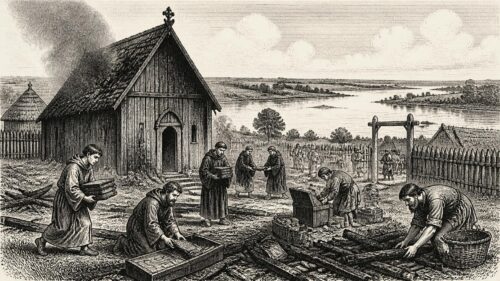
Shannon Monastery
Archived: 31 October 2026
In the annal-year 755, Cluain Moccu Nóis (Clonmacnoise), a major monastery beside the Shannon, was burned on 21 March, though modern calendar alignment remains uncertain. The annals do not state the cause, scale or casualties, but the fire exposed the vulnerability of a wealthy religious and transport centre dependent on regional labour and patronage. They also record deaths of kings of Uí Méith, Uí Maine and Uí Fhailgi, alongside churchmen and abbots from several communities. These notices reveal politically fragmented, interconnected Ireland, where monasteries held economic, scholarly and social importance. No evidence supports nationwide crisis, war, famine or rebuilding details.
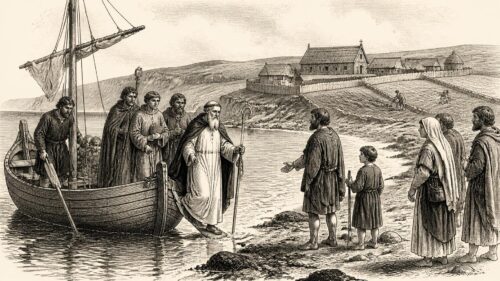
Sléibéne's Crossing
Archived: 31 October 2026
In 754, Irish annals recorded Sléibéne, abbot of Í (Iona), arriving in Ireland, illustrating Columban influence across the Irish Sea. Although chronology is uncertain, the associated notices portray fragmented political authority and interconnected ecclesiastical networks. Flann of Mag Aí and Loingsech of Cenél Conaill died, affecting important regional dynasties. Warfare included Osraige’s destruction of Fotharta Fea, heavy losses between Uí Briúin and Cenél Cairpri at Ard Naescán, and internal conflict among the Uí Thuirtri. The annals also noted local and religious deaths. Together, these brief records reveal an agricultural society shaped by local kingship, monasteries, violence and wider Gaelic connections.
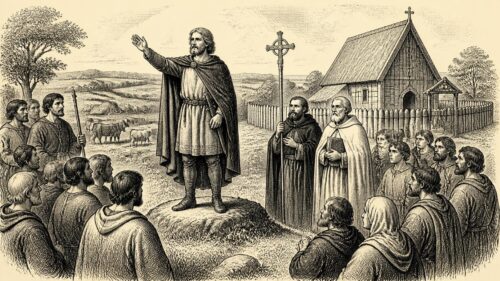
Columba's Law
Archived: 31 October 2026
In 753 CE, Domnall Midi of Clann Cholmáin enforced the law of Colum Cille, publicly combining royal authority with the saint’s protection, privileges and ecclesiastical claims. The act reflected Ireland’s fragmented political order, where rulers, kin groups and churches negotiated power. Annals also record a solar eclipse, deaths of abbots and churchmen across Ireland, the death of Echaid, king of Uí Moccu Uais, slaughter among Connacht groups, and Ferblae’s death as a learned man. These terse notices reveal interconnected religious, political and economic communities. Chronological differences among annals require caution, although the eclipse is securely dated to 9 January 753.
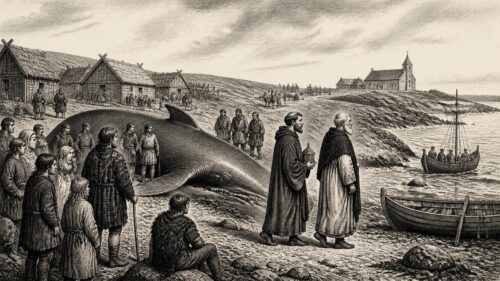
Whale Offering
Archived: 31 October 2026
In 752, Irish annals recorded a darkened sun, the deaths of prominent abbots and scholars, and violence between the Uí Ailella and Grecraige. They also report that Domnall Midi, king of Tara, enforced the law of Colum Cille, linking royal authority with the Columban church’s claims to protection and prestige across Ireland and the Irish Sea. Most memorably, a whale stranded at Bairche in Ulaid was said to possess three golden teeth, one placed on Bangor’s altar. Though implausible literally, the tale reflects medieval connections between natural wonders, wealth, sanctity, political power, and ecclesiastical public memory within this fragmented record.
Clonard Grain
Archived: 31 October 2026
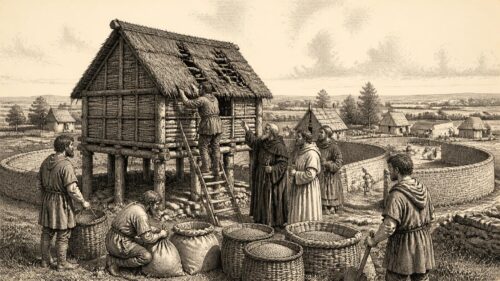
In 751, Irish annals recorded regional political and ecclesiastical change rather than a national event. Half the stored grain at Clonard, a major Meath monastery, was destroyed in uncertain circumstances, exposing the dependence of religious communities upon agricultural production, estates and redistribution. Flann of Uí Fhailgi and Fergus of southern Brega died, creating potential succession openings without recorded conflict. Numerous abbots, bishops, rulers and learned figures also died across Ireland, illustrating the reach of connected churches and monastic networks. The evidence does not establish famine, epidemic, warfare or Viking activity. Instead, 751 reveals fragmented kingship, clerical influence and material vulnerability.
Clonard Fire
Archived: 31 October 2026
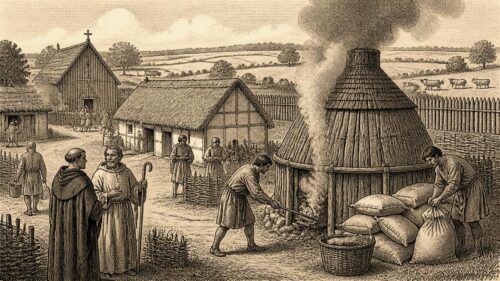
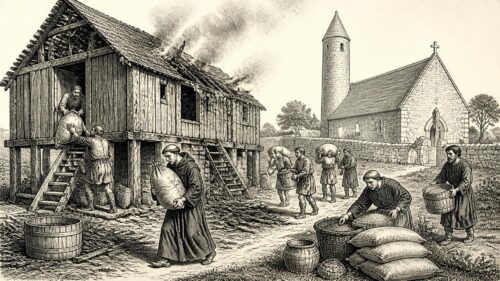
In 750 CE, the Annals of Ulster recorded that half the grain stores at Cluain Ioraird, or Clonard, County Meath, burned in a kiln or drying-house. The cause, quantity lost and consequences remain unknown, but the notice demonstrates the importance and vulnerability of a church settlement dependent on food, labour and reserves. Clonard, an established midland church linked later with learning, operated within networks of land, obligation and regional power. That year also saw the deaths of kings of Uí Fhailgi and southern Brega, illustrating fragmented political authority. The fire reveals material foundations supporting religious life, hospitality and institutional survival.
Ard Ciannachta
Archived: 31 October 2026
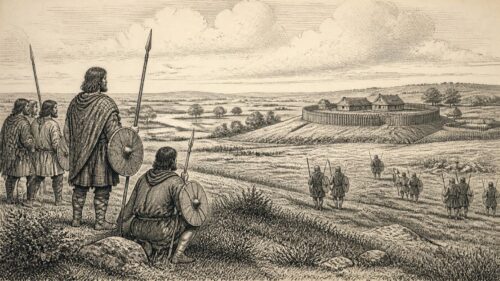
In 749, Irish annals recorded warfare, killings, fires, ecclesiastical deaths and ominous phenomena. At Ard Ciannachta near the Boyne, Dúngal son of Amalgaid won a battle in which Ailill son of Dub dá Crích fell, while Domnall son of Cináed, initially victorious, died in a counter-attack. Cathusach, king of the Cruithin, was killed in Ulaid. Clonfert and Cell Mór burned, and several abbots and rulers died. Iona’s community suffered drowning, while a great windstorm was noted. Ships reportedly appeared above Clonmacnoise, a prodigy reflecting annalists’ providential outlook. Together, these sparse records reveal political fragmentation, vulnerable religious institutions and environmental dangers.
Pastoral Crisis
Archived: 31 October 2026
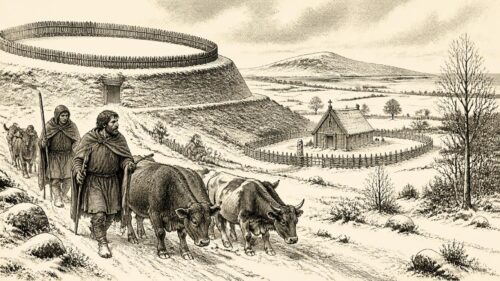
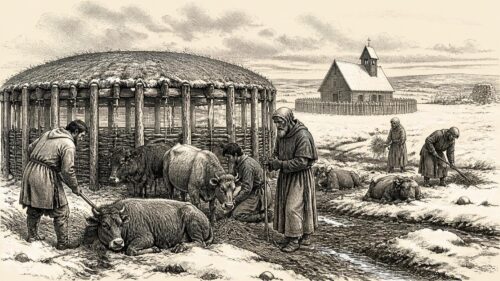
In 748, Irish annals recorded exceptional snow, widespread cattle mortality and subsequent drought, placing severe pressure on a pastoral economy without proving famine. The death of Indrechtach, king of the Ciannachta, affected politics in Brega, while Congal of Airthir was killed at Ráith Escla. Ua Suanaig’s law was enforced in Leth Cuinn, demonstrating proclaimed legal authority despite uncertain provisions or reach. Annals also noted deaths of abbots, anchorites and learned men, illustrating churches’ economic and social importance. A described battle and an aerial-ship prodigy reveal chronicles combining conflict, environment, leadership and marvels. The evidence depicts interconnected hardship, authority and learning.
Deep Snow
Archived: 1 November 2026
In 747, Ireland experienced exceptionally deep snow, widespread cattle mortality and subsequent drought, shocks that endangered a rural economy dependent on livestock for food, labour, tribute and status. The annals do not establish famine or population loss, but attest severe island-wide disruption. Political life continued: Indrechtach of the Ciannachta and Queen Muirenn died, while Congal of the Airthir was slain. Suanach’s grandson’s law operated in Leth Cuinn, indicating public legal or ecclesiastical authority. Obituaries recorded abbots, anchorites and scholars, including Cúan Cam. Munster sources noted fighting at Cúil Géisi. Together, the entries reveal interconnected environmental, political, legal and religious pressures.
Domnach Pátraic
Archived: 1 November 2026
In 746, Irish annals recorded the violation of sanctuary at Domnach Pátraic, where six unnamed captives were hanged, exposing the religious and political weight of ecclesiastical protection. They also noted local warfare, including deaths among rival leaders, defeat of the Conmaicne, slaughter among southern Uí Briúin, and kin-slaying at Les Mór. Obits of abbots, bishops and rulers reveal a dispersed network of churches and regional powers. The Four Masters record fire damage to half Clonard’s granary, highlighting institutional resources and vulnerability. Notices concerning Domnall Midi’s era and dragons seen in the sky further convey a fragmented, unsettled Ireland in transition.
Some records do not yet have a verified historical year and are awaiting chronological placement.