
Year by Year
Explore Year by Year articles from the most modern historical year back to the oldest.
3,295 Articles Archived
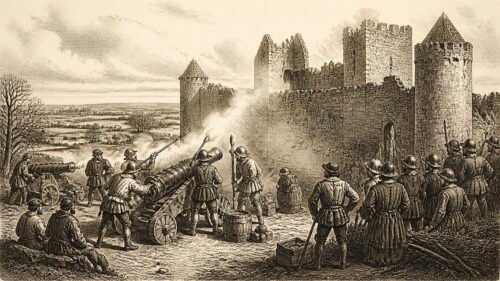
Maynooth Pardon
Archived: 18 October 2026
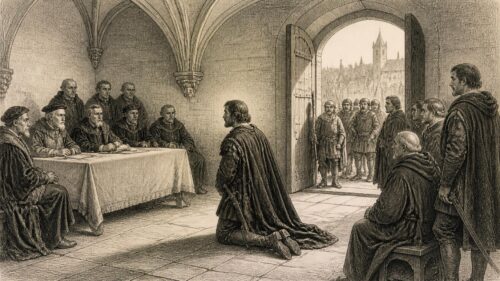
In 1535, the Kildare rebellion collapsed through military defeat, fractured alliances and Thomas FitzGerald’s surrender. Crown artillery captured Maynooth Castle in March, after which surrendered defenders were executed, creating the notorious memory of Maynooth’s pardon. Gaelic allies submitted or negotiated as royal pressure intensified. Leonard Grey received Thomas’s surrender in August and escorted him to England, where imprisonment preceded execution in 1537. Government forces also captured Dungarvan, while northern agreements revealed dependence on powerful local lords. Skeffington’s death closed a campaign. Victory dismantled Geraldine power without establishing secure government across Ireland, leaving authority contested through rivalries, coercion and fragile bargains.
Kildare Rebellion
Archived: 18 October 2026
In 1534, Thomas FitzGerald, vice-deputy and heir to Kildare, renounced Henry VIII at Dublin’s St Mary’s Abbey after his father Gerald was recalled and imprisoned in London. Claiming papal loyalty, Thomas besieged Dublin Castle, mobilised Geraldine, Gaelic and Pale support, and sought foreign aid, but faced opposition from towns, Butlers and royal officials. War brought raiding and devastation across surrounding regions; Archbishop John Alen was murdered after capture near Clontarf. Gerald died in the Tower in September, making Thomas earl. Sir William Skeffington’s October arrival with a royal army shifted the balance, leaving Thomas entrenched at Maynooth under a truce.
Shinrone Siege
Archived: 18 October 2026
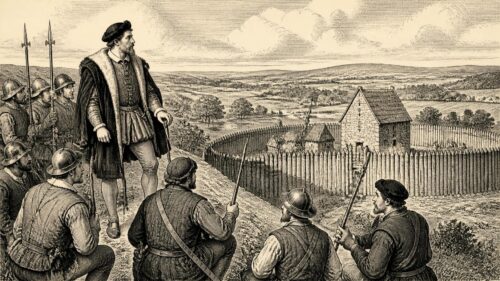
In 1533, Ireland was governed through competing crown, Gaelic and Anglo-Irish powers rather than uniform Dublin rule. Lord Deputy Gerald FitzGerald aided Ferganainm Ó Cearbhaill, capturing Shinrone Castle in Éile, yet a rival claimant soon emerged, exposing Geraldine dependence on alliances and rivalry with the Butlers. Annals record night seizures of Sligo and Ardnaree, punitive raids, executions and violent successions across Moylurg, Firceall and Clannaboy. These conflicts disrupted communities but lordship also rested on hospitality, learning, agriculture and church organisation. Kildare’s Dublin parliament regulated corn disputes within limited crown territory. Ireland remained Catholic, although Henry VIII’s changing position foreshadowed rupture.
Colum Cille
Archived: 18 October 2026
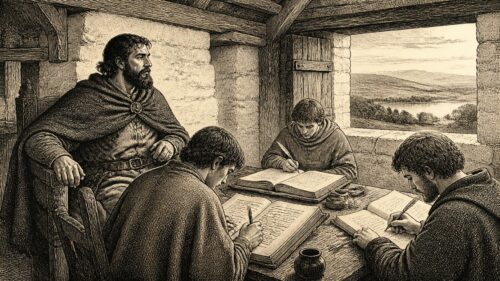
In 1532 Gerald FitzGerald, ninth earl of Kildare, regained the deputyship, yet royal authority remained dependent on alliances with Anglo-Irish and Gaelic lords. Campaigning in Ulster, disputed in date between 1531 and 1532, devastated Tír Eógain through burning, plunder and cattle seizure. In Ely, Kildare supported his son-in-law Ferganainm Ó Carroll during the Birr succession struggle, where he was seriously wounded by gunfire. Feuds continued across Ossory, Connacht and the north-west, occasionally violating sanctuary. Amid violence, Manus Ó Domhnaill compiled Betha Colaim Chille at Lifford, affirming Catholic learning, Irish vernacular culture, dynastic prestige and Colum Cille’s regional importance, lasting significance.
Kinard Campaign
Archived: 18 October 2026
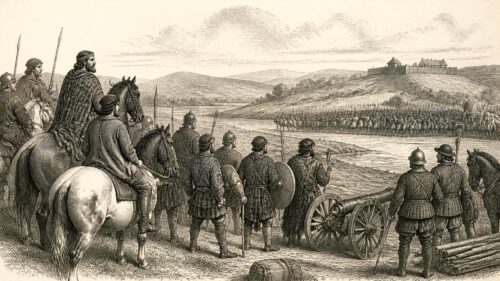
In 1531, Sir William Skeffington’s government, supported by the earl of Kildare and Aodh Dubh O’Donnell, campaigned in Tír Eoghain against Conn Bacach O’Neill after O’Donnell’s submission at Drogheda. The coalition devastated territory and halted at Kinard, but failed to secure O’Neill’s defeat or lasting royal control. Ulster remained divided: O’Donnell faced conflict with his son Manus, while lordship disputes, raids, captivity and fosterage shaped local power. Skeffington’s authority also weakened as relations with Kildare deteriorated and parliament rejected a subsidy. Annalistic obituaries nevertheless record medical learning, hospitality and patronage, underscoring a society sustained by networks of care alongside warfare.
Franciscan Chapter
Archived: 18 October 2026
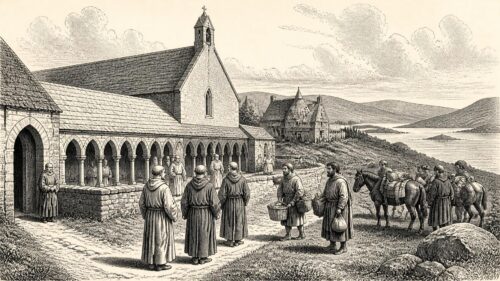
In 1530, Ireland remained divided among the Pale, Anglo-Irish magnates and Gaelic lordships. Gerald FitzGerald, ninth Earl of Kildare, returned from England alongside the new deputy, Sir William Skeffington, whose government relied uneasily on Kildare’s influence. Their forces compelled midland submissions from the O’Mores and O’Connors. Aodh Dubh O’Donnell raided Connacht and Breifne, extracting tribute, burning settlements and making temporary peace. Donegal hosted a Franciscan chapter lavishly supported by O’Donnell patronage. Annals also record deaths, dynastic killings and hospitality, illustrating authority founded on armed followings, negotiated settlements, religious patronage and household generosity rather than stable national rule throughout the island.
Castleforward Demolition
Archived: 18 October 2026
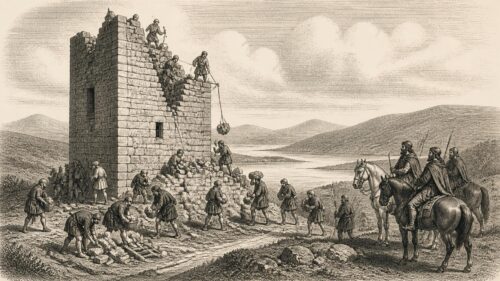
In 1529, local violence, succession and cautious royal intervention shaped Ireland. In Tír Chonaill, Manus Ó Domhnaill captured and demolished Castleforward after a Scottish MacDubhghaill was killed there, weakening a rival power centre amid family conflict. Annals recorded killings and feuds across Ulster, involving lords, clergy and ruling kindreds. James fitz Maurice FitzGerald, earl of Desmond, died without a legitimate son, succeeded by his elderly uncle Thomas, whose alliances helped secure Munster interests. Sir William Skeffington negotiated peace between Desmond and Ossory while assessing royal authority. Learned jurists and poets also died, demonstrating the continuing importance of Gaelic professional culture.
Delvin Captivity
Archived: 18 October 2026
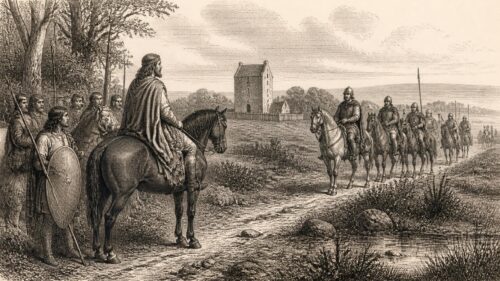
In 1528 Richard Nugent, Lord Delvin, vice-deputy during Kildare’s detention in England, was captured by Brian Ó Conchobhair Fáilghe after challenging the black rent paid by Meath communities. His imprisonment until February 1529 exposed Dublin government’s military weakness and dependence on magnates. Kildare’s continuing rivalry with Piers Butler, later earl of Ossory and deputy, deepened instability, while John Alen became chancellor after Hugh Inge’s death. Across Ireland, successions in Thomond, Bréifne and Moylurg, Uí Néill violence, Scottish-linked campaigning, learned and religious patronage, charitable hospitality, and a destructive pre-Christmas storm demonstrated resilient regional political, cultural and economic life beyond the Pale.
Lifford Castle
Archived: 18 October 2026
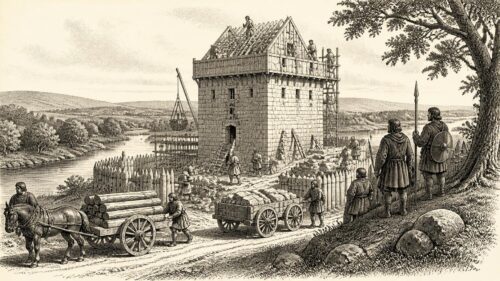
In 1527, Ireland remained divided among the Dublin administration, Anglo-Irish magnates and Gaelic lordships. Gerald FitzGerald, earl of Kildare, and James Butler travelled to England amid rivalry, while fighting continued between Desmond and Butler interests in Munster. Manus O’Donnell completed Lifford Castle during war with Con Bacach O’Neill, strengthening a contested Ulster frontier. O’Donnell’s coalition ravaged Moylurg and captured several castles; Castlereagh later surrendered after a prolonged siege and famine. Successions in Fermanagh and Tirerrill demonstrated contested lordship. Annals also commemorated scholars, physicians, charitable women and Edmund Butler’s consecration as archbishop of Cashel, revealing cultural and ecclesiastical institutions amid warfare.
O'Donnell Raids
Archived: 18 October 2026
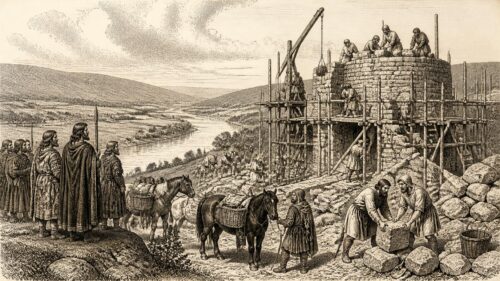
In 1526, Ireland’s fragmented political order was shaped by failed diplomacy, raiding, fortification and contested successions. Gerald FitzGerald, earl of Kildare, unsuccessfully mediated between Conn Bacach O’Neill and Manus O’Donnell, whose rivalry centred on the Tír Chonaill–Tír Eóghain frontier and O’Donnell’s castle at Port na dTri Namhad. O’Donnell forces raided Tír Eóghain and defeated opponents in Connacht, securing hostages and destroying castles while warfare devastated crops and communities. Succession disputes followed deaths among O’Reilly, O’Dochartaigh and O’Rourke kindreds; church office also provoked violence. Severe weather killed raiders. Kildare’s English summons weakened mediation, leaving conflicts unresolved across the island’s competing lordships.
Some records do not yet have a verified historical year and are awaiting chronological placement.