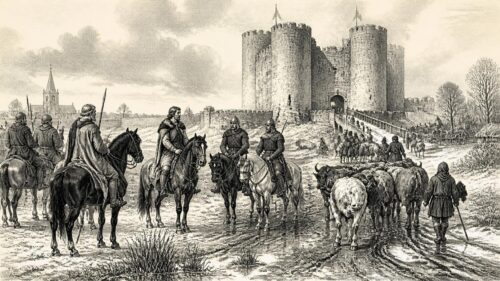
Niall Ó Néill at Dundalk1392 CE
In 1392, Ireland experienced local warfare, succession disputes and notable deaths rather than an island-wide turning point. Niall Ó Néill of Tír Eógain led a major expedition against the English around Dundalk, achieving temporary mastery. Northern tensions intensified after Henry Aimhreidh Ó Néill’s death and the capture of his son by Toirdelbach Ó Domhnaill. In Connacht, Ó Conchobair Donn’s army burned Uí Maine, revealing fractured regional alliances. Deaths of Archbishop Grigair Ó Mocháin, the countess of Desmond and other nobles highlighted ecclesiastical and aristocratic networks. English administration remained uncertain as Thomas of Woodstock’s lieutenancy failed and Roger Mortimer was appointed.

Dateline
A Year Recorded in Raids and Deaths
Ireland in 1392 does not yield a single island-wide turning point. Instead, the surviving annals preserve a series of sharply local episodes: a northern lord’s campaign against Dundalk, a violent contest between the Ó Néill and Ó Domhnaill kindreds, the burning of Uí Maine in Connacht, and the deaths of religious and aristocratic figures whose reputations rested on learning, generosity and hospitality. Taken together, these entries show an Ireland divided among many powers, in which military force, kinship, lordship and the Church structured public life.
The evidence needs careful handling. The Irish annals place these occurrences under 1392, but seldom provide modern-style dates, numbers of combatants, or a continuous narrative. The Annals of Ulster, Annála Connacht and Annals of the Four Masters overlap on several important events while differing in selection and detail. The Four Masters were compiled much later, using earlier materials; their fuller notices are valuable but should not be mistaken for eyewitness reporting. What can safely be said is that 1392 was a year of active warfare, contested succession and elite loss in several Irish regions.
Niall Ó Néill’s Southern Strike
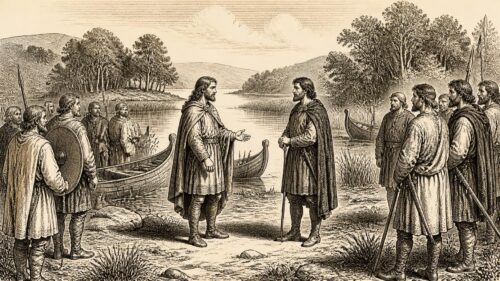
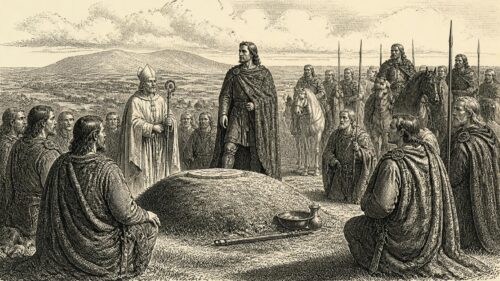
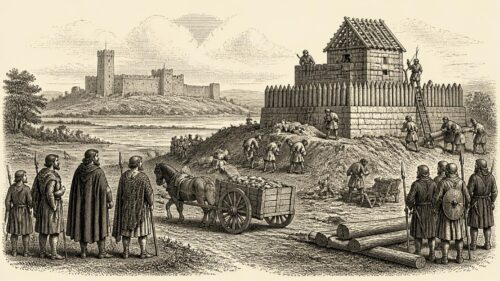
The most conspicuous military entry concerns Niall Ó Néill, king of Tír Eógain. The Annals of Ulster state that he led a great hosting with the leading men of his “Fifth” or province against the Galla—the Foreigners—of Sráidbhaile, and obtained mastery over them; a man called Seifin Fait, or Seffin White in the English translation, was killed. The Four Masters identify the objective more expansively as the English of Tragh Bhaile and Dundalk. This was therefore not merely a private cattle raid but a major expedition directed towards the frontier town and lordship-centre of Dundalk, at the southern edge of Ulster.
The annals do not describe the field of action, the duration of the campaign, or the settlement that followed. Nor should “mastery” be inflated into a permanent conquest of Dundalk. In annalistic language it indicates a success won on that expedition, not necessarily lasting control over the town. Yet the scale of the force is significant. Niall could summon regional allies and strike far beyond the core territory of Tír Eógain. Dundalk, connected to the English lordship by road and sea but exposed to northern attack, stood precisely where Gaelic power and the institutions of the lordship met.
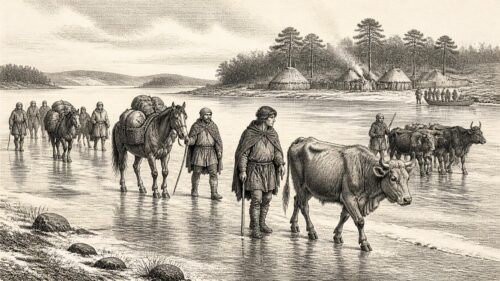
This episode also illustrates the practical character of late-medieval conflict. A hosting required food, animals, attendants, fighting men and the co-operation of subordinate lords. Its effects would have extended beyond those killed in combat: communities on the route faced requisition, loss of livestock, insecurity and interrupted cultivation. The sources do not permit a precise reconstruction of those burdens in 1392, but they make clear that warfare was embedded in the seasonal and economic life of lordships rather than confined to isolated battles.
A Succession Crisis in the North
Niall’s campaign took place amid a more immediate crisis within the northern Gaelic world. Henry Aimhreidh Ó Néill, son of Niall Mór Ó Néill, died about the feast of St Brendan. The annalists call him a man fit for the high kingship of Ireland, and praise his justice, nobility and hospitality. Such language was conventional praise for a powerful nobleman, not proof that he was about to become high king in any practical constitutional sense. It does, however, indicate the standing attributed to him by the annalistic tradition: he was regarded as an exceptionally important potential ruler within the Ó Néill political order.
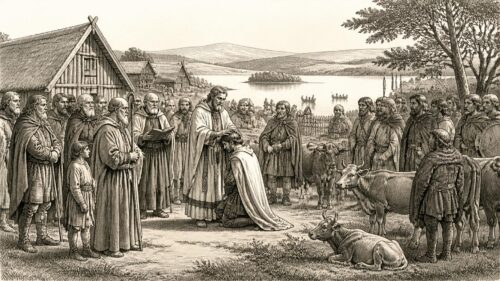
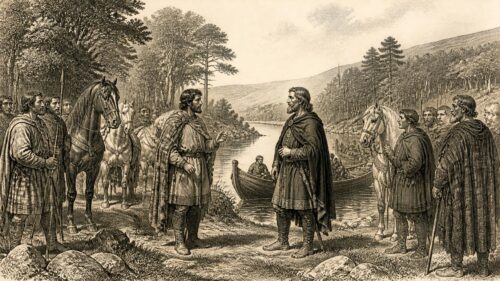
His death was quickly followed by a blow against his family. Domnall, Henry’s son, was captured by Toirdelbach Ó Domhnaill, king of Tír Chonaill. The Four Masters add that Toirdelbach’s men carried out extensive depredations against Domnall’s people that same day. Captivity was a political instrument as well as a personal misfortune. Holding a rival or a rival’s heir could weaken a competing lineage, compel negotiation, or create an opportunity for a wider redistribution of authority.
A fuller Four Masters account places the conflict within an even broader confrontation. Niall Ó Néill and Henry’s sons led an army into Tír Chonaill against Ó Domhnaill, while another force also moved against him. The account says that spoil was carried into wild and defensible country; Ó Domhnaill remained behind to protect his people; and the opposing forces eventually faced one another at Fearsat Mór before making peace. Because the annals do not supply a secure sequence for every movement, it is safer to see 1392 as a year of sustained northern tension rather than to force these notices into a single, neatly ordered campaign. The reference to plundering churches alongside lay property is particularly revealing: ecclesiastical places were not automatically insulated from war, even though Christian language framed the record of death and reconciliation.
Fire in Uí Maine
Connacht saw a different, but equally destructive, assertion of lordship. Ó Conchobair Donn, accompanied by most of the Connachta, led a large army into Uí Maine and burned the country. Uí Maine, broadly corresponding to parts of east Galway and south Roscommon, was a politically important territory ruled by the Ó Ceallaigh dynasty. The phrase “burned the country” should be read as the language of punitive war: it signals the deliberate devastation of settlement and resources, though the annals do not itemise houses, grain stores or herds.
The expedition did not pass without resistance. Ó Conchobair Ruadh pursued the host, and Cathal, son of Aodh Ó Ruairc, was captured after being left isolated at its rear in the confusion. A small number of men were killed. This brief notice exposes the fragmented character of Connacht politics. The two branches represented by Ó Conchobair Donn and Ó Conchobair Ruadh were rivals; military coalitions could be large, but they were not monolithic. A powerful host could ravage a neighbouring territory and still leave vulnerable men behind as it withdrew.
For ordinary people, the immediate distinction between a formal campaign and a raid may have mattered little. Burning and plunder were methods of compelling submission and demonstrating superiority, but they also endangered food supplies and homes. The annals prioritise the decisions of chiefs and the fate of named captives. Their silence about cultivators, craftsmen and dependants should not be confused with an absence of civilian consequences.
Church, Memory and Elite Reputation
Death notices give 1392 another texture. Grigair Ó Mocháin, Archbishop of Tuam, died. Annála Connacht describes him as eminent for piety and learning, while the Four Masters calls him pious and charitable. Both judgements tell us as much about the qualities medieval Irish writers expected in a senior churchman as about the man himself. Learning, charity and good death were public virtues. An archbishop’s passing mattered not only to his own household but to a province in which ecclesiastical office, family networks and local politics were closely connected.
The death of the countess of Desmond, identified by the annals as a daughter of the second earl of Ormond, likewise had political significance. She belonged to the Butler–FitzGerald world of Munster’s great Anglo-Irish lordships. The annalists praise her charity and hospitality, and record that she died after penance. This was not empty decoration. Hospitality was a central aristocratic duty, binding a lordly household to retainers, clerics, poets, clients and travellers through food, gifts and protection. Her death removed a person who embodied a link between two great and often competing dynastic interests, Ormond and Desmond.
Other recorded deaths—the chief of Cenél Fiachach, Diarmait Mag Eochagáin; Toirdelbach Mac Briain of Uí Cuanach; Ruaidri Ó Cearbhaill, tanist of Éile; and noblewomen including Findguala Ó Conchobair—remind us that political society rested on many lordly houses, not only the most famous dynasties. Their appearance in the annals is itself evidence of a culture of genealogy and rank, in which succession, marriage and remembered reputation helped sustain authority.
Government Deferred
Events in England also bore directly upon Ireland. Thomas of Woodstock, duke of Gloucester, was appointed lieutenant of Ireland in 1392, and preparations were made for his service. Yet Richard II discharged him from the government on 23 July before he went. Roger Mortimer, fourth earl of March, was then appointed lieutenant. These changes mattered because the English lordship required an office-holder who could command resources, oversee administration and, when necessary, lead armed intervention. But an appointment made at court was not the same thing as effective government on Irish ground.
In 1392 there was no royal expedition to Ireland. Richard II’s first personal campaign would not begin until his landing at Waterford on 2 October 1394. The failed Gloucester arrangement nevertheless shows that concern about Ireland already existed within royal politics, while the attacks at Dundalk and the struggles of northern and western lordships demonstrate why. The year closed without a general settlement: power remained local, negotiated and vulnerable to the next hosting, captivity or succession dispute.
Primary Sources
- Annals of Ulster otherwise Annala Senait, Annals of Senat: Year U1392
- Annála Connacht: Annal 1392
- Annals of the Four Masters: Annal M1392
- CELT Project: The Annals of Ulster
- CELT Project: Annála Connacht
- Irish Script on Screen – MS C iii 1 (The Annals of Connacht)
- Latin Calendar of Irish Chancery Rolls: Rotulus Clausus de anno 16 Ric. II
- Cotton MS Titus B XI – British Library Archives and Manuscripts Catalogue
- Thomas of Woodstock, Duke of Gloucester, 1355–1397 – British Library Archives and Manuscripts Catalogue Search Results
- National Library of Ireland Sources: Richard II records in Cotton manuscripts
- Patent Roll 3 Henry IV (1401–1402), Item 25 – Virtual Treasury
- A Task Too Great for One Dynasty? The Mortimer Earls of March, the de Burgh Earls of Ulster and the Government of Ireland, c. 1315–1425
- Factions, Feuds and Noble Power in the Lordship of Ireland, c.1356–1496
- King Richard II’s Two Visits to Kilkenny (1393 & 1399)
- Richard II in Ireland
- Thomas Holand – Richard II’s King of Ireland?
- In the Footsteps of a King
- The Later Middle Ages
- Decline of the Norman Colony
- The Draft Indenture of Thomas, Duke of Gloucester as Lieutenant of Ireland, 1391
- The Official Baronage of England, Volume I
- The Genealogies, Tribes, and Customs of Hy-Fiachrach, Commonly Called O'Dowda's Country