Archived: 3 November 2026
Abstract
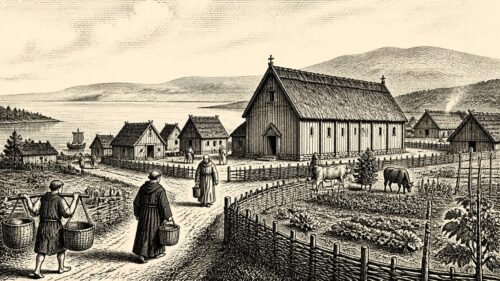
In 646, the Annals of Ulster record the killing of Scannal son of Béc, styled king of the Cruithin, and the death of Mac Laisre, abbot of Bangor. Scannal’s violent death reflects continuing political competition in north-east Ulaid after the battle of Mag Roth, though the annals name neither his killer nor location. Mac Laisre’s obituary marks a leadership change at Bangor, an important monastery beside Belfast Lough with wider Irish Sea connections. Sparse sources reveal little else about the year, but these notices illuminate the coexistence of vulnerable secular rulership and enduring ecclesiastical institutions within a predominantly rural society.
Read Article
Archived: 3 November 2026
Abstract
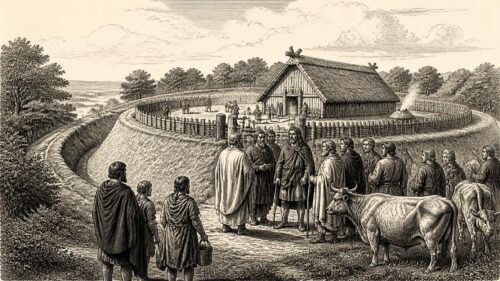
In 647 CE, Máel Cobo son of Fiachnae, overking of Ulaid, was killed by his nephew Congal Cennfhota son of Dúnchad. The notice is brief, but it preserves a decisive act of dynastic violence in north-east Ireland. Máel Cobo belonged to Dál Fiatach, one of the competing royal kindreds of Ulaid; Congal belonged to the same dynasty and was the son of Máel Cobo’s brother Dúnchad. This was not an invasion or a clash between distant peoples. It was a killing within the ruling family, at a point when possession of the overkingship of Ulaid could turn on the survival,
Read Article
Archived: 3 November 2026
Abstract
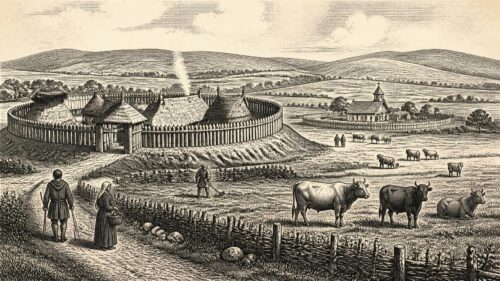
In 648 CE, Ireland was governed through many competing kingships, churches and kin-groups rather than by a single state, and the surviving evidence must be handled with unusual care. A famous cluster of notices is assigned to this year by the seventeenth-century Annals of the Four Masters: the ninth year of Conall and Cellach, the death of Maincheni, abbot of Meanadrochit, the conflict of Cúil Corra in which Cillíne son of Forannán of Uí Failge was killed, and the death of Cugamhna son of Suibne. Yet the older annalistic traditions place the same cluster several years later, under their annal
Read Article
Archived: 3 November 2026
Abstract
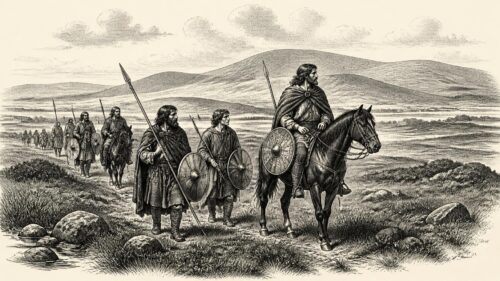
In 649 CE, Irish annalistic tradition places two violent political reversals in Connacht: the killing of Raghallach mac Uatach, described as king of Connacht, and the defeat of Guaire of Aidne by Diarmait mac Áedo Sláine at the battle of Carn Conaill. These were not incidents in the history of a unified Irish state. Ireland was divided among numerous peoples, dynasties and client kingdoms, while ambitious rulers sought influence through raiding, alliance, tribute and control of ecclesiastical centres. Yet the events associated with this year reveal how quickly local conflict could draw in rulers from across the island, and how
Read Article
Archived: 3 November 2026
Abstract
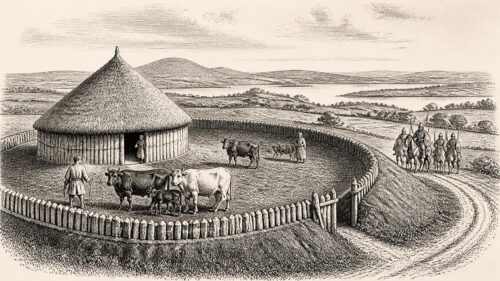
In 650 CE, Ireland’s surviving historical record centres on a violent dispute within the northern Uí Néill, but it also offers unusually revealing glimpses of the island’s fragmented political world. The annals place a battle at Dún Cremthainn in this year, in which Óengus, son of Domnall, was killed by Cellach and Conall Cóel, sons of Máel Coba. Yet early Irish chronology requires care. The Annals of Ulster labels this as its entry U650 while its calendrical heading equates that annal-number with AD 649; modern reference works conventionally place the battle in 650. Other annalistic compilations assign different Irish events
Read Article
Archived: 3 November 2026
Abstract
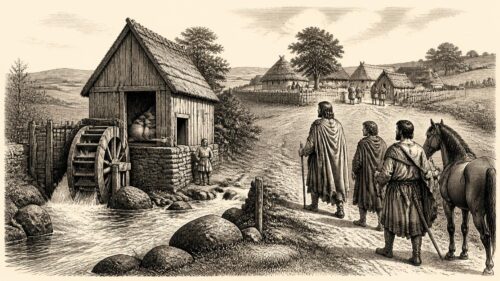
In 651 CE, the Irish annals associate one striking episode with the year: the killing of Dúnchad and Conall, sons of Blathmac son of Áed Sláine, at or beside the mill of Máel Odhrán. The surviving accounts are terse, poetic and chronologically complicated, so the event should not be treated as a securely dated incident on a modern calendar day. Yet it is firmly lodged in the annalistic sequence conventionally discussed under 651. The deaths mattered because the victims belonged to the powerful Síl nÁedo Sláine of Brega, a leading southern branch of the Uí Néill. Their violent end, remembered
Read Article
Archived: 3 November 2026
Abstract
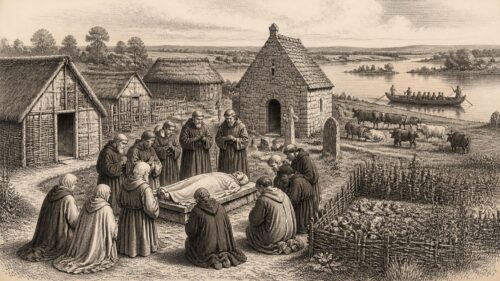
In 652 CE, the Irish annalistic record conventionally places a striking cluster of deaths among leading churchmen alongside a local dynastic battle in the midlands. Yet this is also a year that demands unusual chronological care. The surviving Annals of Ulster group these notices under U652, but their own kalend entry identifies the year as AD 651; related chronicles and later compilations distribute some of the same material under different years. The safest conclusion is not that every event can be fixed to a modern 1 January–31 December 652, but that these events belong to the narrowly defined historical horizon
Read Article
Archived: 3 November 2026
Abstract
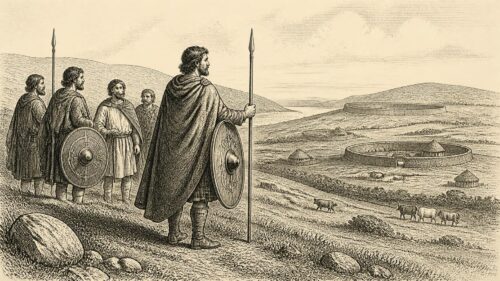
In 653 CE, the clearest Irish political event preserved by the annalistic tradition was a battle in Connacht: the battle of Airther Seóla. The Annals of Tigernach and Chronicon Scotorum record that Marcán son of Tommán, king of the Uí Maine, was killed, while Cenn Fáelad son of Colgu and Máenach son of Báithín, king of the Uí Briúin, were victorious. This is a small entry, but a consequential one. It reveals competition between powerful Connacht dynasties, the lethal stakes of regional kingship, and the way an encounter in one locality could reshape authority far beyond a battlefield. The evidence
Read Article
Archived: 2 November 2026
Abstract
In 654 CE, a violent change at the summit of the Uí Néill reshaped the balance of power in Ireland. Conall Cóel, son of Máel Coba of Cenél Conaill, was killed by Diarmait mac Áedo Sláine. The notice is brief, but its implications were substantial: a northern claimant to the pre-eminent kingship had been removed by a member of the southern Uí Néill line rooted in Brega and associated with Tara. Other annalistic notices connected with this year record killings in Connacht, the deaths of senior clerics at Clonard, and a battle in northern Britain involving Dál Riata. Together they
Read Article
Archived: 2 November 2026
Abstract
In 655 CE, Ireland’s historical record is unusually thin, and its dating is unusually difficult. No contemporary Irish chronicle survives in an original seventh-century manuscript, while later annals sometimes assign the same occurrence to different years. The most defensible approach is therefore to treat 655 as a cautiously reconstructed point in a sequence rather than as a year illuminated by a full narrative. A cluster of annalistic notices connected with this date nevertheless reveals a political landscape of small but ambitious kingdoms, a church embedded in regional society, and an island whose learned communities kept Ireland’s affairs in view alongside
Read Article
