Archived: 2 November 2026
Abstract
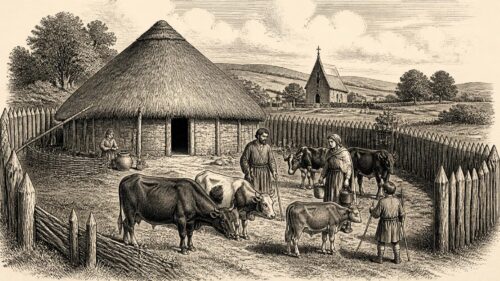
In 656 CE, the surviving Irish annals place a small but revealing cluster of deaths, a battle and an extraordinary report from the countryside within the year. None amounts to a narrative of a united Irish kingdom: Ireland was divided among many dynasties and petty kingdoms, while churches and monasteries exercised influence across political frontiers. Yet the entries for this year illuminate several connected worlds: the Columban community of Iona, the ecclesiastical landscape of Meath and Munster, local violence, cattle-centred rural life, and Ireland’s close relationship with northern Britain. The evidence is terse and must be handled cautiously, but it
Read Article
Archived: 2 November 2026
Abstract
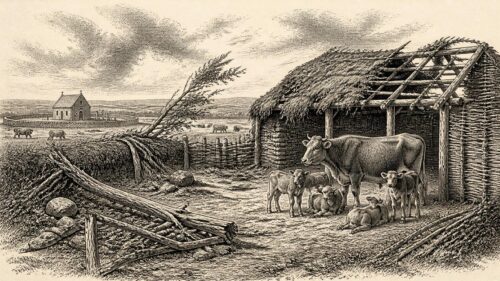
In 657 CE, Ireland’s surviving annalistic record preserves a year of transition, deaths and unsettling signs rather than a single decisive campaign. A later annalistic tradition places the opening of the joint rule of Diarmait and Blathmac, sons of Áed Sláine, in this year. The Annals of Ulster, whose internal year-numbering is offset at this point, explicitly labels its entry U658 as AD 657: it records several deaths, the death of Guret, king of Alt Clut on the Clyde, a violent windstorm, and an extraordinary cow at Láthair Briúin said to have borne four calves. The notices are brief, but
Read Article
Archived: 2 November 2026
Abstract
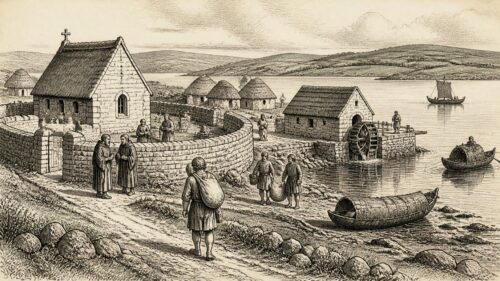
In 658 CE, the most securely attested Irish developments were not a single great battle or royal assembly, but a cluster of deaths that reveal how closely political authority, ecclesiastical institutions and regional society were intertwined. The annals record the deaths of Díma Dub, bishop of Condaire or Connor, and Cuiméne, bishop of Nendrum in Strangford Lough. The Annals of the Four Masters, compiled much later but drawing on older annalistic material, also place in this year the death of Sillán, bishop of Daiminis, probably Devenish in Lough Erne, on 17 May. Its same entry calls 658 the second year
Read Article
Archived: 2 November 2026
Abstract
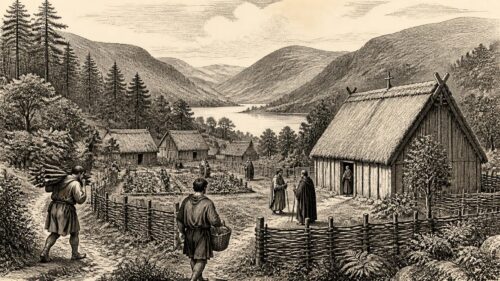
In 659 CE, Ireland’s surviving annalistic record is unusually quiet about battles, harvests and royal assemblies, but it is not empty. The Annals of Ulster, in an entry whose calendar heading explicitly identifies the year as AD 659, records a cluster of deaths: Bishop Fínán son of Rímid, Colmán of Glendalough, Daniél bishop of Cenn Garad, Echaid son of Blathmac, Conall Crannamna, and Eóganán son of Tóthalán. This is firm evidence for what the annalist chose to commemorate, rather than a complete record of all that happened. It offers a revealing cross-section of the Irish world: an important Leinster church,
Read Article
Archived: 2 November 2026
Abstract
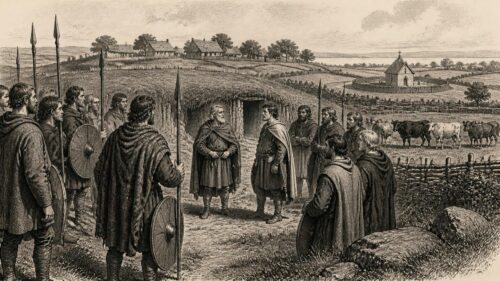
In 660 CE, Ireland’s annals associate the year above all with a battle at Ogaman, at a place called Cenn Corbadáin, and with a striking rupture within the ruling dynasty of the southern Uí Néill. The event is conventionally assigned to 660 by the Annals of the Four Masters and the Annals of Tigernach, but early Irish annalistic chronologies do not align perfectly: the Annals of Ulster place the same fighting under their entry for 661, while the Fragmentary Annals give 662. This is not evidence for several separate battles. Rather, it is a reminder that the modern calendar labels
Read Article
Archived: 2 November 2026
Abstract
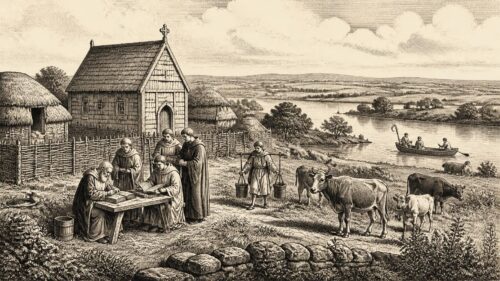
In 661 CE, Ireland’s annals preserve an unusually revealing cluster of deaths, a journey across the Irish Sea, a dynastic battle in the midlands and the passing of a Munster king. None makes a complete national narrative by itself. Together, however, they show how power, learning and religious authority were distributed across a landscape of competing kindreds and ecclesiastical communities. The year is especially associated with Cummian or Cuimíne Fota, ‘Cummian the Tall’, the celebrated scholar linked with Clonfert on the Shannon. His death was commemorated not merely as the loss of a churchman but as the removal of a
Read Article
Archived: 2 November 2026
Abstract
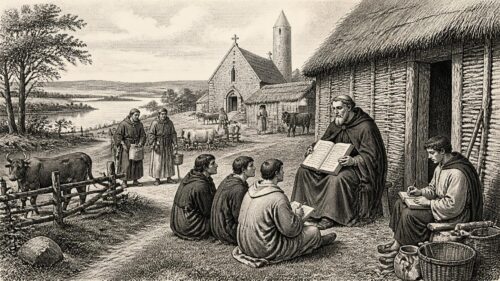
In 662 CE, Irish annalists associated a cluster of political deaths, a battle within the southern Uí Néill and the passing of a celebrated church scholar with this year. The evidence is unusually revealing but not perfectly uniform. The Fragmentary Annals explicitly place the battle of Ogoman, the death of King Máenach of Munster and that of Cummíne Fota in 662; other annalistic compilations place some of the same notices under adjacent year-headings. This is a familiar problem in early Irish chronology, not a reason to discard the events. It does mean that no day, season or sequence within the
Read Article
Archived: 2 November 2026
Abstract
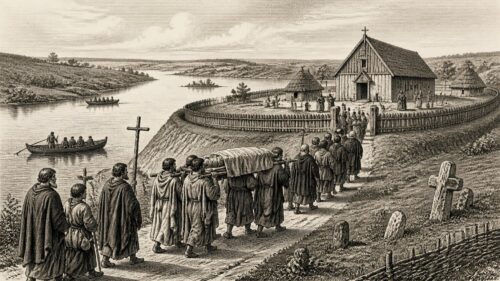
In 663 CE, Ireland’s annalistic record is dominated not by a famous battle or a royal inauguration, but by deaths: above all that of Guaire Aidne, remembered as king of Connacht, and by the loss of senior churchmen at Bangor and Ferns. The year is a useful reminder that early Irish history is often preserved in short, retrospective notices rather than continuous narrative. Those notices nonetheless reveal a society in which royal standing, kinship, monasteries and burial places were tightly interwoven. They also require care over dating. The Annals of Ulster preserve these notices under U663, while their internal year-equivalent
Read Article
Archived: 2 November 2026
Abstract
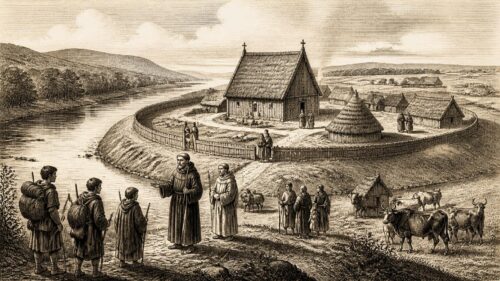
In 664 CE, Ireland entered a year remembered above all for the arrival of a devastating epidemic. The Irish annals place its coming on 1 August, stating with unusual precision that “the plague reached Ireland” and that it first raged at Mag Itha of Fotharta. This is one of the firmest dates attached to an early medieval Irish disease outbreak. Yet the surviving records are terse, copied and rearranged centuries after the events; their year headings do not always coincide exactly with modern chronological conventions. What can responsibly be said is that, during the calendar year 664, mortality reached Ireland,
Read Article
Archived: 2 November 2026
Abstract
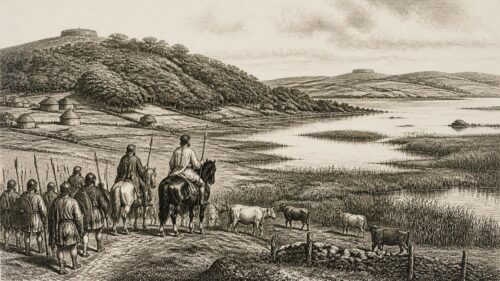
In 665 CE, Ireland stood in the shadow of a grave mortality while conflict still continued between powerful regional groups. The clearest event placed directly in this calendar year is the battle of Loch Fén, recorded by the Annals of Inisfallen as a fight between the men of Munster and Connacht in which Talamnach, son of Laidcenn, was killed. The notice is stark: it supplies neither a victor nor a cause. Yet its very brevity is revealing. Even amid epidemic loss, kings and war-bands remained able to mobilise, cross regional boundaries and contest territory or political influence. The battle also
Read Article
