Mellifont and Rival Kings1142 CE
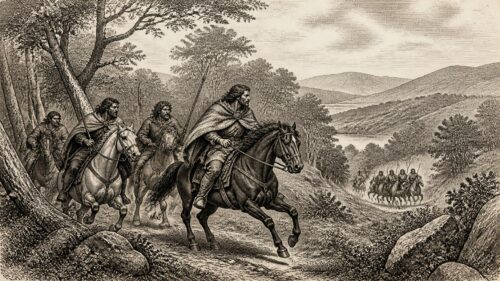
In 1142, Ireland remained politically fragmented despite Toirdelbach Ua Conchobair’s claim to high kingship. His coalition army devastated lands en route to Munster but gained neither cattle nor Munster hostages. Conchobar Ua Briain died, enabling his brother Toirdelbach to take Munster amid dynastic conflict, while Muirchertach Mac Lochlainn fought in the north and Ottir from the Hebrides assumed Dublin’s leadership. Raiding, crop destruction, church burnings and clerical deaths exposed insecurity affecting rural and religious life. Mellifont Abbey, founded by Malachy Ua Morgair with Donnchad Ua Cerbaill’s patronage, introduced Ireland’s first Cistercian house, linking native reform, politics and Clairvaux’s continental network.
Dateline
The surviving record of 1142 is unusually revealing. Irish annalists describe royal deaths, disputed successions, cattle-raiding, burned churches and changes of leadership from Munster to Dublin. Alongside these familiar features of political life, the year witnessed a development with far-reaching consequences: the establishment of Mellifont Abbey in County Louth, Ireland’s first Cistercian monastery. No exact foundation day is securely known, but the year itself is well attested. Mellifont connected Irish religious reform more closely with continental Europe while remaining dependent upon Irish clerics, patrons and political conditions.
A Contested High-Kingship
Toirdelbach Ua Conchobair remained king of Connacht and the leading claimant to the high-kingship of Ireland. Such a title did not amount to settled government over the island. Authority depended upon military expeditions, alliances, tribute and hostages given by subordinate rulers. It could expand quickly after a successful campaign and contract just as rapidly when rivals resisted.
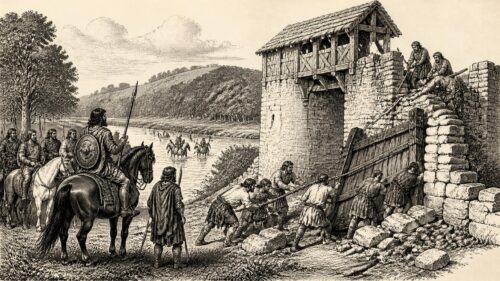
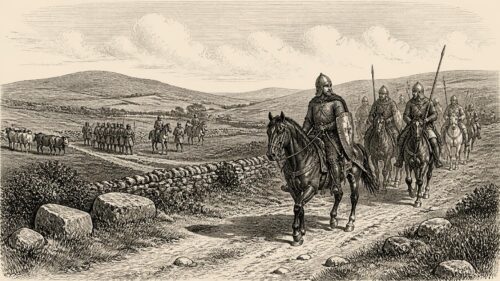
Ua Conchobair had recovered from serious setbacks during the 1130s. A meeting at Uisneach in 1141 had brought him hostages from Murchad Ua Máelshechlainn of Mide and from Bréifne, strengthening his position in the midlands. In 1142 he attempted to carry that momentum southwards. The Annals of the Four Masters record an army drawn from Connacht, Mide, Bréifne and Leinster marching towards Munster. The expedition crossed Osraige and Laois, where crops were damaged, but returned without the cattle or Munster hostages normally expected from a successful hosting. Only Leinster hostages were retained. The entry therefore preserves both the scale of Ua Conchobair’s coalition and the limits of his power.
Succession in Munster
The principal political death of the year was that of Conchobar Ua Briain, ruler of Thomond and claimant to authority over all Munster. He had previously extended his influence into Dublin and had become a formidable opponent of Connacht. The annals report that he contracted an illness and died at Killaloe while undertaking penance or pilgrimage. They do not provide a trustworthy day or month.
Conchobar’s brother Toirdelbach Ua Briain immediately assumed the kingship of Munster. Immediate succession in an annal does not imply an uncontested coronation in the later European sense. Irish kingship was elective within a ruling dynasty, and rival adult relatives could possess substantial followings. Conchobar son of Domnall Ua Briain was expelled by the new king and went to wage war in Connacht, illustrating how a displaced dynast might seek support from his family’s external enemy.
The Mac Carthaig rulers of Desmond presented another challenge. Donnchad Mac Carthaig entered the Déisi, where men were killed on both sides before he was captured and delivered to Toirdelbach Ua Briain. Mac Carthaigh’s Book similarly describes his illness, betrayal and surrender to the Munster king, placing his death while a hostage in the following year. The Annals of Tigernach, however, appear to place his death in 1142. This disagreement warns against assigning a false precision to the end of his career, but all the accounts associate the episode with the struggle for Munster following Conchobar Ua Briain’s death.
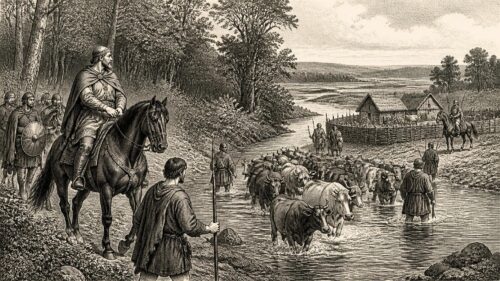
Toirdelbach Ua Briain also raided Leinster, plundering the Uí Muiredaig and part of Uí Chennselaig and carrying away a large cattle-spoil. This was a practical assertion of kingship. Cattle fed armies, rewarded followers and represented portable wealth, while the seizure of herds weakened an opponent’s capacity to maintain dependants. Ua Conchobair’s destruction of corn and Ua Briain’s taking of cattle were therefore economic weapons as well as acts of war.
Northern and Maritime Politics
In the north, Muirchertach Mac Lochlainn, king of Cenél nÉogain, was still consolidating his position. The Four Masters record his victory over the Fír Droma and add that he was badly wounded during the fighting. He would later become Ua Conchobair’s greatest rival for the high-kingship, but in 1142 his authority was not yet secure enough to make him undisputed master of northern Ireland.
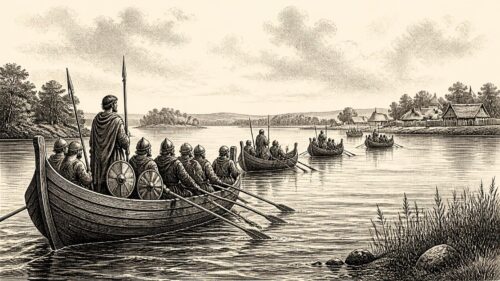
Dublin also experienced a change of leadership. Ottir, described as a son of Mac Ottir and a man of the Hebrides, assumed its chieftainship or government. The entry reflects Dublin’s continuing place within the Irish Sea world. Its Hiberno-Norse population was deeply involved in Irish dynastic politics, yet its rulers and maritime community retained links with the Isles, Britain and overseas trading networks. Control of Dublin offered ships, commercial wealth and political prestige, making the town attractive to Irish overkings and sea-kings alike.
The Foundation at Mellifont
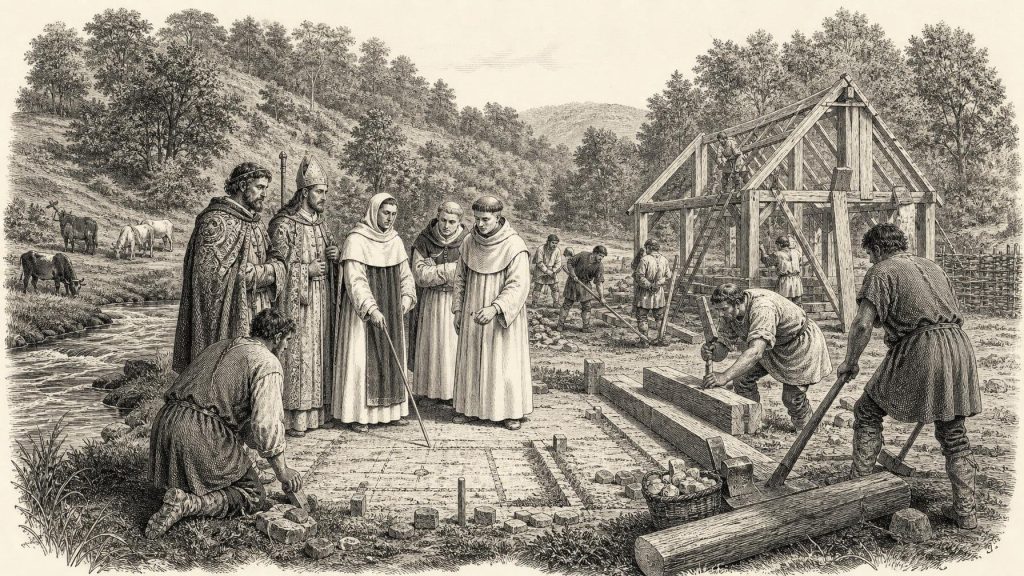
The most enduring development connected with 1142 occurred in the valley of the River Mattock, near the Boyne. There, on land provided by Donnchad Ua Cerbaill, king of Airgialla, Malachy Ua Morgair established Mellifont. Malachy had returned from Rome as a papal legate and was among the leading advocates of reform within the Irish Church. During his travels he had visited Clairvaux in France and formed a close relationship with its abbot, Bernard.
Malachy left several Irish companions at Clairvaux to learn Cistercian observance. In or by 1142 they returned with monks sent by Bernard. Bernard’s surviving letter speaks of sending a small body of brethren as seed for Malachy to nurture. Gilla Críst Ua Conairche, usually called Christian in Latin sources, became Mellifont’s first abbot. The community probably began with modest accommodation; the great stone church and cloister known from archaeology belonged to later phases and should not be imagined as complete in the foundation year.
The Cistercians emphasised communal discipline, regulated prayer and labour, relative simplicity in worship, and administration through an international network of affiliated abbeys. Mellifont was directly connected to Clairvaux, but it was not merely a foreign institution planted in passive Irish soil. Its founder was an Irish bishop, its first abbot was Irish, and its establishment depended upon Ua Cerbaill’s territorial power and patronage. The participation of French monks introduced practical experience and strengthened the new abbey’s links with the wider order.
Donnchad Ua Cerbaill’s support also served political purposes. His kingdom had expanded eastwards into Louth, an area near important routes linking Armagh, Dublin and the Boyne valley. Patronising a prestigious monastery enhanced royal standing, encouraged learned and religious activity, and helped mark authority over newly secured territory. In the same year Ua Cerbaill supported St Mary’s at Louth, associated with the Arrouaisian Augustinian canons. Mellifont was consequently part of a broader, carefully sponsored programme of reform rather than an isolated foundation.
Churches, Fire and Learning
Religious life in 1142 was not defined by reform alone. The Four Masters report that the abbot of Lismore, Ua Rebacháin, was killed by Tadc Ua Cennétig. The circumstances are not explained, but the death demonstrates that senior churchmen could be caught in aristocratic violence. Killaloe, Annaghdown and Tech Mochua were also burned. Annalistic notices seldom identify whether such fires resulted from warfare, accident or deliberate destruction, and much ecclesiastical and domestic building remained timber-built.
The death of Cathasach Ua Circaerech, lector of Armagh, was recorded with particular respect. A lector directed advanced teaching in scripture and learned tradition, and Cathasach was praised as an aged and exceptionally learned priest. His obituary is evidence of the intellectual stature already possessed by Irish ecclesiastical centres. Mellifont therefore represented a new institutional form and a stronger continental affiliation, not the beginning of learning or organised Christianity in Ireland.
Land, Livelihood and Trade
Beyond courts and monasteries, most people lived in dispersed rural settlements and depended upon mixed farming. The year’s military entries reveal how vulnerable that life could be. An army trampling or cutting corn threatened winter food supplies; the removal of cattle deprived households of milk, meat, hides, traction and social wealth. Campaigning also required ordinary communities to provide food, transport and hospitality to forces passing through their territories.
Yet Ireland was not economically isolated. Dublin remained a centre of craft production and maritime trade, with archaeological evidence for timber houses, workshops, ships, imported goods and coin use. Waterford, Wexford, Cork and Limerick likewise connected regional rulers and producers with Britain and continental markets. Mellifont’s relationship with Clairvaux added another channel through which people, books, architectural knowledge and religious practices could cross the sea.
A Year of Transition
No single ruler mastered Ireland in 1142. Ua Conchobair could assemble a multi-kingdom army but failed to subdue Munster; Ua Briain secured a royal succession but faced dynastic enemies; Mac Lochlainn won a northern battle but was wounded; and Dublin passed to a leader from the Isles. Against this fragmented political background, Mellifont’s foundation stands out. Created through cooperation between an Irish reformer, an Airgialla king and an international monastic order, it was both a product of contemporary Irish politics and a lasting transformation of Ireland’s religious landscape.
Primary Sources
- Annals of the Four Masters, Volume II: Annal M1142
- The Annals of Tigernach
- Mac Carthaigh’s Book: Annal MCB1142
- Geoffrey Keating, The History of Ireland: Religious Foundations
- St Bernard of Clairvaux’s Life of St Malachy of Armagh
- St Bernard, Epistle 356 to Malachy
- Malachy (Máel-M’áedóc) Ua Morgair
- Ua Cerbaill, Donnchad
- Ua Briain, Conchobar
- Ua Briain, Tairdelbach
- Ua Conchobair, Tairdelbach (O’Conor, Turlough)
- Mac Lochlainn, Muirchertach
- Mac Murchada, Diarmait (MacMurrough, Dermot)
- Mac Murchada (MacMurrough), Murchad
- Gilla meic Liac (Gelasius)
- Old Mellifont Cistercian Abbey Monastic Site
- Mellifont Cistercian Abbey
- Continental Monasteries
- The Abbatial Succession at Mellifont, 1142–1539
- Excavations at Mellifont Abbey, Co. Louth
- Mellifont Abbey: RTÉ Archives
- Viking Ireland
- 950–1450: Vikings, Normans and Medieval Mints
- Wooden Plank with Viking Ship and Weathervane Graffiti