
Archived: 26 September 2026
Abstract
In 2001, Celtic Tiger prosperity exposed Ireland’s vulnerabilities and transformations. Foot-and-mouth disease at Proleek, County Louth, prompted cross-border controls, slaughter and trade restrictions. Voters rejected the Treaty of Nice in a low-turnout referendum. Northern Ireland’s devolved institutions repeatedly neared collapse over policing and IRA arms, requiring temporary suspensions, before verified IRA decommissioning in October. The RUC became the PSNI in November, while Holy Cross schoolchildren faced loyalist protest and the GAA abolished Rule 21. Census and employment figures recorded social change, euro starter packs anticipated currency conversion, and cultural commemoration and mourning marked national life across the island and abroad.
Read Article
Archived: 26 September 2026
Abstract
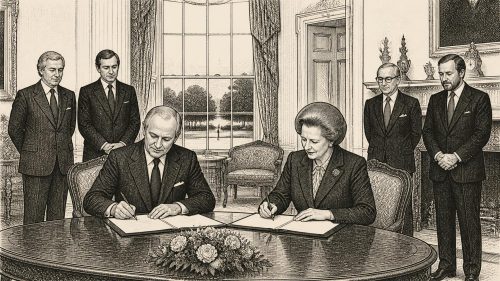
In 1985, the Anglo-Irish Agreement, signed by Garret FitzGerald and Margaret Thatcher at Hillsborough, created a permanent consultative role for Dublin in Northern Ireland affairs while confirming majority consent for constitutional change. It offered constitutional nationalists progress but provoked unionist protest and Fianna Fáil opposition. Violence continued, including major IRA attacks and the killing of a Garda officer. Sinn Féin advanced electorally and revised its Dáil abstention policy. The Republic faced severe unemployment and emigration, alongside the Progressive Democrats’ foundation and liberalised contraception law. Religious controversy, theatre, U2’s Croke Park concert and Cork 800 reflected changing national identities amid hardship.
Read Article
Archived: 11 October 2026
Abstract
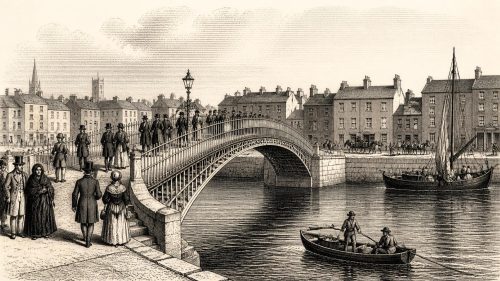
In 1816, postwar recession and exceptionally cold, wet weather brought Ireland a serious subsistence crisis, with deficient potatoes and grain, costly food, wet fuel and conditions favouring fever. Westminster acknowledged distress and disorder but rejected major inquiry or reform. Maritime wrecks killed hundreds near Waterford and Kinsale. Dublin opened Richmond and Wellington, later Ha'penny, bridges, began Dunleary harbour, and founded an institution for deaf children. Belfast gained Ireland's first successful savings bank and St George's Church. Yet progress coexisted with exclusion, poverty and violence: Catholic disabilities persisted, while the burning of Wildgoose Lodge killed eight, exposing agrarian conflict and insecurity.
Read Article
Archived: 11 October 2026
Abstract
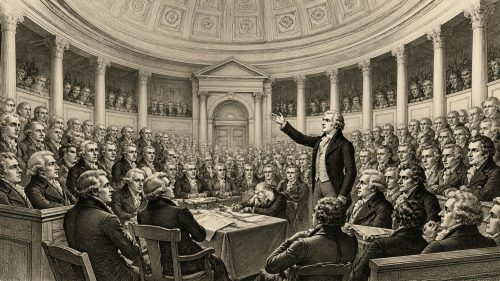
In 1800, Ireland remained a separate kingdom with its own parliament, courts and administration, but the Acts of Union passed in Dublin and London, ending its legislature from 1 January 1801. Cornwallis and Castlereagh secured support amid patronage, compensation and opposition led by Henry Grattan. The Union transferred limited Irish representation to Westminster, preserved the established Protestant church, and left Catholic emancipation unresolved. Post-rebellion repression continued, including Roddy McCorley’s execution, while food scarcity prompted controls on distilling and exports. Parliament also regulated trade, institutions and local improvements. Dublin retained political activity yet faced loss of its resident legislature and disruption.
Read Article

Archived: 15 October 2026
Abstract
In October 1641, Catholic grievances over plantation, exclusion and religious constraints combined with Stuart political instability to trigger rebellion in Ireland. A planned seizure of Dublin Castle failed, but Sir Phelim O’Neill’s Ulster rising captured Dungannon and Charlemont. His proclamation professed loyalty to Charles I and protection for Protestants, while a later forged royal commission fuelled confusion. The conflict brought flight, plunder, killings, dispossession and winter hardship, alongside retaliatory violence. Testimony in the 1641 Depositions records crisis but requires critical reading. Fighting spread towards Dublin, Leinster and Munster, intensified English and Scottish political conflict, and left Ireland fractured without settlement.
Read Article
Archived: 16 October 2026
Abstract
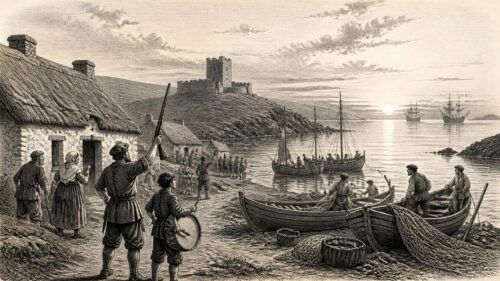
In 1631, Baltimore, a West Cork fishing settlement shaped by plantation, local rivalries and Atlantic commerce, suffered a corsair raid. Before dawn on 20 June, forces led by Murad Reis the Younger seized 107 inhabitants, chiefly women and children, after landing from vessels sailing from Algiers. The captives entered North African systems of sale, labour, ransom and household service; few are known to have returned. Suspicions of local collusion remain unproven. The raid exposed limited coastal protection. Elsewhere, royal honours reinforced hierarchy, Patrick Fleming founded a college in Prague and died in Bohemia, and Sir Henry Docwra died in Dublin.
Read Article
Archived: 17 October 2026
Abstract
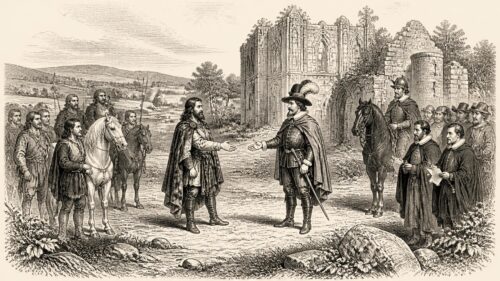
In 1603, Hugh O’Neill’s submission at Mellifont formally ended the Nine Years’ War, as James I succeeded Elizabeth I. O’Neill retained lands and title but surrendered key Gaelic powers, while Ulster faced recovery from severe military devastation and local rivalries. Southern and western Catholic towns, expecting religious toleration, resisted Protestant worship and delayed James’s proclamation; Crown forces compelled their submission without renewed general war. Royal patents in Ulster strengthened selected local lords directly under the Crown, weakening traditional overlordship. Trinity College’s expanding library reflected developing Protestant institutions. Peace ended major warfare but left land, religion, authority and political allegiance unresolved.
Read Article
Archived: 19 October 2026
Abstract
In 1496 Henry VII restored Gerald FitzGerald, eighth earl of Kildare, as lord deputy, ending the immediate crisis of direct Tudor rule. Landing at Howth with royal favour and a new marriage, Kildare accepted conditions including Poynings’ Law, while his heir remained in England. Efforts to dig defensive boundaries around the Pale reflected insecure frontier government. Elsewhere, MacMahon feuds in Oriel, O’Donnell conflicts and regional successions demonstrated fragmented authority. Severe weather destroyed crops and cattle, causing widespread dearth and disrupting husbandry. Annals nevertheless recorded musicians, learned families and religious patrons, revealing cultural prestige amid warfare, political competition and agricultural hardship.
Read Article
Archived: 19 October 2026
Abstract
In 1485, Ireland comprised competing lordships, towns and ecclesiastical jurisdictions, while Kildare dominated the English administration. His Trim parliament defended corporate privileges, funded frontier defence, Castledermot’s construction and plague relief, anticipating England’s uncertain succession. Henry VII’s accession after Bosworth altered calculations without immediately displacing Kildare. In Connacht, Uilleag Burke succeeded violently, with annals differing over his campaign and Tulsk Castle’s destruction. Successions, killings and raids reshaped Connacht and Ulster, where O’Neill and O’Donnell forces fought then made peace. Breifne conflicts involved castles, cattle and Kildare’s intervention. Church appointments, chantries, scholarship, hospitality, disease and hardship reveal communities facing persistent insecurity throughout.
Read Article
Archived: 19 October 2026
Abstract
In 1481, Ireland’s annals recorded conflict, patronage and administration across politically fragmented lordships. On 5 October, Toirdelbach Mag Uidhir was treacherously killed by kinsmen in his Fermanagh castle, alongside several companions; his learning, hospitality and bardic generosity were widely mourned. Tír Eógain endured warfare among O’Neill factions, producing raids, killings, captures and the mutilation of Patrick Savage. Other deaths commemorated aristocratic patrons, poets and clerics, demonstrating the importance of learning, pilgrimage and religious institutions. Killings in Wexford reflected local rivalries, while the English lordship’s 1481–82 business addressed lands, castles, church property, revenues and urban privileges, revealing uneven but governmental authority.
Read Article
Archived: 19 October 2026
Abstract
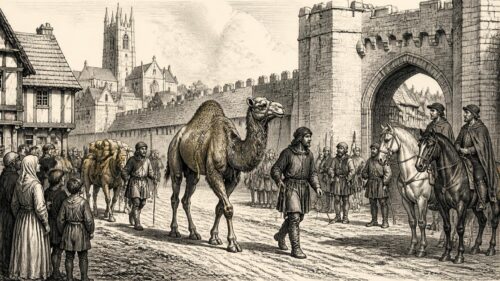
In 1472, Ireland comprised competing Gaelic and Anglo-Irish lordships, while Thomas FitzGerald, earl of Kildare, governed Edward IV’s limited lordship from Dublin. Parliament addressed defence, castles, town property, coinage, trade, religious houses and clerical study, revealing both administrative activity and insecurity in the Pale. Annals record killings, hostage-taking, raids, family struggles and shifting alliances in Ulster, Connacht and Munster, involving Gaelic rulers and Anglo-Irish families alike. Monasteries, pilgrimages and Oxford links connected local society to wider Christian networks. Most strikingly, a yellow camel, probably a royal gift from England, reached Ireland, symbolising international exchange amid fragmented politics across the island.
Read Article
Archived: 23 October 2026
Abstract
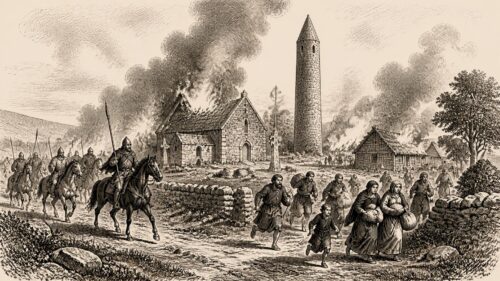
In 1346, Ireland experienced political instability, warfare and dearth following the death of Sir Ralph Ufford, the royal justiciar. Gaelic and settler forces contested Leinster, capturing castles, raiding communities and damaging churches. On 5 May, Diarmaid Mac Giolla Phádraig and an Ó Cearbhaill ally burned Aghaboe, including its church, cemetery and St Canice’s shrine, a religious and communal loss. Wheat prices reflected scarcity, worsened by conflict. Walter de Bermingham became justiciar in May but violence continued, including northern defeats, killings and winter raids. John Clyn’s annals document events, while evidence does not place the Black Death in Ireland before 1348–49.
Read Article
Archived: 23 October 2026
Abstract
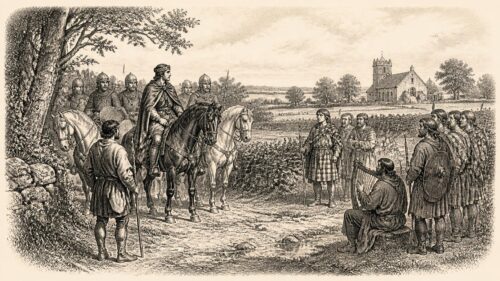
In 1329, John de Bermingham, earl of Louth, was killed at Braganstown near Ardee by Louth’s English gentry, exposing divisions within the lordship rather than an ethnic revolt. His disputed authority, kern’s alleged depredations, and weak local roots fuelled resentment. Parliament in Dublin sought to curb magnate feuds, while rivalries persisted. The killers received pardons, Bermingham’s earldom lapsed, and Mortimer acquired Louth’s liberty. Political conflict also embroiled Bishop Ledrede. Campaigns and killings in Wicklow, the midlands, Breifne and Connacht revealed continuing warfare and shifting alliances. Wet weather delayed harvests, intensifying insecurity across Ireland for tenants, townspeople, and landed communities alike.
Read Article
Archived: 24 October 2026
Abstract
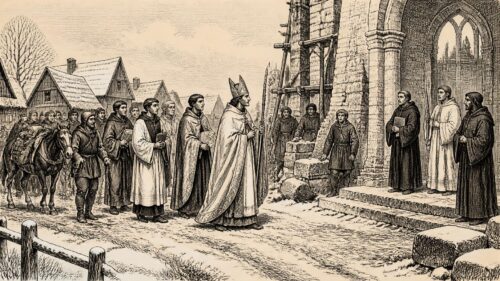
In 1312, ecclesiastical and governmental transitions highlighted tensions within Ireland’s lordship. William de Bermingham’s death created a vacancy at Tuam, where Máel Sechlain Mac Áeda, formerly bishop of Elphin, was formally translated on 19 December, strengthening Gaelic representation in a major metropolitan see. Religious life continued through developments at Boyle and episcopal deaths in Connacht. In Louth, a de Verdon rising defeated royal forces near Ardee, exposing fragile crown authority. Edmund Butler replaced John Wogan as keeper in August and administered Dublin while campaigning in Wicklow. These institutional changes preceded, but did not initiate, the crises of 1315 and afterwards.
Read Article

Archived: 24 October 2026
Abstract
In 1297, John Wogan’s Dublin parliament introduced elected knightly representatives from counties and liberties of the English lordship, seeking consent for measures on defence, policing, road clearance and collective military contributions. It also advanced royal administration through the creation of counties Kildare and Meath, while preserving powerful private liberties. These reforms responded to persistent insecurity: Slieve Margy forces burned Leighlin, while leading Orior figures were killed near Dundalk. Elsewhere, annals recorded the deaths of Moylurg’s lord, chiefs and bishops, and disputes over Elphin. Edward I’s wars constrained affairs. The year revealed authority as selective, contested and dependent on local institutions.
Read Article

Archived: 26 September 2026
Abstract
In 1211, King John’s Irish lordship remained fragile despite his previous campaign against the de Lacys. John de Gray, royal justiciar, sought to consolidate control through castles, garrisons, revenue collection and alliances, as recorded in the Irish Pipe Roll. At Athlone, Richard de Tuit and eight others died when a new tower collapsed, highlighting frontier tensions and disputes over church land. In the north, Áed Méith Ua Néill repelled foreign forces at Narrow Water, demonstrating organised resistance. Irish rulers negotiated through hostages and temporary agreements. Royal power expanded through administration and fortification, but Ireland remained a patchwork of competing jurisdictions.
Read Article

Archived: 26 September 2026
Abstract
By 1178, English lordship in Ireland remained limited to Dublin, parts of Leinster and eastern Meath, while Gaelic kings retained most territories amid rivalries and shifting alliances. Hugh de Lacy raided Clonmacnoise and the midlands, but Connacht resistance constrained him. John de Courcy suffered heavy defeats during northern raids, showing Anglo-Norman arms were vulnerable to terrain, ambushes and supply problems. Warfare across Connacht and Munster damaged settlements, churches and livestock. Dynastic conflicts, ecclesiastical deaths, monastic foundations and learned culture continued alongside violence. Annals also recorded wind damage at Derry and the drying of the River Galway, as conquest remained undecided.
Read Article
Archived: 26 September 2026
Abstract
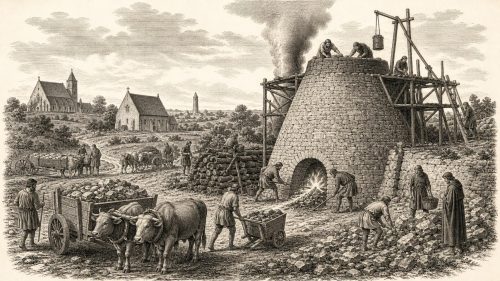
In 1145, Ireland’s contested high-kingship produced widespread warfare, recalled by annalists as a trembling sod. Tairdelbach Ua Conchobair of Connacht faced rebellion from Tigernán Ua Ruairc of Bréifne, Munster offensives and instability in Mide. In the north, Muirchertach Mac Lochlainn regained Cenél nÉogain with support from Cenél Conaill and Airgialla, establishing a powerful rival centre. Campaigns involved battles, cattle raids, burnings, captives and naval conflict on the Shannon, where Connacht defeated Munster and Limerick forces. Amid turmoil, Armagh’s church built a large limekiln, demonstrating ecclesiastical resources, reform and continuing organised construction. The year reshaped, but did not settle, Irish supremacy.
Read Article

Archived: 26 September 2026
Abstract
In 1142, Ireland remained politically fragmented despite Toirdelbach Ua Conchobair’s claim to high kingship. His coalition army devastated lands en route to Munster but gained neither cattle nor Munster hostages. Conchobar Ua Briain died, enabling his brother Toirdelbach to take Munster amid dynastic conflict, while Muirchertach Mac Lochlainn fought in the north and Ottir from the Hebrides assumed Dublin’s leadership. Raiding, crop destruction, church burnings and clerical deaths exposed insecurity affecting rural and religious life. Mellifont Abbey, founded by Malachy Ua Morgair with Donnchad Ua Cerbaill’s patronage, introduced Ireland’s first Cistercian house, linking native reform, politics and Clairvaux’s continental network.
Read Article

Archived: 26 September 2026
Abstract
Ireland in 1137 remained politically fragmented, as Tairdelbach Ua Conchobair of Connacht asserted contested overlordship through warfare and naval power on the Shannon. Rivalries involved Bréifne, Mide, Leinster, Munster and Hiberno-Norse towns. An allied fleet from Leinster, Dál Cais, Dublin and Wexford besieged Waterford, gaining hostages but not conclusively conquering it. Dynastic killing and raids destabilised Mide and Connacht. In the church, Malachy yielded Armagh to reformer Gilla meic Liac. A severe storm and widespread fires damaged communities. Despite violence, trade, maritime capacity, scholarship, artistic patronage and ecclesiastical reform demonstrated a dynamic, connected society within a rapidly changing medieval world.
Read Article

Archived: 26 September 2026
Abstract
In 1102, Ireland experienced negotiated truces rather than unity, as Muirchertach Ua Briain and Domnall Ua Lochlainn balanced competing claims to national authority. Armagh held hostages securing their one-year agreement, although raids and killings continued across Ulster, Connacht, Bréifne and Meath. Muirchertach also confronted Magnus Barelegs’ fleet before forging a marriage alliance with Magnus’s son Sigurd, and linked his dynasty to Norman rebel Arnulf de Montgomery. Churches served as guarantors, learning centres and targets for attack. Rural communities bore warfare’s economic burden, while ports sustained Irish Sea trade. These fragile personal settlements reorganised conflict, preceding renewed campaigns thereafter in 1103.
Read Article

Archived: 26 September 2026
Abstract
In 1097, Muirchertach Ua Briain led a southern coalition to Mag Muirtheimne, where Domnall Ua Lochlainn’s northern army confronted it at Fid Conaill. Abbot Domnall of Armagh brokered an uneasy peace, demonstrating ecclesiastical influence without ending royal rivalry. Connacht suffered renewed instability after Tadc Ua Conchobair’s killing and Flaithbertach Ua Flaithbertaig’s contested restoration. Regional rulers died or were killed, while notable churchmen also died. Fire destroyed books and treasures at Monasterboice. Exceptionally abundant nuts fattened swine, lowered prices and supported food supplies. The annals thus depict political conflict, cultural loss, church diplomacy and rural economic abundance across late eleventh-century Ireland.
Read Article

Archived: 26 September 2026
Abstract
1083 saw political change and violence across Ireland, chiefly in the north. Domnall Ua Lochlainn became king of Cenél Eógain, beginning a long career, and reinforced his position through a cattle raid into Conaille Muirtheimhne, rewarding allies from its proceeds. Áed Ua Maíl Shechnaill and several regional rulers, heirs and churchmen died or were killed, revealing fragile dynastic authority. Tairdelbach Ua Briain remained the dominant southern king, although no campaign is securely dated. Ecclesiastical obituaries highlighted churches’ learned and economic roles. Dublin’s connected bishopric contrasted with saint-centred institutions. Rural pastoral obligations coexisted with trading towns. Later annalistic claims require caution.
Read Article
Archived: 26 September 2026
Abstract
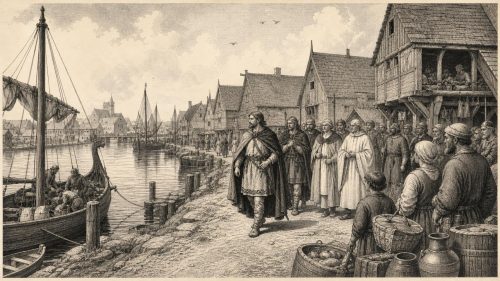
In 1075, Tairdelbach Ua Briain, king of Munster, led a broad coalition northwards seeking hostages from Airgíalla and Ulaid, but his heir Muirchertach was defeated at Ard Monann near Ardee, exposing limits to Ua Briain power. Nevertheless, Tairdelbach secured Dublin after Gofraid's exile and Domnall's brief reign, installing Muirchertach in the commercially and strategically vital Hiberno-Norse city. Annals also record deaths among northern rulers and churchmen, fires at Louth and Clonard, and Dublin's ecclesiastical links with Canterbury. Rural farming, woodland resources and urban craft and trade underpinned political and religious institutions; an abundant mast crop highlighted the economy sustaining them.
Read Article
Archived: 26 September 2026
Abstract
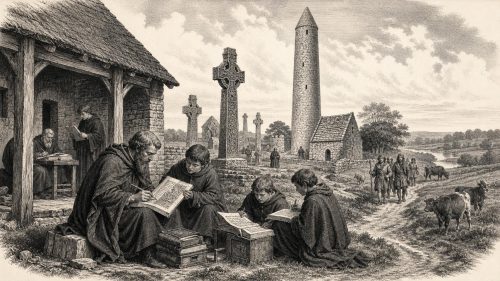
In 1056, Ireland remained divided among competing provincial rulers, as Diarmait of Leinster, Donnchad of Munster, Áed of Connacht and Conchobar of Mide pursued fragile power. Annals record dynastic killings, disputed raids and major cattle seizures, including captives, while a Christmas raid ended in drownings. Churches were influential communities, marked by deaths of prominent clergy, notably Armagh's Áed Ua Forréid. Scholar Flann Mainistrech of Monasterboice died, whereas Marianus Scotus joined Cologne's Irish monastery, illustrating international learned links. Rural farming supported cattle wealth, while Dublin's trade underpinned Leinster. Lightning deaths and storm-related disaster underscored life's vulnerability. Sources vary in reliability, dating.
Read Article

Archived: 26 September 2026
Abstract
In 1050 Ireland remained politically fragmented, with Donnchad mac Briain of Munster pursuing overlordship through hostages, alliances and force, while rival rulers strengthened elsewhere. He proclaimed a law at Killaloe, intended to curb violence, protect agreements and demonstrate royal guardianship of Christian order amid scarcity. Clonmacnoise was repeatedly plundered by neighbouring Irish groups, while Kildare, Emly and Lann Léire suffered fires or attacks, revealing ecclesiastical centres’ wealth and vulnerability. Kings died violently, rivals were imprisoned, and churchmen continued teaching and collecting renders. Rural livelihoods depended on livestock and crops alongside trading towns. Muirchertach Ua Briain, a future king, was born.
Read Article

Archived: 26 September 2026
Abstract
In 1025, Ireland lacked a universally recognised high king after Máel Sechnaill mac Domnaill’s death, and authority was contested through campaigns, hostages, raids and alliances. Flaithbertach Ua Néill entered Brega and Dublin, securing Irish hostages, before Domnall Got countered and recovered Brega’s hostages. Violence included the killing of Brega’s ruler Gerr Gaela, Connacht heir Niall Ua Conchobair, and a Uí Fiachrach Aidne leader, alongside raids between Fernmag and Fir Manach. Termonfeckin was plundered and burned. Annals also recorded Munster rulers, pilgrims and numerous senior churchmen’s deaths, demonstrating churches’ political, economic and cultural importance amid fragmented regional rivalries throughout the island.
Read Article
Archived: 26 October 2026
Abstract
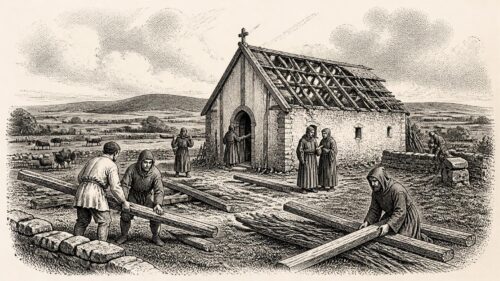
In the annalistic sequence around 987, Ireland experienced severe insecurity from disease, livestock mortality and storm damage. The Annals of Tigernach describes a deadly eastern illness interpreted through demonic imagery, alongside the onset of máelgarb, an unusual cattle murrain whose precise nature remains uncertain. A great wind destroyed many buildings, including Louth’s oratory, disrupting a significant ecclesiastical centre. Differing annal dates prevent precise modern chronology. These reports illuminate vulnerabilities affecting households, churches and political economies dependent on cattle, labour and resources. They occurred amid Máel Sechnaill’s overkingship and Brian Bóruma’s rise, but do not establish an event for that year.
Read Article
Archived: 28 October 2026
Abstract
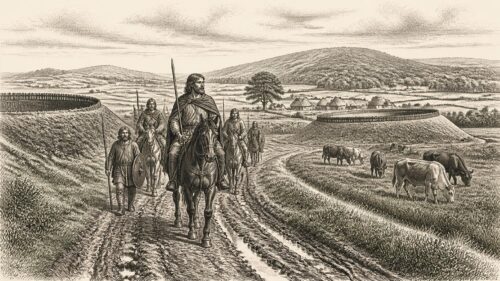
In 905, the Annals of Ulster record Flann Sinna, king of Tara, leading an expedition into strategically important Osraige, amid rivalry with Munster and instability within its ruling dynasty. The source does not specify fighting or outcomes, but the march demonstrated royal pressure in a region linking Leinster and Munster. Máel Ciaráin, bishop of Lann Léire, and Lachtnán, abbot of Ferna, died, highlighting ecclesiastical succession and local power. In the north, Cenél nÉogain prevented battle between Domnall and Niall, sons of Áed Findliath. These sparse notices reveal interconnected kingship, church institutions, rural resources, diplomacy, and tensions preceding wider conflict soon.
Read Article
Archived: 28 October 2026
Abstract
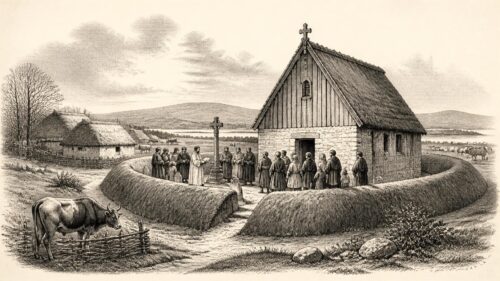
In 898, annalistic records portray Ireland as a landscape of vulnerable regional kingships and influential churches. Aidíth son of Laigne, king of Ulaid, was killed by his associates, probably amid intensified rivalry after military defeat, although motives and successor remain unknown. Cairpre, superior of Lann Léire at Dunleer, died, marking transition within a powerful ecclesiastical community. A reported shower of blood at Ard Cianachta was recorded as an extraordinary, possibly portentous phenomenon. In Corcu Bascinn, west Clare, King Flann son of Cathrannach died and his brother Lennán succeeded, illustrating dynastic continuity. Divergent annalistic chronologies require caution in dating these events.
Read Article

