Conchobar Slain at Bealach1144 CE
In 1144, Conchobar Ua Conchobair, Tairdelbach of Connacht’s son and king of Meath, was assassinated by Meath conspirators after six months’ rule. Tairdelbach invaded, inflicted heavy losses, accepted 400 cows in compensation, and reorganised Meath between Ua Mael Sechlainn rulers and neighbouring powers. Epidemic claimed his son Tadc and others, while clergy secured the conditional release of imprisoned Ruaidrí Ua Conchobair and mediated peace with Munster. Annals also record aristocratic deaths, kindred violence, Kells burning three times, and losses at Clonard. Events exposed high-kingship’s dependence on local dynasties, hostages, wealth, negotiation and ecclesiastical authority during a year of widespread disruption.
Dateline
The surviving Irish chronicles make this a year of unusually visible political change, although they do not provide a continuous narrative or an exact sequence for every event. Their calendar notices identify a leap year beginning on a Saturday, but most happenings are recorded without day or month. The fullest accounts concentrate on Mide, or Meath, where Tairdelbach Ua Conchobair’s attempt to impose Connacht rule ended in assassination, invasion and a fresh division of the kingdom. Alongside this upheaval, the annals record an epidemic, destructive fires, aristocratic deaths and a remarkable intervention by senior clergy in dynastic affairs.
The Killing in Meath
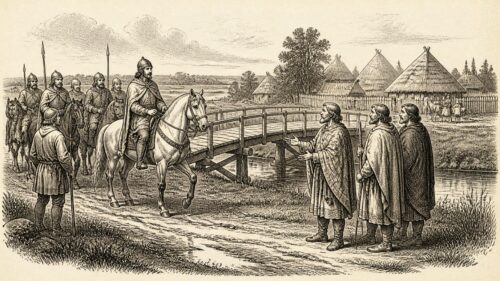
The central event was the death of Conchobar Ua Conchobair, a son of Tairdelbach Ua Conchobair, king of Connacht and leading claimant to the high-kingship of Ireland. Conchobar had been installed as king of Meath in the preceding year after his father displaced Murchad Ua Mael Sechlainn. According to the Chronicon Scotorum, he had ruled for only half a year. This was not his first royal appointment: earlier in his career his father had briefly placed him over Dublin. Such appointments reveal Tairdelbach’s method of extending power beyond Connacht by positioning close relatives in strategically important kingdoms.
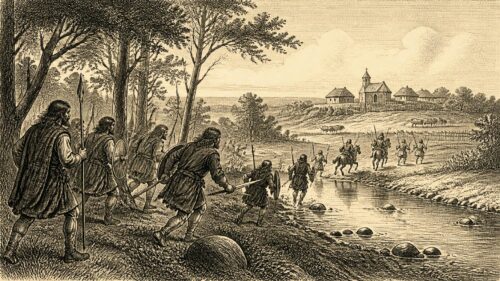
Conchobar was killed at Bealach Muine na Siride by Ua Dublaich, king of Fir Tulach, with Ruaidrí Ua Sencháin also named in one account. The Annals of Tigernach interpret the attack as the product of a secret conspiracy among the men of Meath. The later Annals of the Four Masters explain that Ua Dublaich regarded Conchobar as an outsider ruling over the Meathmen. Although that explanation may simplify a complex coalition, it captures the fundamental problem: Tairdelbach could conquer Meath and install a son, but local dynasties retained their own ideas about legitimate kingship.
Conchobar’s description as heir designate of Ireland shows the scale of the loss. Tairdelbach had many sons, but Conchobar was among the most politically experienced and had been entrusted with both Dublin and Meath. His murder was therefore an attack not merely on an individual ruler but on the wider Ua Conchobair programme of domination. It also demonstrated the danger faced by any provincial king attempting to convert military superiority into lasting authority over another people.
Invasion and Partition
Tairdelbach answered the killing with a major hosting into Meath. The annals speak of slaughter and heavy losses among the Meathmen, with particularly severe fighting against the descendants of Senchán. The language is characteristically dramatic: one account likens the destruction to the Day of Judgement. Such descriptions should not be read as measured casualty reports, but they leave little doubt that the campaign was punitive as well as political.
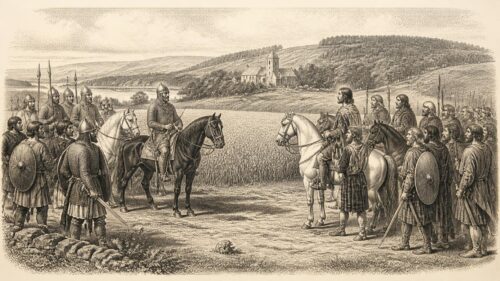
The settlement imposed after the campaign is reported in more than one form. One passage states that West Meath was assigned to Donnchad, son of Muirchertach Ua Mael Sechlainn, while East Meath was divided between Tigernán Ua Ruairc of Bréifne and Diarmait Mac Murchada, king of Leinster. Another entry describes Tairdelbach appointing two Ua Mael Sechlainn rulers on either side of Lough Ennell: Murchad to the east and a son of Muirchertach to the west. These notices may preserve successive arrangements compressed by the annalists, rather than a single neat partition.
Whatever the precise stages, Tairdelbach did not simply replace his murdered son with another Connacht prince. He restored members of the native Ua Mael Sechlainn dynasty while giving powerful neighbouring rulers an interest in the eastern districts. This was calculated balance-of-power politics. Tigernán Ua Ruairc had long sought influence in Meath, while Diarmait Mac Murchada controlled Leinster and had ambitions in the adjoining midlands. Both could be useful, but neither was a subordinate whom Tairdelbach could trust without conditions.
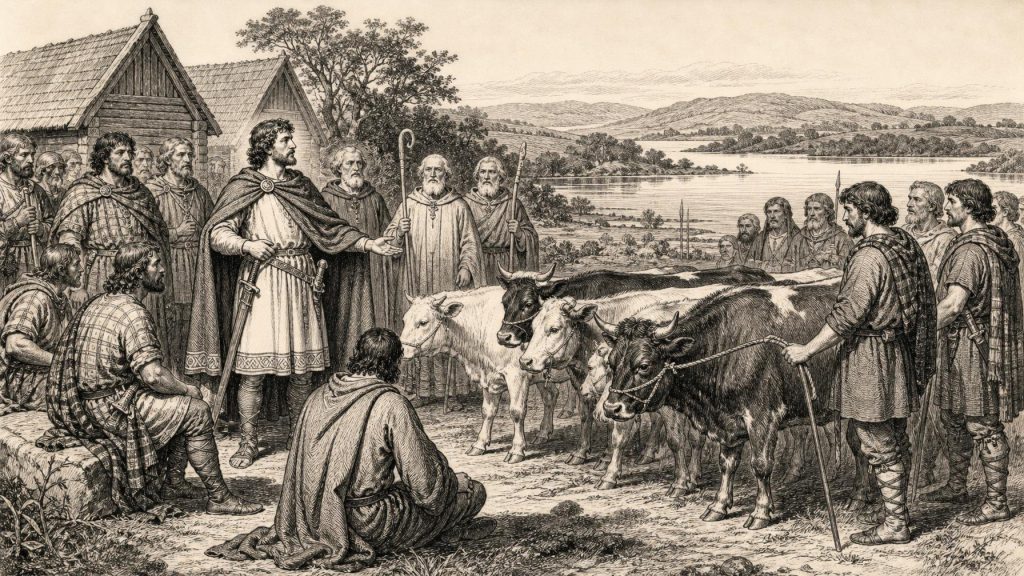
The men of Meath also delivered four hundred cows as an éric, or compensatory payment, for Conchobar’s death. The payment mattered legally, politically and economically. It recognised the injured honour of the Ua Conchobair dynasty while allowing a settlement short of unending vengeance. Cattle were a principal store of wealth, furnishing dairy produce, meat, hides and draught power. Four hundred cows therefore represented a substantial transfer of productive resources, not a merely symbolic fine.
Tairdelbach subsequently raided Leinster, carrying away what the Four Masters call many thousands of cattle and taking heads in battle. The surviving texts do not explain whether Diarmait Mac Murchada had resisted the Meath settlement or whether the expedition pursued a separate dispute. It nevertheless warns against imagining that the earlier allocation of territory created a stable alliance. Agreements between kings were continually tested by changing opportunities, rival claims and the ability to mobilise armed followers.
A Dynasty Under Strain
Conchobar was not the only son Tairdelbach lost. Tadc Ua Conchobair also died, apparently during an outbreak described as an epidemic of colic in Connacht and Munster. The medieval term identifies severe abdominal illness rather than a disease recognisable with certainty today, so no modern diagnosis can responsibly be attached to it. Brian, a member of the Ua Briain dynasty, was another prominent reported victim, while the annals say that many unnamed Connacht people died.
The deaths intensified uncertainty within Tairdelbach’s large and competitive family. Ruaidrí Ua Conchobair, another son and the future high-king, had previously rebelled and remained imprisoned. In this year a major clerical and political gathering sought the release of Ruaidrí and other captives, including Domnall Ua Flaithbertaig and Cathal Ua Conchobair. They were freed after giving hostages and oaths, and in honour of the clergy who had intervened. Release did not mean complete reconciliation: hostages provided security, while sworn promises defined the conditions under which liberty was granted.
Clerics and Peacemaking
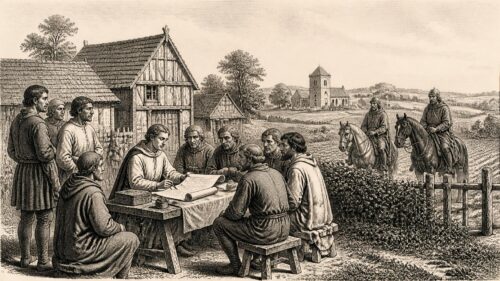
The clergy were active political participants rather than detached observers. The gathering that secured the prisoners included the successor of Patrick, the head of the church of Commán at Roscommon and other senior churchmen, alongside Tairdelbach, Tigernán Ua Ruairc and Ua Fearghail. Ecclesiastical honour, sacred guarantees and collective pressure could restrain a king, though previous violations of clerical protection show that such restraints were not always obeyed.
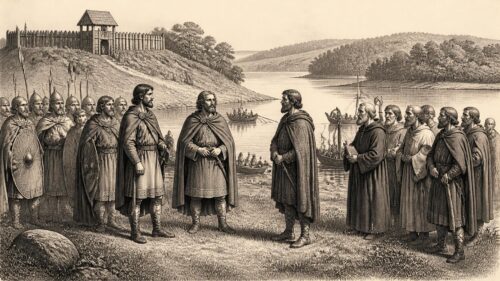
A broader peace conference followed at Tír dá Glas, now Terryglass, between Tairdelbach Ua Conchobair and Tairdelbach Ua Briain, king of Munster. Chiefs and clergy from Connacht and Munster attended. The annalists call the agreement a perfect peace, intended to last for the lifetimes of the two kings, and emphasise that its terms were ratified by churchmen. This was an ambitious diplomatic response to years of warfare between the western provinces. Its permanence should not be overstated: major conflict returned soon afterwards, but the meeting reveals the importance of assemblies, negotiation and ecclesiastical mediation.
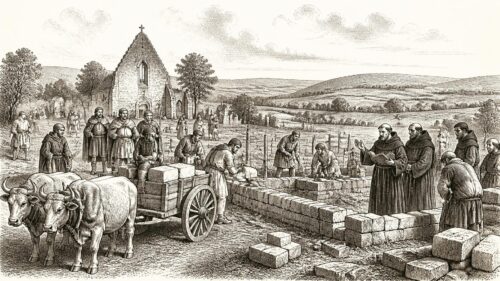
The conference belonged to the wider reforming atmosphere of the twelfth-century Irish Church. Malachy Ua Morgair, papal legate and promoter of Cistercian and Augustinian religious life, was then active in Ireland, while Mellifont had been founded in 1142. A later tradition associates approximately this year with a renewed monastery at Newry. The evidence for an exact foundation in 1144 is disputed, however, and the Cistercian community there is more securely documented in the following decade. Newry should therefore be regarded as a development connected with the period, not as an unquestionably dated event of the year.
Churches, Learning and Fire
Clonard remained an important religious and learned centre in Meath despite the surrounding political instability. Gilla Pátraic son of Congal, its lector and priest, died during the year. A lector was responsible for advanced teaching and the interpretation of texts, making his death significant beyond his own community. The death of Domnall Ua Coinfhiacla, king of Tethbae, was also linked to Clonard: the Chronicon Scotorum says that he ended his life there as a cleric. Retirement into religion offered an aristocrat a recognised final stage of life devoted to penance and preparation for death.
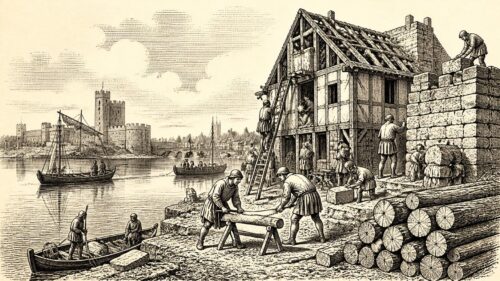
The Four Masters additionally record that Kells was burned three times. They do not identify attackers in these notices, and accidental fires were a constant danger in settlements dominated by timber, thatch and closely grouped buildings. Repeated burning disrupted worship, hospitality, manuscript work, storage and the households dependent upon a major church. Rebuilding required timber, labour, food and patronage, drawing heavily upon the surrounding countryside.
Life Beyond the Kings
The annals name rulers of Delbna, Calraige, Tethbae and other regional peoples, reminding us that Ireland was not governed through a single administrative hierarchy. Cearball Ua Finnalláin, king of Delbna Mór, died, while Cinaed of the Meic Amhalgada was killed by his own people. In Uí Maine, Domnall Ua Cellaig was killed during a violent kindred dispute that also brought death to his attackers. Donnchad Mac Carthaig, an heir designate of Munster, died while imprisoned by his kinsman Tairdelbach Ua Briain. Succession was competitive at every level, from provincial kingships to smaller territories.
For most people, these struggles were experienced through military levies, the movement of herds, demands for tribute, damaged crops and the billeting of royal forces. Farming combined livestock with cereal cultivation, especially oats and barley. Cows remained central to status and subsistence, which explains why raids and settlements were so often counted in animals. The epidemic and repeated fires presented different dangers, capable of harming communities regardless of political allegiance.
By the year’s end Tairdelbach Ua Conchobair had avenged his son and reconstructed the government of Meath, but he had not made it securely Connacht’s possession. His authority depended upon local kings, neighbouring allies, hostages, compensation and clerically witnessed agreements. The events reveal both the reach and the limits of high-kingship: a powerful ruler could cross provinces, punish enemies and appoint kings, yet durable government still required negotiation with dynasties, churches and regional communities whose loyalties could not simply be commanded.
Primary Sources
- The Annals of Tigernach, Part 22
- Chronicon Scotorum, Part 142
- Annals of the Four Masters, Part 25
- The Annals of Ulster
- Chronicon Scotorum
- Ua Conchobair, Tairdelbach (O'Conor, Turlough)
- Ua Conchobair, Conchobar
- Ua Conchobair, Ruaidrí
- Ua Ruairc, Tigernán
- Ua Briain, Tairdelbach
- Malachy (Máel-M'áedóc) Ua Morgair
- Mac Carthaig, Cormac
- Ua Conchobair, Cathal Mór Crobderg
- Derbforgaill: Twelfth-Century Abductee, Patron and Wife
- The Zooarchaeology of Medieval Ireland
- Making Hay While the Sun Shines? Socio-Economic Change, Cereal Production and Climatic Deterioration in Early Medieval Ireland
- Agriculture, Settlement and Society in Early Medieval Ireland
- Changing Human-Cattle Relationships in Ireland: A 6000-Year Isotopic Perspective
- Literature and Learning in Early Medieval Meath
- Power and Patronage in Medieval Ireland: Clonard
- Bective Cistercian Abbey
- History of the Diocese of Dromore
- The Abbey – Newry and Mourne Museum
- Cáin Lánamna
- Lebor na Cert